What Part of the Body Does the Elliptical Work
Senior Fitness & Outdoor Gear Writer at Gym Hike · NASM Certified Personal Trainer (CPT), Wilderness First Responder · 10+ years testing home gym equipment, strength training, and outdoor trail hiking
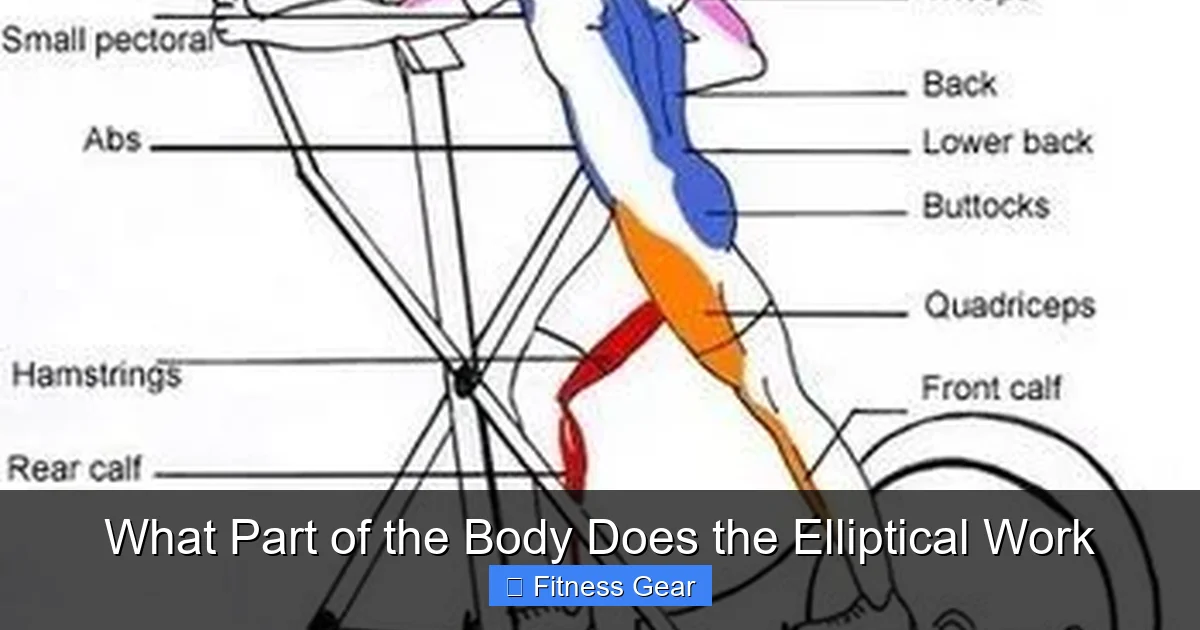
The elliptical is a fantastic full-body, low-impact cardio machine. It primarily works the lower body muscles like the quadriceps, hamstrings, glutes, and calves. Simultaneously, the push-pull motion of the handles actively engages the upper body, including the chest, back, shoulders, and arms. Crucially, it also requires constant core activation for stability, making it one of the most efficient total-body workouts you can do.
Key Takeaways
- It’s a True Full-Body Workout: Unlike a stationary bike or stair climber, the elliptical’s moving handles ensure your upper body (chest, back, shoulders, arms) works just as hard as your lower body.
- Primary Focus is the Lower Body: The leg motion powerfully targets the quadriceps (front thighs), hamstrings (back thighs), and gluteus maximus (buttocks), with calf engagement throughout.
- Core is Constantly Engaged: To maintain balance and an upright posture on the moving pedals, your abdominal and lower back muscles contract isometrically throughout the entire session.
- Low-Impact, High-Result: The elliptical’s smooth, circular motion eliminates the jarring impact of running, making it ideal for joint health while still providing a vigorous cardiovascular and muscular workout.
- You Control the Intensity: By adjusting resistance, incline (if available), and speed, you can shift the emphasis between muscle groups and dramatically increase or decrease the cardiovascular challenge.
- Form is Everything: Leaning on the machine or using the handles only for support (instead of pushing/pulling) significantly reduces upper body engagement and overall calorie burn.
📑 Table of Contents
- Introduction: More Than Just a Cardio Machine
- The Powerhouse: Lower Body Muscle Engagement
- The Often-Overlooked Partner: Upper Body & Arm Muscles
- The Stabilizing Force: Core Activation
- Cardiovascular & Metabolic Benefits: The Engine Room
- Maximizing Your Elliptical Workout: Form, Focus, and Variation
- Conclusion: Your Pathway to Balanced Strength
Introduction: More Than Just a Cardio Machine
Step onto an elliptical, and you might think you’re just about to get your heart pumping. And you’d be right—it’s a stellar cardio workout. But to label the elliptical as “just” cardio is to miss its most powerful secret: it’s one of the most effective full-body strength and endurance trainers hidden in plain sight at your gym. The unique, fluid motion that feels like running on air or cycling while standing engages a symphony of muscles across your entire frame in a single, low-impact motion.
Understanding exactly what part of the body the elliptical works is the key to unlocking its full potential. It’s not about a single muscle group; it’s about coordinated movement, functional strength, and efficient calorie burning. Whether you’re a beginner looking for a safe start, an athlete cross-training, or someone managing joint sensitivities, knowing which muscles are firing—and how to maximize their engagement—transforms your time on the machine from a simple warm-up into a comprehensive, results-driven workout. Let’s break down the anatomy of an elliptical stride.
The Powerhouse: Lower Body Muscle Engagement
When you push down and back on the pedal, you’re initiating a movement pattern that closely mimics a combination of running, stair climbing, and squatting. This makes the elliptical exceptional for building endurance and strength in your major leg and glute muscles. The constant resistance against the motion means these muscles are working concentrically (shortening) and eccentrically (lengthening) throughout the entire stroke.
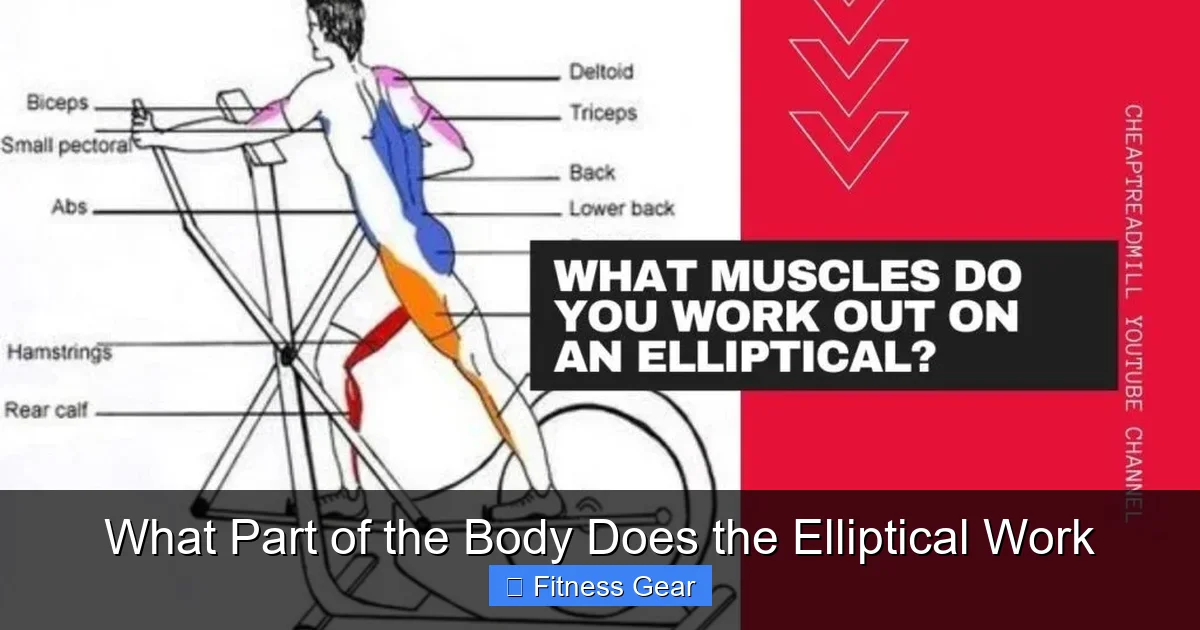
Visual guide about What Part of the Body Does the Elliptical Work
Image source: ellipticalking.com
Quadriceps (Front Thighs)
Your quadriceps, or “quads,” are the primary drivers of the elliptical motion. They are responsible for extending your knee as you push the pedal down and away from your body. You’ll feel them working most intensely during the initial downward press and the “power phase” of the stroke. Increasing the machine’s resistance or incline (on models that have it) places a greater demand on your quads, making them burn in the best possible way.
Practical Tip: To really zero in on your quads, focus on pressing through the ball of your foot and keeping your knees tracking over your toes (not caving inward). Imagine you’re trying to straighten your leg completely at the top of the pedal stroke (without locking the knee).
Gluteus Maximus (Buttocks)
Your glutes are your body’s largest and most powerful muscle group, and they play a starring role on the elliptical. They fire powerfully during the hip extension phase—that’s when your leg moves behind your body. A strong glute engagement is what gives your stride power and helps stabilize your pelvis. Leaning forward slightly (from the hips, not the waist) and driving through your heels can shift more emphasis onto your glutes.
Practical Tip: Think “squeeze your butt” as you push the pedal backward. This conscious mind-muscle connection ensures you’re not just relying on your quads. A strong glute workout on the elliptical is a recipe for a stronger, more stable body and a firmer posterior.
Hamstrings (Back Thighs)
Working in opposition to your quads, the hamstrings on the back of your thigh contract as you pull the pedal up and forward. They are crucial for the recovery phase of the stroke and for decelerating the pedal at the top. They also assist the glutes in hip extension. While they don’t always feel as “burned” as the quads, they are working diligently throughout the entire motion, especially if you maintain a smooth, controlled cadence without letting momentum take over.
Practical Tip: Don’t let the pedals “drop” at the top of the stroke. Maintain control by actively pulling up with your hamstrings. This not only protects your joints but also maximizes hamstring engagement and improves overall muscular balance.
Calves (Gastrocnemius and Soleus)
Your calf muscles, located on the back of your lower leg, are engaged isometrically (in a static hold) to stabilize your ankle joint throughout the entire range of motion. They get a more dynamic workout when you emphasize pushing through the balls of your feet, which activates the larger gastrocnemius. A slower, more deliberate pace with pointed toes can increase calf activation.
Practical Tip: Try alternating your foot pressure: one minute focus on pressing through your heels (glute/hamstring focus), the next minute through the balls of your feet (quad/calf focus). This variation prevents monotony and hits the muscles from slightly different angles.
The Often-Overlooked Partner: Upper Body & Arm Muscles
This is where the elliptical truly separates itself from other cardio machines. The presence of moving handles transforms it from a lower-body-centric activity into a genuine full-body exercise. The handles are not for resting; they are tools for strength. The motion is a continuous push-and-pull, mimicking a standing chest press and a rowing motion performed simultaneously.
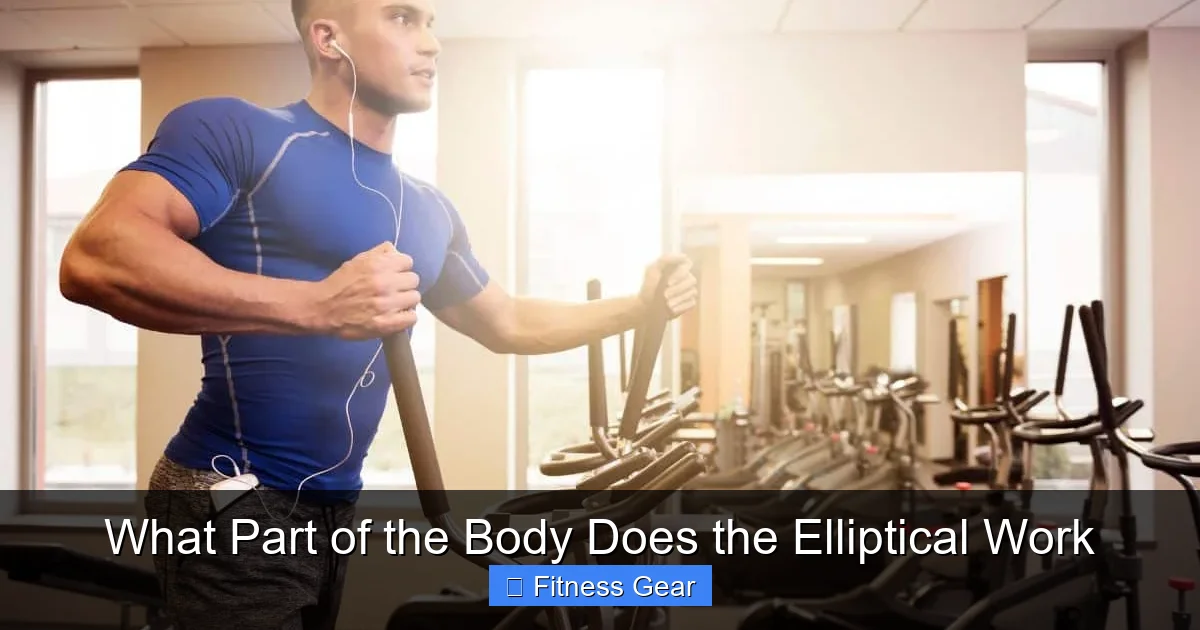
Visual guide about What Part of the Body Does the Elliptical Work
Image source: treadmill.run
Chest (Pectoralis Major) and Shoulders (Anterior Deltoids)
When you push the handles forward and away from your body, you’re performing a dynamic, repetitive pushing motion. This directly targets the pectoral muscles in your chest and the front portion of your shoulder muscles (anterior deltoids). The resistance provided by the machine’s mechanism means you’re building muscular endurance in these pushing muscles with every stroke.
Practical Tip: To maximize chest engagement, keep your elbows slightly bent and soft (don’t lock them), and focus on pushing with the palms of your hands. Imagine you’re trying to push the machine away from you. Exhaling during the push phase can help you generate more force.
Back (Latissimus Dorsi and Rhomboids) and Rear Deltoids
The pulling phase of the handle movement is your back’s time to shine. As you draw the handles back towards your torso, you engage the large “lats” of your back, the rhomboids between your shoulder blades, and the rear deltoids on the back of your shoulders. This pulling motion improves posture by strengthening the muscles that retract the scapulae (shoulder blades), counteracting the hunched-over posture many of us have from desk work.
Practical Tip: Focus on squeezing your shoulder blades together as you pull. Initiate the pull by thinking of driving your elbows back and down, not just by bending your arms. This ensures you’re using your larger back muscles rather than just your biceps.
Biceps and Triceps
While the larger chest and back muscles are the prime movers, your arm muscles act as vital synergists. Your biceps (front of the arm) flex the elbow during the pulling motion. Your triceps (back of the arm) extend the elbow during the pushing motion. On an elliptical with long, mobile arms that require a significant bend and straighten at the elbow, these muscles get a substantial endurance workout. On models with shorter, more rigid arms, the focus remains more on the larger chest and back muscles.
Practical Tip: Maintain a controlled bend in your elbows—don’t keep them locked straight. A slight, dynamic bend (roughly 15-30 degrees) ensures your biceps and triceps are active participants in the movement, leading to better toning and endurance.
The Stabilizing Force: Core Activation
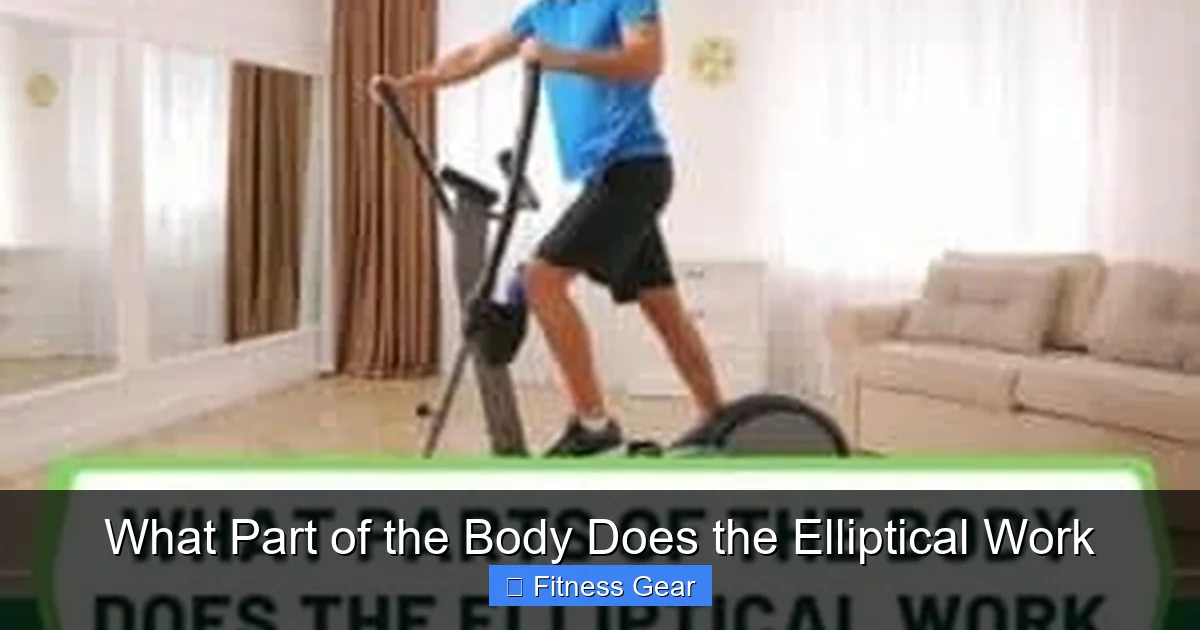
Perhaps the most underappreciated aspect of the elliptical is its demand on your core. Your core isn’t just about six-pack abs; it’s the deep musculature of your torso, including the transverse abdominis, obliques, and erector spinae. On an elliptical, your core works isometrically as a stabilizer. Because your feet are on moving, floating platforms, your body must constantly make micro-adjustments to maintain balance and an upright posture. This forces your entire core cylinder to engage to prevent you from swaying side to side or collapsing forward.
Visual guide about What Part of the Body Does the Elliptical Work
Image source: cardionerd.com
Why This Matters
This is functional core training at its best. You’re not doing a crunch; you’re training your core to stabilize your spine during dynamic limb movement, which is exactly what it needs to do in real life—whether you’re carrying groceries, playing with your kids, or participating in sports. A strong core engaged on the elliptical improves posture, reduces the risk of lower back pain, and makes every other exercise you do more effective and safer.
Practical Tip: Consciously “brace” your midsection as if you’re about to be gently punched in the stomach. Maintain a tall, proud chest and avoid slouching or leaning heavily on the handles. If you feel your lower back arching or rounding, gently engage your abs to bring your pelvis into a neutral position.
Cardiovascular & Metabolic Benefits: The Engine Room
While we’re focused on muscles, we can’t ignore the system that fuels them. The elliptical is a phenomenal cardiovascular workout. By engaging so many large muscle groups simultaneously, it demands a high level of oxygen and energy, causing your heart and lungs to work efficiently. This improves cardiac output, lung capacity, and overall endurance.
Furthermore, because it’s a weight-bearing activity (you’re standing and bearing your own weight on the joints, albeit without impact), it helps in maintaining or even improving bone density, unlike seated exercises. The large muscle mass involved means you’ll burn a significant number of calories during your session, and the “afterburn” effect (Excess Post-exercise Oxygen Consumption, or EPOC) can keep your metabolism elevated for hours after you step off.
Practical Tip: Use the built-in heart rate monitors (if available) or a chest strap to train in specific heart rate zones. A mix of steady-state endurance work (longer, moderate pace) and high-intensity interval training (short bursts of max effort followed by recovery) on the elliptical is a potent combination for heart health and metabolic conditioning.
Maximizing Your Elliptical Workout: Form, Focus, and Variation
Knowing which muscles work is only half the battle. The other half is knowing how to use the machine to maximize their engagement and avoid common pitfalls that turn a potent workout into a wasteful slog.
The Golden Rule: Don’t Rest on the Handles
The most common mistake is leaning forward and using the handles primarily for support, bearing the body’s weight with the arms. This takes almost all the load off your legs and dramatically reduces calorie burn and muscle engagement. Your hands should be lightly resting on the handles, not hanging your entire body weight from them. Your weight should be supported through your legs on the pedals.
Embrace the Reverse Stride
If your elliptical allows for it, reversing the direction of the pedals (while keeping the handles moving in their normal pattern) is a game-changer. Going backwards shifts the emphasis. It places greater demand on your hamstrings and glutes, as they become the primary drivers of the motion. It also challenges your coordination and works the muscles from a novel angle, preventing plateaus.
Manipulate Resistance and Incline
These are your primary knobs for controlling muscle focus and cardio intensity.
- Higher Resistance / Lower Speed: This is your strength-endurance builder. It makes your legs and arms push/pull against a heavier load, building muscular stamina and power. Think “climbing a steep hill.”
- Lower Resistance / Higher Speed: This is your pure cardio and calorie-burning zone. It’s easier to maintain a fast pace, elevating your heart rate quickly for a longer duration.
- Incline (if available): Increasing the front-to-back ramp angle simulates hill climbing and massively increases glute and hamstring activation, similar to the effect of going backwards.
Integrate Intervals for a Metabolic Boost
Don’t just plod along at the same pace. Structure your time. Try a 30-minute session: 5 minutes easy warm-up, then alternate 1 minute of very high resistance/speed (as hard as you can go) with 2 minutes of moderate recovery. Repeat 6-8 times, then cool down. This HIIT-style training on the elliptical is incredibly efficient for improving fitness and burning fat.
Conclusion: Your Pathway to Balanced Strength
So, what part of the body does the elliptical work? The complete, unvarnished answer is: almost all of it. It’s a masterclass in coordinated, full-body movement. It builds endurance and strength in your quadriceps, hamstrings, glutes, and calves. It conditions your pushing (chest, shoulders, triceps) and pulling (back, biceps) muscles in a functional, standing position. It forges a rock-solid core that stabilizes and protects your spine. And it does all of this while delivering a potent cardiovascular workout that’s gentle on your knees, hips, and ankles.
The elliptical’s genius lies in its efficiency and accessibility. To reap these total-body benefits, however, you must use it with intention. Ditch the habit of leaning on the machine. Actively push and pull with your arms. Drive through your heels and balls of your feet in a controlled rhythm. Engage your core to stay tall. Play with resistance, speed, and direction. By understanding the “why” behind the motion—the specific muscles firing with each phase of your stride—you transform a simple cardio session into a comprehensive, intelligent workout that builds a stronger, more resilient, and more balanced body from head to toe.
Frequently Asked Questions
Is the elliptical a good workout for weight loss?
Yes, absolutely. Because it engages so many large muscle groups in both the upper and lower body simultaneously, the elliptical can burn a high number of calories per session. When combined with a consistent routine and a healthy diet, it’s highly effective for fat loss and improving body composition.
Does the elliptical build muscle or just tone?
The elliptical primarily builds muscular endurance rather than significant muscle size (hypertrophy). The constant movement against moderate resistance strengthens and “tones” (increases muscle density and definition) the legs, glutes, and arms. For major muscle building, you’d need to incorporate heavy resistance training with weights.
Is the elliptical better than a treadmill for joint health?
For most people with joint sensitivities, the elliptical is superior. Its motion is a smooth, continuous circle that eliminates the high-impact heel strike of running on a treadmill. This removes the jarring force that travels up through the ankles, knees, and hips, making it a much safer option for those with arthritis, past injuries, or chronic joint pain.
Can I get a good upper body workout on an elliptical?
You absolutely can, but it’s entirely dependent on your effort. You must actively push and pull the handles with force, not just let them move with your arm swing. To maximize the upper body benefit, focus on the mind-muscle connection, squeeze your back and chest with each rep, and consider increasing the machine’s overall resistance to make the handle movement more challenging.
Why does my elliptical workout feel too easy?
This is common and usually means you’re not challenging yourself enough. You can increase the difficulty by: 1) Raising the resistance level, 2) Increasing your speed/pedaling rate, 3) Using the incline function if available, 4) Trying reverse stride, or 5) Incorporating interval training with short bursts of maximum effort. Also, ensure you are not leaning on the handles, which takes load off your legs.
How often should I use the elliptical?
For general health and fitness, aim for 3-5 sessions per week, lasting 20-45 minutes each. You can use it daily for low-to-moderate intensity steady-state cardio, but if you’re doing very high-intensity interval sessions, ensure you have at least one full rest or active recovery day to allow your muscles and nervous system to recover.

Similar Posts