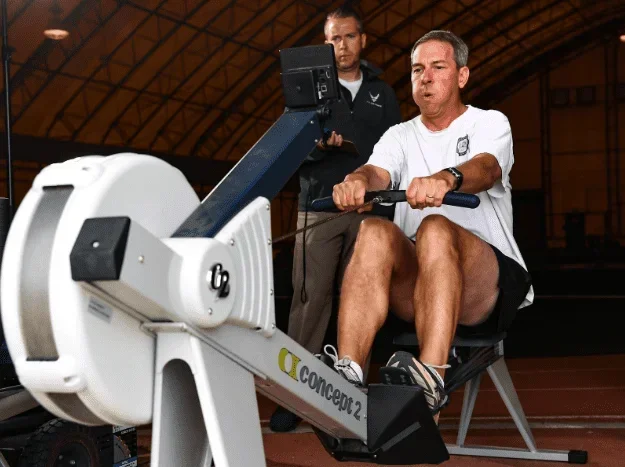
What Are the Numbers on a Rowing Machine

The numbers on a rowing machine tell you how hard you are working and how well you are performing. Key metrics include split time, stroke rate, distance, calories, and watts. Understanding these readings helps you train smarter and track real progress.
Every time you hop on a rowing machine, the screen lights up with numbers. Some make sense right away. Others look like a secret code you wish you could crack.
Here is the good news. Once you learn what the numbers mean, your workouts change completely. You stop guessing. You start training with purpose. This guide breaks down every number you will see on a rowing machine display.
Whether you are a complete beginner or someone who has been rowing for months, understanding your rowing machine metrics is a game changer. You will learn what each reading means, why it matters, and how to use it to get better results.
Key Takeaways
- Split time shows how fast you are rowing each 500 meters.
- Stroke rate tells you how many strokes you take per minute.
- Calories and watts measure your total effort and power output.
- Damper settings control resistance and affect every number you see.
- Understanding your display helps you set goals and improve faster.
📑 Table of Contents
- What Do the Numbers on a Rowing Machine Mean?
- Understanding the Damper Setting and How It Affects the Numbers
- How to Read Your Rowing Machine Display Like a Pro
- What Is a Good Number for Each Metric?
- How to Use Rowing Machine Numbers to Improve Your Workouts
- Common Mistakes People Make When Reading Rowing Machine Numbers
- Benefits of Understanding Your Rowing Machine Data
- Conclusion
What Do the Numbers on a Rowing Machine Mean?
When you look at the screen of a rowing machine, you see several numbers at once. Each one measures something different. Together, they give you a full picture of your workout.
Think of it like a dashboard in a car. Speed, fuel, and engine temperature all tell a story. The same idea applies here. Every number on your rowing machine display has a specific job.
Most modern rowers show the same core set of data. The exact layout varies by brand. But the key numbers stay the same across models from Concept2, WaterRower, and others. Let us go through each one so you never feel lost again.
Split Time
Split time is probably the most important number on your screen. It tells you how long it takes to row 500 meters. The lower the number, the faster you are going.
For example, a split of 2:00 means it would take you 2 minutes to cover 500 meters. A split of 1:45 is faster and shows more power. Most rowers display this in minutes and seconds.
Split time is the main number rowers use to pace themselves. It works like a pace clock in swimming. If you want to row a 2,000-meter race, your split tells you exactly how fast you need to go for each 500-meter chunk.
If you are curious about what all the numbers on your device really represent, you can find a detailed breakdown here.
Stroke Rate
Stroke rate measures how many strokes you take per minute. It is shown as a number like 24 or 30. This is often called your “spm” or strokes per minute.
A higher stroke rate does not always mean a better workout. Sometimes rowing faster with poor form wastes energy. A steady stroke rate with strong technique beats a frantic pace every time.
For endurance rows, most people stay between 20 and 28 strokes per minute. For sprints, you might push up to 32 or 34. The key is finding a rhythm that feels sustainable.
Distance
The distance number shows how far you have rowed. Most rowers measure this in meters. A standard workout might be 2,000 meters, 5,000 meters, or even 10,000 meters.
Distance helps you track progress over time. You can compare today’s row to last week’s row and see real improvement. It is one of the simplest ways to measure your consistency.
Calories Burned
Calories burned is the number the rower estimates you have used during your workout. This figure is based on your weight, pace, and duration.
Keep in mind that calorie counts are estimates. They are not perfectly accurate. But they are useful for comparing workouts. If you burned 400 calories today and 350 last week at the same pace, you know you are working harder.
Watts
Watts measure your power output. This is a very precise number. It tells you exactly how much energy you are producing with each stroke.
Watts do not lie. They are not affected by your body weight or the machine type. A watt reading of 200 means the same thing on every rower. This makes watts one of the best numbers to track over time.
Many competitive rowers focus on watts more than any other metric. It gives you a clear, objective measure of your fitness level.
Time
The time display shows how long you have been rowing. It counts up in minutes and seconds. Simple but important. This number helps you track workout duration and stay on schedule.
Most rowing workouts have a set time goal. A 20-minute steady row or a 5-minute sprint both rely on the clock. Keeping an eye on time helps you push through the final tough minutes.
Understanding the Damper Setting and How It Affects the Numbers
The damper setting is the lever on the side of the rowing machine. It controls how much air flows into the flywheel. Many people confuse this with resistance. But it is actually a bit different.
A damper setting of 1 feels light and easy. A setting of 10 feels heavy and slow. The number you choose changes how the machine feels under your hands. It also changes the numbers you see on the screen.
Here is something important to remember. A higher damper setting does not automatically mean a better workout. It just means more air resistance. You can get a great workout at any damper level.
Most coaches recommend keeping the damper between 3 and 6. This range gives you a smooth, effective stroke. It also keeps the rowing machine numbers in a useful range for tracking progress.
If you want to learn more about how the damper affects your numbers, check out this guide on what the damper does on a rowing machine.
How to Read Your Rowing Machine Display Like a Pro
Reading the display is one skill that separates casual rowers from serious athletes. Once you understand the data, you can make better decisions mid-workout.
Here is a simple way to think about your main numbers:
- Split time tells you your speed.
- Stroke rate tells you your rhythm.
- Watts tells you your power.
- Calories tells you your total effort.
- Distance tells you how far you have come.
When you row, do not stare at every number. Pick one or two to focus on. For a pace-focused workout, watch your split time. For a power workout, watch your watts. This keeps your mind engaged and your form strong.
Pro tip: glance at your rowing machine monitor every few strokes. Do not check it every single stroke. That breaks your rhythm and wastes energy. A quick glance is all you need.
Common Display Layouts
Different rowing machines show numbers in different ways. The Concept2 Model D uses a simple monochrome display. The WaterRower Natural has a more minimal screen. The Hydrow and Ergatta offer full-color touchscreens.
No matter the screen type, the core numbers remain the same. Split time, stroke rate, distance, time, and calories are universal. Some machines also show heart rate if you use a compatible monitor.
What Is a Good Number for Each Metric?
Now that you know what the numbers mean, you might wonder what good numbers look like. The answer depends on your fitness level and goals. Here is a general guide.
Good Split Times by Level
For beginners, a split time of 2:30 to 3:00 per 500 meters is a solid starting point. Intermediate rowers usually fall between 2:00 and 2:30. Advanced athletes often go below 2:00.
Elite competitors can hold splits under 1:45 for long periods. But you do not need to be elite to benefit from rowing. The goal is to improve your own numbers over time.
Good Stroke Rates
A comfortable endurance stroke rate is around 22 to 26 spm. For high-intensity intervals, you might push to 30 or higher. For recovery rows, staying below 20 spm works well.
Good Watt Ranges
A recreational rower might produce 100 to 150 watts. A fit athlete can sustain 200 to 250 watts. Competitive rowers often exceed 300 watts during hard efforts.
These numbers give you a benchmark. Use them to set realistic goals and measure your growth.
How to Use Rowing Machine Numbers to Improve Your Workouts
The real value of understanding your numbers comes when you use them to train better. Here are practical ways to apply what you have learned.
Set Pace Goals
Before you start rowing, pick a target split time. For example, aim for a 2:15 split over 2,000 meters. This gives your workout a clear purpose. You are not just rowing randomly. You are chasing a specific number.
Track Progress Over Time
Keep a log of your best numbers each week. After a month, look back and compare. You will likely see improvement in your split time, stroke rate, and wattage. This kind of tracking keeps you motivated and accountable.
Use Intervals to Push Your Numbers
Interval training is one of the best ways to improve your rowing machine performance. Try rowing hard for 1 minute, then easy for 1 minute. Repeat for 10 rounds. Focus on keeping your split time consistent during the hard intervals.
Over time, you will notice your numbers get better. Your split times drop. Your watts go up. This is real, measurable progress.
Match Your Effort to Your Goal
Not every workout should be all-out. Some days you row easy to build endurance. Other days you push hard to build power. Your numbers help you stay in the right zone.
If your goal is fat loss, focus on calories and time. If your goal is speed, focus on split time and watts. Matching your effort to your goal makes every session count.
Common Mistakes People Make When Reading Rowing Machine Numbers
Even experienced rowers sometimes misinterpret their data. Here are the most common mistakes and how to avoid them.
Chasing a Low Split Time Without Good Form
It is tempting to go all-out and chase a fast split. But poor form leads to injuries and bad habits. Always prioritize technique over speed. A clean stroke at a slower pace is better than a sloppy fast stroke.
Ignoring the Damper Setting
Many people set the damper to 10 and think they are working harder. In reality, a high damper can slow you down and tire you out too fast. Stick to a moderate setting and let your technique do the work.
Relying Only on Calories
Calories are useful but not the whole picture. They are estimates and can be inaccurate. Pay more attention to split time, watts, and stroke rate for a truer measure of your effort.
Not Comparing Apples to Apples
Your split time on a rower with damper setting 2 will look different than on damper setting 8. Always compare numbers taken under similar conditions for the most accurate results.
Benefits of Understanding Your Rowing Machine Data
When you truly understand what your numbers mean, you unlock a whole new level of training. The benefits of using a rowing machine go far beyond just getting a workout. Data-driven rowing helps you train smarter, recover better, and reach your goals faster.
Here are some of the key advantages:
- Clear goals: You know exactly what you are working toward each session.
- Measurable progress: You can see real improvement in your numbers week after week.
- Better pacing: You learn how to distribute your effort evenly across a workout.
- Fewer injuries: Focusing on form and smart numbers keeps you safe.
- More motivation: Seeing your numbers improve is incredibly rewarding.
Rowing is one of the most efficient full-body exercises you can do. Adding data tracking to your routine makes every minute on the machine count. If you want to explore the full range of benefits rowing offers, this guide on the benefits of using a rowing machine has more details.
You can also check out what a good pace on a rowing machine looks like to help set your training targets.
Conclusion
The numbers on a rowing machine are not just random digits. They are powerful tools that tell you exactly how your body is performing. Once you understand split time, stroke rate, distance, calories, and watts, you take full control of your workouts.
Understanding what the numbers on a rowing machine mean is one of the simplest ways to get better results. You train with intention. You track real progress. You stay motivated because you can see the numbers improve.
Start paying attention to your display today. Pick one metric to focus on. Set a small goal. And watch how your rowing transforms. The data is there. All you have to do is use it.
Frequently Asked Questions
What do the numbers on a rowing machine mean?
The numbers on a rowing machine represent key workout metrics like split time, stroke rate, distance, calories burned, watts, and time. Each number tells you something different about your performance. Together, they give you a complete picture of your rowing session.
What is split time on a rowing machine?
Split time shows how long it takes you to row 500 meters. It is measured in minutes and seconds. A lower split time means you are rowing faster and with more power.
What is a good stroke rate on a rowing machine?
A good stroke rate depends on your workout type. For endurance rows, 20 to 28 strokes per minute is ideal. For sprints, you can go up to 32 or higher. Focus on maintaining smooth technique at whatever rate you choose.
Are the calories shown on a rowing machine accurate?
Calorie counts on rowing machines are estimates. They use your weight, pace, and duration to calculate the number. They are useful for comparison but should not be treated as perfectly precise measurements.
How does the damper setting affect the numbers on a rowing machine?
The damper setting controls how much air flows into the flywheel. A higher setting makes the row feel heavier and can change your split time and stroke rate. Most rowers perform best with the damper set between 3 and 6.
Should I focus on watts or split time when rowing?
It depends on your goal. Watts measure raw power and are great for tracking overall fitness. Split time measures speed and is best for pacing and race preparation. Many rowers track both for a complete view of their performance.
=== SEO TITLE ===
What Are the Numbers on a Rowing Machine
=== META TITLE ===
What Are the Numbers on a Rowing Machine? Explained (2025)
=== URL SLUG ===
/what-are-the-numbers-on-a-rowing-machine/