Can You Have a Treadmill in an Upstairs Apartment
Senior Fitness & Outdoor Gear Writer at Gym Hike · NASM Certified Personal Trainer (CPT), Wilderness First Responder · 10+ years testing home gym equipment, strength training, and outdoor trail hiking

Yes, you can often have a treadmill in an upstairs apartment, but it requires careful planning. The primary challenges are managing the machine’s weight, minimizing impact noise and vibrations that disturb downstairs neighbors, and securing explicit permission from your landlord or building management. Success depends on choosing a lightweight, compact, and quiet treadmill, using high-quality isolation mats, communicating proactively with neighbors, and thoroughly reviewing your lease agreement. Ignoring these steps can lead to complaints, fines, or eviction.
You’ve finally decided to bring your fitness routine home. The convenience of a treadmill in your own space is a game-changer. But then, a thought creeps in: Can I put this in my upstairs apartment without becoming the most hated neighbor in the building? The fear of generating a constant, rhythmic thumping that reverberates through the ceiling below is a very real and valid concern for apartment dwellers. The short answer is: yes, you often can, but it’s not as simple as just buying a treadmill and having it delivered. It’s a process that involves understanding your building’s physics, your legal agreements, and investing in the right equipment and diplomacy. This guide will walk you through every single step, from the initial lease check to the final placement of your mat, ensuring you can run in peace without peace treaties with your neighbors.
Key Takeaways
- Check Your Lease and Get Written Permission: Never assume it’s allowed. Your lease likely has clauses about “floor load” and “nuisance.” Get landlord approval in writing before purchasing.
- Weight is the First Hurdle: Standard treadmills (250-300 lbs) plus user weight can exceed typical apartment floor load limits (40-50 lbs/sq ft). You must know your unit’s specific structural capacity.
- Noise & Vibration are the Biggest Complaints: The “thump-thump” of footfalls and motor hum travel through building structures. Mitigation requires a multi-layered approach: a high-density mat, a thick interlocking foam pad, and possibly a gym flooring system.
- Not All Treadmills Are Created Equal: Seek models specifically designed for apartments: lighter weight (<200 lbs), smaller footprint, DC motors (quieter than AC), and built-in cushioning systems that absorb impact.
- Communication is Non-Negotiable: Inform downstairs neighbors of your plans, show them your noise-reduction setup, and establish a “quiet hours” schedule. This builds goodwill and prevents future conflicts.
- Consider Alternatives First: Fold-up treadmills, under-desk walking pads, or completely different cardio equipment (e.g., exercise bike, rower) may be more suitable and less risky for an upstairs apartment.
- You Are Liable for Damage: Any damage to the floor, subfloor, or building structure from the treadmill’s weight or vibration is your financial responsibility. Document the apartment’s condition before moving the machine in.
📑 Table of Contents
- Understanding the Physics: Weight, Vibration, and Sound
- The Non-Negotiable First Step: Your Lease and Landlord Permission
- The Noise & Vibration Mitigation Arsenal: What Actually Works
- Choosing the Right Treadmill for an Apartment
- Alternatives: When a Treadmill Just Isn’t Feasible
- The Social Contract: Neighbor Relations and Etiquette
- Conclusion: A Calculated Risk, Not an Impossibility
Understanding the Physics: Weight, Vibration, and Sound
Before you even look at treadmill models, you need to understand the three core forces your machine will unleash on your apartment building. They are interconnected but distinct problems requiring different solutions.
The Silent Threat: Static Weight and Floor Load
This is the most straightforward but often overlooked issue. A treadmill isn’t just the weight of the machine itself. You must calculate the total point load: the weight of the treadmill (often 200-300 lbs for a residential model) plus your body weight (let’s say 150-250 lbs). That’s a potential 350-550 lbs concentrated on a small area—typically the four contact points of the treadmill’s legs or base.
Apartment buildings are engineered for live loads (people, furniture) distributed across the entire floor area. The typical design standard for residential apartments is a floor load capacity of 40-50 pounds per square foot (psf). However, this is an average distributed load. A heavy, concentrated point load from a treadmill can locally exceed this capacity, potentially causing long-term damage to the subfloor, joists, or even the ceiling drywall below through sagging or cracking. Your first task is to find your building’s specific floor load rating. This is often in your lease, building handbook, or you must ask the landlord/management company directly. Be prepared for them to say “no” for older buildings or to require a engineer’s report for newer ones.
The Annoying Reality: Impact Noise and Structure-Borne Vibration
This is the complaint you’re most worried about. When your foot strikes the treadmill belt, it creates a kinetic impact. That energy has to go somewhere. In a wood-frame apartment building (the most common construction in the US), that vibration travels efficiently through the joists, subfloor, and into the ceiling drywall of the unit below, manifesting as a repetitive thump-thump-thump. It’s not just the sound; it’s the physical sensation. Even if the sound is muffled, the vibration can be disturbingly palpable. Concrete or steel buildings dampen vibration better but are not immune, especially if the treadmill is on a wooden subfloor within the unit. The goal of mitigation is to decouple the treadmill from the building’s structure, absorbing and dissipating that energy before it travels.
The Hum in the Background: Motor and Mechanical Noise
Modern treadmills have motors. Even a “quiet” DC motor produces a hum or whir. This is airborne noise that travels through the air and walls. While less likely to penetrate concrete, it can be noticeable in adjacent units or hallways, especially at higher speeds or inclines. Belt friction and roller noise also contribute. This is the easiest noise to mitigate with a good mat and by keeping the treadmill away from shared walls.
The Non-Negotiable First Step: Your Lease and Landlord Permission
You cannot skip this. Assuming you’re allowed is the fastest route to a “cease and desist” letter, fines, or worse.
Visual guide about Can You Have a Treadmill in an Upstairs Apartment
Image source: sp-ao.shortpixel.ai
Decoding Your Lease Agreement
Grab your lease. Look for keywords: “floor load,” “structural alterations,” “nuisance,” “excessive noise,” “commercial use,” and “appliances.” Many leases have a clause prohibiting anything that causes “damage” or “unreasonable disturbance.” A heavy treadmill could be interpreted as a violation of both. Some leases explicitly list allowable weights for appliances or require approval for any item over a certain weight (e.g., >200 lbs). If it’s ambiguous, the ambiguity works against you. Your lease is a legal contract; violating it is grounds for eviction.
How to Ask for (and Get) Permission
Don’t just send a text. Draft a professional, polite email or letter. Include these key points:
- Specific Model: “I am considering purchasing the [Brand] Model X, which has a shipping weight of 185 lbs and a user weight capacity of 300 lbs.” (Shows you’ve done research).
- Your Mitigation Plan: Detail your noise/vibration control strategy. “I will place it on a 3/4″ dense rubber gym mat, atop a 1/2″ interlocking foam pad, and will only use it during reasonable daytime hours.”
- Floor Load Assurance: “I have confirmed with building management that the floor load capacity in my unit is [X] psf, and the total concentrated load of the machine and my weight will be [Y] lbs, which I believe is within spec.”
- Liability: “I understand and agree that I am fully responsible for any damage to the property resulting from the installation or use of this equipment.”
- Request for Written Waiver: “Please provide written permission for this specific make and model, or advise of any specific conditions.”
This approach shows you are a responsible tenant, not a reckless one. If they say no, you must respect it. Arguing or going ahead anyway is a major risk.
The Noise & Vibration Mitigation Arsenal: What Actually Works
If you get the green light, your mitigation system is your new best friend. A single cheap mat is not enough. Think in layers, like a cake designed to deaden sound.
Visual guide about Can You Have a Treadmill in an Upstairs Apartment
Image source: sp-ao.shortpixel.ai
Layer 1: The Primary Isolation Pad (The Most Critical Layer)
This goes directly under the treadmill. Forget the thin “equipment mats” sold online. You need a high-density, closed-cell rubber pad, at least 3/4″ thick. Brands like Rogue Echo Floor Protection, Horse Stall Matting, or commercial gym rubber tiles are the gold standard. These are heavy, dense, and designed to absorb impact. They should be cut to fit precisely under the treadmill’s entire footprint, not just the base. This layer absorbs the initial impact shock.
Layer 2: The Secondary Decoupler
On top of the rubber mat, add a layer of interlocking foam tiles (like those used in home gyms or playrooms, 1/2″ thick). This creates a second, softer barrier that further isolates vibration. The combination of a dense rubber layer (for mass) and a soft foam layer (for spring) is highly effective at breaking the vibration chain. Some advanced setups use a gym flooring system with a rubber top layer and a foam underlayment.
Layer 3: Strategic Placement and Housekeeping
Location, Location, Location: Place the treadmill on an exterior wall if possible, and as far away as you can from the unit below. The vibration path is shortest directly below. Avoid placing it on a wall shared with a neighbor’s bedroom or living room. Center it in the room if you can.
Keep it Level: An unlevel treadmill rocks and shifts, creating extra noise and stress. Use the built-in leveling feet and a bubble level. An uneven floor is common in older buildings.
Maintenance is Key: A poorly maintained treadmill is a loud treadmill. Lubricate the belt as per the manual (usually with silicone spray), clean debris from the deck and rollers, and tighten all bolts monthly. A squeaky, dry machine will defeat even the best mat system.
Choosing the Right Treadmill for an Apartment
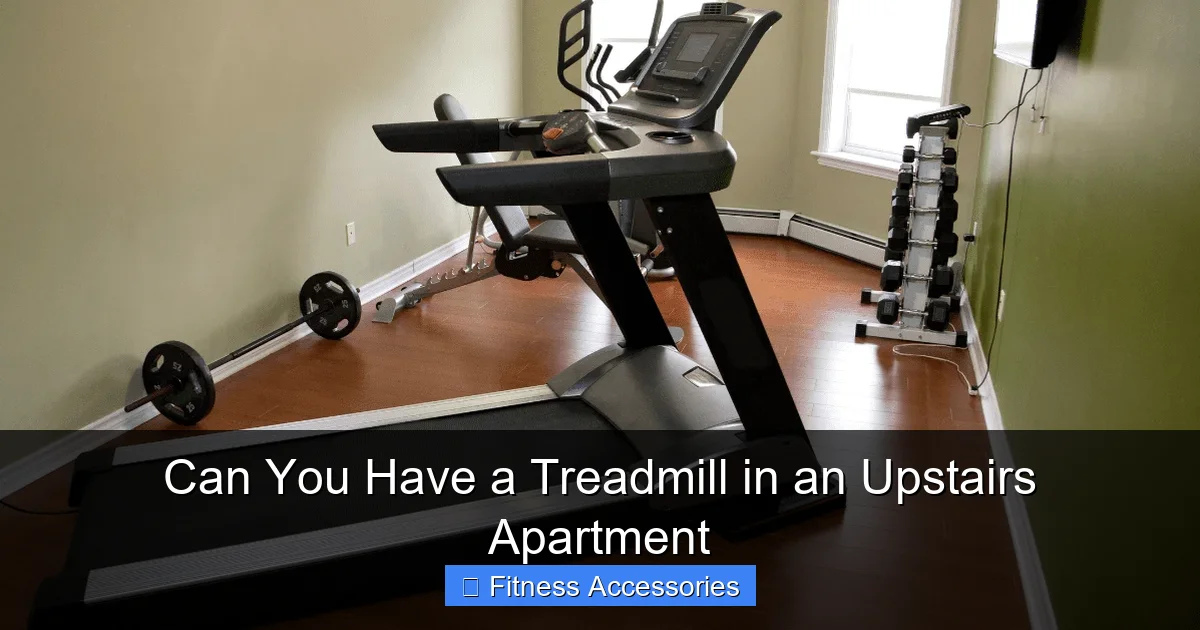
If you’re buying new, your selection criteria change dramatically for an upstairs apartment. Performance specs like horsepower and top speed matter less than weight, footprint, and intrinsic quietness.
Visual guide about Can You Have a Treadmill in an Upstairs Apartment
Image source: treadmill-ratings-reviews.com
Weight and Footprint: Smaller is Safer
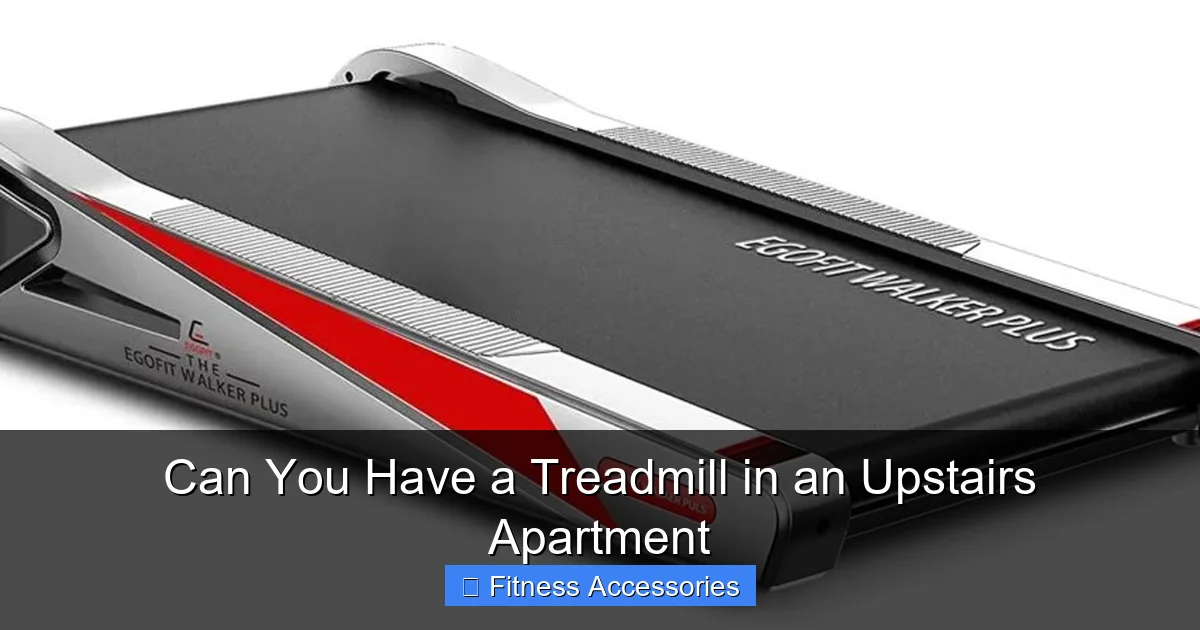
Aim for a shipping weight under 200 lbs. Many “apartment-friendly” or “foldable” models hit this target. Look for a compact fold-and-store design. Even if you don’t fold it daily, the smaller footprint means less weight concentrated on a smaller area, which is slightly better for floor load. Measure your space carefully, leaving adequate clearance behind and on the sides for ventilation and access.
Motor Type: DC is King for Quiet
Treadmills use either AC (alternating current) or DC (direct current) motors. DC motors are significantly quieter. They have a lower hum and are more common in residential, foldable models. An AC motor is more powerful and durable for heavy, continuous use (commercial gyms) but produces a louder, more constant electrical hum. For an apartment, prioritize DC.
Built-In Cushioning: Your Secret Weapon
Most treadmills have some deck cushioning to protect your joints. But for an apartment, this cushioning is your first line of defense against impact vibration. Look for brands that heavily market their cushioning technology (e.g., NordicTrack’s FlexSelect, Sole’s CushionFlex, ProForm’s ProShox). A softer deck absorbs more of the impact energy before it even reaches the frame and floor. This is a huge advantage.
Recommended Features to Seek
- Foldable (Vertical or Horizontal): Essential for space and allows you to move it for cleaning or social events.
- Incline/Decline: If you want variety, a manual or motorized incline is fine. Avoid excessive incline if noise is a primary concern, as it increases impact force.
- Belt Size: A standard 20″ x 55″ belt is fine for walking and light jogging. A longer, wider belt is for serious runners but adds weight and size.
- Read Reviews for “Quiet”: Search specifically for user reviews that mention “quiet,” “apartment,” “neighbors,” or “vibration.” This is the best real-world data you’ll get.
Alternatives: When a Treadmill Just Isn’t Feasible
Be honest with yourself. Sometimes the risk, cost, or hassle isn’t worth it. Excellent alternatives exist that provide cardiovascular benefits with a fraction of the weight and vibration.
Under-Desk Walking Pads
These are the ultimate apartment cardio solution. They are very light (50-100 lbs), have a slim profile, and are designed for low-speed walking (typically up to 4 mph). The impact is minimal, and the vibration is almost non-existent thanks to their simple design and low operating speed. They are perfect for watching TV, working, or reading while you walk. Brands like Goplus, WalkingPad, and Lifespan dominate this market. The trade-off is no running and no incline.
Compact Ellipticals or Steppers
An elliptical machine, especially a front-drive compact model, can be lighter than a treadmill and has a pedal-driven, low-impact motion that generates far less vibration. The motion is smooth and circular, not a pounding impact. Similarly, a mini-stepper or stair climber is very lightweight and compact. They offer a great workout with almost no noise transmission.
The Classic: Jump Rope
Don’t underestimate this. A high-quality, weighted jump rope is virtually free, takes up zero space, and provides an incredible cardio and coordination workout. The only noise is the swish of the rope and your feet tapping—easily muffled with a thick rug. It’s the most landlord- and neighbor-friendly option possible.
Outdoor & Community Solutions
Re-evaluate your local options. A park with a walking path, a community center with a track, or a gym membership (where you can use their commercial-grade, properly installed treadmills) might be a better overall solution. This removes all risk and responsibility from your apartment.
The Social Contract: Neighbor Relations and Etiquette
Even with perfect equipment and permission, you are living in a shared building. Proactive neighbor management is part of the deal.
Pre-Installation Notification
Once you have landlord approval and your mitigation gear is ready, inform the neighbors directly below you (and perhaps the ones on either side). A simple knock on the door with a small gift (baked goods, a gift card) and an explanation goes a long way. Say: “Hi, I’m [Your Name] from upstairs. I wanted to let you know I’ll be setting up a treadmill in my apartment. I’ve invested in special mats to reduce noise and vibration, and I’ll only be using it during the day. Please let me know immediately if you hear or feel anything, and I’ll adjust. Here’s my number.” This transparency builds immense goodwill and gives them a direct channel to you instead of the landlord.
Establish and Respect “Quiet Hours”
Most buildings have official quiet hours (e.g., 10 PM – 8 AM). Adhere to these strictly. Consider setting your own earlier cutoff, like 8 PM. Be mindful of early mornings on weekends. Using a treadmill at 6 AM on a Saturday is a fast track to hostility. Schedule your workouts for midday or early afternoon when people are typically out or less sensitive.
What to Do If You Get a Complaint
If a neighbor complains, even after your precautions:
- Listen and Apologize: Don’t get defensive. Thank them for telling you.
- Diagnose Together: Ask them to describe exactly what they hear/feel and when. Is it the thumping? The motor hum? All the time?
- Adjust Immediately: Try running at a lower speed, with less incline. See if the issue is your running form (heavy heel strike). You may need to add another layer of padding or reposition the treadmill.
- Document Your Efforts: Keep a log of complaints and your responsive actions. Show this to your landlord to prove you are a responsible tenant trying to fix the problem.
- Know When to Stop: If complaints persist despite your best efforts, you may have to accept that your specific unit/building combination is incompatible with a treadmill. Continuing against neighbor objections is a losing battle.
Conclusion: A Calculated Risk, Not an Impossibility
Bringing a treadmill into an upstairs apartment is a project, not a purchase. It’s a project that involves legal due diligence, structural awareness, investment in proper equipment, and interpersonal skills. The path to success is: 1) GET WRITTEN PERMISSION from your landlord. 2) CHOOSE THE RIGHT MACHINE—light, quiet, foldable. 3) BUILD A LAYERED MITIGATION SYSTEM with a quality rubber mat and foam pad. 4) COMMUNICATE OPENLY with downstairs neighbors. 5) MAINTAIN YOUR TREADMILL and respect quiet hours.
For many, the convenience of an indoor workout is worth this effort. For others, the risk and hassle point toward a smarter alternative. By following this guide, you arm yourself with the knowledge to make the right choice for your specific living situation, your fitness goals, and your peace of mind—both yours and your neighbors’. You can indeed have a treadmill in an upstairs apartment, but you must be smarter than the average buyer. You must be an apartment treadmill strategist.
Frequently Asked Questions
What is the maximum weight for a treadmill in an upstairs apartment?
There is no universal maximum. You must find your specific apartment’s floor load capacity (typically 40-50 psf) and calculate the total concentrated load (treadmill weight + your weight). A safe target is to keep the total point load under 300-350 lbs, which often means choosing a treadmill under 200 lbs. Always get landlord confirmation.
Will a treadmill really bother downstairs neighbors?
Yes, absolutely. The rhythmic impact vibration is the primary issue and travels efficiently through wood-frame construction. Even a “quiet” treadmill will be felt below if not properly isolated. The goal is to reduce it to an inaudible, imperceptible level through mats and placement. Without mitigation, complaints are highly likely.
Do I need to tell my landlord if I get a treadmill?
Yes, you must. It is almost always a lease violation to install heavy equipment without permission. Your lease likely covers “floor load” and “nuisance.” Getting written permission protects you from eviction or fines and clarifies liability for any damage.
What is the best type of treadmill for an upstairs apartment?
Look for a foldable, DC motor treadmill under 200 lbs with a compact footprint and strong built-in cushioning. Brands like NordicTrack, ProForm, and Sole have specific “apartment-friendly” lines. Prioritize quiet operation and user reviews that mention apartment living.
Are treadmill vibration pads enough to stop noise?
No. A single thin “vibration pad” or equipment mat is insufficient. You need a multi-layer system: a primary dense rubber mat (3/4″ thick) for mass and shock absorption, topped with a secondary foam interlocking pad for decoupling. This two-layer approach is necessary to effectively break the vibration chain.
What are the best alternatives to a treadmill in an apartment?
The best alternatives are under-desk walking pads (for low-speed walking), compact ellipticals (low-impact, lighter), jump ropes (free, no space), or utilizing outdoor spaces/community gyms. These eliminate or drastically reduce weight, vibration, and noise concerns.

Similar Posts