Can You Get Abs from Walking on the Treadmill
Senior Fitness & Outdoor Gear Writer at Gym Hike · NASM Certified Personal Trainer (CPT), Wilderness First Responder · 10+ years testing home gym equipment, strength training, and outdoor trail hiking

No, you cannot get a visible six-pack (abs) from treadmill walking alone. While walking is a fantastic, low-impact exercise that burns calories and can strengthen your core muscles *during* the activity, revealing your abs requires a much more comprehensive approach. The primary factor is achieving a low enough body fat percentage through a consistent calorie deficit, which walking can support. However, you must also strategically build your abdominal and oblique muscles through targeted resistance training and fuel your body with proper nutrition. Treadmill walking is a powerful tool in your fitness toolbox for fat loss and health, but it’s not a magic bullet for sculpting a six-pack.
So, you’ve hopped on the treadmill, maybe with a new goal in mind. You’ve heard the rumors, the hopeful promises. Can you really get abs from walking on the treadmill? It sounds so simple, so accessible. Just walk, and those chiseled six-packs will emerge. Before we lace up our sneakers and dive into the science, let’s have a real talk. The short, honest answer is: no, you cannot get a visible, defined six-pack from treadmill walking alone. But before you walk away disappointed, let me explain why walking is an absolutely critical piece of the puzzle—just not the only piece. Think of it like this: walking is the reliable, hard-working foundation of your fitness house, but you need to build the walls and roof with other materials to see the complete structure.
The dream of “spot-reducing” fat from your belly by doing a specific exercise is one of the most persistent myths in fitness. Your body doesn’t work that way. When you walk on a treadmill, you burn calories, which contributes to an overall loss of body fat. That fat loss will eventually come from your stomach area, but only after your body has decided to tap into those stores, which is governed by genetics and your overall leanness. So, while walking is a phenomenal tool for creating the calorie deficit needed to *reveal* abs, it does almost nothing to *build* the abdominal muscles that form the six-pack you want to see. To understand the full picture, we need to break down the two separate, equally important jobs: fat loss and muscle development.
Key Takeaways
- Walking Burns Fat, Not Specifically Abs: Treadmill walking creates a calorie deficit, which is essential for losing body fat everywhere, including over your abs. You cannot “spot-reduce” fat from your stomach.
- Core Engagement is Minimal and Temporary: Your abs work to stabilize your torso while walking, but this is an endurance-based, low-intensity activation that doesn’t significantly build muscle mass or definition.
- Intensity is Key for Fat Loss: A leisurely stroll has minimal impact. To maximize fat-burning potential, you must incorporate brisk walking, inclines, or interval training to elevate your heart rate.
- Diet is 80% of the Battle: You can walk for hours, but without a controlled, protein-rich diet in a calorie deficit, the layer of fat covering your abdominal muscles will remain.
- You Must Build the Muscles: To have “abs” to reveal, you need to hypertrophy (grow) your rectus abdominis, obliques, and transverse abdominis through weighted exercises like planks, leg raises, and cable crunches.
- Walking is a Perfect Supplement, Not the Main Act: Use treadmill walking for active recovery, daily movement, and supplemental calorie burning. Your primary focus should be on strength training and nutrition.
- Genetics Play a Role: Where you store fat first and last, and the natural shape and separation of your abdominal muscles, are determined by genetics. Walking won’t change this blueprint.
📑 Table of Contents
- The Fat Loss Equation: How Treadmill Walking Really Works
- The Muscle Development Gap: Why Walking Doesn’t Build a Six-Pack
- The Non-Negotiable Pillars: Diet and Direct Ab Training
- Crafting the Perfect “Get Abs” Routine: Where Walking Fits In
- Maximizing Your Treadmill Walks for Fat Loss
- Common Mistakes & Final Truths
- The Bottom Line: Your Actionable Path to Abs
The Fat Loss Equation: How Treadmill Walking Really Works
This is where your treadmill becomes a star player. The fundamental law of revealing abs is this: your body fat percentage must be low enough for the muscles underneath to be visible. For most men, that means getting below 15%, and for most women, below 22%. Walking is a brilliant, sustainable way to help you get there. It’s low-impact, joint-friendly, and you can do it almost anywhere. But not all walking is created equal when it comes to maximizing its fat-burning potential.
The Calorie Burn: It’s All About the Math
At its core, fat loss is a simple math problem: calories in vs. calories out. Treadmill walking increases your “calories out.” A 155-pound person burns roughly 150 calories walking at a moderate 3.5 mph for 30 minutes. That’s a solid contribution! However, a single 30-minute walk isn’t a massive deficit. The magic happens in consistency and cumulative effect. Walking for 45-60 minutes most days of the week can create a significant weekly calorie deficit, especially when paired with a mindful diet. The key is to view walking not as a dramatic, single-event fat melter, but as a daily habit that steadily chips away at your fat stores.
Boosting the Burn: Incline and Speed
To get more “bang for your buck” on the treadmill and amplify the fat-loss signal, you need to increase the intensity. This is where the incline becomes your best friend. Walking on an incline (even 1-3%) dramatically increases the work your glutes, hamstrings, and calves do, which spikes your heart rate and calorie expenditure. A 5% incline can increase your burn by 30-50% compared to walking on a flat surface at the same speed. Similarly, increasing your speed to a brisk, power-walking pace (where you can talk in short phrases but not sing) pushes you into a better cardiovascular zone for fat oxidation. The goal is to make your walk a *challenge*, not just a commute.
NEAT: The Secret Weapon of Walking
This is a huge, often overlooked benefit. NEAT stands for Non-Exercise Activity Thermogenesis—the calories you burn through all the movement you do that isn’t formal exercise. Taking the stairs, gardening, pacing while on the phone, and consistent daily walking all contribute to NEAT. By making treadmill walking a regular habit, you’re not just burning calories during that 30-minute session; you’re also likely to be more active throughout the day, further boosting your total daily energy expenditure. This makes walking a phenomenal tool for long-term weight management and fat loss sustainability.
The Muscle Development Gap: Why Walking Doesn’t Build a Six-Pack
Here’s the crucial part people miss. A “six-pack” is simply your rectus abdominis muscle (the long, flat muscle running down your front) showing through a thin layer of skin and fat. It has visible separations (tendinous intersections) that create the “pack” look. To make those separations pop, you need to build the muscle itself, making it thicker and more pronounced. Walking, even with great form, does not provide the mechanical tension, metabolic stress, or muscle damage required for hypertrophy (muscle growth).

Visual guide about Can You Get Abs from Walking on the Treadmill
Image source: image-tc.galaxy.tf
The Type of Muscle Contraction Matters
During walking, your core muscles (transverse abdominis, obliques, rectus abdominis) perform primarily isometric and low-force isotonic contractions. They act as stabilizers, bracing your torso with each step to prevent excessive rotation and maintain posture. This is fantastic for core endurance and spinal stability—it’s functional strength. But it’s like comparing holding a light plank for a minute (endurance) to performing a weighted decline sit-up with a plate (hypertrophy). One builds stamina; the other, with progressive overload, builds size and definition. To grow your abs, you need to load them with resistance, just like you would your biceps or chest.
What Walking *Does* for Your Core
Let’s not sell walking short! It offers genuine core benefits that support your overall ab-revealing journey:
- Postural Improvement: Stronger stabilizers help you stand taller, reducing the “slouched” look that can make a stomach appear more prominent.
- Functional Strength: A stable core protects your lower back, improves balance, and makes all your other exercises (like squats and deadlifts) safer and more effective.
- Calorie Burn for Fat Loss: As covered, this is the primary role. A leaner you means less fat covering the muscle.
But again, this is about support and foundation, not about creating the main event.
The Non-Negotiable Pillars: Diet and Direct Ab Training
If the treadmill is the engine for fat loss, then diet is the fuel, and direct ab training is the construction crew building the muscle. Without these two, the treadmill’s efforts are largely wasted in the pursuit of a six-pack.
Diet: The Ultimate Determinant
You can out-train a bad diet for a while, but you cannot out-train it forever, especially regarding abs. No amount of walking will reveal your abs if you are in a calorie surplus, eating highly processed foods, and not getting enough protein. Your diet must:
- Create a Modest Calorie Deficit: Typically 300-500 calories below your maintenance level. This ensures fat loss without sacrificing muscle or energy for workouts.
- Be High in Protein: Aim for 0.7-1 gram of protein per pound of body weight. Protein is essential for muscle repair and growth (including your abs) and is highly satiating, helping you stick to your deficit.
- Focus on Whole Foods: Vegetables, lean meats, complex carbs, healthy fats. These foods are nutrient-dense and keep you full. Minimize liquid calories and ultra-processed snacks.
Walking can help *allow* for a slightly larger diet by burning extra calories, but it doesn’t give you a free pass to eat poorly.
Direct Ab Training: Building the Six-Pack
To build your abdominal muscles, you must train them directly with progressive overload. This means over time, you need to make the exercises harder. Here is where you invest your gym time (or home workout time):
- For the Rectus Abdominis (Six-Pack): Weighted exercises are key. Think cable crunches, weighted leg raises, decline sit-ups with a plate or medicine ball, and stability ball roll-outs.
- For the Obliques (Side Definition): Focus on anti-rotation and lateral flexion. Cable woodchops, side planks with hip dips, Russian twists with weight, and hanging knee raises with twist.
- For the Transverse Abdominis (Deep Core & “Corset”): This is your natural waist-shaper. Pallof presses, stir-the-pot planks, and vacuum exercises target this deep stabilizer.
Aim for 2-3 dedicated ab sessions per week, integrated into your strength training days. Train them like any other muscle group: 3-4 sets of 10-20 challenging reps.
Crafting the Perfect “Get Abs” Routine: Where Walking Fits In
Now, let’s build the weekly plan. Your treadmill walking is not the star of the show, but it’s a vital supporting actor that makes the whole production possible. Here’s how to structure a week for maximum ab-revealing efficiency.
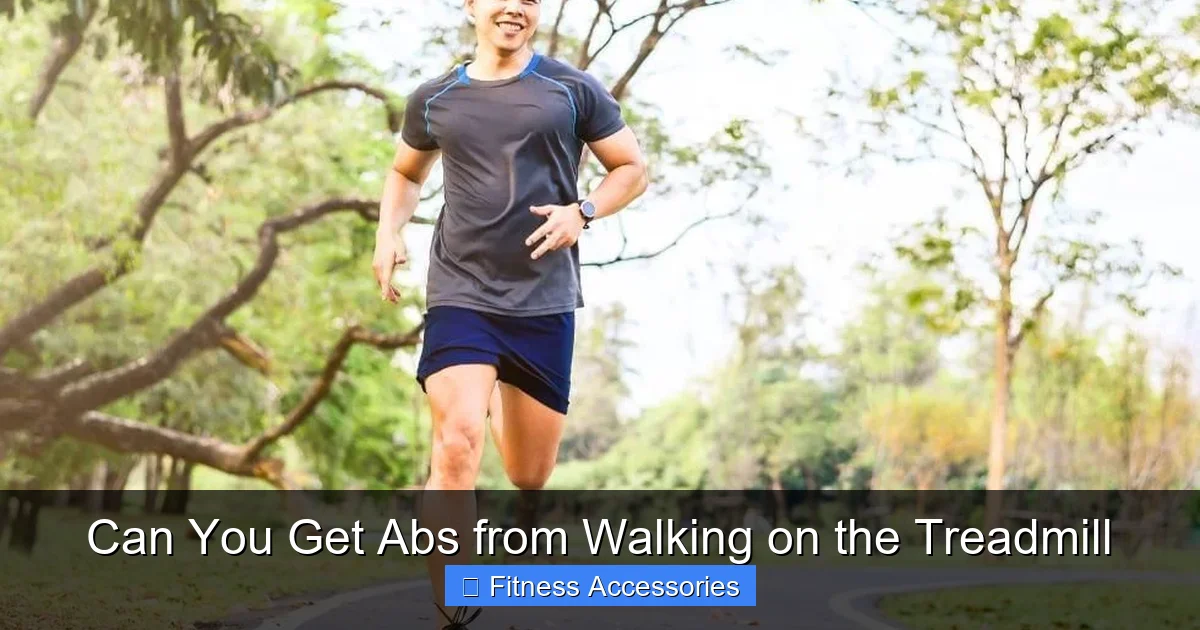
Visual guide about Can You Get Abs from Walking on the Treadmill
Image source: image-tc.galaxy.tf
Sample Weekly Schedule
- Day 1 (Strength Focus): Full-body or upper-body strength training (squats, rows, presses) + 15-min core circuit (cable crunches, leg raises, planks) + 20-min brisk treadmill walk (incline 2-3%) for active recovery and extra burn.
- Day 2 (Treadmill Focus): 30-45 min HIIT treadmill session (e.g., 2 min brisk walk, 1 min run or high-incline walk, repeat). This is your primary cardio/fat-burning day. Follow with light stretching.
- Day 3 (Strength Focus): Full-body or lower-body strength training (deadlifts, lunges) + dedicated 20-min core session (focus on obliques & transverse abdominis) + 20-min easy treadmill walk (flat, conversational pace) for NEAT and recovery.
- Day 4 (Active Recovery): 45-60 min low-intensity steady-state (LISS) walk on the treadmill or outside. Flat or slight incline. This is about movement, calorie burn, and mental clarity. No intensity needed.
- Day 5 (Strength Focus): Repeat a variation of Day 1 strength workout, perhaps swapping some exercises. + 15-min core circuit. + optional 15-min walk if energy allows.
- Day 6 (Treadmill Focus): Repeat or vary Day 2’s HIIT session. You can change the intervals (e.g., 30 sec sprint/90 sec walk).
- Day 7 (Rest): True rest or very light activity like a short, leisurely walk. Recovery is when muscles grow.
This schedule prioritizes strength training and direct ab work as the non-negotiables. Treadmill walking is strategically placed to burn calories, enhance recovery, and boost weekly NEAT without interfering with your heavy lifting days.
Maximizing Your Treadmill Walks for Fat Loss
If you’re going to spend time on the treadmill, do it right. Here’s how to transform a simple walk into a potent fat-loss tool that complements your ab-building goals.
Embrace Inclines Relentlessly
I cannot stress this enough. The incline is the single best way to make walking more effective. It recruits more muscle mass (glutes, hamstrings, calves), which increases your metabolic demand. Start with a 1-2% incline and work your way up. A 4-6% incline at a brisk pace is a brutal, fantastic workout. You’ll feel it in your legs and your lungs. This is far superior to walking fast on a flat surface for fat loss.
Try These Treadmill Walking Workouts
- The Pyramid: Start at 3% incline, 3.5 mph. Every 3 minutes, increase incline by 1% (up to 6-8%), then decrease back down. Keeps your body guessing.
- The 30-60: 30 seconds of power walking at a very high incline (as high as you can maintain), 60 seconds of recovery at 0% incline. Repeat 10-15 times. A brutal HIIT variant.
- The Walk-Run Combo: 3 minutes brisk walk (3.5-4 mph), 1 minute run (5.5-6.5 mph). Repeat for 20-30 minutes. Excellent for heart health and calorie burn.
Mind Your Form
Don’t clutch the handles! Use them only for safety. Engage your core consciously as you walk—imagine you’re about to be lightly punched in the stomach. Pull your belly button slightly towards your spine. Maintain good posture: shoulders back and down, gaze forward. This maximizes core stabilization and prevents the hunched-over, handle-gripping posture that makes walking less effective and can strain your neck and shoulders.
Common Mistakes & Final Truths
Let’s clear up the final misconceptions that trip people up on their ab journey.
Mistake 1: Thinking Walking is Enough
We’ve established this. Walking is a component. Relying solely on it, without diet and direct ab training, will likely lead to a leaner but still soft midsection, not a defined six-pack.
Mistake 2: Ignoring Diet Entirely
You can walk 10 miles a day and still not see your abs if your diet is poor. You cannot out-exercise a bad diet. Track your food (even loosely), prioritize protein, and control portions.
Mistake 3: Only Doing Steady-State, Flat Walking
As discussed, this is the least effective form of treadmill walking for fat loss. You need variety and intensity.
Mistake 4: Neglecting Other Strength Training
Building muscle everywhere (legs, back, chest) increases your overall metabolic rate. More muscle = more calories burned at rest. This creates a better environment for fat loss and a more balanced, aesthetic physique. A huge upper body with tiny legs and a six-pack looks odd. Full-body strength is key.
The Bottom Line: Your Actionable Path to Abs
So, can you get abs from walking on the treadmill? The final, empowering answer is: You can use the treadmill as a powerful tool in the multi-faceted process of getting abs. Here is your direct action plan:
- Fix Your Diet First: This is priority #1. Get into a sustainable calorie deficit with high protein.
- Start Direct Ab Training: Add 2-3 sessions per week of weighted ab exercises. Focus on progressive overload.
- Build Full-Body Strength: Lift weights 3-4 times per week. This builds the overall muscle mass that turns you into a fat-burning machine.
- Use the Treadmill Strategically: Incorporate 3-4 treadmill sessions per week. Make at least 2 of them challenging (incline or intervals). Use the others for active recovery and NEAT.
- Be Patient and Consistent: Revealing abs takes months, sometimes years, of consistent effort across all these domains. There are no shortcuts.
The treadmill is your loyal, tireless companion for the long walk (pun intended) toward a leaner, stronger you. It will help you burn the fat that’s hiding your abs. But you must build those abs yourself, with iron and intention, and feed your body correctly to make them shine through. Now, go build your fitness house—strong foundation, solid walls, and a roof that reveals the beautiful structure underneath.
Frequently Asked Questions
Can walking on an incline on the treadmill help get abs faster?
Yes, walking on an incline significantly increases calorie burn and engages more lower-body muscle, which boosts your metabolism. This creates a larger calorie deficit, aiding in the overall fat loss needed to reveal abs. However, it still does not directly build the abdominal muscles.
Is treadmill walking better than running for getting abs?
>For fat loss, running burns more calories per minute, but walking is more sustainable and joint-friendly for many people. The “better” option is the one you will do consistently. For ab development, neither running nor walking builds the muscles; you need direct resistance training.
Should I do core exercises on the treadmill, like twisting?
No. Twisting or holding weights while walking on a treadmill is dangerous and can cause loss of balance and injury. Your core engagement during walking should be isometric (static bracing). Save dynamic, weighted core exercises for the gym floor or a stable mat.
How often should I walk on the treadmill to see my abs?
Frequency is less important than the total weekly calorie deficit and your diet. Aim for 3-5 treadmill sessions per week, combining both brisk walks and incline/interval sessions, but understand this must be paired with strength training and a proper diet to see abdominal definition.
Can I get a six-pack without doing any direct ab exercises?
For some people with naturally low body fat and genetically prominent ab muscles, it’s possible. However, for most, direct ab training is necessary to develop the muscle size, thickness, and separation that creates a defined six-pack. Walking will not provide this stimulus.
If my abs are sore from walking, does that mean it’s working?
It’s unlikely. Ab soreness (DOMS) from walking would be very mild and unusual. If you have significant soreness, it’s more likely from poor posture, an unusual gait, or possibly an unrelated issue. True muscle-building soreness comes from resistance training, not low-impact cardio.
Similar Posts