Is a Rowing Machine Cardio or Strength Training

A rowing machine delivers both cardio and strength training benefits in one smooth motion. It elevates your heart rate for cardiovascular fitness while building muscle in your legs, back, and arms. Understanding how each benefit works helps you design better workouts.
A rowing machine cardio or strength training question comes up a lot in fitness circles. People want to know if their time on the rower actually counts as a workout that builds muscle, or if it is just a heart-pumping cardio session. The short answer? It is both. A rowing machine does something very few pieces of equipment can do. It blends cardiovascular conditioning with muscular resistance into one fluid movement.
Whether you are a beginner looking to get in shape or a seasoned athlete trying to optimize your routine, understanding how a rowing machine works for your body matters. This guide breaks down exactly how rowing fits into both the cardio and strength training worlds. You will learn what muscles it targets, how it boosts your heart health, and how to adjust your sessions for the results you want.
Many people assume cardio machines are only for burning calories. And strength machines are only for building muscle. A rowing machine blurs that line completely. Let us dive into the details so you can stop guessing and start training smarter.
Key Takeaways
- Rowing is both cardio and strength: It works your heart and lungs while engaging major muscle groups.
- Cardio benefits include improved endurance, heart health, and calorie burn.
- Strength benefits target your legs, core, back, and arms through resistance.
- Proper form is essential to avoid injury and get the most from each stroke.
- You can adjust intensity to focus more on cardio or strength depending on your goals.
- A rowing machine is a full body workout tool that saves time and space at home.
📑 Table of Contents
- What Is a Rowing Machine Doing to Your Body?
- Is Rowing Cardio? Yes, Here Is How
- Is Rowing Strength Training? Absolutely
- How Rowing Blends Cardio and Strength Together
- How to Maximize Both Cardio and Strength Benefits
- Common Mistakes to Avoid
- Who Should Use a Rowing Machine for Cardio and Strength?
- Final Thoughts
What Is a Rowing Machine Doing to Your Body?
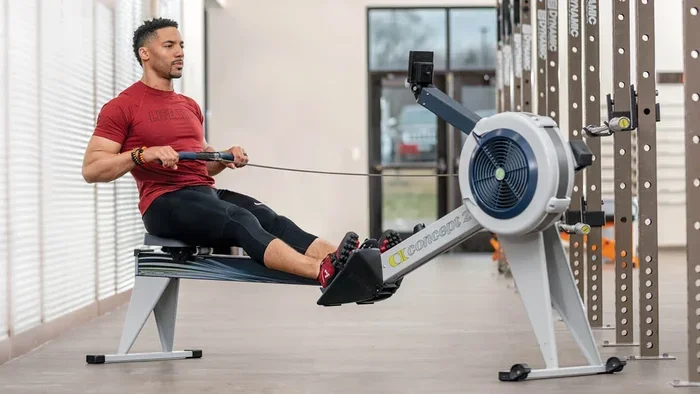
Before we split things into cardio and strength, it helps to understand what actually happens when you row. Every stroke on a rowing machine is a coordinated full body movement. You push with your legs, pull with your arms and back, and brace with your core. All of this happens in one smooth, continuous motion.
This is why so many people call it a full body workout. The rowing stroke involves four distinct phases. The catch, the drive, the finish, and the recovery. Each phase activates different muscle groups in a specific order. This sequencing is what makes rowing so efficient and so effective.
When you row consistently, your body adapts in two major ways. Your heart and lungs get stronger to supply oxygen to working muscles. And your muscles get stronger to handle the repeated resistance of each pull and push. That is the foundation of both cardio and strength training happening at the same time.
The Four Phases of a Rowing Stroke
Understanding the stroke cycle helps you see why rowing works so many muscles. Here is a quick breakdown of each phase:
- The Catch: You lean forward, knees are bent, and arms are extended. Your core is engaged and ready.
- The Drive: You push explosively with your legs, then pull the handle toward your lower chest. This is where most of the power comes from.
- The Finish: Your legs are straight, arms are pulled in, and your torso leans slightly back. Your muscles are fully contracted.
- The Recovery: You reverse the motion smoothly. Arms extend, torso hinges forward, and knees bend as you slide back to the catch.
Every single phase builds both endurance and muscular control. That is what makes rowing unique compared to other machines.
Is Rowing Cardio? Yes, Here Is How
The short answer to whether rowing counts as cardio is a strong yes. Cardiovascular exercise is any activity that raises your heart rate and keeps it elevated for a sustained period. Rowing does exactly that. When you row at a steady pace, your heart pumps faster, your lungs work harder, and your body learns to use oxygen more efficiently.
Rowing is a form of aerobic exercise that improves your heart health over time. Studies show that consistent aerobic activity lowers blood pressure, improves cholesterol levels, and reduces the risk of heart disease. Rowing hits all of those benefits because it engages your large muscle groups in rhythmic, continuous motion.
One of the biggest advantages of rowing for cardio is that it is low impact. Unlike running on a treadmill, rowing puts very little stress on your joints. Your feet stay planted on the footplates, and the sliding seat absorbs much of the impact. This makes rowing a great option for people with knee or hip issues who still want an effective cardio session.
How Rowing Compares to Other Cardio Machines
Not all cardio machines are created equal. Here is how rowing stacks up against some popular alternatives:
- Treadmill: Running burns calories fast but is hard on joints. Rowing gives you similar calorie burn without the impact.
- Elliptical: Ellipticals are also low impact, but they mostly work your lower body. Rowing works your entire body.
- Exercise Bike: Bikes are great for cardio but focus heavily on legs. Rowing adds upper body and core work.
If you want a cardio workout that does not punish your joints and still works your whole body, rowing is hard to beat.
Is Rowing Strength Training? Absolutely
Now let us talk about the strength side of things. Many people do not realize that a rowing machine provides real resistance training. The resistance you feel when you pull the handle comes from the flywheel and the damper setting on the machine. The harder you pull, the more resistance your muscles must overcome.
Rowing targets some of the largest muscle groups in your body. Your legs do the heavy lifting during the drive phase. Your back and shoulders pull the handle toward you. Your core stabilizes your entire body throughout the stroke. And your arms finish the pull by bringing the handle to your chest.
When you row consistently, you build muscular endurance and even raw strength. The repeated resistance against the flywheel creates the same kind of stimulus that weight training provides, but in a more dynamic and movement-based way.
For people who want to build functional strength, rowing is excellent. Functional strength means the kind of strength that helps you in everyday life. Lifting groceries, climbing stairs, carrying children, and playing sports all rely on the same muscle chains that rowing trains. It is strength that actually transfers to real-world movement.
Which Muscles Does a Rowing Machine Work?
Here is a closer look at the primary muscle groups activated during each phase of the rowing stroke:
- Legs (Quads, Hamstrings, Glutes): These do about 60% of the work during the drive phase. They are the engine of every stroke.
- Back (Lats, Rhomboids, Traps): These muscles pull the handle toward your body and keep your posture strong.
- Arms (Biceps, Forearms): Your arms complete the pull and control the handle as it returns.
- Core (Abs, Obliques, Lower Back): Your core stabilizes your body and transfers power between your upper and lower body.
- Chest and Shoulders: These assist during the drive and help maintain proper posture throughout the stroke.
That is a remarkable amount of muscle activation for a single exercise. Very few machines can claim to work this many muscles at once.
How Rowing Blends Cardio and Strength Together
The real magic of a rowing machine happens when you understand how cardio and strength work together during a session. Unlike a treadmill where you are mostly doing steady-state cardio, or a weight rack where you are doing pure strength work, rowing blends both elements seamlessly.
When you row at a moderate pace for a long time, your body relies mostly on aerobic energy. Your heart and lungs are working hard, and your muscles are enduring repeated contractions. This is classic cardio training that also builds muscular endurance.
When you row at a high intensity with short bursts of effort, you tap into both anaerobic and aerobic systems. This is where the strength training benefits really kick in. The resistance forces your muscles to generate powerful contractions, building strength while your heart rate climbs into cardio territory.
This dual benefit is why so many people use rowing as their primary indoor workout. You get more done in less time. A 20-minute rowing session can give you both a cardio challenge and a strength workout that would otherwise take much longer to achieve on separate machines.
Types of Rowing Workouts for Both Goals
Here are some practical ways to structure your rowing sessions to hit both cardio and strength:
- Steady-State Rows: Row at a moderate pace for 20-40 minutes. Keep your heart rate in zone 2 or 3. This builds aerobic endurance and muscular stamina.
- Interval Training: Alternate between 30 seconds of hard rowing and 60 seconds of easy rowing. Repeat for 15-20 minutes. This boosts both cardiovascular fitness and muscular power.
- Distance Goals: Try to row a set distance as fast as possible. This combines speed (cardio) with explosive effort (strength).
- Power Strokes: Row at a normal pace but add 10-15 all-out power strokes every few minutes. This forces your muscles to recruit more fibers for a strength stimulus.
Mixing these styles keeps your workouts fresh and ensures you are developing both systems. You do not have to choose between cardio and strength on a rowing machine. You get both every time you sit down.
How to Maximize Both Cardio and Strength Benefits
Getting the most out of your rowing sessions comes down to a few key factors. Proper technique, the right resistance settings, and smart programming all play a role.
Focus on Proper Form
Good rowing technique is the foundation of everything. Without proper form, you miss out on muscle activation and increase your risk of injury. The most common mistake is using your arms too much and your legs too little. Remember, your legs should drive about 60% of the power. Your back and arms finish the work.
Keep your back straight throughout the stroke. Do not round your shoulders. Engage your core on every single stroke. And move smoothly between phases. Jerky, rushed movements waste energy and reduce the quality of your workout.
Adjust the Damper Setting
The damper on a rowing machine controls how much air flows into the flywheel. More air means more resistance. A higher damper setting makes each stroke harder, which increases the strength training component. A lower damper setting makes strokes easier and faster, which emphasizes the cardiovascular benefit.
For most people, a damper setting between 3 and 5 works well for a balanced workout. If you want to focus more on cardio, go lighter. If you want to build more strength, increase the resistance slightly. You can also change the setting mid-workout to target different goals.
Track Your Heart Rate
Monitoring your heart rate helps you understand whether you are in a cardio or strength-building zone. A heart rate between 60-70% of your maximum is great for steady-state cardio. A heart rate above 75% signals that you are pushing into high-intensity territory where strength and power benefits increase.
Many modern rowing machines have built-in heart rate monitors. If yours does not, a simple chest strap or wrist-based monitor works perfectly. Use the data to guide your intensity and make sure you are hitting the zones that match your goals.
Common Mistakes to Avoid
Even though rowing is a fantastic exercise, people make mistakes that hold them back. Here are some of the most common ones:
- Rounding your back: This puts unnecessary stress on your spine and reduces the power of your stroke. Keep your chest lifted and your core braced at all times.
- Pulling with your arms only: Your arms should finish the stroke, not start it. Let your legs do the heavy work first.
- Sliding too fast on the recovery: Rushing the recovery wastes energy and breaks your rhythm. Move smoothly and control the slide.
- Setting the damper too high: A very high damper does not mean a better workout. It just makes the machine harder to move, which can strain your lower back.
- Skipping warm-ups: Jumping straight into intense rowing without warming up can lead to muscle strains. A few easy strokes to start are always a good idea.
Avoiding these mistakes will keep you safe and help you get better results from every session.
Who Should Use a Rowing Machine for Cardio and Strength?
One of the best things about a rowing machine is its versatility. Almost anyone can use one. Here are some groups who benefit the most:
- Beginners: Rowing is easy to learn and forgiving on your joints. It gives you a full body workout without complicated equipment.
- Seniors: The low-impact nature of rowing makes it safe for older adults who want to stay active and build strength.
- Weight loss seekers: Rowing burns a high number of calories while preserving muscle mass, making it ideal for fat loss.
- Athletes: Rowing builds endurance and functional strength that translates directly to sports performance.
- Busy professionals: A rowing machine gives you a complete workout in less time than doing cardio and strength separately.
No matter who you are, a rowing machine can fit into your fitness routine. You just need to adjust the intensity and duration to match your current fitness level.
Final Thoughts
The question of whether a rowing machine is cardio or strength training has a clear answer. It is both, and it is both at the same time. Every stroke on the machine challenges your heart and lungs while building muscle in your legs, back, core, and arms. Very few pieces of home fitness equipment can make that claim.
If you have been on the fence about buying a rowing machine or adding one to your routine, now is the time. The benefits are real, the learning curve is short, and the results are impressive. Whether you want to improve your heart health, build functional strength, or simply get a great workout in less time, a rowing machine delivers on every front.
So grab those handles, set your damper, and start rowing. Your body will thank you for working both your cardiovascular system and your muscles in every single session.
For more on how rowing compares to other equipment, check out our guide on Is A Rowing Machine A Good Full Body Workout and learn why so many fitness experts recommend it. Also, explore how rowing fits into a warm-up routine in our article on Is Rowing A Good Warm Up For Strength Training to understand how rowing prepares your muscles for heavier training. And if you are curious how rowing compares to other machines, our piece on Is A Rowing Machine A Good Total Body Workout breaks down exactly what makes it stand out.
Frequently Asked Questions
Is a rowing machine mainly cardio or strength?
A rowing machine is both cardio and strength training at the same time. Each stroke works your heart and lungs while also building muscle in your legs, back, and arms. The balance between cardio and strength depends on how hard and how fast you row.
Can you build muscle with a rowing machine?
Yes, you can build muscle with a rowing machine. The resistance from the flywheel challenges your muscles, especially your legs, back, and core. While it will not replace heavy weight lifting, it is excellent for building muscular endurance and functional strength.
How long should you row for a good cardio workout?
A good cardio rowing session lasts between 20 and 40 minutes at a moderate pace. If you are doing interval training, you can get great cardio benefits in as little as 15 minutes. The key is to keep your heart rate elevated throughout the session.
Is rowing better than running for cardio?
Rowing and running both provide excellent cardio benefits, but rowing is lower impact on your joints. Rowing also works your upper body, which running does not. Many people find rowing more comfortable and more balanced as a cardio workout.
How often should you row for strength gains?
For strength gains, aim to row 3 to 4 times per week with higher resistance and shorter, more intense sessions. Focus on power strokes and slower, harder pulls. Combine rowing with other strength training for the best results.
Is a rowing machine a good workout for beginners?
Absolutely. A rowing machine is beginner-friendly because the movement is natural and low impact. Start with short sessions at a comfortable pace and focus on learning proper form. You will build both cardio fitness and strength quickly as you get more comfortable.
=== CONCLUSION ===
A rowing machine cardio or strength training question finally has a clear answer. Rowing is one of the rare exercises that genuinely delivers both benefits in every single session. Your heart gets stronger, your lungs become more efficient, and your muscles grow more resilient with each stroke. The beauty of rowing is that you do not have to choose. You get the best of both worlds without ever leaving the machine.
Whether you are chasing better heart health, looking to build functional strength, or simply want a time-efficient full body workout, a rowing machine checks every box. Start with proper form, adjust the resistance to match your goals, and stay consistent. The results will follow.