Should I Buy a Rowing Machine or Treadmill

Deciding between a rowing machine and a treadmill comes down to your fitness goals, available space, and budget. A rowing machine delivers a full-body, low-impact workout, while a treadmill excels at cardio and running training. This guide breaks down every factor so you can make a confident choice for your home gym.
Choosing between a rowing machine or treadmill is one of the biggest decisions for home gym buyers. Both machines deliver excellent workouts, but they serve very different purposes. You might be leaning toward a treadmill because you love running, or maybe a rowing machine caught your eye for its full-body benefits.
Whatever your reason, this guide will walk you through everything you need to know. We will compare calories burned, muscle engagement, space requirements, and budget. By the end, you will know exactly which machine fits your lifestyle and fitness goals.
The truth is, there is no single “best” machine. The right choice depends on your body, your goals, and your living situation. Let us dive in and break it all down so you can buy with confidence.
Key Takeaways
- Full-body vs. lower-body focus: A rowing machine engages 86% of your muscles, while a treadmill primarily targets your legs and cardiovascular system.
- Low-impact advantage: Rowing is gentler on joints, making it ideal for people with knee or back concerns.
- Calorie burn comparison: Both machines burn significant calories, but rowing often wins for overall energy expenditure in shorter sessions.
- Space and budget matter: Treadmills tend to be larger and pricier, though folding models help save space.
- Match your fitness goals: Choose a treadmill for running training and a rowing machine for balanced strength and cardio.
- Both support weight loss: Consistency matters more than the machine you pick, so choose the one you enjoy most.
📑 Table of Contents
Rowing Machine vs Treadmill: The Big Picture
A rowing machine and a treadmill offer very different exercise experiences. Understanding these differences helps you pick the right tool for your fitness journey. Each machine targets your body in unique ways.
A treadmill simulates walking or running indoors. It focuses on your lower body and cardiovascular system. You control the speed and incline to adjust intensity.
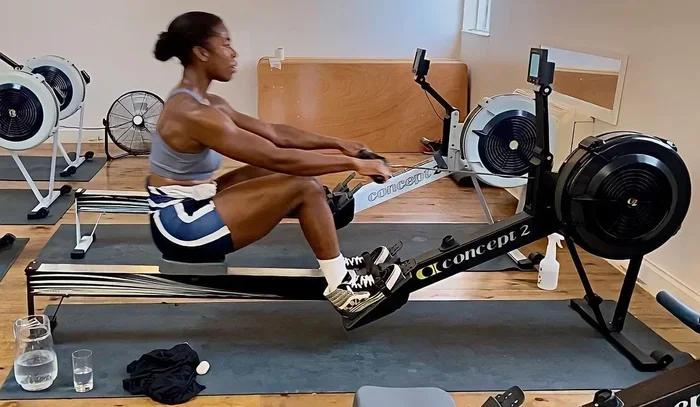
A rowing machine mimics the motion of rowing a boat. It engages your legs, back, arms, and core all at once. This makes it a powerful full-body workout machine that builds strength and endurance simultaneously.
Both machines are excellent for indoor exercise and cardio workouts. But the way they work your body is fundamentally different. Let us look at the key differences in detail.
Muscle Engagement
A treadmill mostly works your quads, hamstrings, calves, and glutes. Your core stabilizes your body, but the upper body stays mostly inactive. This makes treadmills great for leg strengthening and running endurance.
A rowing machine, on the other hand, works up to 86% of your muscles. Every stroke engages your legs, core, back, shoulders, and arms. This balanced engagement makes rowing a powerful tool for total body conditioning.
Impact on Joints
Running on a treadmill puts repetitive stress on your knees, ankles, and hips. This can be a problem if you have joint pain or are recovering from an injury.
Rowing is a low-impact exercise because your feet stay planted on the footplates. There is no jumping or pounding. This makes rowing machines a smart choice for people with knee problems or those who want a gentler workout.
If you want to learn more about how rowing compares to other equipment options, check out our guide on Should I Get A Rowing Machine Or Exercise Bike for additional insights.
Calories Burned: Which Machine Helps You Lose Weight Faster?
Most people buying home gym equipment want to burn calories and lose weight. Both machines can help, but the numbers differ based on intensity and body weight.
| Factor | Rowing Machine | Treadmill |
|---|---|---|
| Average Calories (30 min, moderate) | 250-350 | 200-300 |
| Average Calories (30 min, vigorous) | 400-500 | 350-450 |
| Primary Muscles Used | Full body (86%) | Lower body |
| Impact Level | Low | High |
| Afterburn Effect (EPOC) | Moderate to High | Moderate |
Rowing tends to burn more calories in a shorter time because it works so many muscle groups at once. The full-body engagement means your body uses more energy, even at moderate intensity.
However, treadmill running at high speeds or steep inclines can match or exceed rowing calorie burn. The key is to push yourself hard enough. A HIIT workout on either machine will torch calories and boost your metabolism for hours after you finish.
For more details on workout duration and intensity, see our article on How Long Should I Row On A Rowing Machine 2.
Cardio Benefits and Endurance Training
Both machines are fantastic for aerobic exercise and building cardiovascular endurance. But they train your heart and lungs in slightly different ways.
Treadmill Cardio Benefits
Running on a treadmill raises your heart rate quickly. It is one of the most direct ways to train your cardiovascular system. Regular treadmill use improves:
- Heart health and circulation
- Stamina for running and daily activities
- Lung capacity and oxygen efficiency
- Mental health through consistent aerobic exercise
Rowing Machine Cardio Benefits
Rowing provides steady-state cardio that is easier on your heart over long periods. Because it is low-impact, you can row for longer durations without joint fatigue. This makes it excellent for endurance building and active recovery days.
Rowing also improves your VO2 max, which is a measure of how efficiently your body uses oxygen during exercise. Many athletes use rowing machines as cross-training tools to boost their overall fitness.
Space, Budget, and Home Gym Setup
Not everyone has a huge garage or dedicated home gym room. Space and budget play a big role in which machine you should buy.
Space Requirements
Treadmills are generally larger than rowing machines. A standard treadmill needs about 70 to 80 square feet of floor space. Many models fold up for storage, but they still take up significant room when in use.
Rowing machines are more compact, especially when folded. A rowing machine typically needs about 40 to 50 square feet. Some models even stand upright against a wall when not in use, saving even more space.
Budget Considerations
Both machines come in a wide price range. Budget treadmills start around $300, while premium models can exceed $2,000. Rowing machines range from about $200 for basic air models to over $1,500 for premium magnetic or water rowers.
If you are watching your budget, a rowing machine often gives more value for the money. You get both strength training and cardio in one machine. A treadmill only gives you cardio, so you may need to buy separate equipment for strength work.
For tips on finding affordable options, check out our guide on Where Can I Buy A Good Cheap Treadmill.
Which Machine Fits Your Fitness Goals?
Your personal fitness goals should drive your decision. Here is a simple breakdown to help you decide.
Choose a Rowing Machine If You Want To…
- Get a full-body workout that builds muscle and burns fat
- Protect your joints while still getting a challenging cardio session
- Save space in your home gym setup
- Train for rowing or water sports
- Improve posture and core strength through consistent use
Choose a Treadmill If You Want To…
- Train for running events like 5Ks, half marathons, or marathons
- Enjoy the feeling of running outdoors while staying indoors
- Walk for exercise with adjustable speed and incline options
- Burn calories at high intensity through sprint intervals and hill workouts
- Follow structured running programs with built-in workout features
If you are still unsure, the treadmill vs rowing machine comparison can help clarify which machine aligns with your specific needs.
Common Mistakes to Avoid When Choosing
Many buyers make the same mistakes when picking between a rowing machine and a treadmill. Avoid these pitfalls to make a smarter purchase.
Mistake 1: Buying based on trends alone. Just because rowing machines are popular does not mean they are right for you. Think about what you actually enjoy doing.
Mistake 2: Ignoring noise levels. Treadmills can be loud, especially if you have neighbors below or live in an apartment. Rowing machines are generally much quieter, though air rowers do produce some sound.
Mistake 3: Skipping the test ride. Always try a machine before buying if possible. Visit a store or use one at a gym. Comfort and feel matter more than specs on paper.
Mistake 4: Overlooking maintenance. Treadmills need belt lubrication and motor care. Rowing machines need chain or strap checks. Factor in ongoing maintenance costs when you decide.
Mistake 5: Forgetting about assembly. Both machines require assembly, but treadmills are heavier and more complex. Make sure you have the tools and space to set up your new equipment properly.
Final Verdict: Which Should You Buy?
So, should you buy a rowing machine or a treadmill? The answer comes down to your personal situation and goals.
If you want a versatile, space-saving machine that works your entire body and is gentle on your joints, go with a rowing machine. It is perfect for home workouts and suits almost every fitness level.
If you are a runner, love the treadmill experience, or want to train for a specific running event, a treadmill is the clear winner. Nothing replicates the running motion quite like a quality treadmill.
Both machines are excellent investments for your health and fitness. The best machine is the one you will actually use consistently. Pick the one that excites you, fits your space, and aligns with your goals.
Remember, you do not have to choose forever. Many people eventually own both machines as their home gym grows. Start with what fits your budget and lifestyle today, and expand later if you want.
For a deeper look at which workout is better overall, read our detailed comparison at What Is A Better Workout Treadmill Or Rowing Machine 2.
Frequently Asked Questions
Is a rowing machine better than a treadmill for weight loss?
Both machines support weight loss effectively. Rowing burns more calories per minute on average because it engages your entire body. However, the best machine for weight loss is the one you will use consistently. Consistency beats any single machine feature.
Can I lose belly fat using a rowing machine or treadmill?
Spot reduction is a myth, but both machines help you burn overall body fat through cardio exercise. Combined with a healthy diet and strength training, either machine can help reduce belly fat over time. Rowing offers a slight edge due to higher calorie burn per session.
Which machine is easier on the knees?
A rowing machine is significantly easier on the knees. It is a low-impact exercise with no jarring or repetitive pounding. Treadmill running can stress the knees, especially at higher speeds or on hard surfaces. If you have knee issues, rowing is the safer choice.
How much space do I need for a rowing machine vs treadmill?
A rowing machine needs about 40 to 50 square feet and folds for easy storage. A treadmill needs about 70 to 80 square feet and is bulkier even when folded. If space is limited, a rowing machine is the more compact option.
Can beginners use both machines safely?
Yes, both machines are beginner-friendly. Start with low intensity and short sessions. Focus on proper form, especially with rowing technique. Gradually increase duration and resistance as your fitness improves. Both machines scale easily to any fitness level.
Should I buy a rowing machine or treadmill if I live in a small apartment?
A rowing machine is usually the better choice for small apartments. It is more compact, quieter, and easier to store. Treadmills are heavier and take up more floor space. However, a folding treadmill can work if you have a dedicated corner and are okay with the noise.