How to Build Chest Muscles Fast with Dumbbells
Building a bigger chest with dumbbells is one of the most effective ways to gain strength and size at home. This guide covers the best dumbbell chest exercises, workout routines, and nutrition tips to help you build chest muscle fast. Whether you are a beginner or intermediate lifter, these strategies will accelerate your chest development and deliver real results.
Want to build chest muscles fast with dumbbells? You are in the right place. A well-designed dumbbell routine can transform your chest size, strength, and shape. No gym membership needed. No fancy equipment required. Just a pair of dumbbells and a solid plan.
Many people struggle to grow their chest because they train it the wrong way. They use the same exercises, the same weight, and the same routine week after week. That approach leads to plateaus and frustration. This guide breaks down exactly what works. You will learn the best dumbbell chest exercises, how to structure your chest workout routine, and what to eat to support muscle growth.
Whether you want to gain chest size, improve your chest definition, or simply get stronger, this article has you covered. The strategies here are backed by exercise science and real-world results. Let us dive in and start building a bigger, stronger chest today.
Key Takeaways
- Dumbbells are ideal for chest training: They allow a full range of motion and target each pectoral muscle individually for balanced growth.
- Progressive overload drives results: Gradually increasing weight or reps is essential for continuous chest muscle growth.
- Train chest 2-3 times per week: This frequency optimizes muscle protein synthesis without overtraining.
- Form matters more than weight: Poor technique leads to injuries and stalled progress. Focus on controlled movements.
- Nutrition fuels growth: Eating enough protein and calories supports muscle repair and chest hypertrophy.
- Track your progress: Measuring chest size and strength benchmarks keeps you motivated and on track.
📑 Table of Contents
Why Dumbbells Are Great for Chest Development
Dumbbells are one of the best tools for chest training. They offer unique advantages that barbells and machines cannot match. Here is why dumbbells should be the foundation of your home chest workout.
The Benefits of Dumbbell Training
Dumbbells allow each arm to work independently. This means your weaker side cannot hide behind your stronger side. You fix imbalances naturally. They also let your joints move freely through a natural path. This reduces injury risk and increases muscle activation.
Another big advantage is range of motion. With dumbbells, you can stretch your pectoral muscles further than a barbell allows. That extra stretch under load is a powerful stimulus for muscle growth. Your chest strength will improve as a result.
How Dumbbells Target Your Pectorals
Your chest is made up of two main muscles: the pectoralis major and the pectoralis minor. The pectoralis major has two heads: the upper chest and the lower chest. Dumbbells let you target both heads effectively. By adjusting the angle of your press, you shift the focus.
An incline press hits the upper chest. A flat press works the middle chest. A decline press targets the lower chest. You can do all of these with just a pair of dumbbells. This versatility makes them the most efficient tool for full chest development.
Best Dumbbell Exercises for Fast Chest Growth
Not all chest exercises are created equal. Some deliver far better results than others. Here are the top dumbbell chest exercises you should include in your routine.
Dumbbell Bench Press
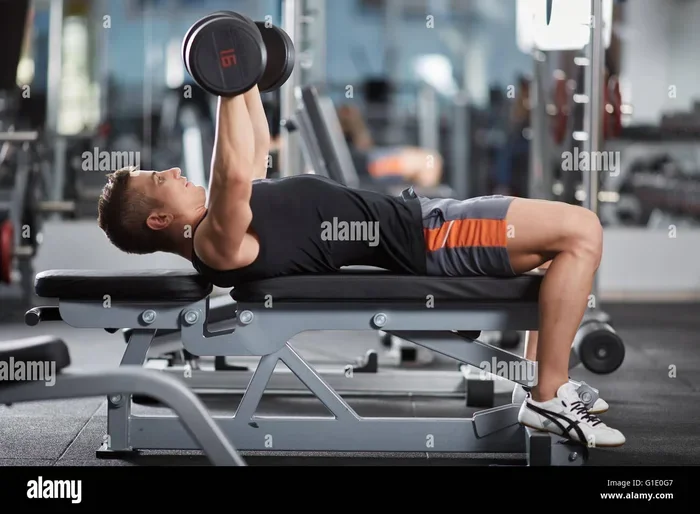
The dumbbell bench press is the king of chest exercises. It builds mass across the entire pectoral region. Lie on a flat bench or the floor. Hold a dumbbell in each hand at chest level. Press both weights up until your arms are fully extended. Lower them back down slowly.
This exercise works the middle and lower chest. It also engages your front deltoids and triceps. Start with a weight you can control for 8 to 12 reps. Focus on a full range of motion. Squeeze your chest at the top of each rep.
Dumbbell Flyes
Dumbbell flyes are excellent for stretching and isolating the pectorals. Lie on a flat bench with dumbbells held above your chest. Keep a slight bend in your elbows. Lower the weights out to your sides in a wide arc. Bring them back up and squeeze your chest at the top.
Flyes emphasize the stretch and contraction of your chest muscles. They are perfect for building chest definition and adding shape. Use a lighter weight than you would for pressing movements. Control the negative portion of each rep for maximum benefit.
Incline Dumbbell Press
The incline dumbbell press targets the upper chest. Set your bench to a 30 to 45 degree angle. Press the dumbbells up from shoulder level. This movement builds the upper chest which creates that full, rounded look.
Many lifters neglect their upper chest. This leads to a flat appearance from the front. Adding incline presses fixes this imbalance. Aim for 3 to 4 sets of 8 to 12 reps. This exercise is a game changer for chest hypertrophy.
Floor Press
The dumbbell floor press is a great option if you do not have a bench. Lie on the floor and press the dumbbells up. The floor limits your range of motion slightly, but it still builds serious chest strength. It is also safer for your shoulders because the floor prevents you from going too deep.
This exercise is perfect for beginners and home trainers. It targets the middle and lower chest effectively. You can also use it as a finishing movement at the end of your workout. Keep your reps controlled and your form tight.
Comparison Table: Top Dumbbell Chest Exercises
| Exercise | Primary Chest Area | Difficulty | Equipment Needed |
|---|---|---|---|
| Dumbbell Bench Press | Middle & Lower Chest | Beginner to Intermediate | Bench + Dumbbells |
| Dumbbell Flyes | Full Chest (Stretch Focus) | Beginner | Bench + Dumbbells |
| Incline Dumbbell Press | Upper Chest | Intermediate | Incline Bench + Dumbbells |
| Floor Press | Middle & Lower Chest | Beginner | Floor + Dumbbells |
How to Structure Your Chest Workout Routine
Knowing the right exercises is only half the battle. You also need a smart dumbbell workout routine that drives results. Here is how to structure your chest training for maximum growth.
Setting the Right Volume and Frequency
Train your chest 2 to 3 times per week. This frequency gives your muscles enough stimulus to grow while allowing proper recovery. Each session should include 4 to 6 exercises targeting different parts of the chest.
A typical chest workout might look like this:
- Dumbbell Bench Press – 4 sets of 8 to 12 reps
- Incline Dumbbell Press – 3 sets of 8 to 12 reps
- Dumbbell Flyes – 3 sets of 10 to 15 reps
- Floor Press – 3 sets of 10 to 12 reps
Rest 60 to 90 seconds between sets. This rest period allows enough recovery to maintain intensity while keeping your chest muscle growth on track. Adjust the volume based on your experience level. Beginners should start with fewer sets and build up over time.
Progressive Overload for Chest Growth
Progressive overload is the most important principle in muscle building. It means gradually increasing the stress on your muscles over time. You can do this by adding weight, adding reps, or adding sets each week.
For example, if you pressed 20-pound dumbbells for 10 reps last week, try 22.5 pounds this week. Or keep the same weight and aim for 11 reps. Small, consistent increases lead to big gains over months and years. This is the secret behind long-term chest development.
Track your workouts in a notebook or app. Write down the weight, reps, and sets for every exercise. Review your progress weekly. This simple habit keeps you accountable and motivated.
Quick Tips for Better Chest Training
- Always warm up before lifting heavy. Start with lighter dumbbells and 10 to 15 reps.
- Control the negative (lowering phase) of each rep. Aim for a 2 to 3 second descent.
- Squeeze your chest hard at the top of every press. This increases muscle activation.
- Breathe properly. Exhale on the press, inhale on the way down.
- Do not ego lift. Choose a weight you can control with perfect form.
Common Mistakes That Slow Down Chest Growth
Even with the best exercises, bad habits can hold you back. Here are the most common mistakes lifters make when training their chest.
Skipping the Warm-Up
Jumping straight into heavy dumbbells without warming up is a recipe for injury. Your chest muscles and shoulder joints need preparation. Spend 5 to 10 minutes doing light cardio and dynamic stretches before your chest workout.
Start your first working set with a lighter weight. This primes your muscles and nervous system. It also helps you practice the movement pattern. A proper warm-up improves performance and protects your joints.
Using Poor Form
Using too much weight and sacrificing form is the fastest way to stall your progress. When your form breaks down, other muscles take over. Your chest stops doing the work. You also risk shoulder and wrist injuries.
Keep your shoulder blades squeezed together and down. Press through your palms, not your fingers. Maintain a natural arch in your lower back. If you are training at home without a bench, lie on the floor and keep your feet flat on the ground. Good form always wins over heavy weight.
Overtraining Your Chest
Some lifters think training chest every day will build it faster. The opposite is true. Muscles grow during rest, not during the workout. Training your chest too often leads to fatigue, soreness, and stalled gains.
Give your chest at least 48 hours of rest between sessions. Focus on quality over quantity. A focused, intense chest session lasting 45 to 60 minutes is more effective than a two-hour grind. Rest is part of the training process.
Ignoring the Mind-Muscle Connection
Lifting weights without focusing on the target muscle is wasted effort. When you press a dumbbell, think about your chest contracting. Visualize the muscle fibers shortening and lengthening. This mental focus increases muscle activation significantly.
Studies show that lifters who practice the mind-muscle connection gain more muscle over time. It is a simple habit that makes a huge difference. Slow down your reps and feel every inch of the movement. Your chest training will never be the same.
Nutrition Tips to Support Chest Muscle Growth
Exercise is only half the equation. What you eat plays an equally important role in building chest muscle. Without proper nutrition, your muscles have nothing to grow with.
Protein Requirements
Protein is the building block of muscle. Aim to consume 0.7 to 1 gram of protein per pound of body weight each day. For a 180-pound person, that is 126 to 180 grams of protein daily.
Good protein sources include chicken, eggs, fish, Greek yogurt, and plant-based options like lentils and tofu. Spread your protein intake across 4 to 5 meals throughout the day. This keeps your muscles fueled for repair and growth.
If you struggle to hit your protein goals, a quality protein powder can help. A shake after your chest workout is especially effective for kickstarting recovery.
Timing Your Meals
When you eat matters almost as much as what you eat. Have a balanced meal with protein and carbohydrates 1 to 2 hours before your workout. This gives your body the energy it needs to perform at a high level.
After your workout, eat another protein-rich meal within 2 hours. This is your anabolic window where your muscles are most receptive to nutrients. Pair your protein with complex carbs like rice, oats, or sweet potatoes to replenish glycogen stores.
Stay hydrated throughout the day. Water supports every metabolic process in your body, including muscle repair. Aim for at least 8 glasses of water daily. More if you are training hard or in a hot environment.
How to Track Your Chest Progress
You cannot improve what you do not measure. Tracking your progress keeps you motivated and helps you adjust your approach when needed.
Measuring Chest Size
Use a soft measuring tape to measure your chest every 2 to 4 weeks. Measure at the nipple line with your arms relaxed. Write down the number and compare it over time.
Do not measure right after a workout. Your muscles will be temporarily swollen and give a false reading. Measure at the same time of day for consistency. Morning measurements before eating are ideal.
Strength Benchmarks
Track how much weight you are lifting for each exercise. If your dumbbell press goes from 25 pounds to 35 pounds over 8 weeks, that is real progress. Strength gains often come before visible size changes.
Take progress photos every 4 weeks. Photos reveal changes that the scale and tape measure might miss. Look for increased fullness in your chest, better definition, and improved shape. These visual markers are powerful motivators.
If you want a complete home training plan, check out this guide on building muscle at home with only dumbbells for a full-body approach.
Remember, building a bigger chest takes time and consistency. Stay patient, trust the process, and keep showing up. For more chest-specific routines, you can also explore this complete guide to working out your chest with dumbbells at home.
Every rep you complete brings you closer to the chest you want. Stick with your dumbbell chest exercises, eat well, rest properly, and the results will come. Start today and your future self will thank you.
For those looking to maximize their upper body development, learning how to get a bigger chest at home with dumbbells is a natural next step in your training journey. Apply the principles in this guide consistently, and you will see noticeable changes in your chest size, strength, and shape within just a few weeks.
Frequently Asked Questions
How long does it take to build chest muscles with dumbbells?
Most people notice visible chest changes within 4 to 8 weeks of consistent training. Beginners often see faster results because their muscles respond quickly to new stimuli. Stick with your routine, eat enough protein, and get proper rest for the best outcomes.
Can I build a big chest with just dumbbells at home?
Absolutely. Dumbbells are one of the most effective tools for building chest muscle at home. You do not need a barbell or a gym. A pair of adjustable dumbbells and a bench (or even the floor) is all you need to train your chest effectively.
How often should I train my chest with dumbbells?
Training your chest 2 to 3 times per week is ideal for most people. This frequency provides enough stimulus for muscle growth while allowing adequate recovery. Train each session with focus and intensity rather than chasing daily volume.
What weight dumbbells should I use for chest exercises?
Choose a weight that challenges you for 8 to 12 reps while maintaining good form. If you can easily do 15 reps, the weight is too light. If you cannot complete 6 reps with control, the weight is too heavy. Adjust as you get stronger over time.
Are dumbbell flyes necessary for chest growth?
Flyes are not mandatory, but they are highly effective for stretching and shaping the pectorals. They complement pressing movements like the bench press. Including flyes in your routine adds variety and targets the chest from a different angle for better overall development.
Why is my chest not growing even though I train it regularly?
Several factors can stall chest growth: using too much weight with poor form, training too often without rest, not eating enough protein, or lacking progressive overload. Review your routine and nutrition. Make sure you are challenging your muscles gradually and giving them time to recover between sessions.
=== CONCLUSION ===
Building chest muscles fast with dumbbells is completely achievable when you follow the right approach. Use the best exercises, train with proper frequency, apply progressive overload, and fuel your body with enough protein and calories. Avoid common mistakes like poor form and overtraining. Track your progress and stay consistent.
Your chest is one of the most visible muscles in your body. It deserves focused, intelligent training. The methods in this guide give you everything you need to succeed. Grab your dumbbells, follow the plan, and start building the chest you have always wanted today.