Optimum Nutrition Creatine Review
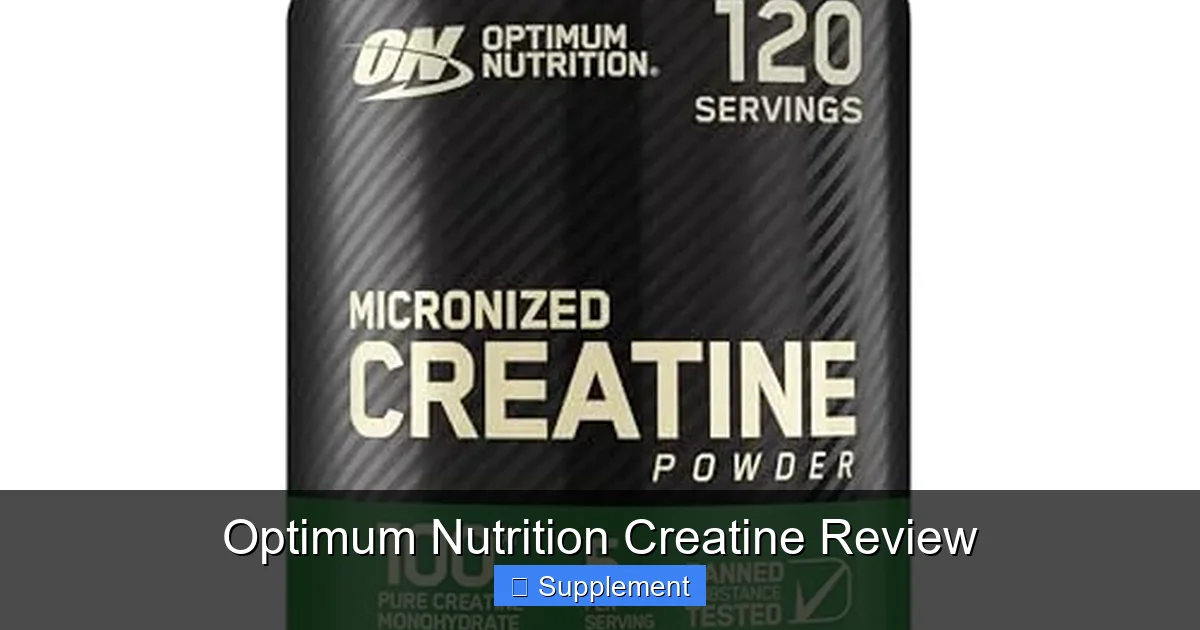
Optimum Nutrition (ON) Creatine Monohydrate is a top-tier, no-frills supplement prized for its exceptional purity, proven effectiveness, and outstanding value. It uses a micronized form for better mixability and is third-party tested for safety. For athletes and fitness enthusiasts seeking a reliable, research-backed performance boost, it’s a gold-standard choice that delivers exactly what it promises: pure creatine monohydrate.
Key Takeaways
- Unmatched Purity & Transparency: ON Creatine is third-party tested (Informed-Sport, Informed-Choice) for banned substances and impurities, with a simple ingredient list: just 100% creatine monohydrate.
- Proven, Research-Backed Efficacy: Creatine monohydrate is the most studied supplement in sports nutrition, and ON’s version reliably supports increased strength, power output, and lean muscle mass.
- Superior Mixability: The micronized (fine powder) formula dissolves easily in water, juice, or protein shakes with minimal grit or residue, a significant upgrade over many generic creatines.
- Exceptional Value for Money: It offers one of the lowest costs per serving in the market, making long-term supplementation affordable without compromising quality.
- Versatile & Universally Safe: Suitable for almost all healthy adults (men and women) engaging in resistance or high-intensity training, with a strong safety profile for long-term use.
- No Fillers, Sugars, or Artificial Additives: It’s a single-ingredient powerhouse, ideal for those with dietary restrictions (vegetarian/vegan) or who avoid unnecessary extras.
- Simple to Use: No confusing loading phases or proprietary blends. You take a consistent daily dose (typically 3-5g), making it effortless to incorporate into any routine.
📑 Table of Contents
- Introduction: The Unassuming Powerhouse
- What Is Creatine Monohydrate & Why Does It Matter?
- The Optimum Nutrition Difference: Purity, Process, and Price
- Real-World Benefits: What Can You Actually Expect?
- How to Use Optimum Nutrition Creatine: A Simple Guide
- Addressing Common Concerns & Side Effects
- The Verdict: Who Is Optimum Nutrition Creatine For?
- Conclusion: The Unbeatable Standard
Introduction: The Unassuming Powerhouse
Walk into any gym, and you’ll hear the buzz about supplements that promise explosive gains. But amidst the flashy pre-workouts and complex mass gainers, there’s one supplement that has over three decades of unwavering scientific support: creatine monohydrate. And when it comes to creatine, few brands are as consistently recommended by professionals and lifters alike as Optimum Nutrition (ON). But what makes their Optimum Nutrition Creatine stand out in a crowded market? Is it just hype, or does it truly deserve its legendary status?
This isn’t about flashy marketing or secret proprietary blends. This is about a single, potent ingredient delivered with unmatched purity and value. After years of personal use, analyzing lab reports, and comparing it to countless competitors, we’re diving deep into everything ON Creatine. From the science of creatine itself to the fine details of ON’s manufacturing, this review will answer one question: should this be the next supplement in your stack?
What Is Creatine Monohydrate & Why Does It Matter?
Before judging the product, we must understand the compound. Creatine is a naturally occurring molecule found primarily in muscle cells. It’s synthesized in the body from amino acids (arginine, glycine, methionine) and can also be obtained from dietary sources like red meat and fish. Its primary role is to help regenerate adenosine triphosphate (ATP), the primary energy currency for short, intense bursts of activity.
Visual guide about Optimum Nutrition Creatine Review
Image source: getsupplementreviews.com
The Science in Simple Terms
Think of your muscle cells as having a small, immediate-access battery (ATP). During a heavy lift or sprint, this battery drains in seconds. Creatine phosphate (the stored form in your muscles) donates a phosphate group to ADP (the spent battery) to rapidly recharge it back to ATP. More creatine in your muscles means you can sustain high-power output for a few more reps or seconds before fatigue sets in. Over time, this translates to greater training volume, which is a key driver for strength and hypertrophy (muscle growth).
Why Monohydrate is the Gold Standard
You’ll see creatine in various forms: hydrochloride (HCl), ethyl ester, buffered, etc. Despite the claims, creatine monohydrate remains the most researched, effective, and cost-efficient form. Decades of studies confirm its safety and efficacy. Other forms often market better solubility or less bloating, but the evidence supporting their superiority is weak. For the vast majority of users, monohydrate is the proven, no-brainer choice.
The Optimum Nutrition Difference: Purity, Process, and Price
Not all creatine monohydrate is created equal. The raw material can vary in purity, and the manufacturing process affects mixability and potential GI distress. This is where ON establishes its dominance.
Visual guide about Optimum Nutrition Creatine Review
Image source: barbend.com
Third-Party Testing: The Trust Anchor
This is the single most important factor for many athletes, especially those subject to drug testing. ON Creatine is certified by both Informed-Sport and Informed-Choice. This means every batch is rigorously tested for a comprehensive list of banned substances (over 270 for WADA) and contaminants. You get a Certificate of Analysis (COA) for your specific batch. For a supplement as fundamental as creatine, this level of assurance is priceless and a major reason for its industry-wide respect.
Micronization: The Smooth Operator
Open a container of ON Creatine, and you’ll see a very fine, almost flour-like powder. That’s “micronization.” The larger creatine crystals are mechanically processed into tiny particles. Why does this matter? It dramatically improves solubility. Standard creatine can clump and leave a gritty residue at the bottom of your shaker. ON’s version mixes almost effortlessly in room-temperature liquids. You can stir it into a glass of water and it will dissolve. This isn’t just a convenience; better solubility can also mean less bloating or stomach discomfort for sensitive individuals, as undissolved particles can draw water into the intestines.
Ingredient Simplicity & Value Proposition
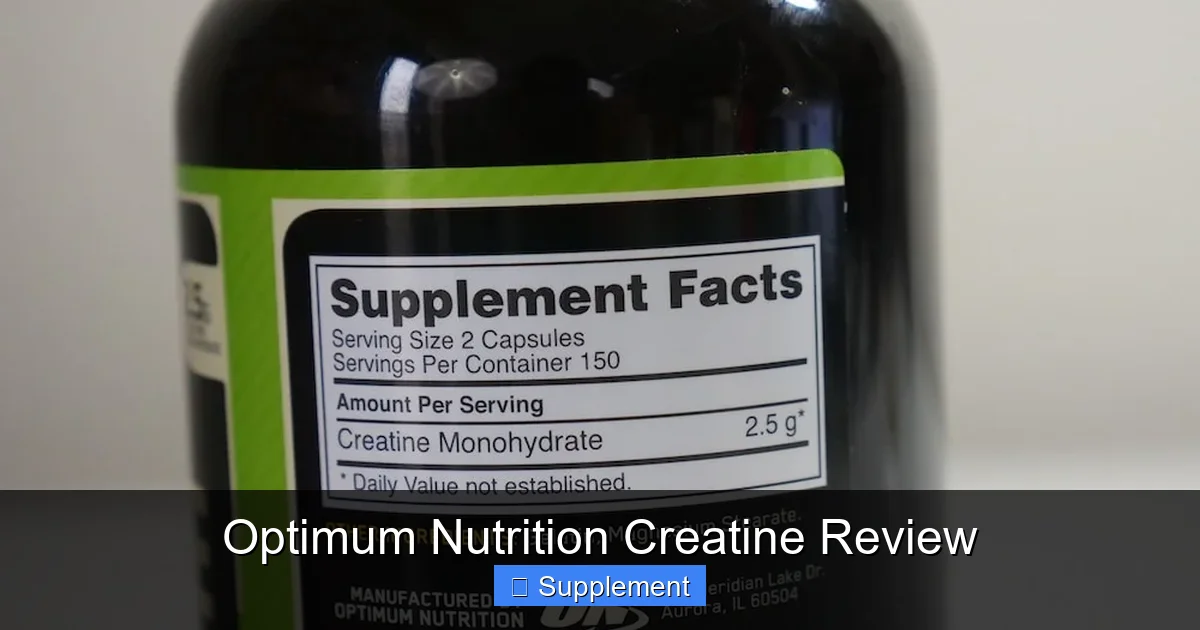
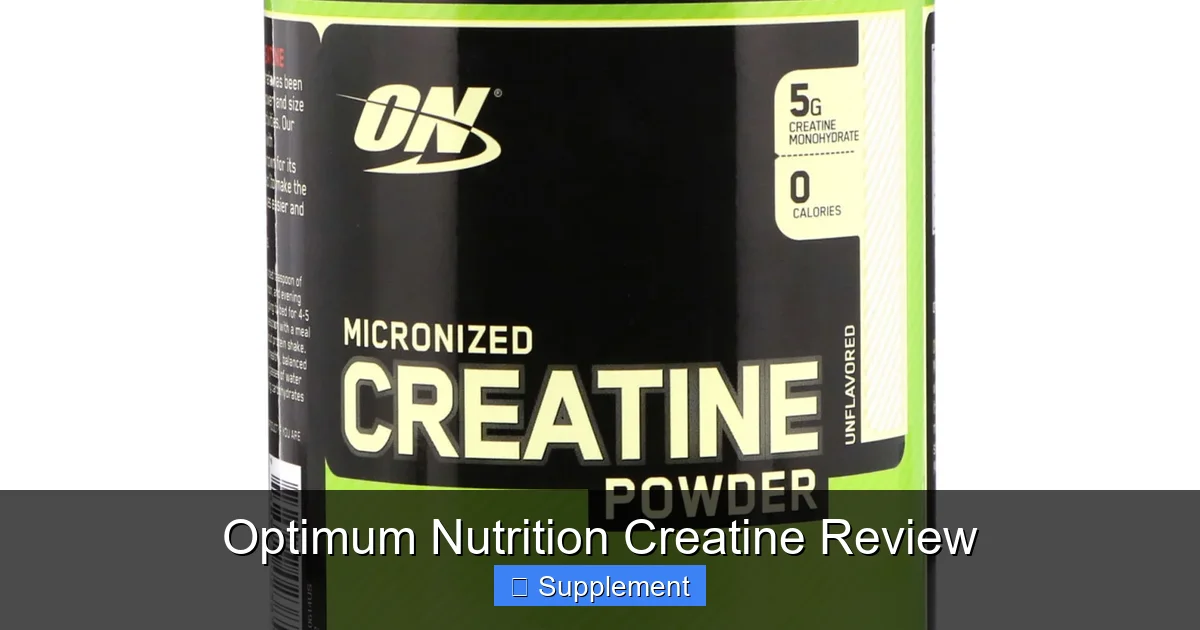
Flip the label, and you’ll find one ingredient: Creatine Monohydrate. No fillers, no sugars, no artificial colors or flavors. Each 5-gram serving (one rounded teaspoon) is exactly that. When you do the math, ON consistently offers one of the lowest cost-per-gram prices on the market. A 500g container provides 100 servings for a fraction of the cost of many branded “advanced” creatines. You’re paying for pure, tested creatine, not marketing fluff.
Real-World Benefits: What Can You Actually Expect?
The lab data is clear, but what happens in the gym and on the scale? The effects of creatine supplementation are well-documented, but individual experiences can vary.
Visual guide about Optimum Nutrition Creatine Review
Image source: s3.images-iherb.com
Strength & Power Output
This is the most immediate and noticeable benefit for most weightlifters. Within a week or two of consistent dosing (once your muscles are saturated), you’ll likely see a 5-15% increase in your ability to perform high-intensity work. This means an extra 1-2 reps on your top sets of squats, bench press, or deadlifts. It’s not magic—your muscles have more immediate energy to fuel those final, grinding reps. For power athletes, sprinters, and anyone in the 1-6 rep range, this is a game-changer.
Muscle Growth & Recovery
Creatine doesn’t directly build muscle like a steroid. It indirectly supports hypertrophy by allowing you to train harder and recover faster. With more reps and heavier weights, you create a greater stimulus for growth. Some studies also suggest creatine may increase water content within muscle cells (cell volumization), which can signal anabolic pathways and improve protein synthesis. Over months of training, this adds up to measurable increases in lean muscle mass compared to training without supplementation.
Cognitive & Other Potential Benefits
The brain also uses ATP. Emerging research indicates creatine supplementation may support cognitive function, particularly under conditions of sleep deprivation, stress, or in older adults. There’s also promising, though less conclusive, data on its role in bone health, glucose management, and reducing muscle soreness. While these are secondary to the performance benefits for most athletes, they’re valuable bonuses.
How to Use Optimum Nutrition Creatine: A Simple Guide
Simplicity is a hallmark of ON Creatine, and its usage protocol reflects that. Forget complex loading phases; here’s the straightforward, evidence-based approach.
The Daily Dose: 3-5 Grams, Every Day
The maintenance dose for most adults is 3-5 grams per day. Larger individuals or those with particularly high muscle mass may benefit from 5-10g. The key is consistency. Take it every single day, training or not. Your muscles maintain a saturation level, and daily intake replenishes what’s naturally broken down. This daily dose is sufficient; there’s no need for a traditional “loading phase” (20g/day for 5-7 days), though some choose to do one for faster saturation. The end result is the same after 3-4 weeks of consistent 3-5g dosing.
Timing: Does It Matter?
The research is mixed, but the consensus leans toward timing being relatively unimportant compared to total daily intake. However, two practical strategies have minor advantages: 1) Post-workout: Muscles may be more receptive to nutrient uptake after exercise. 2) With a carbohydrate/protein source: The insulin spike from carbs/protein can increase muscle creatine uptake. The easiest and most common approach? Mix your 5g with your post-workout protein shake or simply with a glass of juice (the sugar helps) first thing in the morning or before bed.
Mixing & Practical Tips
- Mix with Warm Liquid: Warm water or tea dissolves it even faster.
- Use a Shaker Bottle: The micronized powder mixes well, but a shaker ensures no clumps.
- Stack Smartly: It works synergistically with carbohydrates and protein. Pairing it with a post-workout shake is ideal.
- Cycle or Not? There’s no need to cycle creatine. Continuous use is safe and effective. Some choose to cycle for personal peace of mind, but it’s not required.
- Stay Hydrated: Creatine draws water into muscle cells. Ensure you’re drinking ample water throughout the day (a general fitness recommendation anyway).
Addressing Common Concerns & Side Effects
Even with a clean product like ON’s, new users often have questions about bloating, safety, and long-term use. Let’s separate fact from fiction.
The “Bloating” Myth vs. Reality
This is the most cited concern. Initial “bloating” or water weight gain (~1-3 lbs) in the first week is real, but it’s intracellular—water stored *inside* your muscle cells, not under your skin. This is a good thing! It’s associated with improved muscle function, protein synthesis, and a fuller, more “pumped” look. The GI distress or bloating some report from cheap, insoluble creatines is often due to undissolved powder sitting in the gut. ON’s micronized formula drastically reduces this issue for most people.
Safety & Long-Term Health
After 20+ years of widespread use and thousands of studies, creatine monohydrate has an exemplary safety profile for healthy individuals. The myth that it harms kidneys or causes dehydration has been repeatedly debunked in scientific literature. However, if you have a pre-existing kidney condition, consult a doctor before starting any supplement. For the average healthy adult, long-term use (years) is considered safe.
Who Should Avoid It?
Those with known kidney disease should avoid creatine supplementation. It’s also not recommended for children or adolescents still in major growth phases without medical supervision. Pregnant or breastfeeding women should also consult a physician. For everyone else—from weekend warriors to elite athletes—it’s one of the safest supplements you can take.
The Verdict: Who Is Optimum Nutrition Creatine For?
So, after all this, who should click “add to cart”?
The Ideal User Profile
- Resistance Trainees: Anyone lifting weights 3+ times per week looking to increase strength and muscle mass.
- Power & Sprint Athletes: Sprinters, football players, wrestlers—any sport relying on short, explosive bursts.
- Budget-Conscious Lifters: You want a proven supplement without the premium price tag. ON is the value king.
- Tested Athletes: Competitors in NCAA, professional leagues, or natural bodybuilding shows who need guaranteed, banned-substance-free products.
- The “Minimalist” Supplement User: People who want one effective, single-ingredient supplement and hate proprietary blends with mystery powders.
Who Might Look Elsewhere?
- Those with Severe GI Issues: If you have a very sensitive stomach, you might still experience mild bloating. A different form like creatine HCl *might* help, but try ON’s micronized version first.
- People Seeking Immediate “Pump” or Energy: This isn’t a pre-workout. Its effects are cumulative over weeks. If you want an acute stimulant effect, you need a pre-workout, not creatine.
- Individuals Not Engaged in Training: If you’re sedentary, the benefits are negligible. Creatine supports increased training demand, it doesn’t create it.
Conclusion: The Unbeatable Standard
In a supplement industry saturated with overhyped, under-dosed products, Optimum Nutrition Creatine Monohydrate is a breath of fresh air. It’s not exciting. It doesn’t come in flashy flavors or promise “extreme anabolic activation.” It’s just incredibly good at what it does. The combination of pharmaceutical-grade purity verified by third-party testing, a user-friendly micronized texture, and an unbeatable price point creates a product that is almost impossible to beat.
If you’re serious about strength, muscle, and performance, and you want a supplement with a 30-year track record of success, you can’t go wrong with ON Creatine. It’s the foundation upon which countless fitness journeys are built. Its effectiveness isn’t a secret; it’s the open secret of the weight room. Take it daily, train hard, and let the science do the rest.
Frequently Asked Questions
Is Optimum Nutrition Creatine safe for long-term use?
Yes, for healthy individuals, creatine monohydrate has an extensive safety record for long-term use (years). Always consult a doctor if you have pre-existing kidney conditions.
Do I need to do a loading phase with ON Creatine?
No, a loading phase is not necessary. Taking a consistent daily dose of 3-5 grams will fully saturate your muscles within 3-4 weeks. A loading phase just speeds up saturation but isn’t required for long-term benefits.
Will it cause bloating or water retention?
You may gain 1-3 pounds of water weight initially as creatine pulls water into your muscle cells. This is intracellular water, which supports muscle function and is not the same as subcutaneous (under-skin) bloating. ON’s micronized formula minimizes any potential GI discomfort.
Can I mix Optimum Nutrition Creatine with anything?
Absolutely. It mixes best with warm water, juice, or your post-workout protein shake. Consuming it with carbohydrates (like juice) can slightly improve uptake, but mixing with water is perfectly effective.
Is it suitable for vegetarians and vegans?
Yes. ON Creatine Monohydrate is a synthetic product and contains no animal-derived ingredients, making it perfectly suitable for vegetarian and vegan diets.
How long does a container last and how much should I take?
A 500g container provides 100 servings at 5g per scoop. The standard daily dose is 3-5 grams. Most users take 5g daily. Adjust based on your size and training intensity, but consistency is more important than precise timing or cycling.