Con Cret Creatine Review
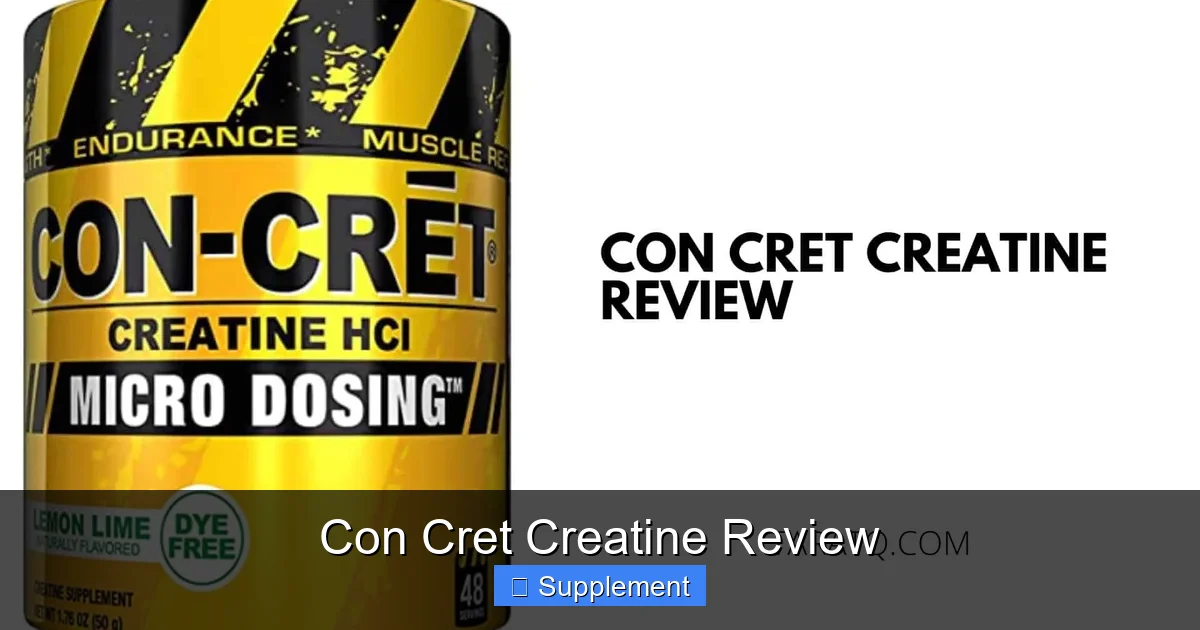
Con Cret (Kre-Alkalyn) is a patented, pH-balanced “buffered” creatine marketed as more effective and easier to stomach than standard creatine monohydrate. This review breaks down the actual science, user experiences, and practical pros and cons to help you decide if its premium price tag delivers real results or if it’s just clever marketing.
So, you’ve heard the buzz about Con Cret. Maybe a trainer mentioned it. Maybe you saw an ad promising explosive gains without the dreaded “creatine bloating.” You’re here because you’re skeptical. Good. In the wild world of sports supplements, skepticism is your best friend. This isn’t just another Con Cret Creatine review parroting the label’s claims. We’re going under the hood. We’ll look at the chemistry, the actual science (not the marketing brochures), real-user reports, and the bottom line on whether this buffered creatine is a smart buy or an overpriced placebo.
Let’s start with the obvious: creatine is one of the most researched, effective, and safe supplements on the planet. Period. Thousands of studies prove it boosts strength, power, muscle mass, and even brain health. The problem isn’t creatine; it’s the *form*. The most common and cheapest form is creatine monohydrate. It works brilliantly for most people. But a small subset reports issues—bloating, stomach discomfort, a feeling of being “waterlogged.” Enter the “buffered” solutions, with Con Cret (Kre-Alkalyn) being one of the most popular. Its promise? All the benefits of creatine, minus the drawbacks. Does it deliver? Let’s find out.
Key Takeaways
- Buffered Claim: Con Cret’s main selling point is its “buffered” formula (Kre-Alkalyn), which is designed to be stable at a higher pH, theoretically preventing conversion to creatinine and reducing bloating.
- Limited Superior Evidence: Most independent research does not show significant performance benefits over creatine monohydrate for healthy individuals; the perceived advantages are often anecdotal.
- Potential for Less Bloating: Many users report less water retention and digestive discomfort, making it a viable option for those sensitive to monohydrate’s side effects.
- No Loading Phase Needed: The manufacturer recommends a consistent maintenance dose from the start, simplifying the supplementation protocol compared to traditional loading.
- Premium Cost: Con Cret is significantly more expensive per serving than basic creatine monohydrate, which is the most researched and cost-effective form available.
- Who It Might Suit: It could be worth trying for individuals who experienced bloating, stomach cramps, or “fullness” with monohydrate and are willing to pay more for a solution.
- Monohydrate is the Gold Standard: For the vast majority of users without specific sensitivities, standard creatine monohydrate remains the most proven, effective, and economical choice.
📑 Table of Contents
- What Exactly is Con Cret? The “Buffered” Promise Explained
- The User Experience: Benefits and Side Effects
- Con Cret vs. Creatine Monohydrate: The Head-to-Head
- How to Use Con Cret: Dosage, Timing, and Stacking
- Who Should Consider Con Cret? (And Who Shouldn’t)
- The Verdict: Is Con Cret Creatine Worth It?
What Exactly is Con Cret? The “Buffered” Promise Explained
To understand Con Cret, you need a quick, painless chemistry lesson. Regular creatine monohydrate is stable in acidic environments, like your stomach. Once ingested, some of it can convert into a waste product called creatinine before it’s absorbed. Creatinine is useless; your body just filters it out through the kidneys. This conversion is what manufacturers of buffered creatine blame for potential digestive issues and the idea that your body isn’t getting the full dose.
The Kre-Alkalyn Difference
Con Cret’s active ingredient is called Kre-Alkalyn. It’s creatine monohydrate that has been “buffered” with sodium bicarbonate (baking soda, essentially) to raise its pH level to around 12. The theory is that this higher pH makes it more stable in the acidic stomach, so less converts to creatinine. More intact creatine reaches your muscles, and less sits in your gut causing irritation. The company holds a patent on this process and claims you only need a much smaller dose (1.5-3 grams) compared to the standard 3-5 gram dose of monohydrate because of this alleged superior absorption and lack of waste.
Is the Theory Sound? What the Research Says
Here’s where we separate marketing from reality. The buffering theory makes logical sense on paper. However, the human digestive system is complex. Independent studies, funded by universities and not the manufacturers, have consistently failed to show that Kre-Alkalyn (Con Cret) leads to higher muscle creatine levels, better performance, or less creatinine excretion compared to an equal dose of standard creatine monohydrate. A seminal study published in the Journal of the International Society of Sports Nutrition found no difference in absorption, performance, or body composition between Kre-Alkalyn and monohydrate. In fact, some studies suggest the buffering process might be unnecessary because the stomach’s acidic environment is transient, and creatine absorption happens primarily in the small intestine, not the stomach. The scientific consensus, based on available evidence, is that the “buffered” advantage is largely unproven in practice.
The User Experience: Benefits and Side Effects
Forget the lab for a second. What do actual people taking Con Cret report? This is where anecdotal evidence has value, as long as we contextualize it. We’ve scoured forums, review sites, and athlete testimonials to compile a balanced picture.
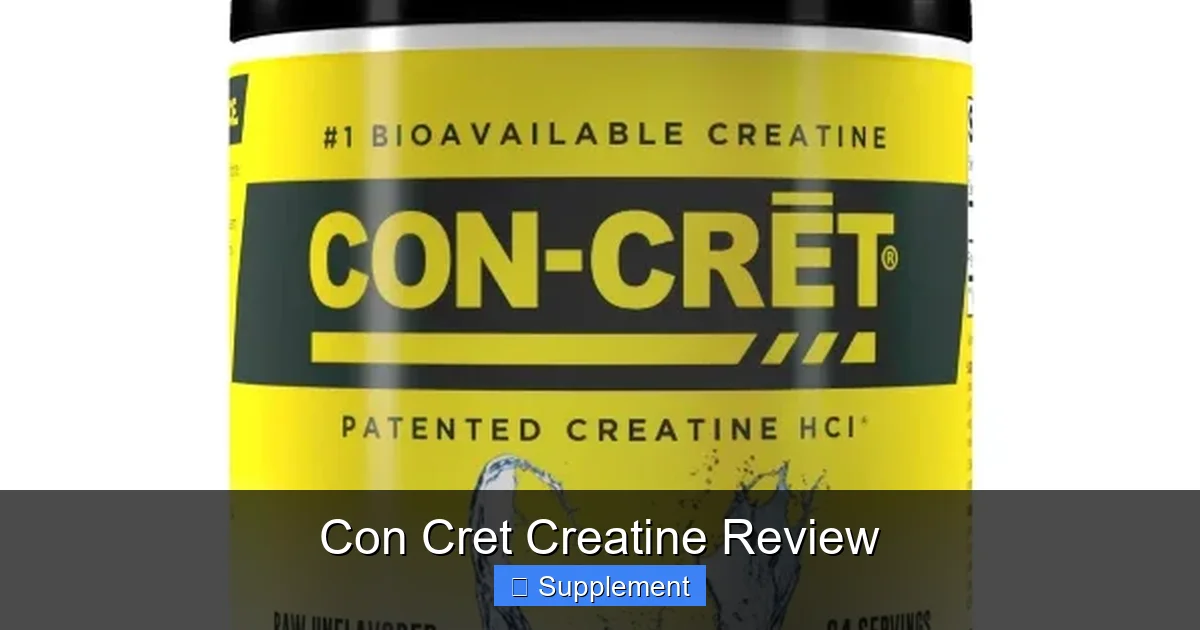
Visual guide about Con Cret Creatine Review
Image source: fitnessclone.com
Reported Benefits: Why People Stick With It
- Reduced Bloating and “Fullness”: This is the #1 cited benefit. Many users who felt puffy, held significant water weight, or experienced a constant sense of GI fullness on monohydrate report that Con Cret feels “cleaner.” They notice less scale weight fluctuation from water retention, which is a major plus for those in weight-class sports or who simply dislike the feeling.
- Gentler on the Stomach: Reports of cramps, gas, or diarrhea are far less common with Con Cret. For individuals with sensitive digestive systems or conditions like IBS, this can be a game-changer, making creatine supplementation possible where it was previously intolerable.
- No Loading Phase: The official instructions for Con Cret skip the traditional 5-7 day “loading phase” (20g/day). They recommend starting with the maintenance dose (1.5-3g/day). This is simpler, avoids potential initial digestive upset from a high dose, and aligns with newer research suggesting loading isn’t strictly necessary—just slower to reach muscle saturation.
- Convenience: The smaller serving size (often just 1-2 capsules) is more convenient for some than mixing a powder. It’s also travel-friendly and doesn’t require a shaker bottle.
Potential Drawbacks and Criticisms
- The Cost: This is the biggest hurdle. Con Cret can cost 2-4 times more per effective gram of creatine than a high-quality monohydrate. You are paying a significant premium for a theoretical benefit that science hasn’t validated.
- The Taste/Capsule Factor: While the powder form is flavorless, some users note a slight, unusual aftertaste from the buffering agent. The capsule form avoids this but means swallowing pills. Pure monohydrate powder is virtually tasteless and dissolves well in any liquid.
- “It Works, But So Does Cheaper Stuff”: Many long-term users who switched *back* to monohydrate after trying Con Cret report identical strength and muscle gains, confirming their suspicion that the performance edge was nonexistent. The only difference was the return of mild bloating.
- Questionable Dose Claims: The recommendation to use 1.5-3g is based on the assumption of higher bioavailability. If that assumption is false, you may be under-dosing compared to the proven 3-5g of monohydrate needed to fully saturate muscles.
Con Cret vs. Creatine Monohydrate: The Head-to-Head
This is the core question. Let’s compare them side-by-side on the factors that matter.
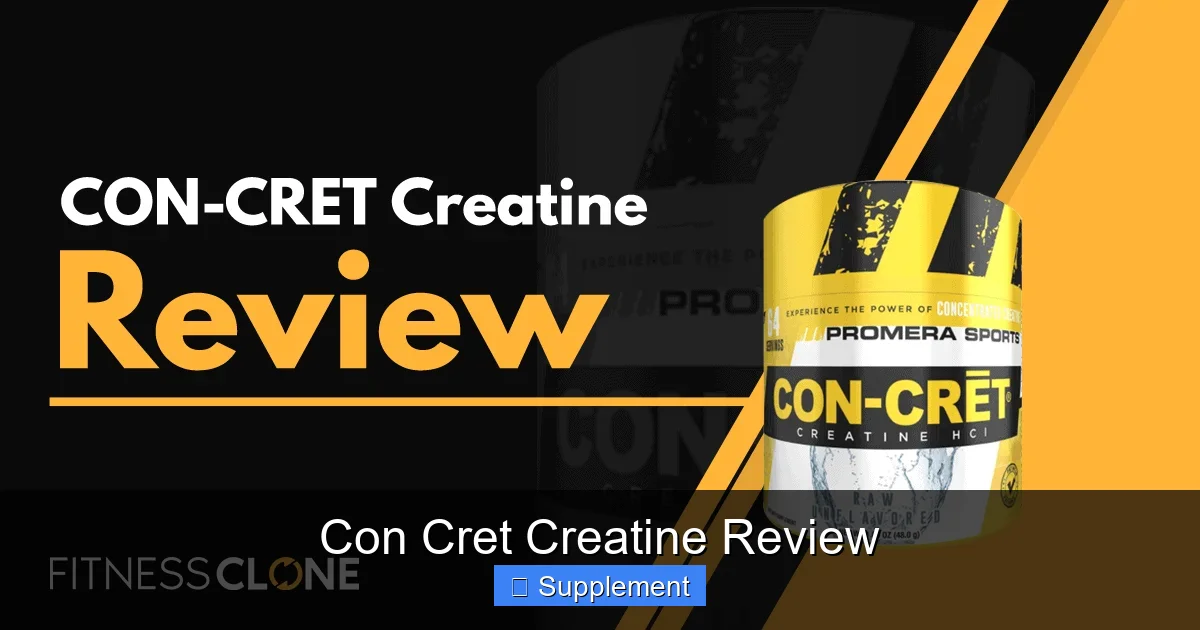
Visual guide about Con Cret Creatine Review
Image source: fitnessclone.com
Effectiveness for Muscle & Strength Gains
Winner: Tie (with an edge to Monohydrate’s proof). Based on the sheer volume of research, creatine monohydrate is the undisputed champion for increasing phosphocreatine stores, enhancing ATP regeneration, and boosting high-intensity exercise performance. There is no credible, replicated study showing Con Cret/Kre-Alkalyn outperforms monohydrate in measures of strength, power output, or lean mass gain. If your primary goal is getting stronger and bigger, both will work, but monohydrate has decades of conclusive evidence.
Digestive Tolerance and Bloating
Winner: Con Cret (for the sensitive minority). This is Con Cret’s sole, clear battlefield victory. While many people experience zero issues with monohydrate, a notable minority do report bloating and discomfort. For this group, Con Cret appears to be a legitimate solution. The “bloating” from monohydrate is primarily intracellular water retention—water pulled *into* the muscle cells, which is actually a good sign for growth. However, the associated GI distress and subcutaneous (under-skin) water retention that makes you look “soft” is what people dislike, and Con Cret seems to minimize this for some.
Cost and Value
Winner: Creatine Monohydrate, by a mile. You can buy a 500g tub of pure, micronized creatine monohydrate for $15-$25. That’s 100-166 servings at 5g each. Con Cret often costs $30-$50 for 90-120 capsules or a 200g powder, equating to a fraction of the servings at a much higher per-gram cost. In terms of pure creatine content per dollar, monohydrate is unbeatable.
Convenience and Ease of Use
Winner: Slight edge to Con Cret (capsules). Mixing powder can be a minor hassle. The “no load” protocol is simpler. If you hate mixing supplements, the capsule form of Con Cret is convenient. However, monohydrate powder mixes easily with any beverage, and the loading phase is optional. This is a minor point of preference.
How to Use Con Cret: Dosage, Timing, and Stacking
If you’ve decided to give it a shot, here’s how to use it correctly based on manufacturer guidelines and user best practices.
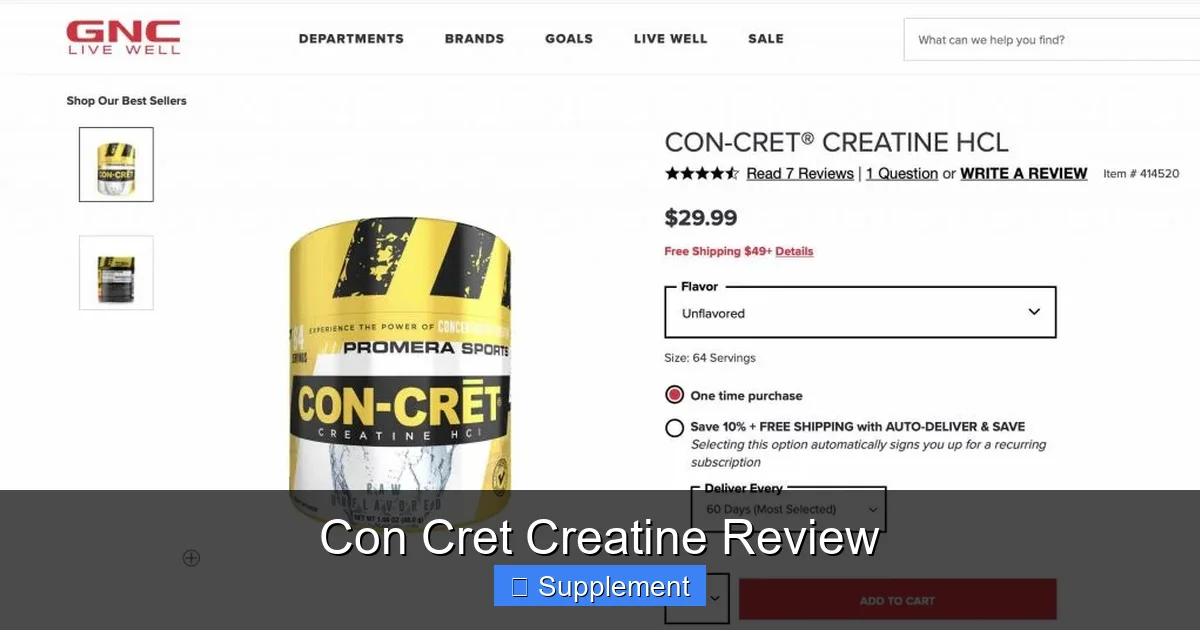
Visual guide about Con Cret Creatine Review
Image source: fitnessclone.com
Recommended Dosage and Protocol
The official Con Cret protocol is straightforward: 1.5 to 3 grams daily. There is no loading phase. Take it consistently every day, with or without food. The rationale is that the buffered formula allows for immediate muscle saturation at a lower dose. If you’re an athlete with very high demand, some users experiment with up to 5g, but you should start with the label dose. For the powder, mix one scoop (check your product’s scoop size, it varies) with 8-12 oz of water or juice. For capsules, take the directed number (usually 1-2).
Timing: Does It Matter?
With creatine, timing is a secondary concern to daily consistency. However, some data suggests taking it post-workout with a carbohydrate and protein source (a recovery shake) might slightly enhance muscle uptake due to insulin spikes. If you only take it once a day, post-workout is a logical, convenient time. If you take it twice a day (e.g., 1.5g morning, 1.5g evening), timing becomes even less critical. The key is taking it every single day to maintain elevated muscle stores.
Can You Stack It?
Absolutely. Creatine stacks exceptionally well with almost anything. The most common and synergistic stacks are:
- Creatine + Whey Protein: The classic muscle-building foundation. Protein provides amino acids for repair, creatine fuels the high-intensity work that stimulates growth.
- Creatine + Beta-Alanine: A powerhouse for strength and endurance athletes. Beta-alanine buffers muscle acid (lactic acid), while creatine recycles ATP. They work on different but complementary energy systems.
- Creatine + Citrulline Malate: Great for pumps, endurance, and reducing fatigue. Citrulline improves blood flow, helping deliver nutrients.
Always introduce one new supplement at a time to gauge its individual effect.
Who Should Consider Con Cret? (And Who Shouldn’t)
This supplement isn’t for everyone. Let’s identify the ideal user profile.
The Ideal Candidate for Con Cret
You might be a good fit for Con Cret if:
- You have a history of bloating, stomach cramps, or diarrhea when taking standard creatine monohydrate, even at smaller doses.
- You compete in a weight-class sport (wrestling, boxing, rowing) where the extra scale weight from monohydrate’s water retention is a tactical disadvantage.
- You simply hate the feeling of being “full” or “puffy” and prioritize a “dry” look, even at a potential minor cost to peak performance.
- You value convenience (capsules) and a simplified “no-load” protocol and are willing to pay more for it.
- You’ve tried high-quality, micronized monohydrate and it genuinely didn’t work for your gut.
Who Should Stick with Monohydrate (or Save Their Money)
You should almost certainly choose creatine monohydrate if:
- You have no issues digesting monohydrate. If it doesn’t bother you, there’s zero reason to spend more.
- Your primary goal is maximizing strength and muscle gains at the lowest cost. Monohydrate is proven and cheap.
- You are a budget-conscious student, beginner, or casual lifter. Your money is better spent on food or a gym membership.
- You are skeptical of “premium” supplement claims and prefer the most researched, straightforward ingredient available.
The Verdict: Is Con Cret Creatine Worth It?
After dissecting the science, the user reports, and the economics, the verdict is nuanced. Con Cret is not a magic bullet. It is not scientifically proven to be more effective than creatine monohydrate for building muscle or increasing strength. The core “buffered” claim remains weak in the face of independent research.
However, it occupies a specific, valuable niche. For the estimated 10-20% of people who experience genuine digestive distress or bothersome water retention from monohydrate, Con Cret can be a legitimate solution. The placebo effect is powerful, but the consistent anecdotal reports of improved tolerance are too significant to ignore. If monohydrate makes you feel bad, you’re less likely to take it consistently. A supplement you actually *use* is always better than one you quit.
For everyone else? Save your money. Buy a reputable brand of creatine monohydrate (look for “Creapure” or a similar certified pure source). Micronized monohydrate mixes easily and is well-tolerated by most. The bloating you might experience is mostly beneficial intracellular water. The performance you get is identical, according to science. The extra $30-$50 you’d spend on Con Cret over a year could go toward better food, a new training book, or just stay in your wallet.
Final Recommendation: Try creatine monohydrate first. Give it a fair shot (4-8 weeks). If you experience no negative side effects, stick with it. If you consistently have bloating or discomfort, then—and only then—consider switching to Con Cret as a potential solution. Don’t start with Con Cret by default; you’re likely paying for a solution to a problem you don’t have.
Frequently Asked Questions
Does Con Cret really prevent bloating better than monohydrate?
For a subset of users who are sensitive to standard creatine, yes, many report significantly less bloating and digestive discomfort. However, there is no definitive scientific proof that the buffering process is the cause; individual GI responses vary greatly. If you don’t have issues with monohydrate, you likely won’t notice a difference.
Do I need to do a loading phase with Con Cret?
No. The manufacturer specifically instructs against a loading phase. They recommend starting with a daily maintenance dose of 1.5-3 grams from day one. This is simpler and avoids the potential for initial digestive upset that a high-dose loading phase can cause.
Is Con Cret safe? Are there any side effects?
Con Cret is generally recognized as safe, as it is a form of creatine. The most commonly reported side effect is the same as with any creatine: potential for mild water retention. However, because it’s buffered, reports of stomach cramps, diarrhea, and bloating are less frequent than with monohydrate for sensitive individuals. As with any supplement, consult a doctor if you have pre-existing kidney conditions.
How long does it take to see results from Con Cret?
Like all creatine forms, results are not immediate. You should take it consistently for at least 2-4 weeks to fully saturate your muscle stores. You may notice improved workout performance (more reps, better recovery) within the first week or two, with visible changes in muscle fullness and strength appearing after a month of consistent training and supplementation.
Can I stack Con Cret with other supplements?
Yes, absolutely. Creatine stacks perfectly with protein powder, beta-alanine, citrulline malate, and pre-workout formulas. The most common and effective stack is creatine + whey protein for muscle building. There are no known negative interactions.
Is Con Cret suitable for vegetarians and vegans?
Yes. Creatine is synthetically produced and does not come from animal sources. Both Con Cret and creatine monohydrate are suitable for vegetarians and vegans. In fact, vegetarians often have lower baseline creatine stores and may benefit more noticeably from supplementation.