How to Target Long Head of Bicep with Dumbbells
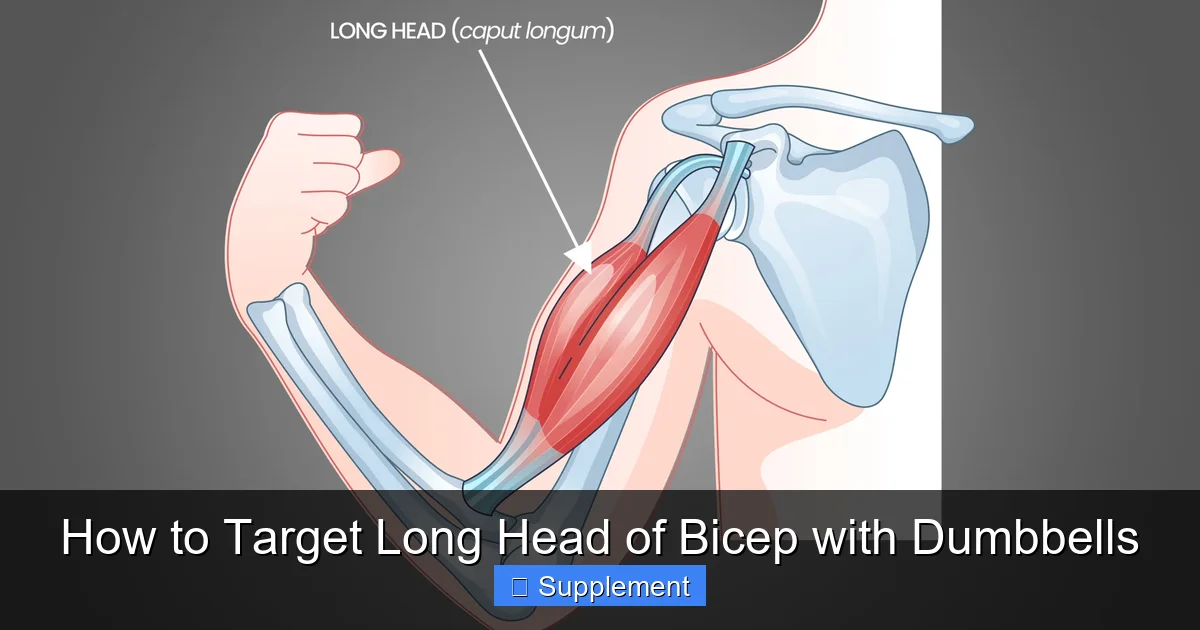
Targeting the long head of the bicep is key to building that coveted “peak” and full, rounded arm mass. Unlike the short head, the long head is stretched under load, making dumbbells the perfect tool due to their freedom of movement. By mastering specific curl variations like the incline dumbbell curl and hammer curl with a supinated finish, you can maximize tension on the long head. Consistent focus on controlled movements, a full range of motion, and strategic programming will lead to significant long head growth and a more dramatic arm silhouette.
So you want to build bigger, more defined biceps. You’ve heard about the “peak” – that dramatic, high bicep flex that looks incredible from the side. You know it’s not just about overall size, but about shaping the muscle itself. The secret to that peak? It’s all about the long head of the bicep. And one of the very best tools to isolate and develop it? A simple pair of dumbbells. Forget the complex machines for a moment. Let’s talk about how you, right now, can use dumbbells to transform the shape of your arms by specifically targeting the long head.
Many people think a bicep curl is a bicep curl. They grab the barbell, load it heavy, and swing the weight up, hoping for growth. But if your goal is a specific, aesthetic shape – that full, round, high-peaking bicep – you need to train smarter. The bicep has two heads: the short head (inner) and the long head (outer). The long head originates on the scapula (shoulder blade) and runs down the outside of your arm. Because of this origin, it’s stretched when your arm is behind your torso. This stretched position is its sweet spot for growth. Dumbbells, with their unrestricted movement, allow us to exploit this anatomy better than almost any other tool. We’re going to break down exactly how.
Key Takeaways
- The long head creates the bicep “peak”: It’s the outer head that gives your bicep its height and rounded appearance when flexed, and it’s most active when the arm is extended behind the body.
- Dumbbells are ideal for long head targeting: They allow for a greater range of motion, natural arm path, and the ability to pronate/supinate the wrist, all of which increase stretch and activation on the long head.
- Stretch is the primary driver: Exercises that place the bicep in a maximally stretched position at the start (like incline curls) generate the most mechanical tension on the long head fibers.
- Control the negative: The eccentric (lowering) phase is crucial for muscle growth. Lower the weight slowly (3-4 seconds) to maximize time under tension and muscle damage.
- Mind-muscle connection is non-negotiable: You must consciously focus on squeezing the bicep, especially the outer portion, throughout the entire movement to ensure it’s doing the work.
- Don’t neglect the hammer curl variation: The neutral-grip hammer curl, especially with a supinated finish, intensely targets the long head while also building brachialis and forearm mass.
- Full range of motion is essential: Never cut the stretch short or stop short of a full contraction. Complete extension and a hard squeeze at the top are required for optimal development.
📑 Table of Contents
Anatomy 101: Understanding Your Long Head
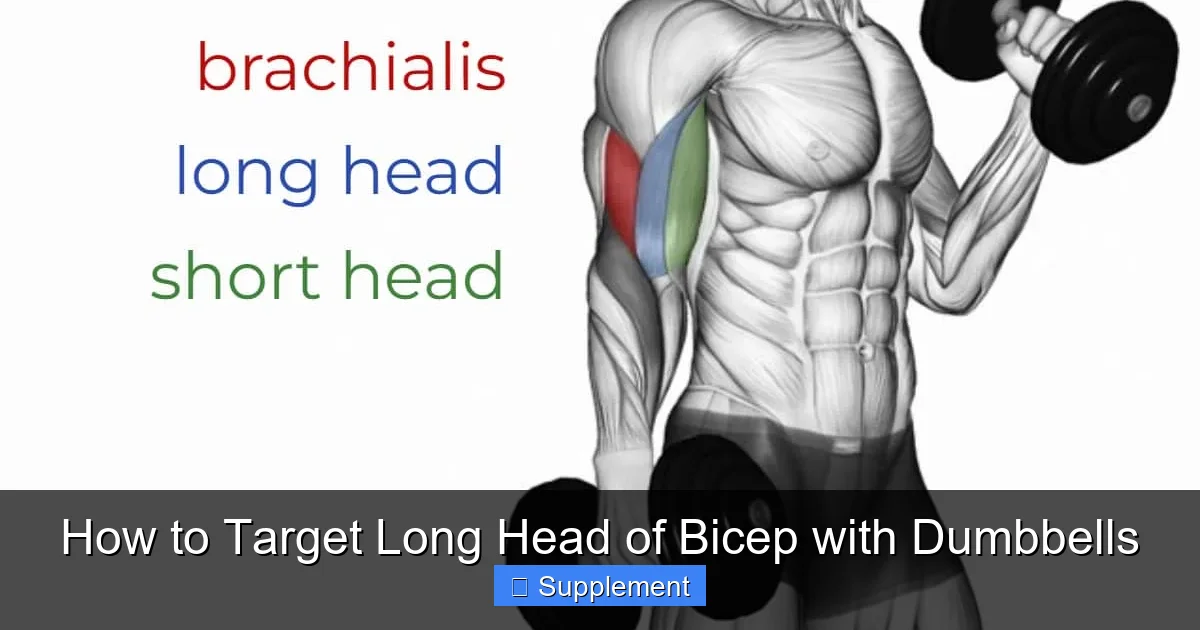
Before we lift a single weight, we need a quick, painless lesson in anatomy. Think of your bicep as a two-headed muscle. The short head sits on the inner part of your arm. It’s responsible for adding thickness to the overall mass but contributes less to that vertical “peak.” The long head forms the outer contour. It’s the one that creates that coveted baseball-like shape when you flex. It also plays a primary role in shoulder stabilization.
The Critical Stretch Position
The defining characteristic of the long head is its relationship to the shoulder joint. Because it attaches up on the scapula, any movement that places your upper arm behind your torso – like reaching back to grab something from behind you – puts the long head on a significant stretch. This is the key. Muscles are strongest and most capable of generating force when they are at a stretched length. Therefore, to target the long head, we want to perform exercises that start from this stretched position. Dumbbells are perfect for this because you can get your arm into positions a barbell simply cannot, without awkward joint stress.
Why Dumbbells Are Your Secret Weapon for the Long Head
You might be wondering, “Can’t I just do barbell curls?” You can, and they’re great for overall mass. But for pure, isolated long head development, dumbbells have three decisive advantages.

Visual guide about How to Target Long Head of Bicep with Dumbbells
Image source: bodybuildingmealplan.com
1. Unrestricted Range of Motion
A barbell forces your hands into a fixed, supinated (palms-up) grip. This limits how far you can extend your arm behind your body because the bar will hit your torso or thighs. With dumbbells, each arm moves independently. You can fully extend your arm behind your torso at the start of a curl, maximizing the stretch on the long head without any obstruction. This full stretch under load is the primary stimulus for growth in this region.
2. Ability to Rotate the Wrist (Pronation/Supination)
The bicep is a supinator – it turns your palm up. With dumbbells, you can start a curl with a neutral (hammer) grip and then actively supinate (rotate) your palm to face your shoulder as you curl. This rotation adds an extra element of contraction and peak tension specifically on the long head fibers. This is a nuance you simply cannot get with a fixed barbell.
3. No Cheating with the Other Arm
It’s human nature to let your stronger side help the weaker side. With a barbell, it’s easy to shift your torso or use your non-targeting arm to initiate the movement. Dumbbells force each arm to work in isolation. This ensures balanced development and prevents you from masking weakness in one arm by using the other. It also makes you focus intently on the muscle you’re supposed to be feeling.
The Top 5 Dumbbell Exercises for Long Head Dominance
Now for the fun part. These are the most effective dumbbell movements for placing maximal tension on the long head of your bicep. Master these, and you will see a change in your arm shape.

Visual guide about How to Target Long Head of Bicep with Dumbbells
Image source: bodybuildingmealplan.com
1. The Incline Dumbbell Curl (The King of Stretch)
This is the single most effective exercise for long head activation. The setup is everything.
- Setup: Set an adjustable bench to a 45-60 degree incline. Sit back, press your back firmly against the pad, and let your arms hang straight down toward the floor. Hold a dumbbell in each hand with a supinated (palms-up) grip. Your arms should be fully extended, feeling a deep stretch in your biceps.
- The Movement: Keeping your upper arms pinned against the pad and your torso still, curl the dumbbells up toward your shoulders. Focus on squeezing your biceps hard at the top. The pad prevents you from using momentum or swinging your body.
- Key Cue: “Lead with the pinky finger.” Imagine you’re trying to touch your pinky to your shoulder at the top of the curl. This external rotation cue enhances the contraction of the long head.
- Pro Tip: Start with lighter weights than you use for standing curls. The stretch is intense. Aim for 3-4 sets of 10-15 reps with a slow, controlled tempo (2 seconds up, 3 seconds down).
2. The Supinating Hammer Curl
The classic hammer curl (neutral grip) is fantastic for brachialis and forearm development, but a simple tweak turns it into a long head monster.
- Setup: Stand or sit holding a dumbbell in each hand with a neutral (hammer) grip, palms facing each other.
- The Movement: Curl the weight up as you normally would for a hammer curl. However, as the dumbbell passes your thigh, actively rotate your wrist so your palm faces your shoulder (supination). Hold this supinated position at the top for a one-count, then reverse the motion to lower.
- Key Cue: “Curl, then twist.” The supination at the top is what brings the long head into its strongest, most contracted position.
- Pro Tip: This is great for adding variety. Do these as your second or third bicep exercise after you’ve already pre-exhausted with incline curls.
3. The Standing Dumbbell Curl (with a Twist)
The standing curl is a staple, but most people do it wrong for long head growth. We need to modify the starting position.
- Setup: Stand holding dumbbells with a supinated grip. Instead of letting your arms hang straight by your sides, pull your shoulders back and down, and slightly extend your arms behind your torso. Think of putting your hands into your back pockets. This pre-stretches the long head.
- The Movement: From this stretched starting position, curl the weights up, keeping your elbows fixed in front of your hips. Do not let them drift forward. Squeeze at the top.
- Key Cue: “Elbows back, curl to the sky.” Maintaining that elbow-behind-the-body position is what keeps tension on the long head instead of shifting it to the short head.
- Pro Tip: Use a mirror to check your form. If your elbows are flying forward in front of your hips, you’ve lost the stretch and are turning this into a short-head dominant movement.
4. The Decline Dumbbell Curl
Similar in principle to the incline curl, but the stretch comes from a different angle. This is a great alternative if you have shoulder issues with the incline version.
- Setup: Set a bench to a 15-30 degree decline. Lie back with your head at the lower end. Let your arms hang straight down toward the floor, holding dumbbells with a supinated grip. Your arms will be behind your torso at the start.
- The Movement: Curl the weights up, focusing on the stretch at the bottom and the squeeze at the top. Keep your upper arms stable.
- Key Cue: “Feel the burn at the bottom.” The stretch should be even more pronounced than in a standing curl.
- Pro Tip: This one can be tough on the shoulders if you have pre-existing issues. Move slowly and stop if you feel any sharp pain in the anterior shoulder.
5. The Zottman Curl
This is a two-in-one powerhouse. It hits the long head on the way up and the brachialis/forearm on the way down, but the supination on the ascent is key for the long head.
- Setup: Stand holding dumbbells with a supinated (palms-up) grip.
- The Movement: Curl the weights up normally. At the top, rotate your wrists to a pronated (palms-down) grip. Then, slowly lower the weights with this pronated grip. At the bottom, rotate back to supinated and repeat.
- Key Cue: “Up with palms up, down with palms down.” The supinated ascent is where the long head is highly activated.
- Pro Tip: The lowering phase with a pronated grip is much harder. Use lighter weight than you would for a standard curl to maintain control.
Programming for Progress: How to Incorporate These Exercises
Knowing the exercises is only half the battle. You need to put them into a smart plan that stimulates growth without overtraining.
Visual guide about How to Target Long Head of Bicep with Dumbbells
Image source: bodybuildingmealplan.com
Frequency and Volume
Train your biceps 2 times per week, with at least 48 hours of rest between sessions. For each session, select 2-3 of the exercises listed above. Total working sets for biceps per week should be in the 10-15 set range. More is not always better. Quality, focused sets beat a high volume of sloppy reps any day. For example: Monday: Incline Dumbbell Curls (3 sets), Supinating Hammer Curls (2 sets). Thursday: Standing Dumbbell Curls (elbows back) (3 sets), Zottman Curls (2 sets).
Tempo and Rep Ranges
This is where you make the weight work for you. Use a controlled tempo. A great template is 2-1-3-1: 2 seconds to lift (concentric), 1-second squeeze at the top, 3 seconds to lower (eccentric), 1-second pause at the bottom to reset. The eccentric is where the most muscle damage occurs, so don’t just let the weight drop! For long head growth, rep ranges of 8-15 are ideal. The stretch under load is the stimulus, so you don’t need to max out on 1-3 reps. Use a weight that makes the last 2-3 reps of each set challenging but doable with perfect form.
Progressive Overload
To grow, you must get stronger. Each week, try to add a small increment. This could be:
- Adding 2.5-5 lbs to the dumbbell.
- Adding one more rep with the same weight.
- Improving your mind-muscle connection so the same weight feels harder and more effective.
- Increasing time under tension by slowing the eccentric.
Keep a training log. If you did 3 sets of 10 with 25lbs last week, aim for 3 sets of 11 or 12 with 25lbs this week, or 3 sets of 10 with 27.5lbs.
Common Mistakes That Sabotage Your Long Head Gains
Even with the right exercises, these errors will rob you of results. Check your ego at the door and focus on form.
Mistake 1: Using Momentum and Swinging the Body
This is the #1 issue. You see it in every gym. The weight is too heavy, so they lean back, thrust their hips forward, and use momentum to get the dumbbell to the top. This takes all the tension off the bicep and puts it on the lower back and front delts. Solution: Sit down for incline curls. For standing curls, brace your core, press your heels into the floor, and keep your torso completely still. If you can’t control the weight, it’s too heavy.
Mistake 2: Not Achieving a Full Stretch
Many people stop the downward motion when their arm is parallel to the floor. They’re afraid of the stretch or just don’t feel it. This is a cardinal sin for long head development. Solution: Go until you feel a deep, comfortable stretch in the bicep. On incline curls, let your arm hang completely. On standing curls, actively pull your arm back behind your torso at the start.
Mistake 3: Incomplete Contraction
Stopping the curl an inch short of your shoulder prevents you from achieving peak contraction. The bicep is fully shortened when your forearm is against your bicep. Solution: Curl the weight all the way up until it touches your shoulder or your bicep is fully contracted. Squeeze for a full second at the top.
Mistake 4: Flared Elbows (on curls where elbows should stay back)
On standing curls, letting your elbows drift forward turns the movement into a front delt exercise. Solution: Keep your elbows tucked slightly in front of your hips throughout the entire movement. Imagine you have a belt around your waist and your elbows must not touch it.
Mistake 5: Ignoring the Mind-Muscle Connection
Just moving the weight from point A to point B is not enough. You must focus on the muscle doing the work. Solution: Before each set, close your eyes and visualize your bicep contracting and squeezing. During the rep, think about “pulling with your elbow” and “crushing the dumbbell.” Feel the burn in the outer part of your bicep.
Conclusion: Building the Arm You Want
Building a powerful, peaked bicep isn’t about randomly throwing exercises at the wall and seeing what sticks. It’s about intelligent, targeted training based on anatomy. The long head is your key to that high, round look. By understanding that its primary function is under stretch, you can weaponize that knowledge with dumbbells. Prioritize the incline dumbbell curl and its variations. Focus relentlessly on a full range of motion – a deep stretch and a hard squeeze. Control the weight on the way down. And above all, practice the mind-muscle connection until it’s second nature.
Ditch the ego-lifting. Put down the barbell for a few sets and grab the dumbbells. Implement these exercises and principles consistently for 8-12 weeks, supporting them with proper nutrition and recovery, and you will see a noticeable difference in the shape and fullness of your biceps. That peak you’re after? It’s built with stretch, control, and dumbbells. Now go get it.
Frequently Asked Questions
How often should I train my biceps to target the long head?
Train your biceps directly 2 times per week with at least 48 hours of rest between sessions. This frequency provides enough stimulus for growth while allowing for adequate recovery. Ensure you’re also performing pulling back exercises (like rows) which indirectly work the biceps.
Can I target the long head without an incline bench?
Yes, but it’s more challenging. You can perform standing curls while actively pulling your arms back behind your torso to create stretch. The decline dumbbell curl is another excellent alternative that provides a strong stretch without an incline bench. However, the incline bench curl remains the most effective single exercise for maximizing long head tension.
Why do I not feel my long head working during curls?
>The most common reason is a lack of stretch. Ensure you are fully extending your arm behind your body at the start of each rep. Another reason is using momentum, which recruits other muscles. Lighten the weight, slow down the tempo, and focus intensely on the mind-muscle connection, specifically trying to “squeeze the outside of your bicep.”
Are barbell curls useless for the long head?
Barbell curls are not useless; they are excellent for building overall bicep mass and strength. However, they are less effective for *isolating* the long head because the barbell limits your range of motion and prevents full arm extension behind the torso. Use barbell curls for general development and dumbbell variations for specific long head shape.
Should I use lighter weights for long head exercises?
Generally, yes. The stretched position is mechanically disadvantaged, meaning you are weaker there. To maintain perfect form and achieve a full stretch, you will need to use 20-30% lighter weight than you would for a standard standing barbell curl. Focus on the feeling, not the number on the dumbbell.
What’s the single most important cue for feeling the long head?
“Lead with the pinky.” As you curl the weight up, imagine leading the movement with your pinky finger, trying to touch it to your shoulder. This external rotation cue helps engage the long head fibers more effectively and enhances the peak contraction at the top of the movement.