Can You Build a Good Physique with Only Dumbbells

Yes, you can absolutely build a outstanding physique using only dumbbells. Dumbbells are incredibly versatile tools that allow for comprehensive muscle stimulation, joint-friendly movement patterns, and progressive overload—the three key pillars of muscle growth. By strategically selecting compound and isolation exercises, following a structured progressive program, and supporting your training with proper nutrition and recovery, a dumbbell-only approach can sculpt a balanced, powerful, and aesthetic physique without ever needing a barbell or machine. The key lies in consistency, intelligent programming, and focusing on form and mind-muscle connection.
So, you’ve got a set of dumbbells at home. Maybe a pair of 20s, some adjustable ones, or a whole rack. You look at them and think, “Is this really enough? Can I build a head-turning, strong, lean physique with just these?” The gym bros might tell you you need a full arsenal of barbells, cables, and machines. But what if I told you that the humble dumbbell might be one of the most powerful and underrated tools for transforming your body? The answer is a resounding, confident yes. You can build a spectacular physique with only dumbbells. The path isn’t about having every piece of equipment; it’s about understanding the principles of muscle growth and applying them intelligently with the tools you have. Let’s break down exactly how, and why, dumbbells are more than capable of the job.
Key Takeaways
- Dumbbells are highly effective for full-body development: They allow for a vast range of motion, engage stabilizer muscles, and can target every major muscle group through compound and isolation movements.
- Progressive overload is non-negotiable: To build muscle, you must consistently increase the demand on your muscles over time by adding weight, reps, sets, or improving technique and mind-muscle connection.
- Exercise selection and programming are crucial: A balanced routine must prioritize compound movements (like presses, rows, squats, lunges) for overall mass and strength, supplemented with isolation exercises for lagging muscle groups.
- Nutrition and recovery build the physique: Training is the stimulus; muscle growth happens during recovery fueled by a caloric surplus with adequate protein (0.7-1g per lb of bodyweight) and 7-9 hours of sleep.
- Mind-muscle connection is amplified with dumbbells: The freedom of movement forces greater neuromuscular control and focus on the target muscle, leading to better activation and growth.
- Joint health and balance are a benefit: Dumbbells allow for natural movement paths, correcting imbalances and reducing stress on joints compared to fixed barbell paths or machines.
- Consistency over intensity wins: A sustainable, well-executed dumbbell routine performed 3-5 times per week for years will outperform an overly ambitious, injury-prone program that you quit in months.
📑 Table of Contents
- The Science of Muscle Growth: Why Dumbbells Check Every Box
- Building Your Dumbbell-Only Arsenal: Exercise Selection for Every Muscle
- Program Design: How to Structure Your Week for Maximum Gains
- Nutrition: The Other Half of the Equation
- Common Mistakes & How to Avoid Them
- Real-World Success: What a Dumbbell-Only Physique Looks Like
- Conclusion: Your Path Starts Now
The Science of Muscle Growth: Why Dumbbells Check Every Box
Before we dive into exercises and routines, we need to understand what actually builds muscle. It’s not magic; it’s science. Three primary factors drive hypertrophy (muscle growth): mechanical tension, metabolic stress, and muscle damage. Dumbbells excel at creating all three.
Mechanical Tension & The Full Range of Motion Advantage
Mechanical tension is the force you apply to a muscle. To maximize it, you need to lift heavy enough weights and through a full, controlled range of motion (ROM). Dumbbells often allow for a greater ROM than barbells on many movements. Think of a dumbbell bench press versus a barbell bench press. With dumbbells, you can lower the weight deeper, stretching the pectoral muscles more at the bottom, which creates tremendous tension across the entire muscle fiber. This deep stretch is a potent growth stimulus. Similarly, in a goblet squat, you can sink deeper than with a barbell on your back if mobility allows, increasing quad and glute activation.
Metabolic Stress & The “Pump”
Metabolic stress is that burning feeling, the “pump,” when metabolites like lactate accumulate in the muscle. This creates an anabolic environment. Dumbbells are perfect for creating metabolic stress because they’re easy to load for high-rep sets, drop sets, and time-under-tension techniques. You can easily do a set of 15-20 reps with dumbbells, or perform a drop set by simply putting one pair down and picking up a lighter one—no fiddling with weight pins on a machine. This constant tension and blood flow restriction in the targeted muscle are key drivers of growth.
Muscle Damage & Stabilizer Engagement
Muscle damage (the soreness you feel days later) occurs when you subject muscle fibers to new or intense stimuli. The unstable nature of dumbbells forces your body to recruit a massive network of stabilizer muscles—your rotator cuff, core, hip stabilizers—to keep the weight path controlled. This not only makes you stronger in real-world, functional movements but also causes more micro-tears in the working muscles and their supporting cast, leading to greater overall adaptation and growth. A barbell bench press is a great exercise, but a dumbbell bench press demands far more from your shoulders and chest to keep the weights from wobbling.
Building Your Dumbbell-Only Arsenal: Exercise Selection for Every Muscle
Having the right exercises is like having the right ingredients for a meal. You can have the best spices (nutrition, recovery), but without the core ingredients (exercises), you won’t get a complete physique. The goal is to mimic the movement patterns of a full gym using dumbbells. Here’s your blueprint.

Visual guide about Can You Build a Good Physique with Only Dumbbells
Image source: betterme.world
The Horizontal Push: Chest, Shoulders, Triceps
This pattern involves pushing weight away from your body horizontally (like a bench press). It’s your primary chest builder.
- Dumbbell Bench Press (Flat, Incline, Decline): The cornerstone. Use a neutral grip (palms facing each other) to reduce shoulder strain and increase ROM. Incline is excellent for upper chest development.
- Dumbbell Flyes: The ultimate stretch exercise for the pecs. Keep a soft elbow bend and focus on the stretch at the bottom. Don’t go too heavy; control is key.
- Dumbbell Shoulder Press (Seated or Standing): Your primary deltoid builder. The seated version provides more back support, while standing engages the core more. Both are essential.
- Lateral Raises: Non-negotiable for shoulder width and that “capped” deltoid look. Use lighter weights and a slight bend in the elbow, raising to the side with a controlled tempo. A “drop set” of partial reps at the top is brutal and effective.
The Horizontal Pull: Back (Lats, Rhomboids, Mid-Traps)
Pulling weight toward your body horizontally. This builds back thickness and the all-important V-taper.
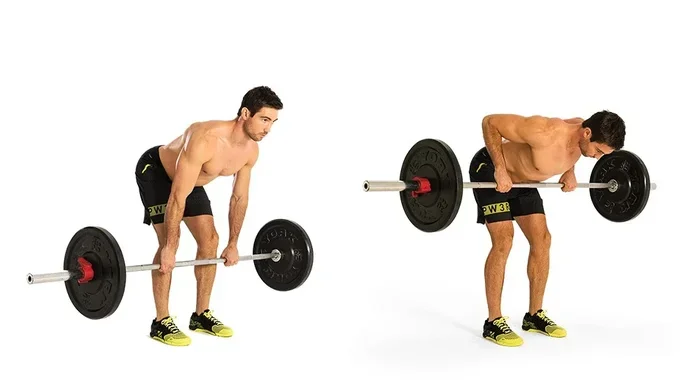
- Bent-Over Two-Arm Dumbbell Row: The king of back thickness. Keep your torso nearly parallel to the floor, pull the weights to your lower ribs, and squeeze your back. A true mass builder.
- Single-Arm Dumbbell Row (with bench support): Allows for a greater ROM and helps address side-to-side imbalances. Focus on pulling your elbow high and back, not just lifting the weight.
- Dumbbell Pullovers: A fantastic exercise that targets the lats and the serratus anterior (the “boxing muscle” on your ribcage). Lie perpendicular across a bench and lower the dumbbell in a wide arc behind your head, feeling a deep stretch in your lats.
- Reverse Flies (Rear Delts): Crucial for posture and back health. Bend at the hips, keep your back flat, and raise the dumbbells out to the side, squeezing your rear delts and mid-back.
The Vertical Push & Pull: Shoulders & Lats
Vertical pushing (overhead) and pulling (chin-ups/pulldowns mimic) complete the shoulder and back development.
- For Vertical Pull: This is the one area dumbbells are *technically* limited compared to a pull-up bar. However, you can still intensely target the lats vertically. The Dumbbell Pullover (mentioned above) is your best bet. Additionally, you can perform Straight-Arm Pulldowns using a resistance band looped over a door anchor or a heavy dumbbell held in both hands, arms straight, pulling down to your thighs while keeping arms locked. It’s an excellent lat stretcher and burner.
- For Vertical Push: You already have the seated/standing Dumbbell Shoulder Press. To add variation and more anterior delt focus, incorporate Dumbbell Upright Rows (use a neutral grip and pull to chin height, not higher, to protect the shoulder).
The Lower Body: Quads, Hamstrings, Glutes
Legs are not an afterthought. A good physique is a complete physique. Dumbbells can absolutely build powerful, sculpted legs.
- Goblet Squat: The ultimate dumbbell leg exercise. Holding one dumbbell vertically against your chest forces an upright torso, great for quad and glute emphasis. It’s also fantastic for learning and maintaining squat depth and form.
- Dumbbell Lunges (Walking, Reverse, Static): Unilateral (single-leg) movements are critical for balance, correcting imbalances, and maximizing glute/hamstring engagement. Walking lunges are a classic mass builder. Reverse lunges are easier on the knees.
- Dumbbell Romanian Deadlifts (RDLs): The premier hamstring and glute builder. Keep a slight knee bend, push your hips back, and maintain a flat back as you lower the weights along the front of your legs. Feel the stretch in your hamstrings.
- Dumbbell Step-Ups: Another fantastic unilateral movement that builds serious quad and glute strength. Use a sturdy bench or box. Drive through the heel of the stepping foot.
- Dumbbell Hip Thrusts: For pure glute development, this is hard to beat. Sit on the floor with your upper back against a bench, plant your feet, and thrust your hips upward, squeezing your glutes hard at the top. You can rest a dumbbell across your hips.
The Core & Arms: The Finishing Touches
Your core is worked indirectly by all the compound lifts (squats, rows, presses require bracing). But dedicated work ensures a tight, defined midsection.
- Dumbbell Russian Twists: Hold a dumbbell with both hands, sit at an angle, and rotate your torso.
- Dumbbell Plank Rows: In a plank position, row one dumbbell up at a time. This brutal exercise hits your core, back, and shoulders simultaneously.
- For Arms: You already have pressing movements for triceps. Add Overhead Triceps Extensions (two hands on one dumbbell) and Dumbbell Curls (any variation: standing, seated, hammer). The beauty of dumbbells is the full ROM and neutral grip options (hammer curls) that are wrist-friendly.
Program Design: How to Structure Your Week for Maximum Gains
Knowing the exercises is one thing; stringing them together into an effective, sustainable program is another. The principles are universal: progressive overload, sufficient volume, and adequate recovery.

Visual guide about Can You Build a Good Physique with Only Dumbbells
Image source: hevyapp.com
Frequency and Split Selection
For most people, training each muscle group 2 times per week is the sweet spot for growth. This leads us to two excellent split options for a dumbbell-only setup:
- The Upper/Lower Split: Simple and effective. Day 1: Upper Body (Push & Pull focus). Day 2: Lower Body. Repeat. This allows for 4 training days per week (e.g., Mon: Upper, Tue: Lower, Thu: Upper, Fri: Lower) with good recovery between sessions.
- The Push/Pull/Legs (PPL) Split: A classic for a reason. Day 1: Push (Chest, Shoulders, Triceps). Day 2: Pull (Back, Biceps, Rear Delts). Day 3: Legs. Repeat. This allows for 6 training days in a week (e.g., Push, Pull, Legs, Rest, Push, Pull, Legs) or you can do a 3-day version and repeat the cycle. PPL is fantastic for focusing on specific movement patterns each day.
Sample Upper Body Day (PPL Push Focus)
- Dumbbell Bench Press: 3 sets of 6-10 reps (heavy, compound)
- Dumbbell Shoulder Press: 3 sets of 8-12 reps
- Incline Dumbbell Flyes: 3 sets of 12-15 reps (lighter, stretch focus)
- Lateral Raises: 4 sets of 15-20 reps (isolation, high reps)
- Overhead Triceps Extension: 3 sets of 10-15 reps
- Triceps Pushdowns (with band/dumbbell): 2 sets of 15-20 reps (finisher)
Rest 60-90 seconds between sets for hypertrophy.
Sample Lower Body Day
- Goblet Squat: 4 sets of 8-12 reps (or Dumbbell Front Squat if you have two heavy dumbbells)
- Dumbbell Romanian Deadlift: 3 sets of 10-15 reps
- Walking Lunges: 3 sets of 10-12 reps per leg
- Dumbbell Hip Thrust: 3 sets of 12-15 reps
- Standing Calf Raises (holding dumbbells): 4 sets of 15-25 reps
The Golden Rule: Progressive Overload
This is the engine of growth. Every week, you must try to do a little more than the week before. This doesn’t always mean adding weight. Your overload ladder should be:
- Add Weight: The most straightforward. If you did 3×10 with 30lb dumbbells, try 3×10 with 32.5lb or 35lb next week.
- Add Reps: If you can’t add weight yet, do more reps with the same weight. Aim for the top of your rep range (e.g., 3×12 instead of 3×10).
- Add Sets: Increase from 3 working sets to 4.
- Improve Form/Mind-Muscle Connection: Slow the tempo down (e.g., 3 seconds down, 1 second up). Focus intensely on squeezing the target muscle. This increases time under tension and quality of contraction.
- Reduce Rest Time: Shortening rest periods from 90 to 75 seconds increases metabolic stress.
Keep a simple notebook or phone note. Write down the exercise, weight, and reps/sets you did. Your goal for the next session is written on that page.
Nutrition: The Other Half of the Equation
You can have the perfect dumbbell program, but without the right fuel, your body has nothing to build with. Think of training as the architect’s blueprint and nutrition as the construction materials and crew.

Visual guide about Can You Build a Good Physique with Only Dumbbells
Image source: hevyapp.com
Calories: The Foundation
To build muscle (bulking phase), you need to be in a caloric surplus. Eat 300-500 calories above your maintenance level. Use an online TDEE (Total Daily Energy Expenditure) calculator as a starting point. Track your weight weekly. You should gain 0.5-1 lb per week. If you’re not gaining, eat more. If you’re gaining too fast (more than 1.5 lbs/week with significant fat gain), eat slightly less. To lose fat while preserving muscle (cutting phase), be in a moderate deficit of 300-500 calories. A drastic deficit will cost you hard-earned muscle.
Protein: The Building Blocks
Protein is the amino acids that repair and build muscle tissue. Aim for 0.7-1 gram of protein per pound of bodyweight daily. For a 180lb person, that’s 126-180g. Distribute this across 3-5 meals. Good sources: chicken breast, turkey, lean beef, fish, eggs, Greek yogurt, cottage cheese, tofu, tempeh, lentils, and protein powder (a convenient supplement, not a necessity).
Carbs and Fats: The Energy & Hormone Managers
Don’t fear carbs. They fuel your intense dumbbell workouts. Prioritize complex carbs around your training (oats, rice, potatoes, whole grains). Fats are crucial for hormone production (testosterone). Get them from healthy sources: avocados, nuts, seeds, olive oil, fatty fish. A balanced plate for a meal might be: palm-sized protein, fist-sized complex carb, two fists of veggies, and thumb-sized healthy fat.
Common Mistakes & How to Avoid Them
Even with the best intentions, people derail their progress. Here are the biggest pitfalls with dumbbell-only training and how to sidestep them.
1. Neglecting Legs or Doing “Patty Cake” Leg Work
Some guys think upper body is all that matters. A physique with pencil legs looks absurd. Take your lower body days as seriously as your upper days. Go heavy on goblet squats and RDLs. The muscle growth hormones released from heavy leg work will also benefit your upper body.
2. Ego Lifting with Poor Form
This is the #1 mistake in any gym, but especially with dumbbells. Swinging a 50lb dumbbell in a bicep curl with your back and momentum does nothing for your biceps and risks injury. Use a weight you can control through the full range of motion. The last 2-3 reps of a set should be challenging but performed with perfect technique. If your form breaks, the set is over.
3. Lack of Variety or Stagnation
Doing the exact same 5 exercises for 6 months leads to a plateau. Every 8-12 weeks, change something. Swap out an exercise (e.g., replace flat bench with floor press to reduce shoulder strain and emphasize triceps). Change the rep scheme (from 8-10 to 12-15). Alter the tempo. This novel stimulus shocks the muscles into new growth.
4. Inconsistent Progressive Overload
Showing up and doing the same weight for the same reps every session is maintenance, not growth. You must push the envelope each week, even if it’s just by one rep or a slight tempo change. Your workout log is your proof of progress.
5. Forgetting About Recovery
Muscles grow when you rest, not when you train. Skimping on sleep (less than 7 hours) and not eating enough protein will sabotage your gains. You cannot out-train a bad diet or poor recovery. Prioritize sleep like it’s part of your job.
Real-World Success: What a Dumbbell-Only Physique Looks Like
Let’s visualize this. A physique built with only dumbbells is not a “lesser” version. It’s a complete, balanced, and functional physique. You’ll develop:
- A broad, thick back: From bent-over rows and pullovers, creating a powerful V-taper.
- A full, rounded chest: From presses and flyes in multiple angles, giving a “barrel-chested” or athletic look.
- Capable, rounded shoulders: From presses and lateral raises, providing that coveted 3D look and improving posture.
- Powerful, defined legs: From goblet squats, lunges, and RDLs. Think athletic sprinter or soccer player legs—strong, not bulky like a bodybuilder’s, but highly functional and aesthetic.
- A tight, strong core: Stabilized by every compound lift and directly worked with core exercises.
This is the physique of an athlete, a soldier, a functional fitness enthusiast. It’s built for performance and aesthetics. Many classic physiques from the early 20th century were built with little more than dumbbells, barbells, and bodyweight. The tool is secondary to the principles applied.
Conclusion: Your Path Starts Now
Can you build a good physique with only dumbbells? Not only can you, but you can build a phenomenal one. Dumbbells offer unparalleled versatility, joint safety, and stabilizer engagement that can lead to a more balanced, functional, and impressive physique than some machine-only routines. The secret sauce has never been the equipment; it’s the unwavering application of the fundamentals: progressive overload, intelligent exercise selection, meticulous nutrition, and dedicated recovery.
Stop waiting for the perfect gym membership or the next piece of equipment. The perfect tool is already in your hands. Pick up those dumbbells today. Master the movements. Get stronger. Eat to support your goals. Sleep like a champion. Be consistent for a year. Then look in the mirror. You’ll have your answer, and it will be a resounding “yes.” Your physique-building journey doesn’t require a gym full of machines. It requires commitment, and it starts with a single, controlled rep.
Frequently Asked Questions
Can you build muscle with only dumbbells as a beginner?
Absolutely. Dumbbells are ideal for beginners because they allow for natural movement patterns, help identify and correct side-to-side imbalances early, and are generally safer to learn with than barbells. Starting with a solid foundation of compound dumbbell movements will build excellent base strength and muscle.
Are dumbbells as good as barbells for building mass?
For most muscle groups, yes, they are equally effective, and in some cases superior due to increased range of motion and stabilizer engagement. The main exception is for the lower back and very maximal loads on squats and deadlifts, where a barbell allows for absolute maximum weight. However, for the vast majority of lifters, dumbbells provide more than enough load to stimulate significant muscle growth.
What muscle groups can be completely trained with dumbbells?
Every major muscle group can be effectively targeted: Chest (presses, flyes), Back (rows, pullovers), Shoulders (presses, raises), Biceps (curls), Triceps (extensions, presses), Quads (goblet squats, lunges), Hamstrings/Glutes (RDLs, hip thrusts), and Calves (raised). Core stability is also immensely improved through all the stabilization required.
How often should I train with dumbbells to see results?
Aim for 3-5 training sessions per week, following a structured split like Upper/Lower or Push/Pull/Legs. Each muscle group should be trained 2 times per week. Consistency over months is what yields visible results. Pair this with proper nutrition and sleep, and you’ll see changes in 8-12 weeks.
Can I get ‘big’ with only dumbbells, or will I just get ‘toned’?
“Big” and “toned” are the same thing—they both mean having more muscle mass and less body fat. “Toned” is just a marketing term for having visible muscle definition. Dumbbells can absolutely help you build significant muscle mass (“get big”) if you train with sufficient intensity and volume and eat in a caloric surplus with enough protein. There is no physiological limit to muscle growth imposed by using dumbbells instead of barbells.
What’s the biggest mistake people make when starting a dumbbell-only routine?
The biggest mistake is failing to implement progressive overload. They do the same exercises with the same weight for the same reps every session. You must track your workouts and strive to add a small increment of weight, reps, or sets each week. Without this continual increase in demand, your muscles have no reason to grow. Second is neglecting leg training—a dumbbell-only routine is not an excuse to skip leg day.