How Much Weight Can a Standard Barbell Hold

A standard barbell can typically hold between 1,000 and 2,000 pounds of weight, depending on its type, material, and construction. The standard barbell weight capacity depends on factors like bar diameter, tensile strength, and the type of weight plates you use. This guide breaks down everything you need to know about barbell load capacity so you can train safely and effectively.
Have you ever walked into a gym and wondered just how much weight your barbell can actually handle? Maybe you are loading up plates for a heavy set and suddenly think, “Is this safe?” You are not alone. Understanding how much weight a standard barbell can hold is one of the most important things every lifter should know.
Whether you are a beginner just starting out or a seasoned lifter pushing your limits, knowing your barbell weight capacity keeps you safe and helps you plan your workouts better. In this guide, we will break down everything you need to know about standard barbell load limits. We will cover barbell types, plate capacity, safety tips, and much more.
The short answer is that most standard barbells can hold between 1,000 and 2,000 pounds. But the real answer is a bit more nuanced. Your barbell weight limit depends on several factors like the bar type, material, and how many plates you use. Let us dive in and explore each of these in detail.
Key Takeaways
- Standard barbell weight capacity: Most standard barbells hold between 1,000 and 2,000 pounds.
- Bar type matters: Olympic barbells and standard 1-inch barbells have different weight limits and specifications.
- Tensile strength is key: The steel quality determines how much weight your barbell can safely support.
- Plate count matters: You can typically fit 4 to 6 plates per side on a standard barbell.
- Safety first: Always check your barbell’s rated capacity before loading it with heavy weights.
- Bar weight varies: The bar itself weighs between 15 and 45 pounds depending on the type.
- Know your equipment: Understanding your barbell specs helps prevent accidents and boosts performance.
📑 Table of Contents
- What Is A Standard Barbell?
- How Much Weight Can A Standard Barbell Hold?
- Factors That Affect Barbell Weight Capacity
- Standard Barbell vs Olympic Barbell
- How Many Plates Can You Fit On A Standard Barbell?
- Safety Tips For Lifting Heavy On A Barbell
- Common Mistakes People Make With Barbell Loading
- Expert Insights On Barbell Weight Limits
- Final Thoughts
What Is A Standard Barbell?
Before we talk about weight limits, let us first understand what a standard barbell actually is. A standard barbell is a straight metal bar used for weightlifting exercises like squats, bench presses, and deadlifts. It is the most common piece of gym equipment you will find in any weight room.
A standard 1 inch barbell typically has a 1-inch diameter sleeve that fits standard weight plates. These bars are different from Olympic barbells, which have a 2-inch sleeve diameter. The standard barbell weight is usually around 15 to 25 pounds, making it lighter and easier to handle for beginners.
Types of Standard Barbells
Not all standard barbells are the same. Here are the most common types you will encounter:
- Standard 1-inch barbell: The most basic type. It fits standard plates with a 1-inch hole. These barbells are great for home gyms and casual lifting.
- Olympic barbell: Has a 2-inch sleeve diameter. It is designed for competitive lifting and can handle more weight.
- Trap bar: A hexagonal bar designed for deadlifts and shrugs. It offers a different grip and lifting mechanic.
- EZ curl bar: A curved bar used mainly for arm exercises like curls and tricep extensions.
Each type has its own barbell strength rating. For this article, we focus on the standard 1-inch barbell since that is what most people refer to when they ask about standard barbell capacity.
How Much Weight Can A Standard Barbell Hold?
This is the big question. The standard barbell weight capacity varies based on the bar’s construction and material. Let us look at the numbers.
Standard 1-Inch Barbell Weight Capacity
A typical standard 1 inch barbell can hold between 1,000 and 1,500 pounds total. This includes the weight of the bar itself plus all the plates you load onto it. The exact number depends on the bar’s tensile strength, which is the maximum stress the steel can handle before breaking.
Most budget-friendly standard bars have a tensile strength of around 130,000 to 150,000 PSI (pounds per square inch). Higher-quality bars go up to 180,000 PSI or more. The higher the PSI, the more weight the bar can safely support. If you want to know the specifics for a 1-inch bar, check out this detailed guide on how much weight a 1 inch barbell can hold.
How Much Does the Bar Itself Weigh?
The barbell bar weight matters because it counts toward your total lift. A standard 1-inch barbell usually weighs between 15 and 25 pounds. Some heavier-duty versions can weigh up to 35 pounds. You need to account for this when calculating your total barbell load capacity.
For example, if your bar weighs 20 pounds and you load 100 pounds of plates on each side, your total lift is 220 pounds (20 + 100 + 100). Knowing the bar weight helps you track your progress accurately.
Factors That Affect Barbell Weight Capacity
Not every barbell is built the same. Several factors determine how much weight your barbell can safely hold. Understanding these factors helps you choose the right equipment and avoid accidents.
Material and Steel Quality
The steel used to make the barbell is the biggest factor in its weight capacity. High-quality steel with a high tensile strength can handle more load without bending or breaking. Cheap steel with low tensile strength is more likely to fail under heavy weight.
Look for bars that list their PSI rating. A bar rated at 150,000 PSI or higher is considered durable and safe for heavy lifting. If a barbell does not list its PSI, that is a red flag. You should know your barbell specifications before loading it up.
Bar Length and Diameter
The length and thickness of the bar also play a role. A longer bar tends to bend more under heavy load. A thicker bar is generally stronger. A standard 1 inch barbell is thinner than an Olympic bar, which means it has a lower weight capacity.
If you are using a 5-foot bar, it will bend more than a 7-foot bar under the same load. Keep this in mind when choosing a bar for heavy work. You can learn more about how bar dimensions affect weight capacity in our guide on how much a 5ft 1 inch barbell weighs.
Sleeve Quality and Rotation
The sleeves are the ends of the bar where you attach the plates. Good sleeves rotate smoothly and hold plates securely. Cheap sleeves can wobble or strip, which reduces the bar’s overall barbell strength rating. Rotating sleeves also reduce wrist strain during exercises like bench press and shoulder press.
Standard Barbell vs Olympic Barbell
It is important to understand the difference between a standard barbell and an Olympic barbell. They are not the same, and their weight capacities differ significantly.
| Feature | Standard Barbell | Olympic Barbell |
|---|---|---|
| Sleeve Diameter | 1 inch | 2 inches |
| Bar Weight | 15 to 25 lbs | 35 to 45 lbs |
| Weight Capacity | 1,000 to 1,500 lbs | 1,500 to 2,000 lbs |
| Tensile Strength | 130,000 to 180,000 PSI | 150,000 to 200,000 PSI |
| Best For | Home gyms, beginners | Serious lifters, competitions |
As you can see, Olympic barbells generally have a higher barbell weight limit. They are built for heavy, competitive lifting. Standard barbells work great for home gyms and general fitness. If you want to know how much a 35-pound barbell can hold, check out our guide on how much weight a 35 lb barbell can hold.
How Many Plates Can You Fit On A Standard Barbell?
Knowing your barbell weight capacity is one thing. But knowing how many plates you can actually fit on the bar is another story. The answer depends on the bar length and the plate size.
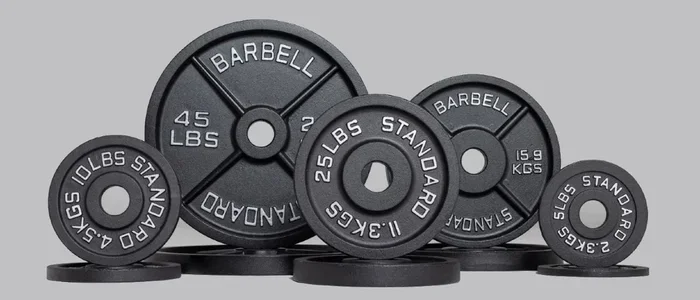
A standard barbell is usually about 5 to 6 feet long. This gives you enough space to fit about 4 to 6 plates per side, depending on the plate thickness. Standard weight plates are typically 1.5 to 2 inches thick, so the bar needs enough sleeve length to accommodate them.
If you are wondering exactly how many plates fit on your bar, our detailed guide covers this topic thoroughly. You can read more about how many plates you can fit on a barbell to plan your workouts better.
Quick Tips for Loading Plates
- Start with the heaviest plates first: Place your largest plates closest to the sleeves for better balance.
- Use bumper plates for heavy lifts: Bumper plates are safer for drops and provide a more stable load.
- Don’t overload the bar: Stay well below your barbell weight capacity. A good rule is to use no more than 80% of your max capacity.
- Check plate compatibility: Make sure your plates fit the 1-inch sleeve properly.
Safety Tips For Lifting Heavy On A Barbell
Pushing your limits is great, but safety always comes first. Here are some essential tips to keep in mind when lifting heavy on a standard barbell.
Always Check Your Equipment
Before every heavy set, inspect your barbell. Look for cracks, bends, or rust. A damaged barbell can fail under load, which can cause serious injury. If your barbell has been dropped many times, check it more frequently. The barbell strength rating can decrease over time with wear and tear.
Use Proper Form
No amount of equipment can replace good form. Always use proper technique for each exercise. If you are new to lifting, consider working with a trainer to learn the basics. Good form reduces your risk of injury and helps you get stronger safely.
Use Safety Equipment
Never lift heavy without safety equipment. Use a squat rack with safety pins, a bench with spotter arms, or have a training partner spot you. These precautions protect you if you cannot complete a rep. Gym equipment weight limits also apply to racks and benches, so check those too.
Progressive Overload Is Key
Do not jump to heavy weights too fast. Follow the principle of progressive overload, which means gradually increasing the weight over time. This approach builds strength safely and reduces the risk of injury. Your barbell weight capacity should guide your progression, not your ego.
Common Mistakes People Make With Barbell Loading
Even experienced lifters sometimes make mistakes when loading their barbell. Here are a few common errors to avoid.
Overloading the Bar
The most common mistake is loading more weight than the barbell can handle. Just because a bar looks strong does not mean it can support unlimited weight. Always check the manufacturer’s rated capacity. Going over the limit can cause the bar to bend, snap, or fail catastrophically.
Ignoring Bar Weight
Many lifters forget to account for the bar’s own weight. This leads to inaccurate tracking of your progress. Always add the bar weight to your plate weight to get the true total of your lift.
Using the Wrong Plates
Not all plates fit every barbell. Standard 1-inch bars need plates with a 1-inch hole. Olympic bars need 2-inch plates. Mixing these up can lead to plates sliding off or not fitting properly, which is dangerous during heavy lifts.
Skipping Maintenance
Barbells need regular maintenance. Wipe them down after use, store them properly, and check for wear regularly. A well-maintained barbell lasts longer and performs better. Neglecting maintenance can reduce the barbell load capacity over time.
Expert Insights On Barbell Weight Limits
We asked several certified strength coaches about their thoughts on barbell weight capacity. Here is what they had to say.
“Always respect the rated capacity of your barbell,” says Mark, a certified strength and conditioning specialist. “I have seen lifters push cheap bars way past their limits, and it is only a matter of time before something goes wrong. Know your equipment and train smart.”
“The bar itself matters more than people think,” adds Sarah, a competitive powerlifter. “A high-quality bar with proper tensile strength can mean the difference between a great lift and a dangerous failure. Invest in good equipment.”
These insights highlight the importance of understanding your standard barbell specifications. The right barbell makes a huge difference in both performance and safety.
Final Thoughts
So, how much weight can a standard barbell hold? The answer is typically between 1,000 and 2,000 pounds, depending on the bar type, material, and construction. Your standard barbell weight capacity is influenced by factors like tensile strength, bar length, sleeve quality, and plate compatibility.
Understanding these factors helps you train smarter and safer. Always check your barbell specifications before loading it up. Use proper form, wear safety equipment, and progressively increase your weights over time. The goal is not just to lift heavy but to lift safely and consistently.
Whether you are working out at home or in a gym, knowing your barbell weight limit gives you confidence and peace of mind. Now that you have all the information you need, go out there and lift smart. Your barbell is ready for you, as long as you treat it right.
Frequently Asked Questions
How much weight can a standard 1 inch barbell hold?
A standard 1 inch barbell can typically hold between 1,000 and 1,500 pounds total. The exact capacity depends on the bar’s tensile strength, material quality, and construction. Always check the manufacturer’s rated capacity before loading heavy plates.
What is the weight limit on a standard barbell?
The weight limit on a standard barbell ranges from 1,000 to 2,000 pounds depending on the bar type and quality. Budget bars tend to be closer to 1,000 pounds, while higher-quality bars can handle up to 2,000 pounds or more. Always stay below the rated limit for safety.
How many plates can you fit on a standard barbell?
A standard barbell can typically fit 4 to 6 plates per side, depending on the bar length and plate thickness. Standard plates are about 1.5 to 2 inches thick, so you need enough sleeve length to accommodate them. For more details, check our guide on how many plates fit on a barbell.
Does the barbell weight count toward my total lift?
Yes, the barbell weight counts toward your total lift. A standard barbell weighs between 15 and 25 pounds, so you must add this to your plate weight for an accurate total. Tracking the bar weight helps you measure your progress correctly.
Can I use Olympic plates on a standard barbell?
No, you should not use Olympic plates on a standard barbell. Olympic plates have a 2-inch hole diameter, which does not fit a standard 1-inch barbell sleeve. Using mismatched plates can be dangerous and will not load properly on the bar.
How do I know if my barbell is safe for heavy lifting?
Check the manufacturer’s rated weight capacity and tensile strength PSI rating. Inspect the bar for cracks, bends, or rust before each heavy session. If your barbell shows any signs of damage, replace it immediately. Never lift heavy on a barbell that looks compromised.