How to Do Barbell Squats on Smith Machine
Barbell squats on the Smith machine are a fantastic way to build strong legs with added safety and control. This guide walks you through the exact setup, form, and technique you need to get the most out of every rep. Whether you are a beginner or looking to refine your squat game, you will find clear, actionable steps inside.
Barbell squats on the Smith machine are one of the most popular lower body exercises you can do in any gym. They combine the raw power of a barbell squat with the guided stability of a machine. This makes them perfect for beginners and seasoned lifters alike. In this guide, we break down everything you need to know to perform this exercise safely and effectively.
If you have ever felt intimidated by free weight squats, the Smith machine offers a welcoming alternative. The bar follows a fixed path, which removes the balance challenge. You can focus entirely on your squat form and muscle engagement. But do not let the machine fool you. Smith machine squats still demand proper technique and respect for the weight.
The beauty of the Smith machine is its versatility. You can adjust the bar angle, change your stance width, and target different muscle groups. Whether your goal is building muscle, increasing strength, or rehabbing an injury, this exercise fits the bill. Let us dive into the details.
Key Takeaways
- Proper Setup Matters: Adjusting the bar height and foot placement correctly is essential for safe and effective Smith machine squats.
- Controlled Movement Is Key: The Smith machine guides the bar path, but you still need to control the descent and drive through your heels.
- Avoid Common Mistakes: Locking your knees, using too much weight, and poor foot placement can lead to injury.
- Great for Beginners: The fixed bar path makes Smith machine squats a confidence builder for those new to barbell training.
- Targets Multiple Muscle Groups: You work your quads, glutes, hamstrings, and core all at once with proper form.
- Pair With Accessories: Adding a safety squat bar or adjusting the stance can change the focus of the exercise.
📑 Table of Contents
- What Is a Smith Machine Barbell Squat?
- How to Set Up the Smith Machine for Squats
- Step-by-Step Barbell Squat Technique
- Common Mistakes to Avoid
- Benefits of Smith Machine Squats vs Free Weight Squats
- How to Program Smith Machine Squats Into Your Routine
- Expert Tips for Better Smith Machine Squats
- Final Thoughts
What Is a Smith Machine Barbell Squat?
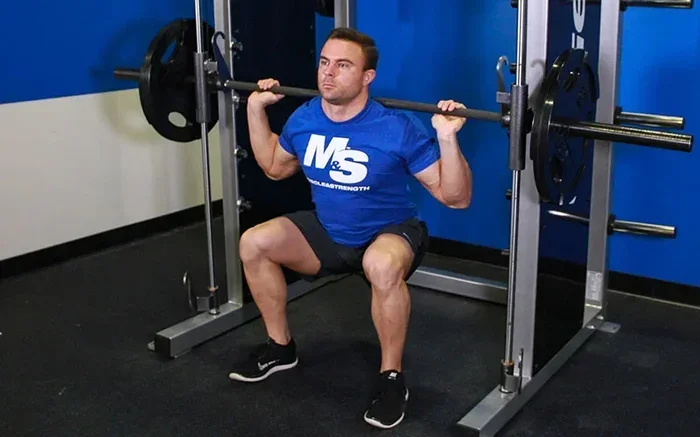
A Smith machine squat is a variation of the traditional barbell squat performed on a Smith machine. The machine features a barbell fixed within steel rails, allowing it to move only up and down. This creates a guided path that helps you maintain a consistent barbell squat technique throughout the movement.
Unlike a free weight squat where you must stabilize the bar yourself, the Smith machine removes that variable. The bar locks into the rails and moves along a predetermined track. This can be incredibly helpful for those learning proper squat form or recovering from injuries. However, it also changes the way your muscles work compared to a traditional squat.
The Smith machine bar typically weighs between 15 and 25 pounds, depending on the model. This is much lighter than a standard Olympic barbell, which weighs 45 pounds. You can check the exact Smith machine bar weight at your gym to calculate your total load accurately. Knowing this number helps you track your progress over time.
Why Choose the Smith Machine Over Free Weights?
There are several reasons lifters choose the Smith machine for squats. First, it provides a built-in safety mechanism. If you fail a rep, you can simply rack the bar at any point along the rails. There is no need for a spotter. This makes solo training much safer and more convenient.
Second, the guided path reduces the risk of the bar tipping or shifting. This is especially helpful for beginners who are still developing their barbell squat technique. Third, the Smith machine allows you to isolate specific muscle groups more easily by adjusting foot placement and squat depth. It is a valuable tool in any leg workout routine.
How to Set Up the Smith Machine for Squats
Proper setup is the foundation of a great Smith machine squat. Skipping this step can lead to poor form and potential injury. Take the time to dial in your settings before every set.
Step 1: Adjust the Bar Height
Stand inside the Smith machine and look straight ahead. The bar should be positioned at about shoulder height when you are standing tall. If the bar is too low, you will struggle to unrack it. If it is too high, you waste energy lifting it off the hooks. Most Smith machines have adjustable hooks, so find the height that feels natural for your body.
Once you have the right height, step under the bar and position it across your upper traps. This is the same spot as a free weight squat. Grip the bar lightly with both hands to secure it. Unrack the bar by straightening your legs and pushing it off the hooks. Take a step or two back to create space.
Step 2: Set Your Foot Placement
Your feet are the most important contact point during a Smith machine squat. Stand with your feet shoulder-width apart or slightly wider. Point your toes out at about 15 to 30 degrees. Your heels should be flat on the floor. If you have long legs, you may need a wider stance to maintain balance.
The bar path on a Smith machine is straight, which means your body position needs to match that path. Place your feet far enough forward so that when you squat down, your knees track over your toes. If your feet are too far back, you place excessive stress on your knees and lower back.
For a more quad-focused movement, stand with a narrower stance and place your feet slightly forward. For a glute and hamstring emphasis, use a wider stance and position your feet further back. Experiment to find what works best for your body type and goals.
Step 3: Choose the Right Weight
Start with the bar alone to practice your movement pattern. Once you feel comfortable, add weight in small increments. A good rule of thumb is to increase by 5 to 10 pounds per set until you reach a challenging but manageable load. If you are unsure about proper weight selection, you can read our guide on how to put weights on a barbell for squats for more detailed guidance.
Do not ego lift on the Smith machine. The guided path can make heavy weights feel easier than they actually are. Focus on controlled reps with proper form. Your muscles will feel the work even at lighter weights.
Step-by-Step Barbell Squat Technique
Now that you are set up, let us walk through the actual movement. Follow these steps carefully for every rep.
- Unrack the bar. Straighten your legs and push the bar off the hooks. Hold it across your upper traps with your chest up.
- Take a stance. Step back and plant your feet at your chosen width and angle. Keep your toes pointed slightly outward.
- Begin the descent. Bend at your hips and knees simultaneously. Lower your body as if sitting back into a chair. Keep your knees tracking over your toes.
- Reach proper depth. Descend until your thighs are at least parallel to the floor. Deeper is fine if your mobility allows it and your form stays solid.
- Drive upward. Push through your heels and midfoot. Extend your hips and knees to return to the starting position. Keep your core tight throughout.
- Repeat. Perform your desired number of reps with control. Do not let the bar bounce at the bottom.
Keep your back straight and your core braced throughout the movement. Do not lean forward excessively. The Smith machine guides the bar, but your body still needs to maintain a neutral spine. If you feel your lower back rounding, stop the set and reassess your form.
For more detailed guidance on squat form and how to avoid pain, check out our article on how to do barbell squats without hurting your neck. Proper head and neck positioning plays a big role in overall squat comfort.
Common Mistakes to Avoid
Even with the guidance of a Smith machine, mistakes can happen. Here are the most common errors and how to fix them.
Mistake 1: Locking Your Knees at the Top
Fully locking your knees at the top of the squat puts unnecessary stress on the joint. Keep a slight bend in your knees at the top of each rep. This maintains tension in your muscles and protects your knee ligaments. It is a small adjustment that makes a big difference.
Mistake 2: Feet Too Far Back
Because the Smith machine bar moves in a straight line, placing your feet too far back forces your knees past your toes. This increases shear force on the knee joint. Always position your feet so that your knees track naturally over your ankles throughout the movement.
Mistake 3: Using Too Much Weight
The Smith machine can make heavy weights feel deceptively manageable. Resist the urge to load up too quickly. Focus on mastering the movement pattern first. You can always add weight once your form is solid and consistent.
Mistake 4: Neglecting Your Core
Your core stabilizes your entire body during a squat. If you let your core go soft, your lower back takes on extra stress. Brace your abs as if someone is about to punch you in the stomach. This simple cue keeps your spine safe and your lifts stronger.
Want to learn more about proper squat execution? Our article on how to do barbell squats without hurting your neck covers additional tips for keeping your body safe during every squat session.
Benefits of Smith Machine Squats vs Free Weight Squats
Both Smith machine squats and free weight squats have their place in a well-rounded training program. Here is a quick comparison to help you understand the differences.
| Factor | Smith Machine Squat | Free Weight Squat |
|---|---|---|
| Stability | High (guided bar path) | Moderate (requires balance) |
| Muscle Activation | Slightly lower stabilizer engagement | Higher stabilizer engagement |
| Safety | Built-in racking at any point | Requires spotter or safety arms |
| Bar Path | Fixed vertical path | Natural angled path |
| Best For | Beginners, rehab, isolation work | Advanced lifters, functional strength |
| Learning Curve | Low | Moderate to High |
Smith machine squats are not inferior to free weight squats. They simply serve a different purpose. The fixed bar path reduces the demand on your stabilizer muscles, which allows you to focus more on the target muscles. This can be beneficial for hypertrophy and muscle building. For overall functional strength and athletic performance, free weight squats have the edge. But for targeted leg development and safety, the Smith machine is hard to beat.
How to Program Smith Machine Squats Into Your Routine
Knowing how to perform the exercise is only half the battle. You also need to program it effectively into your training plan. Here are some practical guidelines.
Rep Ranges and Sets
For muscle building, aim for 3 to 4 sets of 8 to 12 reps. This rep range hits the sweet spot for hypertrophy. If your goal is strength, use heavier weights and aim for 4 to 5 sets of 5 to 8 reps. For endurance and conditioning, go lighter and perform 3 sets of 15 to 20 reps.
If you are unsure about how many reps or sets to do, you can check our detailed guide on how many reps of barbell squats should I do for a more in-depth breakdown.
Frequency
Train your legs 2 to 3 times per week with Smith machine squats. Allow at least 48 hours of rest between sessions targeting the same muscle groups. This gives your muscles time to recover and grow. Pair Smith machine squats with other leg exercises like lunges, leg presses, and Romanian deadlifts for a complete lower body workout.
Progressive Overload
Like any exercise, progressive overload drives results. Add small amounts of weight each week. Track your reps, sets, and weights in a workout log. Over time, these small increases add up to significant strength and muscle gains. The Smith machine makes it easy to track your progress because the weight increments are precise and controlled.
Expert Tips for Better Smith Machine Squats
Here are some pro tips that can instantly improve your Smith machine squats.
- Wear flat-soled shoes. Running shoes with cushioning create an unstable base. Flat shoes like Converse or weightlifting shoes give you a solid foundation and better force transfer.
- Use a safety squat bar if available. Some Smith machines have safety bars that reduce shoulder strain. This is especially helpful for those with limited shoulder mobility.
- Control the eccentric phase. Take 3 to 4 seconds to lower the bar. This increases time under tension and maximizes muscle growth.
- Squeeze your glutes at the top. At the top of each rep, consciously contract your glutes. This improves muscle activation and helps you stand taller.
- Breathe properly. Inhale as you descend and exhale as you drive up. Proper breathing supports your core and maintains intra-abdominal pressure.
These small adjustments can make a huge difference in the quality of your reps. Do not overlook them. The details matter when it comes to building strength and avoiding injury.
Final Thoughts
Smith machine barbell squats are a powerful tool for building strong, well-developed legs. They offer safety, stability, and versatility that make them accessible to lifters of all levels. By following the setup, technique, and programming guidelines in this article, you can get the most out of every squat session.
Remember to focus on proper squat form above all else. Start with lighter weights and build from there. Avoid the common mistakes we covered, and always listen to your body. If something feels off, stop and reassess. The Smith machine is a great assistant, but your technique is what drives real results.
Now that you have all the information you need, it is time to hit the gym and put these tips into action. Your legs will thank you. Stay consistent, stay patient, and enjoy the journey of getting stronger with every squat.
Frequently Asked Questions
What weight should I start with for Smith machine squats?
Start with just the bar, which typically weighs 15 to 25 pounds on a Smith machine. Practice your form with the empty bar until you feel confident. Then add weight in small increments of 5 to 10 pounds per session. This gradual approach helps you build proper technique without risking injury.
Are Smith machine squats as effective as free weight squats?
Smith machine squats are effective but work slightly differently than free weight squats. The guided bar path reduces stabilizer muscle engagement, which can be helpful for targeting specific muscles. For overall functional strength, free weight squats have an edge. But for hypertrophy and safety, Smith machine squats are excellent.
Can Smith machine squats help with knee pain?
Yes, when performed correctly, Smith machine squats can actually help strengthen the muscles around your knees and reduce pain. The key is proper foot placement and controlled movement. If you have existing knee issues, consult a doctor or physical therapist before starting any new exercise program.
How deep should I squat on the Smith machine?
Aim for at least parallel, where your thighs are level with the floor. If your mobility allows, you can squat deeper for greater glute and hamstring activation. Never sacrifice form for depth. If your lower back starts to round or your heels lift, stop at the depth where your form remains solid.
How often should I do Smith machine squats?
Training your legs 2 to 3 times per week with Smith machine squats is a good starting point. Allow at least 48 hours of rest between sessions. This gives your muscles adequate time to recover and grow. Pair squats with other leg exercises for a balanced lower body workout.
Can beginners do barbell squats on the Smith machine?
Absolutely. The Smith machine is one of the best tools for beginners learning how to squat. The fixed bar path removes the balance challenge and allows you to focus on squat form and muscle activation. Start with the empty bar, master the movement, and gradually increase weight over time.
=== CONCLUSION ===
Mastering barbell squats on the Smith machine opens the door to stronger, more defined legs with greater safety and confidence. The guided bar path makes this exercise accessible to everyone, from complete beginners to experienced lifters looking to isolate specific muscles. By following the setup steps, maintaining proper form, and avoiding common mistakes, you will get the most out of every squat session.
Remember that consistency is the real key to progress. Show up, focus on your technique, and trust the process. The Smith machine is a reliable partner on your strength journey. Use it wisely, and the results will follow. Now go out there and squat strong.