
How Much Does a Smith Machine Barbell Weight
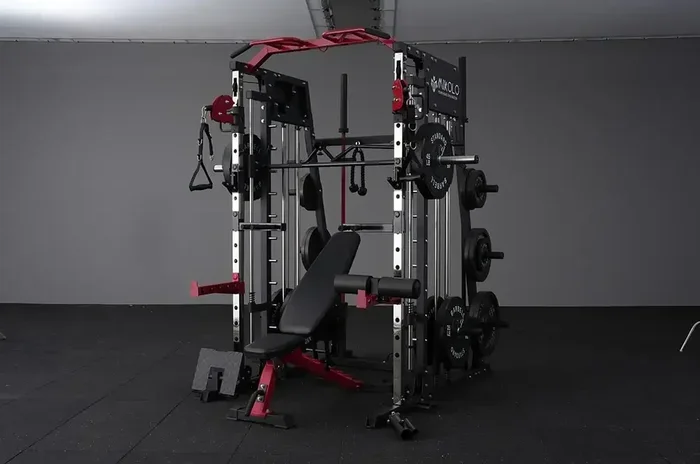
The typical Smith machine barbell weight ranges from about 15 to 25 pounds (6.8 to 11.3 kg), which is lighter than a standard Olympic barbell. Understanding the Smith machine bar weight is crucial for tracking your lifting progress accurately and setting the right baseline for your resistance training routine.
Key Takeaways
- Smith machine bars are lighter: Most Smith machine barbells weigh between 15 and 25 pounds, compared to the standard 45-pound Olympic barbell.
- Bar weight varies by brand: Different manufacturers use different materials and designs, so the barbell weight on Smith machine can differ significantly.
- Fixed vs. free weights matter: The guided track system changes how the bar feels and moves, affecting your weight training experience.
- Know your equipment: Checking the actual weight of your specific Smith machine bar prevents miscalculations in your load capacity tracking.
- Use it strategically: The Smith machine is great for beginners, isolation exercises, and safely pushing past failure points.
📑 Table of Contents
- What Is a Smith Machine and Why Does Barbell Weight Matter?
- How Much Does a Smith Machine Barbell Actually Weigh?
- Smith Machine Barbell Weight vs. Free Weight Barbells
- Factors That Affect Smith Machine Barbell Weight
- Common Smith Machine Barbell Weight Mistakes
- Tips for Getting the Most Out of Your Smith Machine
- Expert Insights on Smith Machine Bar Weights
- Conclusion
What Is a Smith Machine and Why Does Barbell Weight Matter?
The Smith machine is one of the most popular pieces of equipment in any gym. It features a barbell locked into vertical or angled rails, which guides the bar along a fixed bar path. This machine-assisted setup gives lifters extra stability during exercises like squats, bench presses, and shoulder presses.
Knowing the how much does a Smith machine barbell weight matters for several reasons. First, it directly affects how you calculate your working load. If you think the bar weighs 45 pounds (like a standard Olympic barbell) but it actually weighs only 20, you are adding far less resistance than you think. That gap can throw off your entire resistance training plan.
Second, understanding the bar weight helps you track progress accurately. When you lift heavy on a Smith machine, every pound counts. Misjudging the starting weight means your numbers lie to you over time. Third, the vertical movement system changes how muscles engage compared to free weights, so knowing the baseline weight helps you adjust accordingly.
Why Lifters Need to Know This Number
Many beginners assume all barbells weigh the same. That assumption leads to confusion when switching between a free weight barbell and a Smith machine. Some people also wonder about how much a barbell weighs at the gym, and the answer changes depending on the equipment type. The Smith machine bar weight is almost always lighter, which can actually benefit new lifters building confidence.
How Much Does a Smith Machine Barbell Actually Weigh?
The short answer is that it depends. Most Smith machine barbells fall somewhere between 15 and 25 pounds (roughly 6.8 to 11.3 kg). However, several factors push that number up or down. For a more detailed breakdown, check out how much a barbell weighs on Smith machine across different setups.
Some machines use a standard fixed barbell weight of about 20 pounds. Others go lighter at 15 pounds, especially compact models designed for home gyms. Commercial-grade units sometimes use heavier bars closer to 25 pounds. You can learn more about the specifics by reading what the weight of a Smith machine barbell is across various brands.
Common Weight Ranges by Brand
Here is a quick look at what you might expect from popular manufacturers:
- Life Fitness: Typically around 20 pounds (9 kg). The bar sleeve length and build quality keep it consistent.
- Hammer Strength: Often closer to 22 to 25 pounds (10 to 11.3 kg). These commercial units use heavier steel.
- Cybex: Usually around 15 to 20 pounds (6.8 to 9 kg). Designed for smoother machine-assisted lifting.
- Home models: Can drop to 12 to 15 pounds (5.4 to 6.8 kg). Lighter materials reduce the overall gym equipment weight.
The best approach is to check the label or ask gym staff. If you want to compare the Smith machine bar against other equipment, you might also want to know how much a standard barbell weighs in kg. That comparison makes it easy to see the difference between free and fixed systems.
Angled vs. Vertical Smith Machines
Another factor is the machine angle. Angled Smith machines tilt slightly forward, mimicking natural body movement. Vertical Smith machines keep the bar perfectly straight. The angle does not always change the bar weight, but it does change how the load feels on your joints and muscles. Some angled models use slightly different bar specs, which can shift the total weight by a pound or two.
Smith Machine Barbell Weight vs. Free Weight Barbells
Comparing the barbell weight on Smith machine setups to free weights reveals some big differences. A standard Olympic barbell weighs 45 pounds (20.4 kg) for men and 35 pounds (15.9 kg) for women. A Smith machine bar typically weighs 15 to 25 pounds. That gap of 10 to 30 pounds is significant.
Side-by-Side Comparison
| Feature | Smith Machine Bar | Standard Olympic Bar |
|---|---|---|
| Typical Weight | 15 to 25 lbs | 45 lbs (men) / 35 lbs (women) |
| Bar Path | Fixed vertical or angled | Free movement |
| Stabilizer Muscles Used | Minimal | High |
| Best For | Isolation, beginners, safety | Compound, strength building |
| Weight Capacity | Usually 600 to 1000 lbs | Usually 1000+ lbs |
As the table shows, the Smith machine uses a lighter bar but still supports serious loading. The fixed bar path reduces the need for stabilizer muscles, which means your primary movers do more work. This can be a plus or a minus depending on your goals. For more details on how barbell weight varies across settings, how heavy the barbell on a Smith machine depends heavily on the specific unit and manufacturer.
Why the Difference Matters for Your Workout
When you move from free weights to a Smith machine, the lighter bar creates a lower starting point. Adding 45 pounds on a Smith machine might feel like 55 to 65 pounds on a free bar because of the reduced load capacity and machine assistance. Your muscles experience less total resistance even if the plates look the same. This is why tracking the exact bar weight is so important for honest progress logging.
Factors That Affect Smith Machine Barbell Weight
Several things determine exactly how much a Smith machine barbell weighs. Not every machine is built the same, and small design choices add up. Here are the key factors to consider.
Material and Build Quality
Steel thickness plays the biggest role. Thicker steel bars weigh more. Cheaper home models sometimes use thinner tubing to keep costs down, which drops the bar weight. Commercial gyms usually invest in heavy-duty units that keep the fixed barbell weight closer to 20 pounds or higher.
Bearing Type
The bearings inside the machine affect how smoothly the bar moves. Ball bearings and linear bearings add slight weight to the bar assembly. Some machines use bushings instead, which are lighter but create more friction. This small detail changes the feel of every rep even if the actual weight difference is minor.
Bar Sleeve Length
The bar sleeve length also contributes. Standard Olympic bars have about 16 inches of sleeve on each side. Some Smith machine models use shorter sleeves to save space or weight. Shorter sleeves mean less steel, which means a lighter bar overall.
Safety Catches and Attachments
Many Smith machines include built-in safety catches or J-hooks. These additions can shift the balance point and slightly affect the total bar weight. While the change is small, it matters when you are calculating precise loads for weight training programs.
Common Smith Machine Barbell Weight Mistakes
Even experienced lifters make mistakes when it comes to the how much does a Smith machine barbell weight question. Avoiding these errors keeps your training honest and effective.
Assuming All Bars Are 45 Pounds
This is the number one mistake. People assume the bar weighs the same as their home free weight barbell. It does not. That assumption inflates your perceived load and makes your progress numbers look worse than they are. Always verify the actual weight before loading plates.
Ignoring the Machine Angle
An angled Smith machine changes how your body positions under load. Even if the bar weighs the same as a vertical model, the movement feels different. Your muscles recruit differently, which can trick your brain into thinking the weight changed. Account for this when evaluating your strength gains.
Not Accounting for Plate Weight
Some gym plates are not exactly their labeled weight. Older or cheap plates can be off by one to three pounds. Combined with a lighter Smith machine bar, this creates a noticeable gap. If you are serious about progress, consider using a barbell that weighs correctly on its own as a reference point to calibrate your perception.
Skipping the Warm-Up Set
Jumping straight into heavy sets on a Smith machine without warming up is risky. The fixed vertical movement removes the natural balance adjustments your body makes with free weights. Start light, confirm the bar path feels right, and then build up gradually.
Tips for Getting the Most Out of Your Smith Machine
Now that you understand the Smith machine bar weight inside and out, here are practical tips to maximize your sessions.
Start With a Logbook or App
Write down the exact bar weight every time. Use an app or notebook to record the total load, reps, and sets. Over weeks and months, this data reveals real strength trends. You will see exactly how your load capacity improves.
Use Lighter Loads for Isolation Work
The Smith machine shines for exercises like tricep pushdowns, face pulls, and lateral raises. The guided bar path keeps the movement smooth and safe. You do not need heavy loads to get results from these movements. Let the machine do the stabilizing so you can focus on the target muscles.
Push Past Failure Safely
One major benefit of the Smith machine is the built-in safety catches. You can push to true failure without a spotter. This is perfect for advanced techniques like drop sets and rest-pause training. The machine-assisted lifting system catches the bar instantly if you lose control.
Combine With Free Weights
The best weight training programs blend free weights and machines. Use barbells and dumbbells for compound lifts like deadlifts and squats. Then switch to the Smith machine for isolation work or when you want a more controlled environment. This combination builds balanced strength and reduces injury risk.
Quick Tips for Beginners
- Ask before assuming: Always confirm the Smith machine bar weight with staff or a label.
- Start light: Begin with just the bar and add plates gradually.
- Focus on form: The fixed path helps, but bad form still causes injury.
- Track everything: Honest logging beats guessing every time.
Expert Insights on Smith Machine Bar Weights
Strength coaches often emphasize that the barbell weight on Smith machine should never be guessed. Certified personal trainer Mike Reinold notes that understanding equipment specifics helps lifters set realistic expectations. The Smith machine guide from most manufacturers includes the exact bar weight, and it is worth finding that document.
Another expert tip involves periodization. Your resistance training program should account for the fact that the Smith machine bar is lighter than a standard bar. When transitioning from free weights to the machine, reduce your expected numbers by 10 to 20 percent initially. Give your body time to adapt to the different bar path and reduced stabilizer demand. For more information on equipment weights, you can also read how much a barbell weighs for bench press to understand variations across setups.
Conclusion
So, how much does a Smith machine barbell weight really come to? The answer is typically between 15 and 25 pounds, depending on the brand, model, and build quality. This is significantly lighter than the standard 45-pound Olympic barbell, and that difference impacts how you plan and track your workouts.
Understanding the Smith machine bar weight gives you a solid foundation for honest progress tracking, smarter programming, and safer training. Do not assume, do not guess, and do not skip the verification step. Whether you are a beginner exploring machine-assisted lifting or an experienced lifter refining your load capacity, knowing your equipment is the first step to using it effectively.
Take the time to measure, record, and learn your specific machine. Your future self will thank you when the numbers in your logbook actually mean something. Now get to the gym and put that knowledge to work.
Frequently Asked Questions
How much does a Smith machine barbell weigh on average?
Most Smith machine barbells weigh between 15 and 25 pounds (6.8 to 11.3 kg). The exact weight depends on the brand, material thickness, and machine design. Commercial models tend to be closer to 20 to 25 pounds, while home units may be as light as 15 pounds. Always check the manufacturer specifications for your specific machine.
Is a Smith machine bar lighter than a standard barbell?
Yes, a Smith machine bar is almost always lighter than a standard Olympic barbell. A standard men’s Olympic bar weighs 45 pounds, while the average Smith machine bar weighs around 15 to 25 pounds. This difference means you should not assume the same total load when switching between free weights and a Smith machine. You might also want to check how heavy the barbell on a Smith machine is compared to your regular setup.
Why does Smith machine bar weight vary by brand?
The barbell weight on Smith machine varies because manufacturers use different steel thicknesses, bearing types, and bar sleeve lengths. Higher-end commercial units use thicker steel and more robust components, which adds weight. Home models prioritize affordability and compactness, often resulting in a lighter bar. The fixed barbell weight is directly tied to build quality and intended use case.
Can I use the Smith machine for heavy squats and bench press?
Yes, you can use the Smith machine for heavy squats and bench press, but with some caution. The guided vertical movement reduces stabilizer muscle involvement, so your primary movers handle more of the load. Make sure the machine’s load capacity supports your planned weight. Use safety catches and always prioritize proper form over lifting heavy.
How do I find the exact weight of my Smith machine bar?
Check the manufacturer’s manual or the label on the machine itself. You can also ask gym staff for the exact number. Another method is to load known plate weights and test the total against a barbell weight at Planet Fitness or any gym with a calibrated scale. Knowing the exact weight removes guesswork from your weight training logs.
Does an angled Smith machine bar weigh more than a vertical one?
Not necessarily. The angle of the machine changes the bar path and how your body moves, but the bar weight often stays similar. Some angled models use slightly different bar specs, which could shift the weight by a pound or two. The bigger difference is how the bar path affects muscle engagement and comfort during exercises like squats and presses. The Smith machine barbell weight itself is not usually the main variable between angled and vertical models.


