How Much Does a Barbell Weigh on Its Own
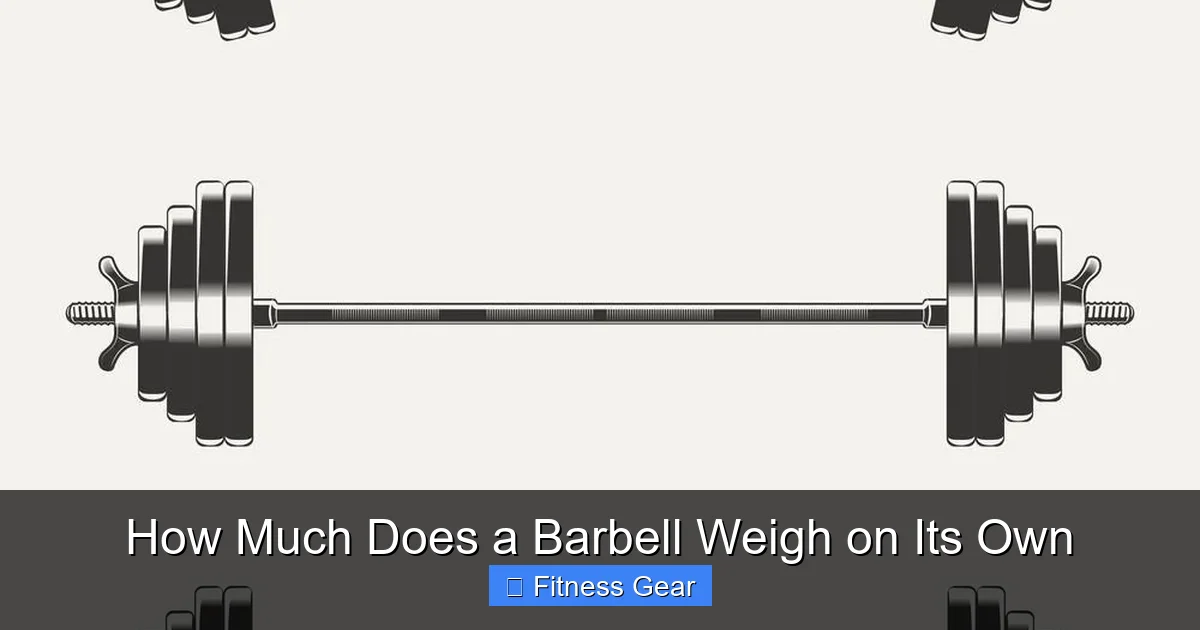
Ever wonder how much a barbell weighs before you add plates? This guide breaks down the standard weights of Olympic, standard, and specialty bars, explains why the weight matters, and offers tips for selecting the perfect bar for your training goals. Get clear answers and practical advice in minutes.
Key Takeaways
- Standard Olympic bar weight: 45 lb (20 kg) for men, 35 lb (15 kg) for women.
- Standard (non‑Olympic) bar weight: typically 15–25 lb (7–11 kg) depending on length and material.
- Specialty bars vary: EZ curls, trap bars, and safety‑bars can weigh anywhere from 30 lb to 70 lb.
- Why bar weight matters: It influences balance, loading strategy, and the accuracy of your strength measurements.
- Choosing the right bar: Match the bar’s weight and dimensions to your sport, lift style, and space constraints.
- Check manufacturer specs: Not all “Olympic” bars are identical; verify length, sleeve diameter, and knurling.
- Maintenance tips: Proper cleaning and storage keep the bar’s weight consistent and extend its life.
📑 Table of Contents
- Introduction: Why Knowing the Bare Weight of a Barbell Matters
- 1. The Classic Men’s Olympic Barbell
- 2. The Women’s Olympic Barbell
- 3. Standard (Non‑Olympic) Barbells
- 4. Specialty Bars and Their Unique Weights
- 5. How Bar Weight Impacts Your Training
- 6. Buying Guide: Choosing the Right Bar for Your Needs
- Conclusion: Know Your Bar, Lift With Confidence
Introduction: Why Knowing the Bare Weight of a Barbell Matters
When you walk into a gym, the first thing you see is a rack of shiny metal bars. You might grab a pair of plates, load them up, and start your lift without a second thought. But have you ever stopped to ask, “How much does this barbell weigh on its own?” Knowing the exact weight of the empty bar is more than trivia—it’s a crucial piece of information that affects:
- How you calculate total load for strength tests.
- The balance and feel of each lift.
- The safety of your setup, especially when you’re training alone.
In the next few pages, we’ll break down the most common barbell types, give you the exact numbers you need, and show you how to use that knowledge to improve your training.
1. The Classic Men’s Olympic Barbell
Standard specifications
The men’s Olympic barbell is the gold standard in most commercial gyms. Its “standard” weight is 45 lb (20 kg). That figure is consistent across most reputable manufacturers, but let’s look at the details that make up that number.

Visual guide about How Much Does a Barbell Weigh on Its Own
Image source: marathonhandbook.com
- Length: 86.6 in (2.20 m)
- Sleeve diameter: 2 in (50 mm) – fits 2‑inch plates.
- Sleeve length: 16.3 in (415 mm) – room for up to 45 lb plates on each side.
- Bar diameter: 28 mm – the “grip” area.
- Knurling: Usually medium‑aggressive, centered for powerlifting or slightly wider for Olympic lifting.
Why the 45‑lb weight is important
When you add plates, you’re really only adding to that base 45 lb. If you’re tracking a 1‑rep max (1RM), you need to subtract 45 lb from the total weight you load to get the true weight you’re moving. Forgetting this can lead to inaccurate logs and stalled progress.
Practical tip
When you first start a new program, write down the bar’s weight on your notebook or phone. Then every time you load plates, add the bar’s weight automatically. It becomes a habit in less than a week.
2. The Women’s Olympic Barbell
Standard specifications
The women’s Olympic bar is designed for a slightly smaller grip and lighter base weight. It weighs 35 lb (15 kg) and measures 81.3 in (2.06 m) in length. Key dimensions include:
Visual guide about How Much Does a Barbell Weigh on Its Own
Image source: marathonhandbook.com
- Sleeve diameter: 2 in (50 mm) – same as the men’s bar, so plates are interchangeable.
- Sleeve length: 15.2 in (385 mm).
- Bar diameter: 25 mm – a thinner grip for smaller hands.
- Knurling: Usually a bit lighter than the men’s bar, but still provides a solid hold.
When to use a women’s bar
Even male lifters sometimes prefer the women’s bar for certain movements—like overhead presses or clean & jerks—because the thinner shaft can feel more comfortable. If you’re training for Olympic weightlifting, a women’s bar can be a great option for technique work.
Practical tip
If you share a gym with both men’s and women’s bars, label the racks. A quick visual cue helps you avoid loading the wrong bar and miscalculating your total weight.
3. Standard (Non‑Olympic) Barbells
What makes them “standard”?
Standard barbells are the budget‑friendly cousins of Olympic bars. They usually have a 1‑inch sleeve, meaning they only accept standard plates (the ones with 1‑inch holes). Because they’re lighter and shorter, they’re common in home gyms and commercial “multi‑use” racks.

Visual guide about How Much Does a Barbell Weigh on Its Own
Image source: barbend.com
Typical weight range
Most standard bars weigh between 15 lb and 25 lb (7–11 kg). The exact weight depends on:
- Length (often 5–6 ft).
- Material (solid steel vs. hollow‑core).
- Whether the bar has a “tapered” or “straight” design.
When to choose a standard bar
If you’re a beginner, have limited space, or primarily do bodyweight‑based routines, a standard bar can be a smart, cost‑effective choice. Just remember that you’ll need standard plates, which are not interchangeable with Olympic plates.
Practical tip
Use a kitchen scale to weigh your standard bar once you get it. That one‑time check eliminates guesswork and helps you track progress accurately.
4. Specialty Bars and Their Unique Weights
EZ Curl Bar
Designed for arm work, the EZ curl bar typically weighs 20–25 lb (9–11 kg). Its curved shape reduces wrist strain, but the weight is lighter than a standard Olympic bar.
Trap (Hex) Bar
Trap bars come in two common versions: a “standard” 45‑lb model and a “heavy” 60‑lb (27 kg) version. The weight difference is due to the thicker steel needed for the hexagonal shape, which offers a more stable lifting position for deadlifts and shrugs.
Safety (Squat) Bar
Safety bars often weigh 45–55 lb (20–25 kg). The extra weight comes from the padded shoulder pads and wider grip area, which makes them feel heavier even before you add plates.
Swiss Bar (Multi‑Grip Bar)
These bars have multiple handles and usually weigh around 35–45 lb (15–20 kg). The varied grips make them versatile for chest and shoulder work, but the added hardware adds weight.
Practical tip
When you switch between specialty bars, always reset your “bar weight” entry in your training app or notebook. It’s easy to forget and end up logging a heavier lift than you actually performed.
5. How Bar Weight Impacts Your Training
Balance and stability
A heavier bar can feel more stable under heavy loads, especially in lifts like the deadlift or squat. Conversely, a lighter bar may feel “tippy” when you’re loading plates asymmetrically.
Programming and percentages
Most strength programs are built on percentages of your 1RM. If you miscalculate the bar’s weight, you’ll be training at the wrong intensity. For example, a 200‑lb squat programmed at 75 % should be 150 lb total—including the bar. If you think the bar is 35 lb instead of 45 lb, you’ll load 115 lb of plates, which is 10 % off.
Progress tracking
Accurate bar weight helps you track true progress. When you finally hit a new PR, you’ll know exactly how much you added beyond the bar itself.
Safety considerations
If you’re training alone, knowing the bar’s weight helps you set up proper “spotter” strategies. For instance, you can calculate the exact weight on each side and make sure the rack’s safety pins are set correctly.
Practical tip
Print a small cheat‑sheet with the bar weights you own and tape it inside your rack. A quick glance before you load plates saves time and prevents errors.
6. Buying Guide: Choosing the Right Bar for Your Needs
Assess your goals
- Powerlifting: Go for a 45‑lb men’s Olympic bar with a stiff, aggressive knurl.
- Olympic lifting: Choose a men’s or women’s Olympic bar with rotating sleeves.
- Home gym basics: A 15‑25 lb standard bar is budget‑friendly and space‑saving.
- Specialty work: EZ curl, trap, or safety bars add variety—pick based on the lifts you love.
Check the specifications
Even within the “Olympic” category, bars differ in tensile strength, whip (flex), and sleeve rotation. Look for:
- Tensile strength: 190,000–210,000 psi for high‑quality steel.
- Whip: A slight flex helps Olympic lifts but can feel “soft” for powerlifting.
- Finish: Chrome, black oxide, or zinc—each offers different durability and grip.
Budget vs. longevity
A high‑end Olympic bar costs $250–$500, while a standard bar can be under $100. If you plan to lift heavy regularly, investing in a quality Olympic bar pays off in durability and consistent weight.
Space considerations
Standard bars are shorter, making them easier to store in tight garages. Olympic bars need more room, especially with plates stacked on the 16‑inch sleeves.
Practical tip
Before buying, test‑lift the bar (many specialty stores allow this). Feel the balance, knurl, and overall weight. If it feels right, you’ll enjoy it for years.
Conclusion: Know Your Bar, Lift With Confidence
Understanding how much a barbell weighs on its own is a simple yet powerful piece of knowledge. It affects every aspect of your training—from accurate programming to safe loading and long‑term progress tracking. Whether you’re using a 45‑lb men’s Olympic bar, a 15‑lb standard bar, or a specialty trap bar, take a moment to note its weight and keep that number handy.
When you start each session, add the bar’s weight to your plate calculations, and you’ll lift with precision, confidence, and safety. Happy training!
Frequently Asked Questions
What is the standard weight of a men’s Olympic barbell?
The standard men’s Olympic barbell weighs 45 lb (20 kg). This weight is consistent across most reputable manufacturers.
Do women’s Olympic bars weigh the same as men’s?
No. Women’s Olympic bars weigh 35 lb (15 kg), making them lighter while still using the same 2‑inch sleeves for plates.
Can I use standard plates on an Olympic bar?
Standard plates have a 1‑inch hole and will not fit the 2‑inch sleeves of an Olympic bar. You need Olympic‑compatible plates for those bars.
Why does a trap bar sometimes weigh more than a regular Olympic bar?
Trap bars have a thicker, hexagonal frame and often include reinforced steel for added stability, which can increase the bar’s overall weight to 60 lb or more.
How can I quickly verify the weight of my bar at home?
Use a bathroom or kitchen scale. Place the bar on the scale and record the reading. This one‑time check ensures accurate logging.
Is a heavier bar better for powerlifting?
Heavier bars (like a 45‑lb Olympic bar) provide more stability during heavy lifts, but the most important factor is the bar’s stiffness and knurling, not just its weight.