What Is the Weight of a Smith Machine Barbell

Wondering how heavy a Smith machine barbell really is? Most standard bars weigh 15 lb (7 kg), but variations exist across manufacturers and models. Learn the differences, how to adjust for accurate lifts, and smart tips for using the Smith machine safely.
Key Takeaways
- Understanding What Is The Weight Of A Smith Machine Barbell: Provides essential knowledge
📑 Table of Contents
- Introduction: Why the Weight of a Smith Machine Barbell Matters
- 1. The Standard Weight: 15 lb (7 kg) – The Baseline
- 2. Brand‑Specific Variations: When the Bar Gets Heavier
- 3. Home‑Gym vs. Commercial Machines: Different Priorities
- 4. How the Bar’s Weight Affects Your Workout Programming
- 5. Safety Considerations: The Bar Isn’t the Only Thing to Watch
- 6. Frequently Overlooked Factors: Counterweights, Counterbalance Systems, and More
- Conclusion: Knowing the Weight Empowers Your Lifts
Introduction: Why the Weight of a Smith Machine Barbell Matters
If you’ve ever walked into a gym and seen that sleek, guided bar gliding up and down a set of rails, you’ve probably wondered how heavy it is. The answer isn’t as simple as “it’s the same as a regular barbell.” In fact, the weight of a Smith machine barbell can affect everything from your rep count to the total load you lift.
Knowing the exact weight helps you:
- Track progress accurately.
- Program workouts that match your strength goals.
- Stay safe by avoiding overload.
- Compare the Smith machine to free‑weight exercises.
In this guide, we’ll break down the typical weight ranges, explain why manufacturers differ, and give you practical tips for using the Smith machine like a pro.
1. The Standard Weight: 15 lb (7 kg) – The Baseline
What “standard” really means
Most commercial Smith machines—think of the ones you find in big box gyms—use a bar that weighs about 15 lb (7 kg). This matches the weight of a standard Olympic bar’s shaft only, without the extra weight of the rotating sleeves found on free‑weight bars.

Visual guide about What Is the Weight of a Smith Machine Barbell
Image source: i.pinimg.com
Why manufacturers choose 15 lb
There are three main reasons:
- Consistency: It mirrors the weight of a typical Olympic bar’s shaft, making it easy for lifters to estimate total load.
- Safety: A lighter bar reduces stress on the machine’s rails and safety catches.
- Cost: Using a lighter steel bar keeps production costs down.
How it feels in the gym
When you first step onto a Smith machine, the bar feels “lighter” than a free‑weight bar of the same plate load. That’s because you’re not fighting the bar’s own weight as much. It can be a confidence boost for beginners, but experienced lifters must remember to add that 15 lb to every set for true progression.
2. Brand‑Specific Variations: When the Bar Gets Heavier
Popular brands and their typical weights
While 15 lb is the industry norm, several brands deviate:
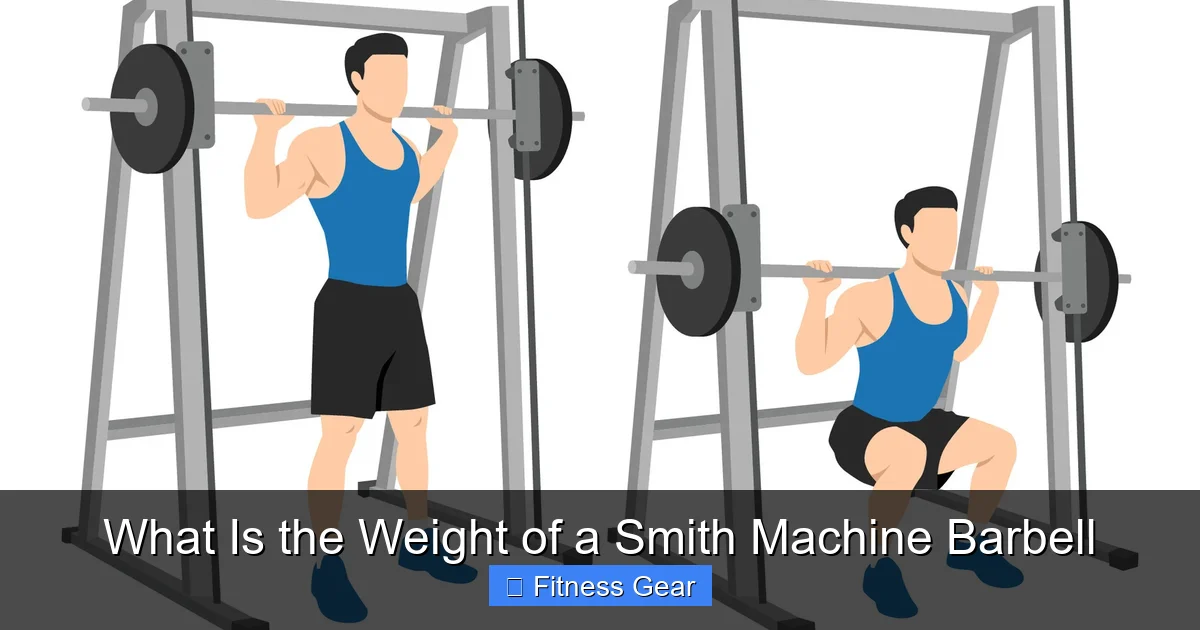
Visual guide about What Is the Weight of a Smith Machine Barbell
Image source: static.vecteezy.com
- Rogue Fitness: Their “Rogue S-1” Smith bar weighs 20 lb (9 kg) because of added counterweights for smoother motion.
- Body‑Solid: Some models use a 25 lb (11 kg) bar to increase stability on the rails.
- Marcy & Valor Fitness: Often stick to the 15 lb standard but may have slight variations (+/- 1 lb) due to manufacturing tolerances.
Why the extra weight?
Heavier bars can improve balance on the rails, especially on machines with longer travel distances. The added mass also reduces vibration, making the lift feel more “solid.” However, the trade‑off is a higher baseline load, which can be a surprise for newcomers.
Real‑world example
Imagine you’re doing a Smith machine bench press with 45 lb plates on each side. On a 15 lb bar, your total load is 105 lb. On a 25 lb bar, the same plates give you 115 lb. That 10‑lb difference can affect your rep count, especially at higher intensities.
3. Home‑Gym vs. Commercial Machines: Different Priorities
Why home machines are often lighter
Home‑gym Smith machines are built for smaller spaces and lighter frames. Manufacturers often use a 10‑12 lb (4.5‑5.5 kg) bar to keep the overall weight down, making the unit easier to move and assemble.

Visual guide about What Is the Weight of a Smith Machine Barbell
Image source: d2m0n84d5tgmh1.cloudfront.net
Impact on training
If you transition from a home machine (10 lb bar) to a commercial gym (15 lb bar), you’ll notice a sudden jump in perceived effort. Adjust your plate loading accordingly, and consider adding a small “dummy weight” (like a 5 lb plate) to the bar when you’re at home to mimic the heavier feel.
Tip: Use a scale to verify
Place the bar on a bathroom scale with no plates. Note the reading. This quick check eliminates guesswork and helps you program accurately.
4. How the Bar’s Weight Affects Your Workout Programming
Calculating total load
Every set’s total weight = bar weight + (plate weight × 2). For example, on a 15 lb bar with two 25 lb plates per side, total = 15 + (25×2×2) = 115 lb.
Progression strategies
- Micro‑loading: Add 2.5 lb plates on each side instead of jumping to the next full size. The bar weight stays constant, so the increase is precise.
- Bar weight awareness: When you move from a 15 lb to a 20 lb bar, add an extra 5 lb to your “starting weight” to keep progression linear.
- Volume calculations: Multiply total load by reps and sets. Knowing the bar weight prevents under‑ or over‑estimating weekly volume.
Practical tip for beginners
Start with the bar alone. Perform a set of 8–10 reps to feel the weight. Then add plates gradually, always counting the bar’s weight in your totals.
5. Safety Considerations: The Bar Isn’t the Only Thing to Watch
Setting the safety stops correctly
Because the bar moves on fixed rails, you can set safety catches at any point. Always position them just below your lowest comfortable range of motion. This protects you if you fail a rep, regardless of bar weight.
Maximum load limits
Every Smith machine has a published weight limit—usually between 500–800 lb (227–363 kg). The bar’s own weight counts toward this limit, so never exceed the manufacturer’s rating.
Grip and hand placement
A heavier bar can feel “thick” in the hands. Use a mixed grip (one overhand, one underhand) for heavy pulls, but keep the grip width consistent to avoid shoulder strain.
Maintenance tip
Periodically lubricate the rails with a silicone spray. A smooth glide reduces the effort needed to move a heavier bar and extends the machine’s lifespan.
6. Frequently Overlooked Factors: Counterweights, Counterbalance Systems, and More
What are counterweights?
Some Smith machines incorporate a hidden counterweight system that balances the bar, making the effective weight feel lighter than the actual bar. This is common in high‑end commercial units.
How to identify a counterbalanced system
- Listen for a “whoosh” sound when the bar moves—indicates a pneumatic or hydraulic aid.
- Check the user manual; manufacturers will note if the bar is “counterbalanced.”
- Test by lifting the bar with no plates. If it feels significantly lighter than 15 lb, a counterweight is at work.
Impact on training
Counterbalanced bars can help beginners develop proper form without fighting the bar’s inertia. However, advanced lifters should be aware that the bar’s perceived weight may not reflect the actual load when plates are added.
Adjusting your programming
If your machine is counterbalanced, add an extra 5–10 lb to your calculated total load to approximate the effort you’d feel on a non‑counterbalanced bar.
Conclusion: Knowing the Weight Empowers Your Lifts
The Smith machine is a versatile piece of equipment, but its barbell weight isn’t always obvious. Whether you’re using a 15 lb standard bar, a 20 lb heavy‑duty version, or a lightweight home‑gym model, understanding that number is key to accurate programming, safe training, and steady progress.
Take a moment to weigh your bar, note the manufacturer’s specifications, and adjust your plate loading accordingly. With that knowledge in hand, you can lift confidently, track real progress, and make the most of every rep on the Smith machine.
Frequently Asked Questions
What is the typical weight of a Smith machine barbell?
Most commercial Smith machines use a bar that weighs about 15 lb (7 kg), which is similar to the shaft of an Olympic bar.
Do all Smith machine bars weigh the same?
No. Some brands add counterweights, resulting in bars that weigh 20–25 lb (9–11 kg). Home‑gym models can be as light as 10 lb (4.5 kg).
How can I find out the exact weight of my machine’s bar?
Place the bar on a bathroom scale with no plates attached. The reading is the bar’s weight. Check the user manual for manufacturer specifications, too.
Does the bar’s weight affect how I calculate my total load?
Absolutely. Total load = bar weight + (plate weight × 2). Forgetting the bar’s weight can lead to inaccurate programming.
Are there safety concerns specific to heavier Smith machine bars?
Heavier bars increase the baseline load, so always set the safety stops appropriately and never exceed the machine’s maximum weight rating.
Can a counterbalanced Smith machine make the bar feel lighter?
Yes. Counterweight or hydraulic systems can reduce the perceived effort. Add a small extra weight to your calculations to match the effort of a non‑counterbalanced bar.