Which Is Better for Chest Barbell or Dumbbells
Both barbell and dumbbell chest exercises are excellent for building strength and muscle. The barbell allows you to lift heavier weights, while dumbbells offer a greater range of motion and better muscle activation. Your choice depends on your goals, experience level, and any joint concerns you may have.
Key Takeaways
- Barbell presses let you lift heavier: This makes them great for building raw strength and overall muscle mass.
- Dumbbells provide a fuller range of motion: They allow your chest muscles to stretch more, which can lead to better muscle activation.
- Dumbbells are easier on your joints: They reduce shoulder strain and allow for more natural movement patterns.
- Barbells are better for progressive overload: Adding weight is simpler and more precise with a barbell.
- Both tools have a place in your routine: Using a combination of barbell and dumbbell exercises gives you the best of both worlds.
- Your fitness goals should guide your choice: Strength-focused lifters may prefer barbells, while hypertrophy-focused lifters may lean toward dumbbells.
- Form matters more than the tool: Proper technique with either barbell or dumbbells will always beat poor form with the other.
📑 Table of Contents
- Barbell vs Dumbbells for Chest: Which One Wins?
- What Is the Barbell Bench Press?
- What Is the Dumbbell Chest Press?
- Barbell vs Dumbbell for Chest: Head-to-Head Comparison
- Which One Builds More Muscle?
- Which Is Safer for Your Shoulders?
- How to Choose the Right Option for You
- The Best Chest Workout Strategy
- Common Mistakes to Avoid
- Final Thoughts on Barbell vs Dumbbells for Chest
Barbell vs Dumbbells for Chest: Which One Wins?
If you have been hitting the gym for any amount of time, you have probably wondered about the barbell or dumbbells debate. Both are staple tools for building a strong, well-developed chest. But which one is truly better? The answer is not as simple as picking a winner. Each tool has unique strengths that serve different goals, experience levels, and body types.
In this guide, we will break down everything you need to know. You will learn how each tool affects muscle growth, strength gains, joint health, and overall performance. By the end, you will know exactly which option fits your chest workout routine best.
The barbell or dumbbells for chest question comes up constantly among gym-goers of all levels. Beginners often feel overwhelmed by the choices. Even seasoned lifters sometimes second-guess their go-to exercises. Let us clear up the confusion and give you a clear path forward.
What Is the Barbell Bench Press?
The barbell bench press is one of the most popular exercises in any gym. It targets the pectoral muscles, front deltoids, and triceps. Because both hands grip a single bar, the movement is fixed and stable. This stability allows you to lift heavier weights compared to dumbbells.
Benefits of Barbell Chest Press
- Heavier loading: You can stack more weight on a barbell, which drives raw strength gains.
- Progressive overload is simple: Adding small plates makes it easy to track and increase your lifts over time.
- Great for building mass: Heavy compound movements like the barbell bench press stimulate significant muscle growth.
- Stabilizes both sides equally: The fixed path of the bar ensures balanced development across your chest.
Drawbacks of Barbell Chest Press
- Limited range of motion: The bar stops you from lowering the weight as far as dumbbells allow.
- Higher shoulder stress: The fixed movement pattern can put extra strain on your shoulder joints.
- Requires a spotter: Lifting heavy barbells alone can be risky without someone watching.
- Less stabilizer muscle engagement: Because the bar guides the movement, smaller stabilizing muscles do less work.
What Is the Dumbbell Chest Press?
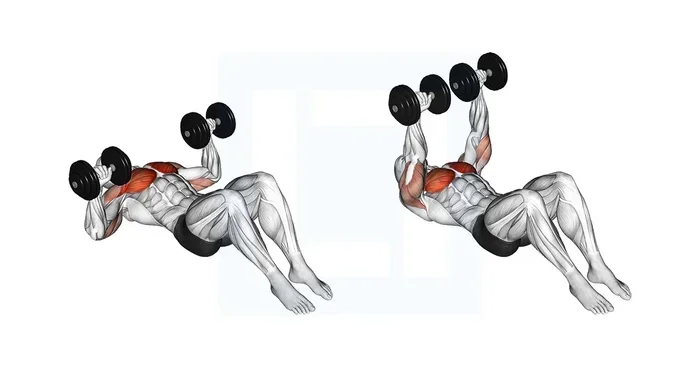
Dumbbell chest exercises include the dumbbell bench press, incline dumbbell press, and dumbbell flyes. With a dumbbell in each hand, your arms move independently. This freedom allows for a more natural path of motion and a deeper stretch at the bottom of each rep.
Benefits of Dumbbell Chest Work
- Greater range of motion: Dumbbells let you lower the weight further, which increases muscle activation.
- Better for shoulder health: The natural movement path reduces joint stress and discomfort.
- Unilateral training: Each arm works independently, helping to fix strength imbalances over time.
- More stabilizer muscle recruitment: Your body works harder to control each dumbbell, engaging more muscle fibers.
Drawbacks of Dumbbell Chest Work
- Lower weight capacity: You will likely lift less total weight compared to a barbell.
- Harder to progressive overload: Adjusting dumbbell weights in small increments can be tricky.
- Requires more balance: Each arm must stabilize its own weight, which can fatigue you faster.
- More setup time: Loading and unloading dumbbells takes longer than loading a barbell.
Barbell vs Dumbbell for Chest: Head-to-Head Comparison
Let us put the two side by side so you can see the differences clearly. The table below breaks down the key factors that matter most for your chest training.
| Factor | Barbell | Dumbbells |
|---|---|---|
| Maximum Weight | Higher | Lower |
| Range of Motion | Limited | Full |
| Joint Friendliness | Moderate | High |
| Muscle Activation | Good | Excellent |
| Progressive Overload | Easy | Moderate |
| Stabilizer Engagement | Lower | Higher |
| Best For | Strength & Mass | Hypertrophy & Detail |
| Injury Risk | Moderate | Lower |
| Learning Curve | Moderate | Easier |
As you can see, neither tool is clearly better in every category. The barbell or dumbbells for chest debate really comes down to what you want to achieve. If your top priority is lifting the heaviest weight possible, the barbell has the edge. If you care more about muscle detail, full stretch, and joint health, dumbbells take the lead.
Many lifters ask whether barbell or dumbbells for chest is the better choice for building a bigger chest. The truth is that both contribute to chest growth in different ways. The barbell builds the foundation of strength, while dumbbells add shape, detail, and balance. The best approach uses both.
Which One Builds More Muscle?
Muscle building, or hypertrophy, depends on several factors. These include tension, volume, range of motion, and progressive overload. Both barbell and dumbbell exercises can trigger muscle growth effectively. However, they do so through slightly different mechanisms.
Barbell exercises allow you to use heavier loads. Heavy weights create high mechanical tension, which is one of the primary drivers of muscle growth. When you bench press a heavy barbell, your chest muscles are under significant load throughout the movement.
Dumbbell exercises, on the other hand, provide a deeper stretch and greater muscle activation. Studies show that a fuller range of motion can lead to more muscle fiber recruitment. This means each rep with dumbbells may do more work for your chest muscles than the same rep with a barbell.
For the best results, consider alternating between barbell and dumbbell movements. One week you might focus on heavy barbell presses. The next week, shift your emphasis to dumbbell presses and flyes. This variation keeps your muscles guessing and promotes continuous growth.
If you are still deciding between barbell or dumbbells for chest, here is a practical tip. Start your workout with barbell presses when your energy is highest. Then finish with dumbbell exercises to fully fatigue the chest muscles from a different angle.
Expert Insight on Muscle Building
Many professional coaches recommend a hybrid approach. They suggest using the barbell for your main compound lift and dumbbells for accessory work. This strategy combines the strength benefits of the barbell with the muscle-building benefits of dumbbells. It is the approach used by many elite powerlifters and bodybuilders alike.
Which Is Safer for Your Shoulders?
Shoulder health is a major concern for anyone who trains chest regularly. The bench press, whether barbell or dumbbell, places significant stress on the shoulder joint. However, the two tools affect your shoulders in different ways.
The barbell forces your arms into a fixed path. This can be problematic if you have pre-existing shoulder issues or poor mobility. The locked-in position may cause the shoulder to sit in a vulnerable spot under heavy load. Over time, this can lead to impingement or rotator cuff strain.
Dumbbells allow your shoulders to move more naturally. Each arm finds its own path, which reduces the risk of awkward positioning. The ability to rotate your wrists and adjust the angle slightly at the bottom of each rep makes dumbbells much friendlier for sensitive shoulders.
If you have had shoulder problems in the past, dumbbells are generally the safer choice. You can also try incline dumbbell press variations, which tend to be gentler on the shoulder joint. For a deeper look at incline exercises, you can read our guide on which is better incline dumbbell press or barbell press.
Quick Tips for Shoulder-Safe Chest Training
- Keep your elbows at about 45 degrees: This reduces shoulder strain regardless of whether you use a barbell or dumbbells.
- Do not flare your elbows too wide: A moderate elbow tuck protects the shoulder joint.
- Warm up your shoulders before pressing: Light band work and dynamic stretches prepare the joint for heavy loads.
- Stop if you feel pain: Discomfort is different from sharp pain. Listen to your body and adjust accordingly.
- Use a controlled tempo: Avoid bouncing the weight off your chest, which spikes injury risk.
How to Choose the Right Option for You
Choosing between barbell or dumbbells for chest comes down to your personal situation. Several factors should influence your decision. Let us walk through them so you can make a confident choice.
Consider Your Fitness Goals
If your main goal is to get stronger on the bench press, the barbell is your best friend. Powerlifters and strength-focused athletes rely heavily on barbell training. The fixed path and ability to load heavy weight make it the ideal tool for building maximal strength.
If your goal is to build a bigger, more defined chest, dumbbells have a lot to offer. The greater range of motion and muscle activation help create a more complete physique. Bodybuilders often favor dumbbells for this reason.
Consider Your Experience Level
Beginners may find dumbbells easier to start with. They require less technical skill and allow for a more natural movement pattern. You can learn the basic pressing motion without worrying about balancing a heavy barbell.
Intermediate and advanced lifters often benefit from barbell work because it allows them to push heavier loads. However, even advanced lifters should include dumbbell exercises in their routine for balanced development and joint health.
Consider Your Equipment Access
If you train at a fully equipped gym, you have access to both barbells and dumbbells. Take advantage of both. If you train at home, your equipment may be limited. A adjustable dumbbell set can be a great investment if you can only choose one option.
For those who train at home and want to compare options, check out our article on is it better to do dumbbell bench or barbell for more guidance on home setup decisions.
Consider Any Existing Injuries or Limitations
Your health history should always guide your exercise choices. If you have a history of shoulder, wrist, or elbow injuries, dumbbells give you more freedom to work around those issues. The ability to adjust the angle and range of motion is a huge advantage when recovering from or managing an injury.
On the other hand, some people with wrist issues find that a barbell is easier to hold because the wrists stay in a neutral position. Your individual needs should always come first.
The Best Chest Workout Strategy
The most effective chest workouts use both barbell and dumbbell exercises. This approach gives you the strength benefits of the barbell and the muscle-building benefits of dumbbells. Here is a simple framework you can follow.
- Start with a heavy barbell compound lift: Barbell bench press or barbell incline press for 3 to 4 sets of 5 to 8 reps.
- Move to a dumbbell compound movement: Dumbbell bench press or incline dumbbell press for 3 sets of 8 to 12 reps.
- Finish with a dumbbell isolation exercise: Dumbbell flyes or cable flyes for 2 to 3 sets of 12 to 15 reps.
This combination ensures you build strength first and then carve out muscle detail. It is the strategy used by countless successful lifters and bodybuilders. You can find more exercise comparisons on our site, including our article on is it better to do dumbbell bench or barbell for additional insights.
Sample Weekly Chest Routine
- Day 1 (Heavy Barbell Focus): Barbell bench press, barbell incline press, dips.
- Day 2 (Dumbbell Focus): Dumbbell bench press, incline dumbbell flyes, cable crossovers.
- Day 3 (Combination): Alternate between barbell and dumbbell exercises for balanced development.
Switching between these days every few weeks keeps your training fresh and prevents plateaus. Your chest muscles respond well to variety, so do not be afraid to experiment with different angles, rep ranges, and equipment choices.
Common Mistakes to Avoid
No matter which tool you choose, certain mistakes can hold back your progress or lead to injury. Here are the most common errors lifters make when training chest with either barbell or dumbbells.
- Bouncing the bar off your chest: This wastes energy and increases injury risk. Lower the weight with control and pause briefly at the bottom.
- Flaring elbows too wide: This puts excessive stress on the shoulder joint. Keep your elbows at a comfortable angle.
- Using too much weight: Sacrificing form for heavier weight is a shortcut that leads to poor results and injuries.
- Skipping the full range of motion: Partial reps limit muscle activation. Lower the weight until you feel a good stretch in your chest.
- Neglecting dumbbell work entirely: Relying only on the barbell can lead to imbalances and limited muscle development.
- Neglecting barbell work entirely: Avoiding heavy compound movements means you miss out on significant strength gains.
Avoiding these mistakes will help you get the most out of every workout. Proper form, consistent effort, and smart programming matter more than which specific tool you pick up.
Final Thoughts on Barbell vs Dumbbells for Chest
The debate between barbell or dumbbells for chest does not have a single winner. Both tools are incredibly effective for building a strong, muscular chest. The barbell excels at building raw strength and allowing heavy progressive overload. Dumbbells shine in muscle activation, range of motion, and joint-friendly training.
The smartest approach is to use both. Combine barbell presses for your heavy compound work and dumbbell exercises for volume and detail. This balanced strategy builds a powerful, well-shaped chest that looks and functions at its best.
Remember, the best exercise is the one you can perform with proper form and consistent effort. Whether you choose the barbell or the dumbbells, your commitment to training matters most. Focus on progressive overload, good technique, and adequate recovery. Your chest will grow stronger and more defined over time.
Start experimenting with both tools in your next workout. Pay attention to how your body responds. Over time, you will find the perfect balance that works for your unique goals and physique.
Frequently Asked Questions
Is barbell or dumbbell better for chest hypertrophy?
Both can build muscle effectively. Dumbbells offer a greater range of motion and more muscle activation, which can be advantageous for hypertrophy. However, barbells allow heavier loading, which also drives muscle growth. Using both in your routine gives you the best results.
Can I build a big chest with dumbbells alone?
Yes, you can build a very impressive chest using only dumbbells. Dumbbells provide a full range of motion and hit the chest from multiple angles. Many bodybuilders have developed massive chests using dumbbells as their primary tool.
Which is better for beginners, barbell or dumbbell chest exercises?
Dumbbells are generally better for beginners. They are easier to learn, require less technical skill, and allow for a more natural movement pattern. As you gain experience, adding barbell work to your routine becomes very beneficial.
Are barbell chest exercises safe?
Barbell chest exercises are safe when performed with proper form and appropriate weight. Always use a spotter when lifting heavy. If you have shoulder concerns, dumbbells may be the safer option because they allow more natural movement.
How often should I train chest with barbells and dumbbells?
Training chest twice per week is a good starting point for most people. One session can focus on barbell presses for strength, while the other can emphasize dumbbell work for muscle detail. Adjust frequency based on your recovery and overall training volume.
Should I do barbell or dumbbell bench press first in my workout?
Generally, you should do your barbell bench press first when your energy is highest. The barbell allows heavier loading, which benefits from fresh muscles. Follow it up with dumbbell exercises to target the chest from different angles and finish with a good pump.
=== CONCLUSION ===
The choice between barbell or dumbbells for chest training does not have to be an either-or decision. Each tool brings something valuable to your workout. The barbell builds strength and allows progressive overload with heavy weights. Dumbbells enhance muscle activation, improve range of motion, and protect your joints.
The best chest workout routine includes both. Start with heavy barbell presses to build a strength foundation. Then use dumbbells to add shape, detail, and balanced development. This combined approach will help you build a powerful, well-rounded chest that stands out.
Focus on proper form, consistent effort, and smart programming. No single tool replaces dedication and smart training choices. Pick up the barbell, grab the dumbbells, and start building the chest you have always wanted.