Which Is Better Barbell Squat or Smith Machine

The barbell squat and Smith machine squat are two popular lower-body exercises, but they work very differently. The barbell squat is a free-weight movement that engages stabilizer muscles and builds real-world strength. The Smith machine offers a fixed path, making it safer for beginners but limiting muscle activation. Choosing the right one depends on your fitness goals, experience level, and injury history.
When you walk into any gym, you see two options for squatting. There is the barbell squat rack in the corner, and there is the Smith machine over by the wall. Both target your legs and glutes. But which one is truly better for your goals? This guide breaks it all down.
The barbell squat or Smith machine debate is one of the most common questions in fitness. Beginners often wonder which one they should start with. Advanced lifters sometimes question whether they are leaving gains on the table by choosing one over the other. The truth is, both exercises have unique benefits. And understanding those benefits helps you train smarter.
In this article, we compare the barbell squat and the Smith machine squat in detail. We look at muscle activation, safety, strength gains, and who benefits most from each. By the end, you will know exactly which squat belongs in your workout plan.
Key Takeaways
- Barbell squats build functional strength: They recruit stabilizer muscles and improve overall balance and coordination.
- Smith machine squats are safer for beginners: The fixed bar path reduces the risk of losing balance or dropping the weight.
- Muscle activation differs significantly: Free-weight squats activate more muscles, especially in the core and legs.
- Both exercises have a place in your routine: You can use both for variety and to target different training goals.
- Form matters more than the equipment: Proper technique on either machine leads to better results and fewer injuries.
- Consider your gym setup: Not all gyms have quality squat racks, making the Smith machine a practical alternative.
- Progressive overload works on both: You can build muscle and strength with either exercise when you follow a structured plan.
📑 Table of Contents
What Is a Barbell Squat?
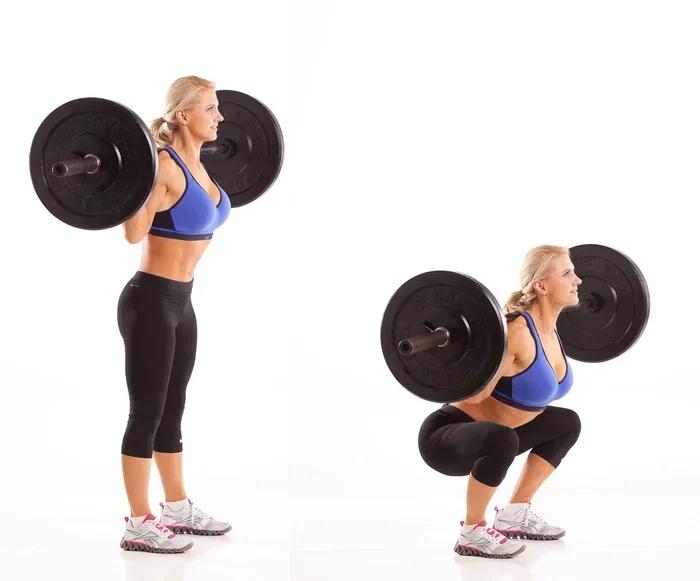
The barbell squat is a compound movement that trains your entire lower body. You place a loaded barbell across your upper back and squat down until your thighs are parallel to the floor. It is a free-weight exercise, meaning the bar is not attached to any machine.
Because the bar is free, your body must stabilize the weight throughout the movement. This engages your core, hips, and smaller muscles around your knees and ankles. The barbell squat is often called the king of lower-body exercises for good reason.
Muscles Worked in a Barbell Squat
The barbell squat hits many muscle groups at once. Here are the main muscles activated:
- Quadriceps: The front of your thighs do most of the work as you stand back up.
- Glutes: Your glute muscles power the movement, especially at the bottom of the squat.
- Hamstrings: These muscles on the back of your thighs help control the descent.
- Core: Your abs and lower back stabilize the bar and keep your torso upright.
- Adductors: The inner thigh muscles help guide the movement.
- Calves: Your lower legs assist at the bottom of the squat.
Because so many muscles work together, the barbell squat burns more calories and builds more functional strength than isolation exercises. It also improves your overall balance and coordination. If you want real-world strength that carries over to sports and daily life, the barbell squat is hard to beat.
What Is a Smith Machine Squat?
The Smith machine is a gym machine where the barbell is fixed to a vertical track. You unrack the bar, stand under it, and perform the squat along a guided path. The machine does the balancing work for you. This makes the movement more predictable and easier to control.
Many gyms have at least one Smith machine, and some people prefer it because it feels safer. You do not need a spotter. If you fail a rep, you can simply let the bar lock into the safeties. This is a big advantage for people training alone.
Muscles Worked in a Smith Machine Squat
The Smith machine squat targets similar muscle groups as the barbell squat. However, the fixed path changes how your muscles work. Here is a breakdown:
- Quadriceps: Still the primary mover, but slightly less activated than with a free barbell.
- Glutes: Engaged, but the fixed path may reduce glute activation depending on foot placement.
- Hamstrings: Less involved because the machine guides the movement pattern.
- Core: Less stabilization is needed since the bar moves on a fixed track.
- Stabilizer muscles: These are significantly less active compared to a free-weight squat.
The Smith machine barbell weight also plays a role. Most Smith machines counterbalance the bar, making it feel lighter than it actually is. This can be helpful for beginners but may limit your ability to progressively overload the muscles effectively.
Barbell Squat vs Smith Machine: Key Differences
Now let us compare the two exercises side by side. Understanding the differences helps you choose the right tool for your goals.
Muscle Activation and Stabilizer Engagement
This is the biggest difference between the two exercises. A free-weight barbell squat requires your stabilizer muscles to work hard. These are the small muscles around your joints that keep you balanced and controlled. When you squat with a free bar, your body must manage the weight in all three planes of motion.
The Smith machine removes much of this demand. The bar follows a fixed path, so your stabilizers do not work as hard. Research shows that free-weight squats activate more muscle fibers than machine-based squats. This means you may build strength and muscle faster with a barbell squat.
However, the Smith machine is not useless. It still provides a solid stimulus for your legs and glutes. And for some people, it can be a better starting point before they progress to free weights.
Safety and Injury Risk
Safety is where the Smith machine shines. The fixed bar path means you cannot lose your balance in the same way you can with a free barbell. If you get stuck at the bottom of a squat, you can simply drop the bar onto the safeties.
With a barbell squat, you need proper equipment like a squat rack and ideally a spotter. Dropping a heavy barbell on yourself is a real risk if you do not use safeties. However, when performed with proper form and the right equipment, barbell squats are very safe.
Here are some safety tips for both exercises:
- Always use safeties or spotters: Never squat alone without protection, especially with heavy weights.
- Warm up properly: Do a few light sets before loading up the bar.
- Check your form: Poor form on either exercise increases your risk of injury.
- Start light: Master the movement pattern before adding heavy weight.
One common mistake people make is bouncing out of the bottom of the squat. This puts enormous stress on your knees and lower back. Whether you use a barbell or a Smith machine, control the descent and pause briefly at the bottom.
Range of Motion and Natural Movement
The barbell squat allows a full, natural range of motion. Your body moves the way it was designed to move. You can adjust your stance width, foot angle, and depth based on your anatomy and goals.
The Smith machine limits your range of motion to the fixed track. This can feel unnatural for some people. The bar path may not match your body’s proportions, which can lead to awkward positioning. For example, a tall person may find the Smith machine bar path too short, while a shorter person may find it too long.
If you want to maximize your range of motion and hit your muscles through a full stretch, the barbell squat is generally the better choice. The free weight exercise allows your joints to move naturally and your muscles to work through their full length.
Strength and Muscle Building
For building raw strength, the barbell squat wins. Free-weight movements require more muscle coordination and stabilization, which leads to greater strength gains over time. Powerlifters and strength athletes almost always train the barbell squat as a primary lift.
That said, you can still build significant muscle on the Smith machine. The key is progressive overload, which means gradually increasing the weight or reps over time. Both exercises can trigger muscle growth when you follow a consistent training program.
If you are also interested in upper body training, you might want to explore dumbbell bench or barbell comparisons to round out your strength routine. And for back exercises, checking out T bar row or barbell row can help you balance your training program.
Who Should Use Each Exercise?
Here is a simple breakdown of who benefits most from each squat variation:
- Choose the barbell squat if: You want to build functional strength, you are an intermediate or advanced lifter, you have access to a quality squat rack, and you enjoy challenging free-weight movements.
- Choose the Smith machine squat if: You are a beginner learning proper squat form, you train alone without a spotter, you are recovering from an injury and need a safer option, or your gym lacks a proper squat rack.
Many experienced lifters use both exercises in their routines. The barbell squat builds foundational strength, while the Smith machine squat allows for targeted isolation work or safer high-rep sets. There is no rule that says you must pick just one.
Some people also compare the Smith machine to other gym equipment. For instance, if you are curious about how different machines stack up, you might enjoy reading about how heavy the barbell on a Smith machine really is. Understanding the actual weight can help you set realistic training goals.
Common Mistakes to Avoid
Whether you choose the barbell squat or the Smith machine, avoiding common mistakes is crucial for progress and safety.
Mistake 1: Skipping Warm-Ups
Jumping straight into heavy squats without warming up is a recipe for injury. Your muscles and joints need time to prepare for the load. Start with bodyweight squats, then do a few sets with just the bar before adding weight.
Mistake 2: Letting the Knees Cave In
When your knees collapse inward during a squat, it puts stress on your ACL and other knee ligaments. Focus on pushing your knees out in line with your toes throughout the entire movement. This applies to both barbell and Smith machine squats.
Mistake 3: Standing Too Far From the Bar
On the barbell squat, standing too far from the bar creates a long lever arm that puts unnecessary strain on your lower back. The bar should sit close to your body, almost touching your upper back.
Mistake 4: Using the Smith Machine as a Crutch
Some people rely on the Smith machine forever because it feels easier. While there is nothing wrong with using it, neglecting free-weight movements means you miss out on stabilizer training and functional strength development.
Expert Insights on Squat Training
Many strength coaches agree that the barbell squat is the gold standard for lower-body training. But they also recognize the value of the Smith machine, especially for certain populations. Here are some expert perspectives:
For beginners: Start with the Smith machine to learn the squat pattern. Once you feel confident and comfortable, transition to the barbell squat with lighter weights. This progression builds a solid foundation and reduces the risk of early injuries.
For intermediate lifters: Use the barbell squat as your primary compound movement. Add Smith machine squats as an accessory exercise for higher-rep sets or to target specific areas of your legs.
For advanced lifters: The barbell squat should be the centerpiece of your leg day. Use the Smith machine sparingly for variation or rehabilitation work. Advanced lifters benefit most from the full muscle activation that free-weight squats provide.
Remember that progressive overload is the key to growth on any exercise. Whether you squat with a barbell or a Smith machine, you need to gradually increase the challenge over time. This can mean adding weight, increasing reps, or reducing rest periods between sets.
Which One Should You Choose?
The answer depends on your personal situation and goals. Here is a quick guide to help you decide:
- Goal: Build functional strength and athletic performance. Choose the barbell squat.
- Goal: Learn proper squat form safely. Start with the Smith machine.
- Goal: Train alone without a spotter. The Smith machine is the safer option.
- Goal: Maximize muscle activation and growth. The barbell squat is superior.
- Goal: Rehab an injury or work around pain. The Smith machine offers more control and safety.
Ultimately, the best exercise is the one you can perform consistently and safely. If the barbell squat causes pain or discomfort due to equipment limitations, the Smith machine is a perfectly valid alternative. The worst squat is the one you do not do at all.
Both the barbell squat and Smith machine squat have earned their place in strength training. They are not enemies. They are tools. Use the right tool for the right job, and you will see great results either way.
Conclusion
The debate between the barbell squat or Smith machine comes down to your goals, experience level, and gym setup. The barbell squat offers superior muscle activation, functional strength, and a natural range of motion. The Smith machine provides a safer, more controlled environment that is perfect for beginners or those training alone.
You do not have to choose just one. Many effective training programs incorporate both exercises. The barbell squat builds your foundation of strength, while the Smith machine adds variety and safety to your routine. The most important thing is that you squat consistently, use proper form, and progressively challenge yourself over time.
Now that you understand the differences, it is time to hit the gym and put this knowledge to work. Your legs will thank you.
Frequently Asked Questions
Is the Smith machine squat easier than the barbell squat?
Yes, the Smith machine squat is generally easier because the bar follows a fixed path. This means your stabilizer muscles do less work, and the machine helps guide the movement. For beginners, this makes it a great starting point before progressing to free-weight squats.
Can you build the same amount of muscle with a Smith machine squat?
You can build significant muscle with a Smith machine squat, but the barbell squat typically produces greater muscle activation. The free movement of the barbell recruits more stabilizer muscles and creates a stronger overall stimulus. However, with consistent progressive overload, the Smith machine can still deliver excellent results.
Which squat is better for beginners?
The Smith machine squat is usually better for beginners. It is safer, easier to learn, and does not require a spotter. Once you master the movement pattern on the Smith machine, you can transition to the barbell squat with greater confidence and better form.
Does the Smith machine bar weigh the same as a regular barbell?
Not exactly. Most Smith machines have a counterbalance system that makes the bar feel lighter than a standard barbell. The actual weight of the Smith machine bar varies by model. Check with your gym or look up the specific machine to understand how much weight you are actually lifting.
Should I avoid the Smith machine if I want to get stronger?
No, you should not avoid it entirely. The Smith machine can be a useful tool for strength training, especially for isolation work or high-rep sets. However, if your primary goal is to build maximum strength, the barbell squat should be your main exercise because it engages more muscles and builds real-world strength.
Can I do barbell squats at home without a squat rack?
It is not recommended. Barbell squats without a squat rack are very dangerous. You need a proper rack to safely unrack and rack the barbell. If you do not have a squat rack at home, the Smith machine or bodyweight squat variations are safer alternatives for home training.