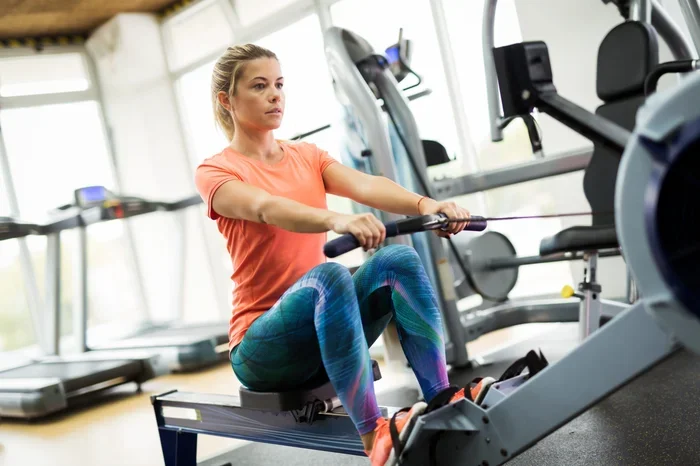
What Muscles Does a Water Rowing Machine Work

So, what muscles does a water rowing machine work? A water rowing machine is one of the most effective pieces of fitness equipment for hitting almost every major muscle group. It delivers a full-body workout that strengthens your legs, back, arms, and core while giving you a killer cardiovascular session.
Key Takeaways
- Legs drive the power: Your quads, hamstrings, glutes, and calves do the heavy lifting during the drive phase of every stroke.
- Back and arms pull the load: The upper body handles the catch and finish, engaging your lats, rhomboids, biceps, and forearms.
- Core stays engaged: Your abs and obliques stabilize your torso throughout the entire rowing stroke.
- Water resistance is unique: Unlike air or magnetic rowers, a water rower provides smooth, progressive resistance that adapts to your effort.
- Low-impact and inclusive: Water rowing machines are gentle on joints while still delivering serious muscle-building benefits.
- Proper form matters: Technique affects which muscles get worked and how effective your workout really is.
📑 Table of Contents
- What Muscles Does a Water Rowing Machine Work?
- How a Water Rowing Machine Works
- Upper Body Muscles Worked on a Water Rowing Machine
- Lower Body Muscles Worked on a Water Rowing Machine
- Core Muscles Activated During Rowing
- Full Body Muscle Engagement: A Comparison Table
- Tips for Maximizing Muscle Work on a Water Rowing Machine
- Why Water Resistance Makes a Difference
- Building a Rowing Routine for All Major Muscles
- Expert Insights on Water Rowing for Muscle Building
- Conclusion
What Muscles Does a Water Rowing Machine Work?
If you have been searching for a piece of equipment that can deliver a serious full-body workout, you have probably looked at a water rowing machine. These machines are growing fast in popularity, and for good reason. They offer smooth, realistic resistance that mimics the feeling of actual rowing on water. More importantly, they activate a wide range of muscle groups in every single stroke.
So, what muscles does a water rowing machine work? The honest answer is quite a lot. We are talking about your legs, back, arms, shoulders, and core all working together. It is one of the few cardio machines that truly functions as a resistance training tool at the same time. Whether you are a beginner or a seasoned athlete, understanding which muscles get activated helps you train smarter and get more out of every session.
In this guide, we will break down every muscle group involved. We will also explain how the water resistance mechanism plays a role, share tips for better form, and help you understand why this machine stands out from the crowd. Let us get into it.
How a Water Rowing Machine Works
Before we dig into the muscles, it helps to understand the mechanics. A water rowing machine uses a paddle filled with water to create resistance. The harder you pull, the more water moves inside the paddle, and the more resistance you feel. This is different from air rowers that use a spinning fan or magnetic rowers that use electromagnets.
The rowing stroke has four distinct phases:
- The Catch: You start with your legs compressed and arms extended. This is the most demanding part of the stroke.
- The Drive: You push with your legs, then lean back and pull with your arms. This is where the most power comes from.
- The Finish: Your legs are fully extended, your back is slightly leaned back, and your hands are pulled into your lower ribs.
- The Recovery: You return to the catch position in a controlled, relaxed motion.
Each of these phases targets different muscle groups. That is what makes the water rower so effective. No single muscle does all the work. Instead, you get a coordinated effort that builds real-world strength and endurance training. For a deeper look at the overall body impact, check out our detailed guide on what muscles you work on a rowing machine.
Upper Body Muscles Worked on a Water Rowing Machine
One of the biggest surprises for first-time users is how much the upper body gets involved. People assume rowing is mostly a leg exercise. In reality, your upper body plays a huge role in every stroke. Let us break it down.
Back Muscles
Your back does the heaviest lifting during a rowing stroke. The latissimus dorsi (lats) are the primary movers. These are the wide muscles that run from your shoulders down to your hips. Every time you pull the handle toward your body, your lats fire up.
Alongside the lats, your rhomboids and trapezius muscles work to retract your shoulder blades. This is what gives you that strong, pulled-together feeling at the finish of the stroke. Your erector spinae muscles along the spine also engage to keep your back stable and upright. Together, these muscles build a strong, balanced back that supports everyday movement and posterior chain strength.
Arm Muscles
Your arms come into play mostly during the pull phase. The biceps bend your elbows as you draw the handle toward your ribs. Your triceps work during the push-away phase when you extend your arms back to the catch. The forearms and grip muscles stay active the entire time to maintain your hold on the handle.
If you want to add extra forearm work, you can grip the handle slightly wider or use gloves that add resistance. This kind of detail matters when you are serious about maximizing every muscle group. For more on how arms contribute, see our breakdown of what muscles you work with a rowing machine.
Shoulder Muscles
The deltoids stabilize your shoulders throughout the stroke. They help control the movement during both the catch and the finish. Your rear deltoids especially benefit from the pulling motion. Over time, this leads to better shoulder health and definition.
Lower Body Muscles Worked on a Water Rowing Machine
Here is where the real power comes from. Your lower body generates most of the force during the drive phase. If your legs are weak or tired, your entire stroke suffers. That is why many coaches say rowing starts with the legs.
Quadriceps and Glutes
The quadriceps are the large muscles on the front of your thighs. They extend your knees as you push off the footplates. At the same time, your glute muscles (gluteus maximus, medius, and minimus) power the hip extension. These are the same muscles you use when jumping, running, or climbing stairs. A water rower trains them through a full range of motion, which is excellent for functional strength.
Hamstrings
The hamstrings work alongside the glutes to extend your hips. They also help control your forward lean during the recovery phase. Because they are active in both the drive and the recovery, they get a thorough workout. This makes the water rower a great tool for hamstring workout routines and injury prevention.
Calves
Your calves stabilize your ankles and help with the final push during the drive. While they are not the primary movers, they are constantly engaged. Over time, this builds leaner, stronger lower legs. For more insights into total lower body activation, our article on what body parts does a rowing machine work out covers this in detail.
Core Muscles Activated During Rowing
Now let us talk about the middle section. Your core muscles are the bridge between your upper and lower body. Without core engagement, you would not be able to transfer power efficiently. On a water rowing machine, the core works almost nonstop.
The rectus abdominis (the six-pack muscle) helps you maintain posture and lean slightly forward and back during the stroke. Your obliques stabilize your torso during rotation and prevent side-to-side wobbling. The transverse abdominis, which is the deep stabilizing muscle, keeps your spine protected.
This is why rowers tend to have strong, defined midsections. It is not just from crunches. It is from hundreds of strokes that demand constant core strength. If you are looking for a workout that builds real-world stability and balance, this is it.
Full Body Muscle Engagement: A Comparison Table
To give you a clear picture of how a water rowing machine stacks up against other forms of exercise, here is a comparison of muscle activation across different activities.
| Muscle Group | Water Rowing Machine | Treadmill Running | Cycling |
|---|---|---|---|
| Quadriceps | High | High | High |
| Hamstrings | High | Medium | Low |
| Glutes | High | Medium | Medium |
| Calves | Medium | High | Low |
| Back (Lats, Rhomboids) | High | Low | Low |
| Arms (Biceps, Triceps) | High | Low | Low |
| Core (Abs, Obliques) | High | Medium | Low |
| Shoulders (Delts) | Medium | Low | Low |
As you can see, the water rowing machine activates nearly every major muscle group. It is one of the few cardiovascular exercise tools that delivers such comprehensive engagement. This is also why many people consider it superior for low impact exercise that still builds serious strength. You get the heart-pumping benefits of cardio with the muscle-building power of resistance training.
Tips for Maximizing Muscle Work on a Water Rowing Machine
Knowing which muscles get worked is one thing. Making sure you actually activate them properly is another. Here are some practical tips to get the most out of every session.
Focus on Leg Drive
Push hard through your feet during the drive phase. Think of your legs as the engine. If you rely too much on your arms, you will tire quickly and miss the biggest muscle-building benefits.
Keep Your Back Stable
Avoid rounding or over-arching your lower back. A neutral spine protects your vertebrae and lets your lats and core work properly. If your back hurts, slow down and check your form.
Adjust the Damper Settings
The damper settings on a water rower control how much water flows into the paddle. Higher settings create more resistance. Think of it like gears on a bike. Lower settings are great for speed and endurance. Higher settings build raw strength. Experiment with different levels to target different muscle responses.
Use a Controlled Recovery
The recovery phase is not just rest. It is when your muscles learn to stabilize and control movement. Move slowly and deliberately on the way back to the catch. This adds to the overall muscle groups engagement and improves coordination.
Add Interval Training
Alternate between short, powerful sprints and longer, steady rows. This style of aerobic exercise boosts calorie burn and forces your muscles to adapt quickly. It also keeps your workouts interesting. For a deeper understanding of how rowing benefits your entire body, read our article on what does a rowing machine do for your body.
Common Mistakes That Reduce Muscle Activation
- Pulling with arms only: This turns a full-body exercise into an arm workout. You lose the leg and back engagement.
- Rushing the stroke: Speed without control reduces resistance effectiveness. Slow down and feel every phase.
- Slouching: Poor posture shuts down your core and back muscles. Sit tall and brace your abs.
- Heels lifting off the footplates: This means your leg drive is incomplete. Keep your heels down and push through your full foot.
Why Water Resistance Makes a Difference
Not all rowing machines are the same. The water resistance mechanism offers a unique advantage. Because the paddle moves through actual water, the resistance feels natural and fluid. There are no jerky or mechanical sensations. Your muscles experience a smooth, continuous load throughout the stroke.
This is especially beneficial for endurance training. Your muscles work through a full range of motion without sudden spikes in resistance. That means less joint stress and more sustained muscle activation. It is also why water rowers are often recommended for people who want a low impact exercise option that does not sacrifice intensity.
Water rowers also tend to be quieter than air rowers. If you are using one at home, this is a big plus. You can train at any time without disturbing others. The soothing sound of water splashing inside the tank adds a calming element that makes longer sessions more enjoyable.
Building a Rowing Routine for All Major Muscles
Now that you know which muscles get worked, let us talk about how to structure your workouts. Here is a simple weekly plan that targets every major muscle group.
Beginner Plan (3 Days Per Week)
- Day 1: 20-minute steady row at moderate damper. Focus on technique and feeling every muscle work.
- Day 2: 15-minute interval session. Alternate 1-minute hard rows with 2-minute easy recoveries.
- Day 3: 25-minute long, slow row. Emphasize core engagement and smooth strokes.
Advanced Plan (5 Days Per Week)
- Day 1: 30-minute power row. Use higher damper settings for strength focus.
- Day 2: 20-minute sprint intervals. Push max effort for 30 seconds, recover for 90 seconds.
- Day 3: Active recovery with a 35-minute light row at low damper.
- Day 4: 25-minute pyramid set. Increase damper every 5 minutes, then decrease back down.
- Day 5: 30-minute endurance row. Keep a consistent pace and focus on breathing.
Both plans naturally develop strength in all the muscle groups we discussed. Over time, you will notice improvements in muscle definition, cardiovascular fitness, and overall core strength.
Expert Insights on Water Rowing for Muscle Building
Fitness coaches often recommend water rowing machines for athletes who want a complete training tool. According to many strength trainers, the key to maximizing muscle building on a rower is intention. Do not just go through the motions. Focus on the muscle contraction during every phase of the stroke.
One pro tip is to pause briefly at the finish position. This isometric hold forces your back, arms, and core to work harder. Another technique is to slow the recovery way down. This increases time under tension, which is a proven driver of muscle growth. These small adjustments can transform your rowing machine workout from basic cardio into a serious strength session.
It is also worth noting that water rowers are highly adjustable. As your fitness improves, you can increase the damper, extend session length, or add structured intervals. This scalability makes them suitable for everyone from weekend warriors to competitive rowers. For more on how rowing contributes to fat loss and muscle definition, check out our guide on does a rowing machine help you lose belly fat.
Conclusion
So, what muscles does a water rowing machine work? The answer is almost all of them. From your quads and glutes to your lats and core, a water rower delivers a truly comprehensive workout. It combines the benefits of cardiovascular exercise, resistance training, and low impact exercise into one smooth, satisfying movement. Whether you are new to rowing or a seasoned pro, understanding the muscle engagement helps you train with purpose and see better results. Start incorporating the tips and routines shared in this guide, and you will feel the difference in no time.
Frequently Asked Questions
What muscles does a water rowing machine work the most?
A water rowing machine works the legs, back, and core the most. Your quads, glutes, and hamstrings drive the power, while your lats and rhomboids handle the pull. The core stabilizes everything in between, making it a true full-body workout.
Is a water rowing machine better than an air rowing machine for muscle building?
Both are excellent, but water rowers offer smoother, more progressive resistance that adapts to your effort. This makes it easier to engage all muscle groups through a full range of motion. Air rowers tend to spike in resistance as you pull faster, which can favor speed over raw strength.
Can a water rowing machine help me build visible muscle?
Yes, it can. Regular rowing builds lean muscle across multiple groups, especially your back, legs, and core. Combined with proper nutrition and consistent training, you will notice improved muscle definition over time. The low-impact nature also means you can train frequently without overtraining your joints.
How long should I row to work all my muscles effectively?
For beginners, 20 to 30 minutes per session is a solid starting point. Advanced users can go up to 45 minutes or incorporate intervals. The key is maintaining proper form throughout. Even a short, focused row can activate all major muscle groups if done correctly.
Does rowing on a water machine work the same muscles as actual outdoor rowing?
Very closely. Water rowing machines are designed to mimic the feel of real water rowing. The same muscle groups are activated, including the legs, back, arms, and core. The main difference is that outdoor rowing adds balance and environmental challenges that a machine does not fully replicate.
Is a water rowing machine suitable for beginners who want to build muscle?
Absolutely. Water rowing machines are beginner-friendly because the resistance is natural and forgiving. You control the intensity by how hard you pull. Start with lower damper settings and shorter sessions, then gradually increase. Your muscles will adapt quickly, and you will build a strong foundation for more advanced training.