Should I Get a Rowing Machine or Exercise Bike

Choosing between a rowing machine and an exercise bike comes down to your fitness goals, space, and personal preference. If you crave a full‑body, low‑impact workout that torches calories, rowing shines; if you prefer a steady, joint‑friendly cardio session, the bike wins. This guide breaks down everything you need to decide.
Key Takeaways
- Full‑body vs. lower‑body focus: Rowers engage arms, core and legs; bikes target mainly the legs.
- Impact level: Both are low‑impact, but rowing adds a gentle pull‑phase that’s easy on knees.
- Calorie burn: Rowing typically burns 10‑15% more calories per hour at the same effort.
- Space & cost: Bikes are usually more compact and cheaper; premium rowers can be pricey and need longer storage.
- Learning curve: Rowing technique takes practice; biking is almost intuitive.
- Joint health: Both protect joints, but rowing offers a balanced, non‑repetitive motion.
- Versatility: Rowers double as strength trainers; bikes excel for interval and endurance sessions.
📑 Table of Contents
Introduction: Why the Decision Matters
Imagine you have a spare corner in your living room, a budget, and a goal to get healthier. The first question that pops up is: should I get a rowing machine or exercise bike? Both promise cardio, calorie burn, and a convenient home workout, but they feel very different once you sit down and start moving.
In this article we’ll walk through the science, the practicalities, and the personal preferences that tip the scales. By the end you’ll have a crystal‑clear picture of which machine fits your lifestyle, goals, and space. Let’s dive in!
1. How Each Machine Works
Rowing Machine Basics
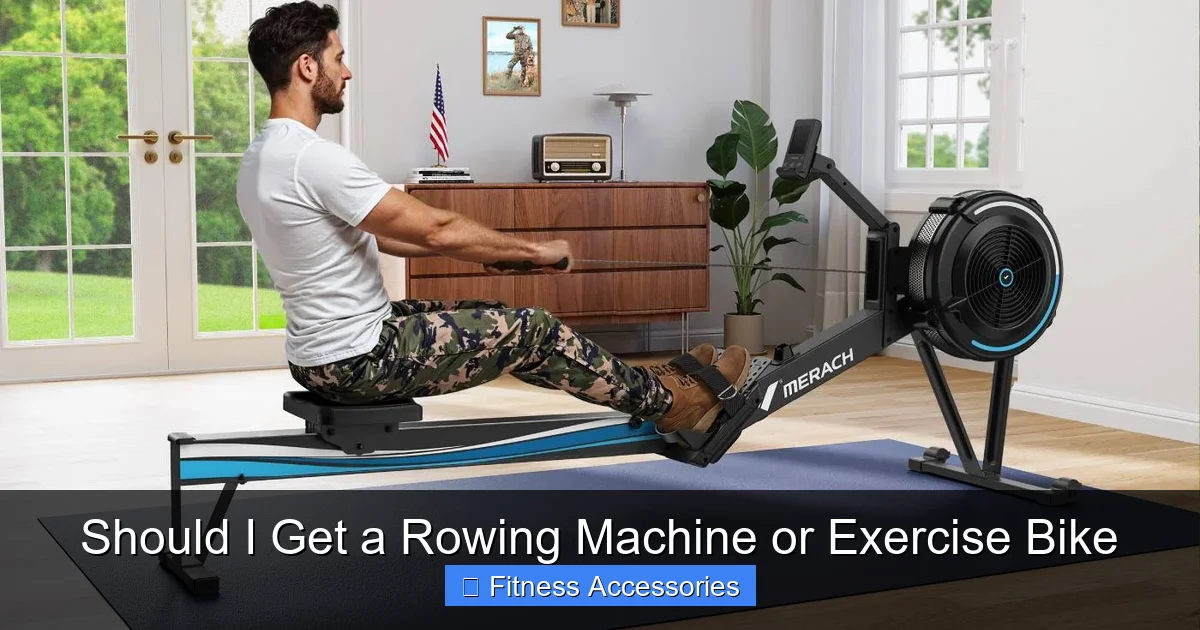
A rowing machine simulates the motion of a boat. You push with your legs, lean back using your core, and pull the handle toward your chest. The motion is a smooth “drive‑recover” cycle that recruits 80% of your muscles.

Visual guide about Should I Get a Rowing Machine or Exercise Bike
Image source: exercisebikeacademy.com
- Legs: Quadriceps, hamstrings, glutes.
- Core: Abdominals and lower back.
- Upper body: Back, shoulders, biceps.
Because you’re moving a flywheel (or water tank) with both push and pull forces, the calorie burn is high and the workout feels like a mix of cardio and strength training.
Exercise Bike Basics
Exercise bikes come in three main styles: upright, recumbent, and indoor cycling (spin) bikes. All of them work by rotating a pedal crank, which turns a resistance system—magnetic, friction, or air.
- Upright: Similar to a road bike, engages core for balance.
- Recumbent: Seat with back support, easier on lower back.
- Spin: Heavy flywheel, designed for high‑intensity intervals.
The focus is primarily on the lower body—quads, hamstrings, calves, and glutes—while the upper body stays relatively passive.
2. Fitness Goals: What Do You Want to Achieve?
Weight Loss & Calorie Burn
If your main aim is to shed pounds, both machines work, but rowing typically burns 500–800 calories per hour at moderate intensity, compared with 400–600 on a bike. The extra upper‑body effort makes a difference.
Visual guide about Should I Get a Rowing Machine or Exercise Bike
Image source: merachfit.com
Strength & Muscle Tone
Rowers double as strength trainers. The pulling motion builds back and arm muscles, while the leg drive adds power to the glutes and quads. Bikes, unless you add resistance bands or stand‑up intervals, provide limited upper‑body stimulus.
Endurance & Cardio Health
Both improve VO₂ max, heart health, and lung capacity. If you enjoy long, steady‑state sessions, a bike may feel smoother. For varied intensity—short bursts, steady pulls, and recovery—the rower offers more natural interval options.
Joint Friendliness
Both are low‑impact, but rowing distributes forces across the whole body, reducing stress on any single joint. People with knee issues often find rowing easier than cycling, especially if they can adjust the foot straps and handle height.
3. Space, Cost, and Practical Considerations
Footprint
Typical upright bikes need about 2’ × 3’ of floor space. Recumbents are a bit longer (up to 6 ft). Rowers range from 6‑foot “water” models to compact “fold‑away” versions that shrink to 3‑4 ft when stored upright.

Visual guide about Should I Get a Rowing Machine or Exercise Bike
Image source: images-na.ssl-images-amazon.com
Price Range
- Budget bikes: $200‑$500.
- Mid‑range bikes: $500‑$1,200.
- Budget rowers: $250‑$600 (magnetic).
- Premium rowers: $800‑$2,000+ (water, air, or hybrid).
Overall, bikes tend to be cheaper, but a high‑quality rower can be a long‑term investment in full‑body fitness.
Noise Level
Magnetic resistance on both machines is quiet. Air‑resistance rowers and spin bikes can be louder, especially during sprints. If you live in an apartment, consider a quieter model or place a mat beneath the machine.
Maintenance
Both require occasional cleaning and occasional bolt tightening. Water rowers need occasional water changes; magnetic bikes need no lubrication. Overall, maintenance is minimal for both.
4. Learning Curve & User Experience
Getting the Technique Right
Rowing demands a coordinated sequence: legs → core → arms, then reverse on the recovery. Beginners often start with “arms‑only” pulls, which can strain the back. A short tutorial or video can shorten the learning curve dramatically.
Bike Simplicity
Pedal, adjust the seat, and you’re ready. Even the most advanced spin bikes have a simple start‑stop routine. That ease makes bikes more attractive for people who want instant workouts.
Motivation & Enjoyment
Enjoyment is a huge predictor of consistency. Some love the rhythmic glide of rowing; others find the steady pedaling meditative. Try a demo at a local gym or a friend’s house to gauge your reaction.
5. Sample Workouts & Programs
Rowing Machine Sample
- Beginner 20‑Minute Routine: 5 min warm‑up (easy row), 8 × 30‑second sprints with 90‑second easy rows, 5 min cool‑down.
- Full‑Body Strength: 4 × 500 m rows at moderate pace, 30‑second plank after each row.
- Endurance Build: 30 min steady row at 20‑22 strokes per minute (spm), focus on smooth drive‑recover.
Exercise Bike Sample
- Beginner 30‑Minute Ride: 5 min warm‑up, 20 min steady cadence (70‑80 RPM) at moderate resistance, 5 min cool‑down.
- HIIT Spin Session: 5 min warm‑up, 10 × 30‑second all‑out sprints (90+ RPM) with 60‑second easy pedaling, 5 min cool‑down.
- Hill Climb: 4 min low cadence (50‑60 RPM) high resistance, 2 min recovery, repeat 5 times.
Combining Both
If you have space for both, alternate days: rowing on Monday, Wednesday, Friday for full‑body work; biking on Tuesday, Thursday, Saturday for low‑stress cardio. This variety reduces boredom and balances muscle development.
6. Making the Final Decision
Ask Yourself These Questions
- What is my primary goal? (Weight loss, strength, endurance, joint health?)
- How much floor space do I have?
- What is my budget?
- Do I enjoy learning new movement patterns?
- Will I share the machine with others?
Decision Matrix Example
| Factor | Rowing Machine | Exercise Bike |
|---|---|---|
| Full‑body workout | ✔️ | ❌ |
| Low impact on knees | ✔️ | ✔️ |
| Space required | 6 ft length | 2 ft × 3 ft |
| Cost (mid‑range) | $800‑$1,200 | $500‑$1,000 |
| Learning curve | Moderate | Easy |
| Calorie burn (hour, moderate) | 600‑700 | 450‑550 |
Bottom Line
If you crave a total‑body, high‑calorie burn workout and are willing to spend a bit more time mastering technique, the rowing machine is the winner. If you prefer a simple, space‑saving, lower‑body focused cardio option that you can hop on without a tutorial, the exercise bike takes the lead.
Conclusion: Your Best Fit Awaits
Both rowing machines and exercise bikes are fantastic investments in your health. The “right” choice aligns with your goals, living space, budget, and personal enjoyment. Remember, consistency beats perfection—pick the machine you’ll actually use day after day, and your fitness will follow.
Take a test ride, read reviews, and imagine yourself finishing a workout on each. The mental picture can be a surprisingly strong predictor of long‑term adherence. Whichever you choose, you’re one step closer to a stronger, healthier you.
Frequently Asked Questions
Which machine burns more calories per hour?
Rowing generally burns 10‑15% more calories than cycling at the same perceived effort because it engages both the upper and lower body.
Is a rowing machine harder on the back?
If you use proper form—drive with the legs first, keep the spine neutral, and avoid pulling with the arms alone—rowing is low‑impact and safe for the back.
Can I use an exercise bike for strength training?
While bikes mainly target the legs, you can add resistance bands or perform standing intervals on spin bikes to involve the core and upper body.
Do I need a special floor mat?
A rubber or foam mat protects both the machine and your floor, reduces noise, and adds stability for both rowers and bikes.
How often should I replace my rowing machine or bike?
With regular maintenance, a quality machine can last 10‑15 years. Replace only when major components wear out or the frame shows structural damage.
Which is better for beginners?
Exercise bikes are typically easier for beginners because the motion is intuitive. Rowing machines have a short learning curve but offer greater overall fitness benefits once mastered.