Both the Stairmaster and incline treadmill are exceptional tools for weight loss, primarily because they create a high-calorie burn through intense resistance cardio. The key difference lies in movement pattern and muscle emphasis: the Stairmaster mimics stair climbing, heavily targeting glutes and quads with a fixed motion, while an incline treadmill offers a walking or running motion up a slope, engaging more posterior chain muscles (hamstrings, calves) and allowing for a more natural gait. Your choice should depend on joint health, personal preference for movement, and which machine you’ll use consistently. Ultimately, the best machine is the one you’ll actually use regularly as part of a calorie-deficient diet and exercise plan.
Key Takeaways
- Calorie Burn is Comparable: When intensity (heart rate) is matched, both machines burn a similar number of calories, making them equally effective for creating the calorie deficit needed for weight loss.
- Muscle Emphasis Differs: The Stairmaster is a quad and glute-dominant vertical climber. The incline treadmill is a posterior-chain (hamstrings, glutes, calves) dominant horizontal walker/runner.
- Joint Impact Varies: The Stairmaster’s fixed, repetitive motion can be harder on knees and ankles. The incline treadmill’s natural walking motion is generally lower impact, especially at lower inclines and speeds.
- Sustainability & Preference Rule: The single biggest factor for weight loss success is adherence. Choose the machine you find more enjoyable and can tolerate for longer, more frequent sessions.
- Personal Factors are Key: Consider existing injuries, fitness level, and goals. Those with knee pain may prefer the treadmill; those wanting extreme leg burn may prefer the Stairmaster.
- Diet is Non-Negotiable: No machine, including these two, can overcome a poor diet. Weight loss is fundamentally driven by a sustained calorie deficit.
- The Bottom Line: There is no single “better” machine. The best for *your* weight loss is the effective, joint-safe tool that fits your body and lifestyle, ensuring you show up and work hard consistently.
📑 Table of Contents
- Understanding Incline Training for Weight Loss
- The Stairmaster: A Deep Dive into the Vertical Climber
- Incline Treadmill: The Versatile Hill Simulator
- Head-to-Head: The Direct Comparison
- Who Should Choose Which Machine?
- Maximizing Your Weight Loss Results (Beyond the Machine)
- The Verdict: It’s About You, Not the Machine
Understanding Incline Training for Weight Loss
Before we pit the Stairmaster against the incline treadmill, we need to understand why adding incline to your cardio is such a powerful strategy for shedding pounds. At its core, weight loss requires a calorie deficit—burning more calories than you consume. Traditional flat-ground cardio, like walking or jogging on a level treadmill, is effective. But adding an incline supercharges the workout.
Think about walking up a steep hill versus walking on a flat sidewalk. The hill feels dramatically harder, right? That’s because you’re working against gravity. This dramatically increases the energy (calorie) demand on your body. Incline training elevates your heart rate more than flat running at the same speed, meaning you burn more calories per minute. It also shifts the workload from your knees (which absorb impact on flat running) to your larger, more powerful glute and hamstring muscles. This not only builds lean muscle—which boosts your resting metabolism—but also reduces repetitive joint stress. Essentially, incline cardio lets you get a high-intensity workout with a lower-impact motion, a winning combination for sustainable weight loss.
The Science of the “Afterburn” Effect
Both the Stairmaster and incline treadmill excel at triggering Excess Post-Exercise Oxygen Consumption (EPOC), often called the “afterburn” effect. After a tough, muscle-intensive cardio session, your body works overtime to repay its oxygen debt, repair muscle tissue, and return to a resting state. This process can keep your metabolism elevated for hours after you’ve finished exercising, meaning you continue to burn extra calories. The more you can spike your intensity and engage large muscle groups (like the glutes and quads on these machines), the greater this effect tends to be.
The Stairmaster: A Deep Dive into the Vertical Climber
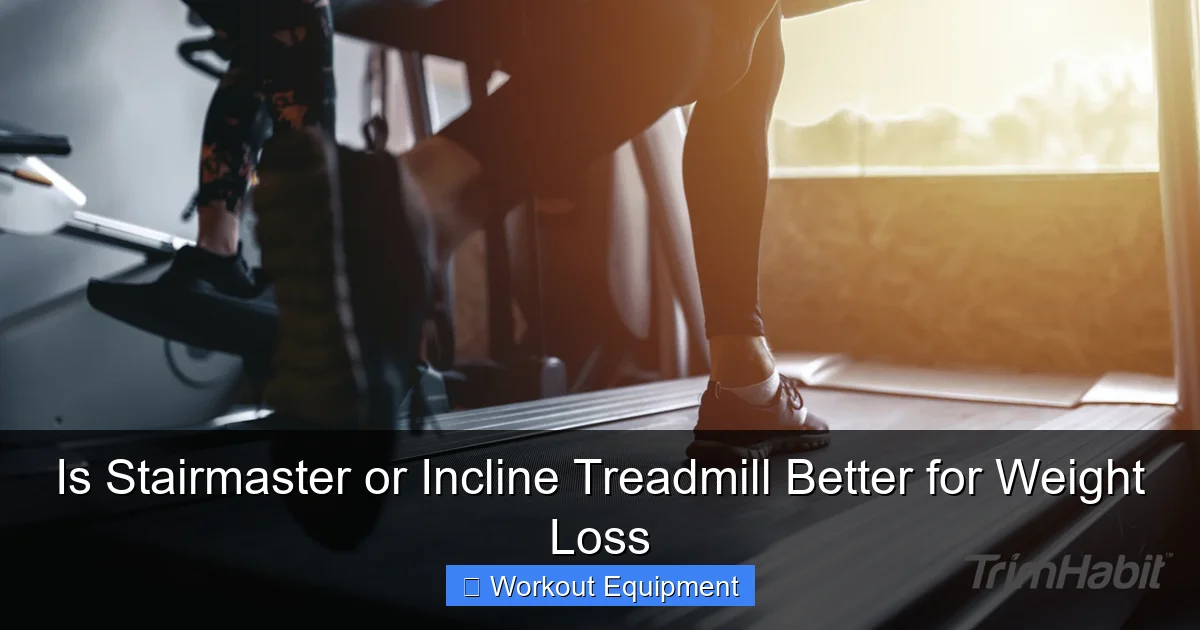
The Stairmaster is an iconic piece of gym equipment that simulates the action of climbing an endless staircase. You stand on two independent foot pedals that move in a circular, stepping motion. The speed and resistance are controlled by the user, typically via a console. Its movement is entirely fixed and vertical.
Visual guide about Is Stairmaster or Incline Treadmill Better for Weight Loss
Image source: trimhabit.com
How It Works & Muscle Engagement
The Stairmaster’s motion is all about concentric and eccentric contraction of the lower body. As you push down to lift your body weight against gravity, you powerfully engage your quadriceps (front of the thigh) and gluteus maximus (buttocks). The hamstrings and calves act as stabilizers. Because the motion is repetitive and purely vertical, it creates a profound “burn” in these primary muscles. It’s essentially a high-rep, bodyweight leg press performed continuously. This makes it fantastic for building muscular endurance and tone in the legs and glutes.
Calorie Burn & Intensity
Calorie expenditure on the Stairmaster is highly dependent on your effort. A moderate pace might burn 300-500 calories per hour for an average person, but a vigorous session with high resistance and speed can push that well over 600-800 calories per hour. The key is maintaining a high heart rate, typically in the zone 3-4 range (70-80% of max heart rate). The constant stepping motion makes it easy to achieve and sustain this elevated heart rate.
Practical Tips for Stairmaster Success
- Posture is Paramount: Keep your chest up, shoulders back, and core engaged. Avoid holding onto the handrails for support, as this drastically reduces calorie burn and muscle engagement. Use them lightly only for balance.
- Mind Your Knees: The fixed, repetitive flexion and extension can aggravate pre-existing knee conditions like patellofemoral pain. Ensure your knees track over your toes, not caving inward. If you feel sharp knee pain, stop.
- Mix Up Your Pace: Try interval training. Go hard for 1-2 minutes (high speed/resistance), then recover at a slow pace for 1 minute. This maximizes calorie burn and EPOC.
- Focus on Full Steps: Try to place your entire foot on the pedal. Partial steps reduce range of motion and effectiveness.
Incline Treadmill: The Versatile Hill Simulator
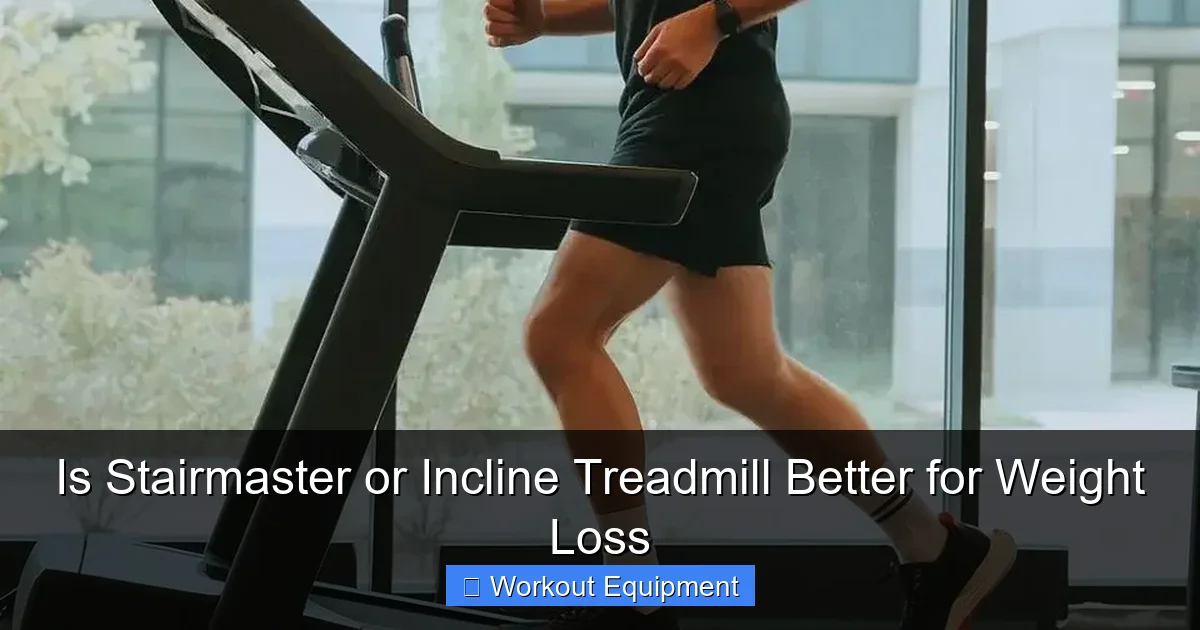
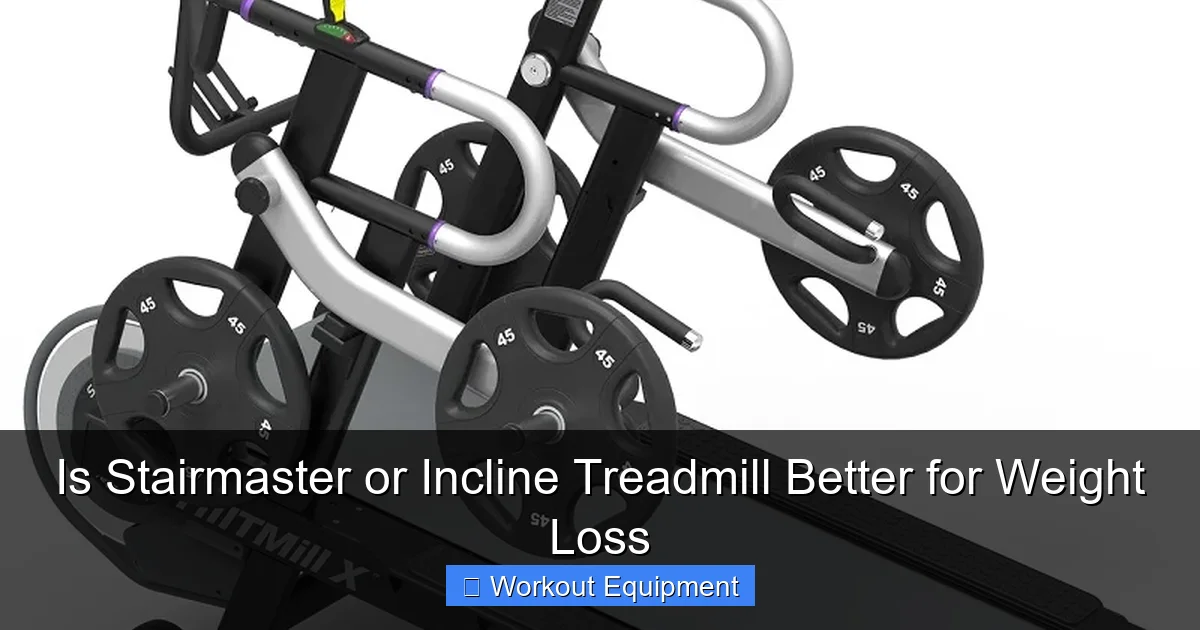
The incline treadmill is a standard treadmill with a motorized platform that can raise to steep angles, often 10%, 15%, or even 40% grade. You walk or run on the moving belt as it tilts upwards. It mimics the natural motion of walking or running uphill.
Visual guide about Is Stairmaster or Incline Treadmill Better for Weight Loss
Image source: sportcoaching.com.au
How It Works & Muscle Engagement
The incline treadmill’s magic is in its ability to change the recruitment pattern of your leg muscles. On a flat treadmill, running is quad-dominant. As you increase the incline, the movement shifts dramatically. To propel yourself upward, you must drive through your heels, powerfully engaging the gluteus maximus and the hamstrings (the muscles on the back of your thigh). The calves (gastrocnemius and soleus) also work overtime to stabilize the ankle. This posterior chain emphasis is excellent for building a strong, balanced lower body and can be easier on the knees than flat running, as the incline reduces the impact force per stride.
Calorie Burn & Intensity
An incline walk at a brisk pace (e.g., 3.5-4.5 mph at 8-12% grade) can burn calories at a rate comparable to a much faster flat run. For example, a 155-pound person might burn approximately 350-500 calories per hour at a 10% incline walking at 4 mph. The calorie burn escalates quickly with both speed and grade. The ability to control speed independently from incline allows for precise intensity tuning—you can get a massive burn without ever having to run, which is a huge plus for those with joint issues.
Practical Tips for Incline Treadmaster Success
- Start Conservatively: Begin with a low incline (4-6%) and a comfortable walking speed (2.5-3.5 mph). Focus on posture—lean slightly from the ankles, not the waist, and pump your arms.
- Short, Steep Walks: For maximum glute/hamstring activation and calorie burn, try “summit” intervals: Walk at 12-15% incline for 2-3 minutes at a challenging pace, then lower to 0% for 2 minutes to recover.
- Don’t Hold On: Holding the handrails cheats you of the full workout. If you need them for balance at first, use them lightly, but aim to let go as you build stability.
- Combine with Sprints: For a killer workout, alternate 1-minute flat sprints with 2-minute steep incline walks. This combines anaerobic and aerobic systems for supreme fat loss.
Head-to-Head: The Direct Comparison
Now, let’s stack these two titans of incline cardio against each other on the key factors that matter for weight loss.
Visual guide about Is Stairmaster or Incline Treadmill Better for Weight Loss
Image source: fitnesszone.com
Calorie Burn: It’s a Tie (With a Caveat)
When matched for perceived exertion and heart rate, studies and practical experience show that calorie burn is very similar between the two machines. The Stairmaster might have a slight edge at very high intensities due to its purely vertical motion, but the difference is negligible. The real winner is the machine that allows *you* to sustain a higher intensity for a longer duration. If you hate the Stairmaster’s motion, you’ll bail after 10 minutes. The treadmill you can do for 30 minutes will win the calorie war.
Muscle Building & Toning
This is where they diverge. The Stairmaster is superior for quad and glute endurance and “pump.” The constant stepping under load creates a strong hypertrophic (muscle-building) stimulus for the front of your legs. The incline treadmill is superior for glute, hamstring, and calf development. The heel-driven, hip-extensor motion is a classic glute/hamstring builder. For overall lower body balance, the incline treadmill might have a slight advantage by targeting the often-neglected posterior chain.
Joint Stress & Injury Risk
This is a critical differentiator. The Stairmaster’s fixed, repetitive motion is inherently higher impact on the knee and ankle joints. Each step loads the knee joint in flexion. For those with arthritis, tendonitis, or other knee issues, it can be problematic. The incline treadmill, especially used for walking, is generally a lower-impact option. While you’re moving uphill, the motion is a natural gait cycle. The incline actually reduces the braking forces on the knees compared to flat running. However, steep walking can stress the Achilles tendon and calves.
Usability, Variety, and Boredom
The incline treadmill wins hands down for versatility and mental engagement. You can walk, jog, or run. You can change the incline and speed constantly, creating endless workout combinations. You can watch TV, read (if walking slowly), and the motion feels more natural. The Stairmaster’s motion is monotonous for many people. There’s no variation in gait—it’s just step, step, step. This can lead to faster mental fatigue and boredom, potentially shortening workout duration.
Learning Curve & Accessibility
The incline treadmill has a near-zero learning curve. You already know how to walk. The Stairmaster requires some coordination to find a smooth rhythm and avoid “bouncing.” It can feel awkward and unstable for beginners. In terms of accessibility, most commercial gyms have both, but home gym enthusiasts often find a good folding treadmill with incline more feasible and space-efficient than a dedicated Stairmaster.
Who Should Choose Which Machine?
Based on the comparison, here’s a practical guide to help you decide.
Choose the Stairmaster If…
- Your primary goal is building muscular endurance and a “burn” in your quads and glutes.
- You have healthy, strong knees and ankles and don’t experience pain from repetitive flexion.
- You enjoy a steady, rhythmic, high-effort cardio session and don’t mind the monotonous motion.
- You are an advanced exerciser looking for a brutal, no-nonsense leg conditioner.
Choose the Incline Treadmill If…
- You have any history of knee pain, arthritis, or joint sensitivities.
- You want to build your glutes, hamstrings, and calves more effectively.
- You value workout variety and the ability to easily switch between walking and running.
- You are a beginner or intermediate exerciser who prefers a more natural, intuitive movement pattern.
- You want to combine cardio with a walking-based workout you can sustain for 30-60 minutes.
- You get bored easily and need the option to change speed and grade frequently.
Maximizing Your Weight Loss Results (Beyond the Machine)
Selecting the right machine is just step one. Here’s how to leverage it for optimal fat loss.
1. Prioritize Intensity Over Duration
For weight loss, a 30-minute high-intensity interval session is far superior to a 60-minute slow, easy stroll. Use the features of your chosen machine to push your heart rate up. On the Stairmaster, that means increasing resistance and speed. On the treadmill, that means cranking the incline and/or speed. Aim for sessions where you break a heavy sweat and find it difficult to hold a conversation.
2. Fuel Your Workouts and Recovery
You cannot out-exercise a bad diet. The calorie deficit must come from both sides: increased burn and controlled intake. Ensure you’re eating enough protein to support muscle repair from these intense sessions. Fuel your workouts with complex carbohydrates for sustained energy. Stay hydrated, as dehydration can impair performance and recovery.
3. Strength Training is Non-Negotiable
Relying solely on cardio for weight loss is a path to plateaus and muscle loss. Incorporate 2-3 full-body strength training sessions per week. Building more muscle mass increases your Basal Metabolic Rate (BMR), meaning you burn more calories 24/7, even at rest. The muscle you build from stair climbing and hill walking will be more resilient and defined if supported by heavy compound lifts like squats, deadlifts, and lunges.
4. Listen to Your Body and Deload
These are high-stress, repetitive exercises. Doing them every single day is a recipe for overuse injury (shin splints, tendonitis, stress fractures). Schedule at least 1-2 full rest or active recovery days per week. If you feel persistent joint pain, switch machines or modes of cardio. Consistency over months and years beats a 3-week burst followed by a 2-month injury layoff.
The Verdict: It’s About You, Not the Machine
So, is the Stairmaster or the incline treadmill better for weight loss? The most honest answer is: the one that you will use consistently, safely, and intensely.
From a purely physiological standpoint, they are remarkably equal in their potential for calorie burn and metabolic stimulation. The differences are in the nuances of muscle emphasis and joint stress. The incline treadmill is the more versatile, joint-friendly, and generally accessible option for most people. Its ability to provide a brutal glute/hamstring workout through walking alone is a unique and powerful advantage. The Stairmaster offers a more targeted, quad-focused burn that some athletes and fitness enthusiasts crave, but it comes with a higher barrier to entry for those with joint sensitivities.
Your decision should be a personal one. Try both, extensively. Spend 20 minutes on each, at a hard effort. How do your knees feel the next day? Which one made you feel more accomplished? Which could you see yourself doing three times a week without dread? Answer these questions, and you’ll have your winner. Remember, the journey to weight loss is a marathon, not a sprint. Choosing a sustainable, enjoyable form of exercise is the single most important decision you can make. Pick your hill, and start climbing.
Frequently Asked Questions
Which machine burns more belly fat?
Neither machine specifically targets belly fat—spot reduction is a myth. Both create a full-body calorie deficit that, combined with a proper diet, will lead to overall fat loss, including from the abdominal area. The best machine for burning total body fat is the one you use most consistently at a high intensity.
Is the Stairmaster bad for your knees?
For individuals with healthy knees, the Stairmaster is generally safe when used with proper form. However, its fixed, repetitive vertical motion can aggravate existing knee conditions like arthritis, chondromalacia, or tendonitis. The incline treadmill’s walking motion is typically lower impact and often a better choice for those with knee concerns.
Can I build a bigger butt on the Stairmaster or incline treadmill?
You can certainly strengthen and develop your glutes on both machines. The incline treadmill is often considered superior for glute building because the heel-driven, hip-extension motion of walking uphill is a classic glute and hamstring activator. The Stairmaster also works the glutes hard, but with more quad emphasis. For maximum growth, combine either machine with weighted glute-focused strength exercises like hip thrusts and squats.
Which is more cost-effective for a home gym?
A basic treadmill with a good incline motor (10-12% grade) is usually more cost-effective and space-efficient for a home gym than a dedicated commercial-grade Stairmaster. Folding treadmills with incline are widely available at various price points. True Stairmasters are large, heavy, and expensive, making them a less common home purchase.
How often should I use these machines for weight loss?
Aim for 3-5 sessions per week, depending on intensity and your overall schedule. Each session should be 20-45 minutes of work. It’s crucial to balance these high-impact cardio sessions with rest days and at least 2 days of full-body strength training to prevent overuse injuries and muscle loss.
Can I use both machines in my weekly routine?
Absolutely! Using both can be an excellent strategy to prevent boredom and provide a slightly different muscular stimulus. For example, you could do an incline treadmill walk on Monday, a Stairmaster interval session on Wednesday, and another incline session on Friday. Just ensure you’re not overloading your legs with too much repetitive motion without adequate recovery.