Running barefoot on a treadmill is possible but comes with significant trade-offs. It can strengthen foot muscles and improve form, but risks severe injury from friction, heat, and lack of protection. Success depends on your goals, foot health, and a very gradual, cautious approach. Treadmill belts generate intense heat and friction, making blisters and burns a real threat. For most, a minimalist shoe is a far safer and more practical way to gain barefoot-like benefits without the hazards.
So, you’ve heard the buzz about barefoot running. The idea of ditching the bulky sneakers and letting your feet move naturally is compelling. Maybe you’re looking to strengthen those tiny intrinsic foot muscles, improve your balance, or just feel a deeper connection to your run. But then you look at your treadmill — that endless, moving belt of rubber — and a logical question pops up: “Is it actually okay to run barefoot on that?” It’s a great question, and the answer isn’t a simple yes or no. It’s a nuanced “it depends,” with a heavy emphasis on caution.
Let’s be clear upfront: running barefoot on a treadmill is fundamentally different from running barefoot on grass, sand, or even pavement. The treadmill environment introduces a unique set of risks that can turn a freeing experience into a painful, blister-filled disaster in a very short time. However, with the right knowledge, preparation, and mindset, you can explore barefoot *movement* on a treadmill in a controlled way, or more commonly, use a minimalist shoe to capture most of the benefits with far fewer dangers. This guide will walk you through everything you need to know, from the science of friction to a step-by-step safety protocol.
Key Takeaways
- The treadmill belt is uniquely hazardous: Unlike pavement, it creates continuous friction and heat buildup that can cause painful blisters and burns on bare skin in minutes.
- Barefoot running changes your form fundamentally: It encourages a forefoot/midfoot strike, higher cadence, and shorter strides, which can reduce impact but requires retraining your muscles and tendons.
- Start with walking, not running: The only safe way to test your feet is to begin with 5-10 minute barefoot walks on a slow speed to assess sensitivity and friction before any jogging.
- Hygiene is a major, often overlooked, concern: Treadmill decks and belts harbor sweat, bacteria, and fungi. Direct skin contact exposes you to infections like athlete’s foot and plantar warts.
- Minimalist shoes are the recommended bridge: Shoes with zero drop, thin soles, and wide toe boxes (like Vibrams or Merrells) provide essential protection while allowing natural foot movement.
- Listen to your feet immediately: Any hot spots, redness, or discomfort means STOP. Pushing through leads to blisters that sideline you for days or weeks.
- Not everyone should try it: Individuals with diabetes, peripheral neuropathy, poor circulation, or existing foot injuries should avoid barefoot treadmill use entirely due to high injury risk.
📑 Table of Contents
- The Allure of Barefoot Running: Understanding the “Why”
- The Treadmill Reality: Why It’s a Different Beast
- Barefoot vs. Shod Running: A Form and Force Comparison
- How to Start Safely: A Gradual, Cautious Protocol
- Treadmill-Specific Considerations & Alternatives
- Who Should Absolutely Avoid It
- The Verdict: A Careful “Maybe” With a Strong Preference for Shoes
The Allure of Barefoot Running: Understanding the “Why”
Before we dive into the treadmill-specific issues, it’s important to understand why the concept of barefoot running is so attractive. The modern running shoe, with its thick cushioning, elevated heel (known as “drop”), and restrictive toe box, is a relatively new invention. Proponents of barefoot or natural running argue that it allows the foot to function as it evolved to — as a sensitive, flexible, and strong sensory organ and lever.
Potential Benefits of Going ‘Bare’
Advocates point to several potential advantages, many of which are supported by emerging research and anecdotal evidence. First, it can strengthen the musculature of the foot and lower leg. Without a supportive shoe doing the work, the small muscles in your arch, your toes, and your calves must activate to stabilize and propel you. This can lead to a more robust “foot core.” Second, the heightened sensory feedback from the ground up through your soles can dramatically improve your proprioception — your body’s awareness of its position in space. You feel every nuance of the surface, which can lead to better balance and more agile movement.
Third, and perhaps most significantly for injury prevention, going barefoot naturally encourages a different running gait. It typically promotes a forefoot or midfoot strike (landing on the ball of your foot first) rather than a heavy heel strike. This shifts the point of impact absorption from your knees and hips to the elastic structures of your foot and calf (the Achilles tendon and plantar fascia), potentially reducing repetitive stress injuries associated with heel striking. The lack of cushioning also forces a higher cadence (steps per minute) and shorter stride length, which further decreases impact forces. These are all desirable adaptations for many runners.
The Treadmill Reality: Why It’s a Different Beast
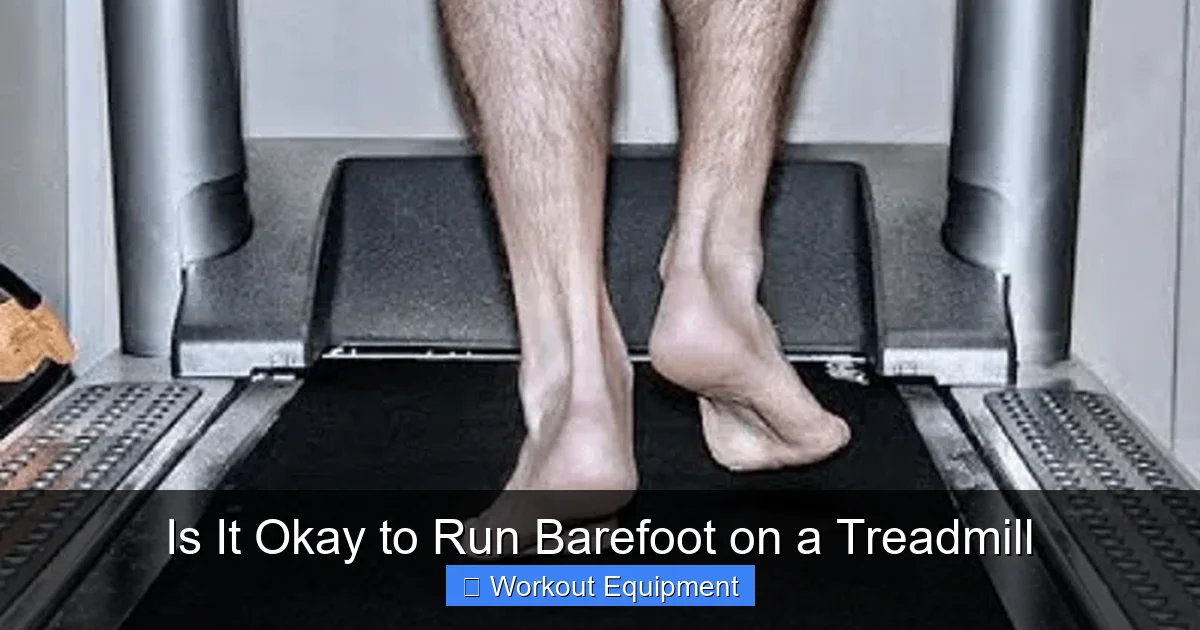
Now, let’s talk about the machine in your living room or gym. A treadmill is not a natural surface. It’s a continuously moving, often hot, textured rubber belt running over a smooth deck. This creates a perfect storm of conditions that are uniquely hostile to bare skin.
Visual guide about Is It Okay to Run Barefoot on a Treadmill
Image source: runforefoot.com
The Triple Threat: Friction, Heat, and Repetition
1. Friction: Your foot is constantly sliding *backward* against the moving belt, even with a perfect forefoot strike. This creates shear force — a rubbing action that peels the top layers of skin away from the underlying tissue. This is the primary cause of blisters. On a static surface like pavement, your foot pushes backward against a stationary ground. On a treadmill, the ground moves backward under you, creating that relentless, abrasive drag. The textured surface of the belt, designed to grip your shoe, becomes a giant piece of sandpaper on your tender sole.
2. Heat: Friction generates heat. A lot of it, and fast. The belt and deck mechanism can become quite warm during operation. That heat, combined with the friction, can literally cook the skin on your feet, leading to painful burns that feel like a bad sunburn. You might not even notice it developing until it’s too late.
3. Repetition: Running is, by definition, a repetitive motion. On a treadmill, that repetition is perfectly consistent and unchanging. You are hitting the same spot on the belt with the same part of your foot, thousands of times. There’s no variation in terrain to change up your strike or pressure points. This concentrated, repetitive abuse is a blister’s best friend.
Hygiene Hazards: What’s Living on That Belt?
Think about a gym treadmill. Dozens, maybe hundreds, of people use it weekly, often in sweaty shoes. Even your home treadmill isn’t immune. The belt and deck collect sweat, dead skin cells, bacteria, and fungi. Running barefoot means your skin is in direct contact with this microbial cocktail. The risks include:
- Athlete’s Foot (Tinea Pedis): A fungal infection that causes itching, burning, and peeling skin.
- Plantar Warts: Caused by HPV, these tough, painful growths enter the body through tiny cuts or weak spots in the sole.
- Bacterial Infections: Like cellulitis, which can enter through abrasions or blisters.
- Impetigo or Folliculitis: Skin infections from Staphylococcus or Streptococcus bacteria.
Simply put, your feet are touching a public (or semi-public) surface that is rarely, if ever, disinfected thoroughly. The risk is real and should not be dismissed.
Barefoot vs. Shod Running: A Form and Force Comparison
To understand what you’re getting into, it helps to contrast the biomechanics of barefoot running with traditional, cushioned running.
Visual guide about Is It Okay to Run Barefoot on a Treadmill
Image source: runforefoot.com
The Gait Transformation
When you run in a typical running shoe with a 8-12mm heel-to-toe drop, your natural tendency is to reach out with your leg and land on your heel first (heel striking). The shoe’s cushion absorbs some of the shock, but this still sends a pulse of impact force up through your skeletal system, linked to common injuries like knee pain and stress fractures. Your stride tends to be longer, and your cadence lower.
Remove the shoe, or use a zero-drop, thin-soled shoe, and everything changes. You can’t heel-strike comfortably because there’s no pad to protect your calcaneus (heel bone). The moment you try, you feel a sharp, painful jolt. Your body instinctively adapts by:
- Landing on the midfoot or forefoot. The arch and ball of your foot, with their complex network of muscles, tendons, and ligaments, become your primary shock absorbers. This is a more elastic, spring-like system.
- Increasing cadence. Your legs move faster, taking quicker, lighter steps. This reduces the time your foot is on the ground and the leverage that creates braking forces.
- Shortening stride length. You land with your foot more directly under your center of mass instead than out in front, further reducing braking impact.
These changes are generally considered more efficient and less damaging to joints. However, they place much higher demands on your calf muscles (gastrocnemius and soleus) and the plantar fascia. A sudden switch from heel-striking in cushioned shoes to forefoot-striking barefoot is a recipe for severe Achilles tendinitis or plantar fasciitis. The transition must be glacial.
How to Start Safely: A Gradual, Cautious Protocol
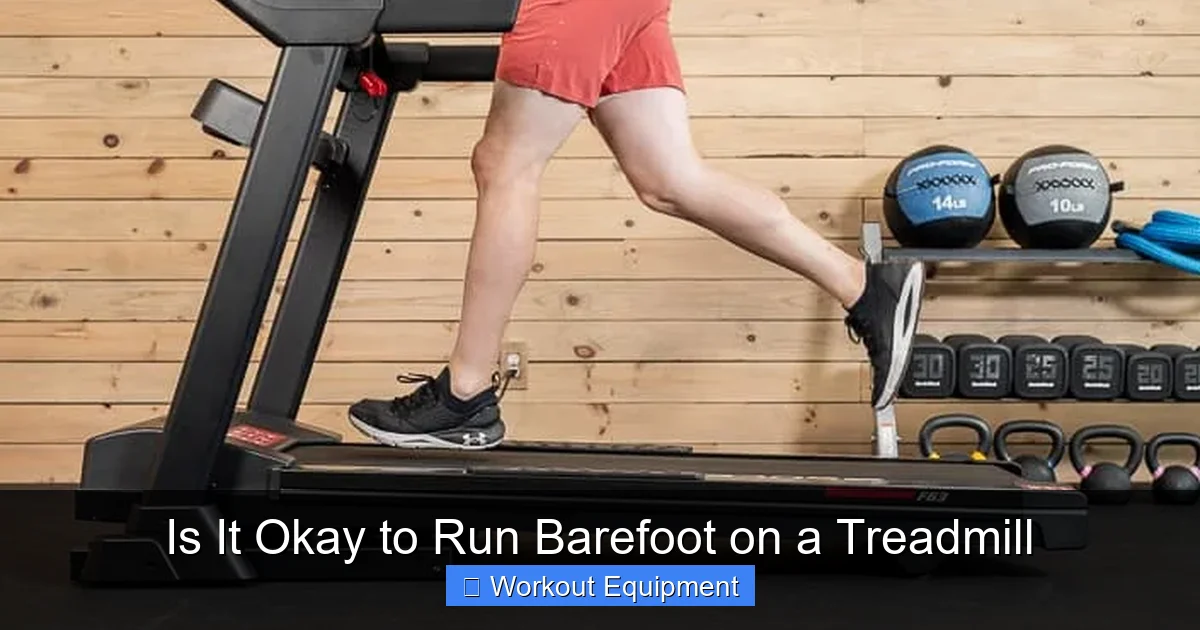
If, after understanding the risks, you still want to experiment with barefoot movement on your treadmill, you must follow a strict, patient protocol. The goal is not to run a 5K barefoot on day one. The goal is to teach your feet and legs a new language of movement without causing injury.
Visual guide about Is It Okay to Run Barefoot on a Treadmill
Image source: treadmillreviewguru.com
Phase 1: The Foot Familiarization (Weeks 1-4)
For the first month, forget running. Your only activity will be walking.
- Setting: Treadmill speed between 1.5 and 2.5 mph (a slow, deliberate pace). Zero incline.
- Duration: Start with just 5 minutes. Yes, 5 minutes. Your feet are not used to this. After your walk, inspect your feet carefully for any redness, hot spots, or irritation.
- Frequency: 3-4 times per week, with at least one day of rest in between.
- Focus: Pay attention to how it feels. Notice the texture of the belt. Feel your toes spreading and your arches engaging. Your goal is to build calluses *gradually* on the ball of your foot and heel, not to tear the skin.
If you complete two weeks of 5-minute walks with no issues, increase the duration by 1-2 minutes per session, capping at 10-15 minutes of walking for the remainder of the month.
Phase 2: The Jogging Introduction (Weeks 5-8+)
Only progress to this phase if your feet are completely comfortable with 15 minutes of barefoot walking. No blisters, no burning, no soreness 24 hours later.
- Setting: Speed between 3.0 and 4.0 mph (a very slow jog). You may need to start at 2.8 mph.
- Duration: Start with 1-2 minutes of jogging embedded within your 10-minute walk. For example: 8 min walk, 2 min jog, 2 min walk.
- Frequency: Still only 3-4 times per week.
- Form Focus: Consciously try to land with a light midfoot strike directly under your hips. Keep your cadence high (aim for 170-180 steps per minute). Your landing should be quiet and gentle.
Each week, you might add another 30-60 seconds of jogging time, but never at the expense of doubling your time. If you feel any friction or heat building, stop immediately and walk it out. The moment you get a hot spot, your session is over. That’s your sign your skin isn’t ready.
The Non-Negotiable Safety Checklist
Before every single barefoot session, run through this list:
- Clean the treadmill: Wipe down the belt and side rails with a gym-safe disinfectant wipe. Let it dry completely.
- Inspect your feet: Look for any cuts, calluses that are about to tear, or blisters from previous activity. Don’t run on compromised skin.
- Hydrate: Well-hydrated skin is more pliable and resistant to friction.
- Have a towel and water bottle ready: To wipe any sweat from your feet mid-session (sweat increases friction) and to cool down the belt if it feels hot.
- Know the emergency stop: Your hand should be near the safety clip or stop button at all times.
Treadmill-Specific Considerations & Alternatives
The treadmill environment demands special attention beyond the general rules of barefoot running.
Deck Texture and Belt Material
Check your treadmill’s belt. Is it a smooth, almost slick belt (common on some high-end models) or a heavily textured, “grippy” belt? The more textured the belt, the higher the friction and the greater the blister risk. A smooth belt is slightly better but still generates immense heat. There is no treadmill belt material that is truly “safe” for barefoot running over time. It’s a matter of degree, not safety.
The Heat Factor
Even on a low setting, the friction generates heat. After 10 minutes of continuous movement, place the back of your hand gently on the belt (do this while the belt is moving, but be extremely careful). If it feels warm to the touch, it’s definitely warm against the more sensitive skin on your sole. This heat accelerates blister formation. You can try running with the treadmill off (pushing the belt with your feet — “manual mode”) to eliminate this heat source, but this changes the mechanics entirely and isn’t a true running simulation.
The Superior Alternative: Minimalist Footwear
For 99% of people interested in the benefits of barefoot running, the answer is not true barefoot on a treadmill. The answer is a true minimalist shoe. These are not just “lightweight” trainers. They have:
- Zero Drop: No height difference between heel and forefoot.
- Thin, Flexible Sole: Usually 3-6mm thick, allowing ground feel.
- Wide Toe Box: Allows toes to splay naturally.
- No Arch Support or Cushioning: They are essentially a protective sock with a durable sole.
Brands like Vibram FiveFingers, Merrell Vapor Glove, Xero Shoes, or even the New Balance Minimus are designed for this. They provide an essential barrier between your skin and the abrasive, hot treadmill belt. They protect against cuts, bacteria, and the vast majority of friction blisters. You still get the sensory feedback, gait changes, and foot strengthening benefits because your foot moves inside the shoe without constraint. This is the strongly recommended, safe path to explore natural movement on a treadmill.
Who Should Absolutely Avoid It
Some individuals have health conditions that make barefoot activity, especially on a high-friction surface like a treadmill, an unacceptable risk.
- People with Diabetes: Diabetic neuropathy (nerve damage) means you may not feel a burn or blister forming until it’s severe and infected. Poor circulation also means injuries heal very slowly and can become serious complications. Barefoot activity is generally contraindicated.
- Those with Peripheral Artery Disease (PAD) or other circulation disorders: Similar to diabetes, reduced blood flow to the feet impairs healing and increases infection risk.
- Anyone with existing foot injuries: Plantar fasciitis, Achilles tendinitis, stress fractures, or severe ankle sprains need support and protection, not additional stress.
- Individuals with severe flat feet or overpronation: While minimalist shoes can help some, those with extreme biomechanical issues may need guidance from a physical therapist or podiatrist before attempting any barefoot work, as the transition can exacerbate problems without proper strength.
- Anyone with compromised immune systems: The infection risk from gym hygiene is higher.
If you fall into any of these categories, please consult with your doctor or a podiatrist before even considering barefoot or minimalist running.
The Verdict: A Careful “Maybe” With a Strong Preference for Shoes
So, is it okay to run barefoot on a treadmill? The technical answer is yes, your feet can touch the belt. But the practical, safety-first answer is: it is generally not advisable for sustained running. The risks of blisters, burns, and infection are high and occur quickly. The treadmill is an artificial environment that magnifies the downsides of barefoot activity while minimizing the benefits (like varied terrain stimulation).
If your goal is to improve foot strength, gait, and proprioception, the vastly superior method is to invest in a pair of true minimalist shoes and use them on the treadmill. This gives you 95% of the biomechanical benefits with a critical layer of protection against the treadmill’s unique hazards. Start with the same ultra-gradual protocol: walking first, then slow jogging, listening to your body obsessively.
If you are determined to try true barefoot, treat it as a short-term experiment, not a training method. Limit sessions to 5-10 minutes of slow walking, stop at the first sign of discomfort, and never do it on a shared or poorly maintained treadmill. Your feet are your foundation. Protect them wisely, and they will carry you powerfully for years to come.
Frequently Asked Questions
Can I get a blister from one short barefoot treadmill session?
Yes, absolutely. Due to the high friction and heat, a painful blister can form in as little as 10-15 minutes of continuous jogging, especially if you have sensitive skin or a hot spot from an ill-fitting shoe the day before. Always start with just a few minutes of walking to test the friction.
Is it more hygienic to run barefoot on my home treadmill vs. a gym?
It is more hygienic on your *own* home treadmill simply because you are the only user. However, your home belt still collects your own sweat and dead skin, which can breed bacteria and fungi over time. You should still wipe it down before and after any barefoot session. A gym treadmill is a high-risk surface due to many unknown users and inconsistent cleaning.
Will running barefoot on a treadmill strengthen my feet?
It can, but it’s a risky way to do it. The act of engaging your foot muscles to stabilize and push off without support will stimulate strength gains. However, the pain and injury from blisters or burns will force you to stop, negating any training benefit. Strengthening is better achieved through controlled, pain-free movements in minimalist shoes or specific foot exercises.
What about those toe socks (like Injinji)? Are they enough protection?
Toe socks are excellent for preventing blisters *between* your toes (a common issue in any shoe) and for hygiene. However, they provide almost no protection against the friction and heat of the treadmill belt itself. The sole of the sock is thin fabric and will wear through quickly, offering no barrier to blisters on the ball or heel of your foot. They are not a substitute for a sole.
How long does it take to transition to barefoot treadmill running?
For the tiny fraction of people who might attempt it, a cautious transition takes many months of consistent, pain-free walking before even considering short jogs. For a safe and effective transition to *natural running form*, using minimalist shoes on varied outdoor surfaces is the recommended path, and that process typically takes 6 months to a year of gradual increase in distance and time.
I have really tough, calloused feet. Can I handle the treadmill better?
Calluses are your body’s way of protecting skin from friction. However, on a treadmill, the shear force is so intense that even calloused skin can tear, leading to a painful “blister under the callus” that is very difficult to treat. Calluses might buy you a few extra minutes, but they do not make you immune to the heat and friction. They can also crack, creating an entry point for infection. Proceed with extreme caution regardless of your callus level.