Is It Better to Use a Treadmill or Elliptical
Choosing between a treadmill and an elliptical depends entirely on your personal fitness goals, physical condition, and preferences. Both are excellent cardiovascular machines, but they differ significantly in impact, muscle engagement, and workout feel. The treadmill is superior for running-specific training and often burns more calories, while the elliptical provides a low-impact, full-body workout that’s gentler on the joints. There is no single “best” machine—the right choice is the one you’ll use consistently and that aligns with your body’s needs.
So, you’ve decided to add a cardio machine to your home gym or you’re evaluating the options at your local fitness center. The two heavyweights in the ring are almost always the treadmill and the elliptical. Both promise a heart-pumping, sweat-inducing workout. But when it comes to the great “treadmill or elliptical” debate, which one truly comes out on top? The answer, as you might suspect, is deeply personal. There is no universal champion. Instead, the “better” machine is the one that best aligns with your unique body, your specific fitness goals, and your personal taste. Let’s break down the science, the feel, and the practicalities to help you make an informed decision.
Key Takeaways
- Impact Level is Key: Treadmills are high-impact (stress on joints), ellipticals are low-impact (gliding motion). This is the most critical difference for injury prevention and joint health.
- Calorie Burn Can Be Similar: At comparable effort levels, calorie expenditure is often similar. Treadmills *can* burn more during running, but ellipticals engage more upper body muscles, balancing the equation.
- Muscle Engagement Differs: Treadmills primarily target lower body (quads, hamstrings, glutes, calves). Ellipticals provide a true full-body workout, engaging arms, chest, and back alongside legs.
- Running vs. Gliding: If your goal is to train for a race or you love the feel of running/walking, a treadmill is essential. If you prefer a smooth, continuous motion, the elliptical is your machine.
- Space & Cost Considerations: Ellipticals generally have a larger footprint and are often more expensive than basic treadmills, though high-end models of both can be comparable.
- Safety & Balance: Ellipticals have a fixed path and are easier for those with balance issues. Treadmills require more coordination and carry a small risk of falling if not used carefully.
- The Best Machine is the One You’ll Use: Consistency trumps all. Personal enjoyment, comfort, and long-term sustainability are the ultimate deciding factors.
📑 Table of Contents
- Understanding the Machines: How They Work
- Head-to-Head: Calorie Burn and Cardiovascular Benefit
- The Joint and Injury Factor: Impact vs. Low-Impact
- Muscle Engagement: Lower Body vs. Full Body
- Practical Considerations: Space, Cost, and Experience
- Making Your Choice: Who Should Choose What?
- Conclusion: Listen to Your Body and Your Goals
Understanding the Machines: How They Work
Before we compare outcomes, it’s crucial to understand the fundamental mechanics of each machine. The difference in their operation is the root of all other distinctions—impact, muscle use, and even psychological feel.
The Treadmill: Simulating Earthbound Motion
The treadmill is straightforward: it’s a moving belt that you walk, jog, or run on. You control the speed and, on most models, the incline. Your body performs a gait cycle—heel strike, mid-stance, and toe-off—that is identical to outdoor running or walking. This means your body absorbs the full force of each footstrike. That impact travels up through your ankles, knees, hips, and spine. The treadmill’s primary advantage is its specificity; if you want to get better at running, there is no substitute for running. The motorized belt also allows for precise control over pace and gradient, making it a fantastic tool for structured interval training or pace-specific runs. You can simulate hill repeats with the touch of a button, something that’s logistically harder outdoors.
The Elliptical: A Physics-Based, Low-Impact Glide
The elliptical, also called a cross-trainer, operates on a completely different principle. Your feet ride on pedals that follow a fixed, elliptical (oval-shaped) path. There is no heel strike or toe-off; your feet never leave the pedals, creating a smooth, continuous motion. This gliding action is what makes it low-impact. The force of your motion is distributed, and the machine’s mechanics absorb much of the shock that would otherwise hit your joints. Most ellipticals also have movable handlebars. Pushing and pulling these handles engages your upper body—chest, back, shoulders, and arms—in a coordinated motion with your legs. This creates a true, simultaneous upper and lower body workout that is difficult to replicate on other cardio equipment. Some models offer a ramp or “stride length” adjustment, which changes the muscle emphasis and feel of the workout.
Head-to-Head: Calorie Burn and Cardiovascular Benefit
This is the question on everyone’s mind: “Which one will help me lose weight faster?” The short answer is that both can be highly effective for burning calories and improving cardiovascular health, but they get there in slightly different ways.
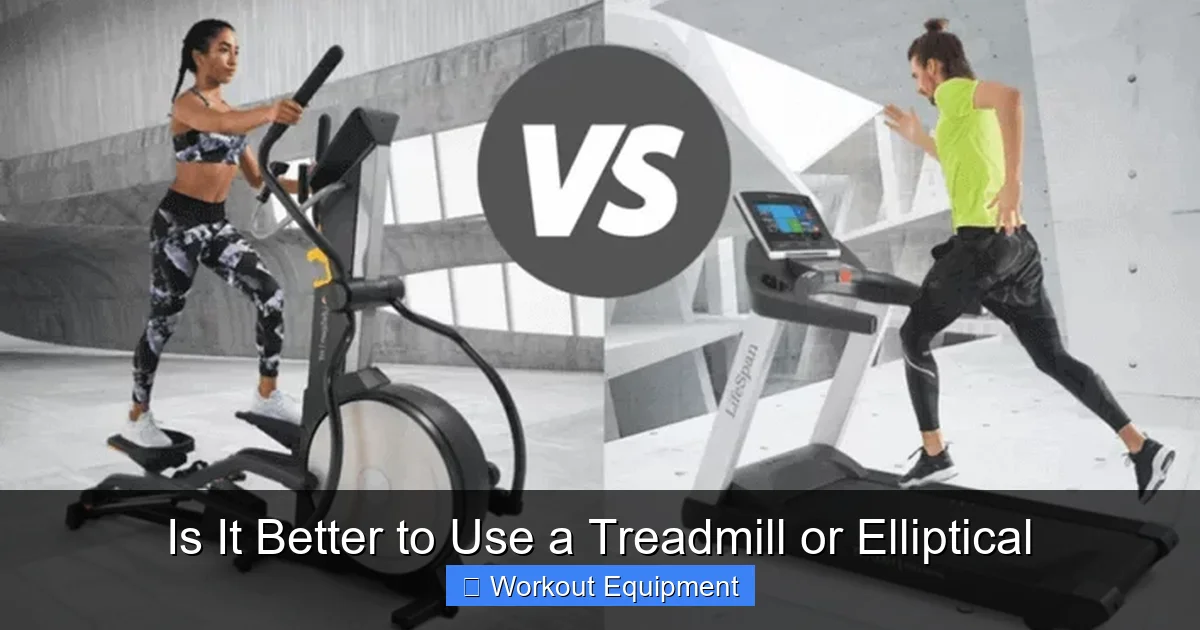
Visual guide about Is It Better to Use a Treadmill or Elliptical
Image source: besttreadmillchoice.com
The “Afterburn” Effect and Perceived Exertion
Studies often show that, pound for pound, running on a treadmill can have a slightly higher gross calorie burn at the same perceived level of exertion. This is because running is a more metabolically demanding activity per minute than the elliptical’s gliding motion. However, the elliptical’s advantage lies in its sustainability and muscle engagement. Because it’s low-impact, you can often exercise for longer durations at a higher intensity without joint pain or fatigue setting in as quickly. Furthermore, engaging more muscle mass (arms and core) means your body is working harder overall and may have a greater Excess Post-Exercise Oxygen Consumption (EPOC), commonly known as the “afterburn” effect, where your metabolism stays elevated for hours after the workout. So, while the treadmill might win the sprint, the elliptical can win the marathon—both in the session and in the hours following.
The Role of Intensity and Inertia
A critical factor often overlooked is user-controlled intensity. On a treadmill, if you set the speed to 6 mph, you must keep up or you’ll fall off. This external force creates a mandatory workload. On an elliptical, you can let the pedals swing with your momentum (using the machine’s inertia) without putting in as much effort, especially if you’re not actively pushing and pulling the handles. This makes the elliptical more “forgiving” but also means you have to be more disciplined to maintain true high intensity. To maximize calorie burn on an elliptical, you must consciously drive with your legs and push/pull with your arms, avoiding a passive ride. Using the ramp or resistance settings is also crucial to build intensity and overcome the machine’s momentum.
The Joint and Injury Factor: Impact vs. Low-Impact
This is arguably the most important differentiator and the primary reason many people choose one machine over the other. The long-term health of your joints should be a paramount consideration.

Visual guide about Is It Better to Use a Treadmill or Elliptical
Image source: blog.nordictrack.com
Treadmill Impact: A Double-Edged Sword
The high-impact nature of treadmill running is a double-edged sword. On the positive side, weight-bearing exercise is crucial for building and maintaining bone density, which helps prevent osteoporosis. The stress on bones and connective tissue stimulates growth and strength. However, this same stress is a major contributor to overuse injuries: shin splints, plantar fasciitis, knee pain (patellofemoral pain syndrome), and hip bursitis. The treadmill’s belt can also be harder than natural terrain (especially asphalt), and the repetitive motion in a straight line can create muscular imbalances. If you have pre-existing joint issues, arthritis, or are significantly overweight, the treadmill can be a fast track to pain and injury. It’s also not ideal for the rehabilitation phase after many lower-body injuries.
Elliptical Low-Impact: Gentle but Effective
The elliptical’s gliding motion is a godsend for those with joint sensitivities. Because your feet never leave the pedals and the motion is fluid, there is minimal jarring or pounding. This makes it an excellent option for:
- Individuals with arthritis, knee replacements, or chronic joint pain.
- Those in injury recovery (with doctor/therapist approval).
- People who are significantly overweight and need to reduce load on weight-bearing joints.
- Older adults concerned about joint preservation.
The elliptical allows you to get a cardiovascular workout without accumulating the micro-trauma that leads to inflammation and pain. However, it’s not a magical “no-impact” device—there is still some force transmitted through the joints, just dramatically less than running. A note of caution: because it’s easy, some users develop a “passive” habit, letting the machine do the work. To gain strength and bone benefits, you must use sufficient resistance and drive through your heels.
Muscle Engagement: Lower Body vs. Full Body
Where you feel the burn tells you a lot about what each machine is working. This is a key distinction in terms of overall body development and calorie expenditure.

Visual guide about Is It Better to Use a Treadmill or Elliptical
Image source: s36370.pcdn.co
Treadmill: The Leg-Dominant Engine
Walking or running on a treadmill is predominantly a lower-body endeavor. Your quadriceps, hamstrings, glutes (especially on an incline), and calves do the vast majority of the work. Your core engages isometrically to stabilize your torso, and your arms swing naturally, but the contribution is minimal. To make it more full-body, you’d have to actively pump your arms vigorously or wear light hand weights (though this can compromise form and shoulder health). The treadmill’s strength is in developing running-specific power, endurance, and muscular endurance in the legs. The incline function is a powerful tool for shifting emphasis to the glutes and hamstrings, creating a more comprehensive lower-body toning effect.
Elliptical: The True Full-Body Integrator
This is the elliptical’s standout feature. When used correctly—with active arm movement—it provides a simultaneous upper and lower body workout. The leg motion works the quads, hamstrings, and glutes in a pattern similar to a squat or lunge, but without impact. The pushing and pulling of the handlebars engages the pectorals, latissimus dorsi, deltoids, and triceps. The core muscles (abdominals and obliques) are engaged constantly to stabilize the torso as the arms move. This integrated movement pattern is more functional, mimicking pushing and pulling motions used in daily life. For someone looking to build overall muscle tone and strength across their entire body in a single cardio session, the elliptical has a clear advantage. It’s essentially a strength and cardio hybrid, though the resistance is not typically high enough to build significant muscle mass like weight training would.
Practical Considerations: Space, Cost, and Experience
Beyond the physiological debate, real-world factors often tip the scales. Let’s talk about the logistics of owning or using these machines.
Footprint, Portability, and Noise
Treadmills: Generally have a smaller, more compact footprint relative to their function. Folding models are common, allowing you to store them vertically against a wall. They are heavier but often come with transport wheels. The main noise concern is the belt motor and the impact of your feet, which can transmit sound to floors and neighbors below, especially in apartments. A good quality treadmill with a cushioned deck will be quieter.
Ellipticals: Almost always have a larger, more fixed footprint due to the pedal and flywheel mechanism. They are typically much heavier and more difficult to move. Very few “foldable” ellipticals exist, and they are often cumbersome when they do. They are generally quieter in operation than treadmills, as the motion is fluid and magnetic or fan-based resistance is silent. However, the pedal mechanism can develop squeaks over time.
Price Points and Value
You can find cheap, basic models of both machines. However, to get a durable, stable, and feature-rich machine, you need to invest. Generally, a decent entry-level treadmill for walking/jogging starts around $600-$800. A good running treadmill with a powerful motor and good deck cushioning starts around $1,500. Ellipticals tend to have a higher entry point for a quality machine. A solid, stable elliptical with a good stride length and smooth motion often starts around $1,000-$1,200 and can go well over $3,000 for commercial-grade models. The elliptical’s more complex mechanics (two moving arms, pedal linkage) contribute to the higher cost for a comparable build quality.
The User Experience: Boredom and Mindset
This is subjective but vital. The treadmill can feel monotonous—staring at a wall or a screen while running in place. However, the “progress” is easy to see (speed, distance, incline) and many find the rhythmic motion meditative. The elliptical’s motion can feel awkward or unnatural to some people (“I feel like I’m pedaling a strange bike”), while others love the smooth, floating sensation. The arm movement adds a layer of complexity that some find engaging and others find tiring or distracting. Try both extensively before buying. Can you see yourself using this machine for 30 minutes, 4 times a week, for years? Your emotional response to the motion is a huge predictor of long-term adherence.
Making Your Choice: Who Should Choose What?
Let’s synthesize all this into clear recommendations. Think of this as a decision flowchart based on your primary concerns.
Strongly Consider a TREADMILL If:
- Your primary goal is to train for a running race (5k, marathon) or you simply love running.
- You have no current joint pain, injuries, or high risk for osteoporosis (or bone density is a specific goal).
- You enjoy the specificity and measurable progress of pace and distance.
- You have limited space and need a potentially foldable option.
- You prefer a simpler, more straightforward motion.
- You want to use incline as a primary tool for glute/hamstring development and calorie burn.
Strongly Consider an ELLIPTICAL If:
- You have knee, hip, ankle, or back pain, arthritis, or are recovering from an injury (always consult a doctor).
- You are significantly overweight and need to reduce joint stress while getting fit.
- You want a time-efficient, full-body workout that hits arms and legs simultaneously.
- You find running/jogging uncomfortable or boring, but enjoy a smooth, gliding motion.
- You have balance or coordination concerns (the fixed pedal path is safer).
- Noise is a major concern (e.g., living in an apartment with downstairs neighbors).
- You want a machine that allows for a longer, more sustainable cardio session due to its low-impact nature.
The Hybrid Approach: Not an “Or,” But an “And”
For many dedicated fitness enthusiasts, the ideal scenario is not choosing one over the other, but incorporating both into their routine. Use the treadmill for specific running workouts (intervals, tempo runs, long slow distance) and the elliptical for active recovery days, cross-training to prevent overuse injuries, or full-body cardio sessions. This variety challenges your body in different ways, prevents boredom, and reduces the repetitive stress that comes from doing the exact same motion day after day. If your budget and space allow for two machines, this is the gold standard for a well-rounded home cardio setup.
Conclusion: Listen to Your Body and Your Goals
The “treadmill or elliptical” question has no one-size-fits-all answer. The treadmill is the king of specificity for runners, offering a high-impact, leg-focused workout that translates directly to road performance. The elliptical is the champion of low-impact, full-body engagement, providing a sustainable, joint-friendly option that builds total-body endurance. Your decision should be a dialogue between your objectives and your physiology. What is your primary goal? Weight loss? Race training? Joint preservation? Full-body toning? Be brutally honest about any existing aches, pains, or physical limitations. What motion do you genuinely enjoy? The best cardio machine is a joy to use, not a torture device you dread. If possible, spend 20-30 minutes on each machine at a store or gym. Notice where you feel the work, how your joints feel afterward, and which one leaves you feeling energized rather than beaten down. Ultimately, the machine that gets used consistently, week after week, is the undisputed winner for your health and fitness journey.
Frequently Asked Questions
Which machine burns more belly fat?
Neither machine specifically targets belly fat—spot reduction is a myth. Both are excellent for burning overall body fat by creating a calorie deficit. The best machine for fat loss is the one you can use most consistently at a high intensity for a sufficient duration.
Is the elliptical good for knee problems?
Yes, the elliptical is generally an excellent, safe option for people with knee issues like arthritis or post-rehabilitation, as its low-impact motion minimizes joint stress. However, you should always get clearance from a doctor or physical therapist and start with low resistance.
Can you lose weight on an elliptical as effectively as a treadmill?
Absolutely. Weight loss depends on total calories burned and diet. While a treadmill might have a slight edge in calories burned per minute at a running pace, the elliptical’s full-body engagement and lower perceived exertion often allow for longer, more frequent sessions, leading to equal or greater total weekly calorie expenditure.
Does the elliptical tone your arms?
Yes, actively pushing and pulling the handlebars on an elliptical engages the muscles of the chest, back, shoulders, and arms. For significant muscle building (“toning”), you’d need higher resistance, but it effectively works these muscles for endurance and mild strengthening alongside cardio.
What is the main disadvantage of an elliptical?
The main disadvantages are its large, fixed footprint (hard to store), typically higher cost for a quality model, and the potential for a “passive” workout where you rely on momentum instead of generating power with your muscles, reducing effectiveness.
Is a treadmill or elliptical better for a beginner?
For a complete beginner, the elliptical is often the safer, more comfortable starting point due to its low-impact nature and lower risk of falling. However, if the beginner’s goal is to learn to run or walk for fitness and has no joint issues, a treadmill with good cushioning is also a fine, intuitive choice. The best beginner machine is whichever feels more approachable and less intimidating.