Is It Better to Do Push Ups with Dumbbells
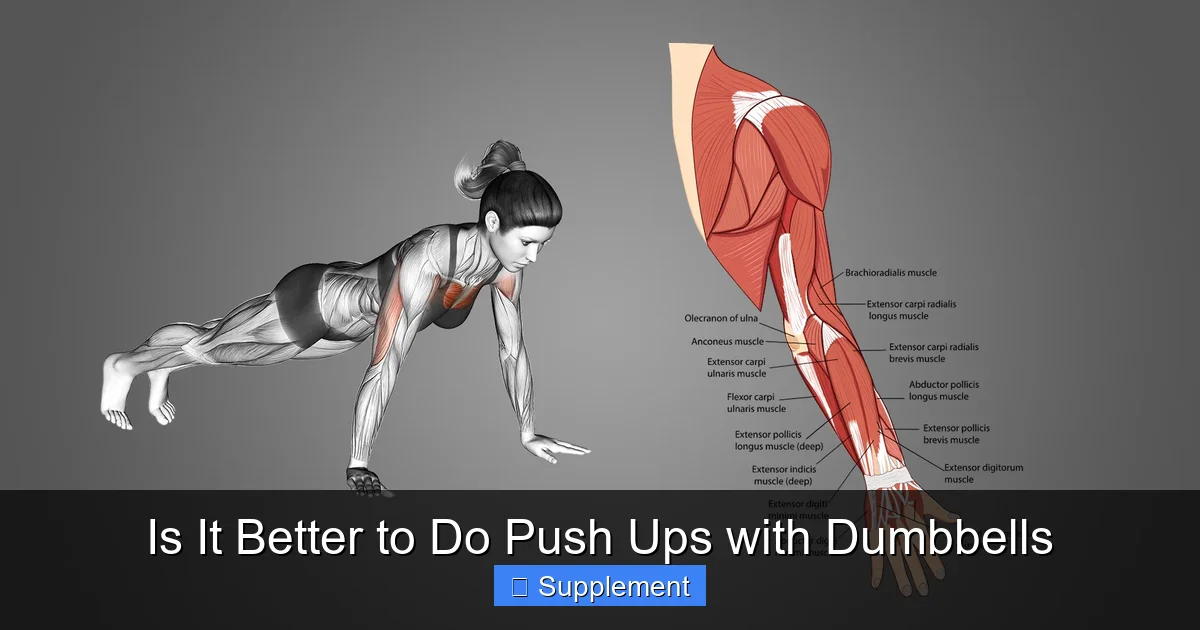
Using dumbbells for push-ups increases your range of motion and creates instability, which can engage stabilizer muscles more. However, it’s not inherently “better” for everyone—it adds complexity, requires good wrist mobility, and increases the risk of form breakdown. The best choice depends on your goals, experience level, and physical condition. For most, mastering standard push-ups is foundational before adding dumbbells.
You’re in the gym, knocking out set after set of push-ups on the mat. You see someone across the room gripping a pair of dumbbells and pushing up from the floor. Your first thought might be, “Is that guy showing off?” Your second, more curious thought is likely, “Is it better to do push-ups with dumbbells?” It’s a fantastic question that gets to the heart of exercise progression. The short answer is: it’s not universally “better,” but it is *different*. And those differences can be powerful tools or pitfalls, depending on who you are and what you’re trying to achieve. Let’s unpack everything you need to know about the dumbbell push-up.
The classic push-up is a cornerstone of fitness for a reason. It requires no equipment, builds foundational strength, and tests your entire upper body and core. But once that movement feels easy, the natural instinct is to find a way to make it harder. Adding external load via dumbbells is one of the most common and logical progressions. However, before you grab the heaviest dumbbells you can find, it’s crucial to understand *how* this variation changes the exercise. Is it simply adding weight, or is it creating a fundamentally new movement pattern? The answer will determine whether it’s the right next step for you.
Key Takeaways
- Increased Range of Motion: Dumbbells allow your chest to sink lower than floor push-ups, potentially increasing muscle stretch and engagement.
- Enhanced Instability: The unstable dumbbell handles force your shoulders, core, and wrists to work harder as stabilizers.
- Wrist Strain Risk: The extended wrist position on dumbbells can exacerbate existing wrist issues or cause discomfort for those with limited mobility.
- Equipment Dependent: You need a pair of suitable dumbbells and a stable surface, making this variation less accessible than floor push-ups.
- Not for Beginners: The added instability and technical demand make dumbbell push-ups an intermediate-to-advanced progression, not a starting point.
- Goal-Specific Application: They can be a valuable tool for breaking plateaus and building functional upper-body strength, but aren’t a mandatory upgrade.
- Safety is Paramount: Proper form, controlled movement, and appropriate weight selection are critical to avoid shoulder or wrist injury.
📑 Table of Contents
- The Anatomy of a Standard Push-Up
- How Dumbbells Change the Movement: Mechanics & Physics
- The Pros and Cons: A Balanced Breakdown
- Who Should Try Dumbbell Push-Ups? (And Who Should Avoid Them)
- How to Perform Dumbbell Push-Ups Correctly: A Step-by-Step Guide
- Alternatives & When to Choose What
- The Verdict: Is It Better?
The Anatomy of a Standard Push-Up
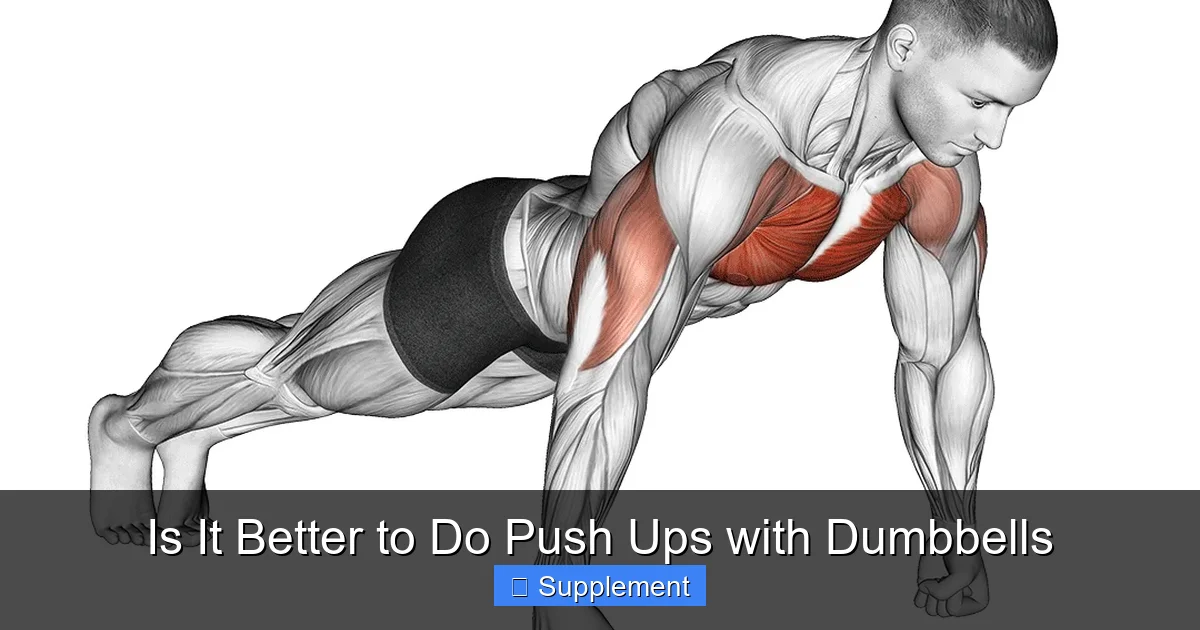
To appreciate the change dumbbells bring, we must first understand the baseline. A standard push-up performed on the floor is a closed-chain kinetic chain exercise. This means your hands (and feet) are fixed against an immovable surface—the floor. As you lower yourself, your body moves relative to that fixed point. The primary movers are the pectoralis major (chest), anterior deltoids (front shoulders), and triceps brachii. Your core (rectus abdominis, obliques, transverse abdominis) and even your glutes and quads act as dynamic stabilizers, keeping your body in a rigid plank.
The Role of Wrists and Range of Motion
On the floor, your wrists are typically in a neutral or slightly extended position, depending on your hand placement. The floor itself stops your descent when your sternum lightly touches it. This creates a natural, self-limiting range of motion (ROM) that is generally safe for most shoulder joints. The limitation isn’t muscular strength but the physical barrier of the ground. This is a key point: the floor is a hard stop.
How Dumbbells Change the Movement: Mechanics & Physics
Introducing a pair of dumbbells transforms the push-up from a closed-chain to an open-chain exercise for your upper body. Your hands are now on movable objects. This single change cascades into several significant mechanical differences.
Visual guide about Is It Better to Do Push Ups with Dumbbells
Image source: inspireusafoundation.org
1. Unrestricted Range of Motion (The “Deep Stretch”)
This is the most obvious and celebrated change. With your hands gripping dumbbells, there is nothing to stop your chest from descending lower than the floor. You can lower yourself until your chest is just above the dumbbell handles or even lightly brushes them. This dramatically increases the stretch on the pectoral muscles. In strength training, a greater stretch under load (often called “muscle lengthening under tension”) is associated with increased mechanical tension and potential for muscle growth (hypertrophy). For many, achieving this deep stretch without the shoulder discomfort that can come from a very wide floor push-up is easier with dumbbells, as the grip allows for a more natural shoulder external rotation.
2. The Instability Factor
A dumbbell is a cylinder. On a flat floor, it can roll. Even on a textured gym floor or a yoga mat, there is micro-movement. Your wrists, forearms, and shoulders must constantly make tiny adjustments to keep the dumbbells from tipping or rolling. This recruits the smaller stabilizer muscles—like the rotator cuff group (supraspinatus, infraspinatus, teres minor, subscapularis) and the muscles of the forearm—far more than a stable floor push-up does. This builds functional, joint-supporting strength and improves proprioception (your body’s awareness in space). Think of it like the difference between standing on solid ground and standing on a wobble board.
3. Altered Joint Angles and Wrist Position
Gripping a dumbbell handle forces your wrists into a position of extension. For people with limited wrist dorsiflexion mobility or conditions like arthritis, this can be painful or even injurious over time. The neutral grip (palms facing each other) often used with dumbbells can be *more* wrist-friendly than a standard push-up where wrists are hyperextended, but it’s highly individual. You must listen to your body. Furthermore, the grip width is now dictated by the distance between the dumbbells you place on the floor, which can subtly change the emphasis on chest vs. triceps.
The Pros and Cons: A Balanced Breakdown
Now let’s lay out the advantages and disadvantages in a clear list. This isn’t about declaring a winner; it’s about matching the tool to the job.
Visual guide about Is It Better to Do Push Ups with Dumbbells
Image source: thumbs.dreamstime.com
Pros of Dumbbell Push-Ups
- Greater Chest Activation: The increased ROM allows for a deeper stretch at the bottom, potentially leading to more complete pectoral fiber recruitment.
- Enhanced Stabilizer Strength: The instability builds robust shoulder and wrist stabilizers, which can translate to better performance and injury resilience in other pressing movements.
- Reduced Shoulder Impingement for Some: The neutral grip and ability to keep elbows closer to the body can create a more subacromial space (under the shoulder blade), reducing impingement risk for those who experience it with standard push-ups.
- Easier to Add Progressive Overload: It’s simpler to grab a slightly heavier dumbbell than it is to add weight plates to your back with a weight vest or a plate. This makes tracking strength progress more straightforward.
- Fixed Hand Position: Unlike floor push-ups where hands can slide, the dumbbell provides a fixed, defined point of contact, ensuring consistent hand placement set.
Cons of Dumbbell Push-Ups
- Increased Wrist Demand: The extended wrist position can be a deal-breaker for anyone with pre-existing wrist pain, carpal tunnel syndrome, or limited mobility.
- Higher Skill Ceiling: The instability requires more coordination and mind-muscle connection. Beginners will often fail due to the dumbbells tipping long before their chest muscles fatigue.
- Balance and Tipping Hazard: If your dumbbells aren’t perfectly parallel or if you have uneven strength, one dumbbell can roll, leading to a sudden loss of balance and potential shoulder or wrist injury.
- Limited Maximal Load: While adding weight is easier, the maximum safe load you can use is often less than what you could safely have on your back in a weighted vest, as the dumbbells must be gripped and supported throughout the entire range of motion.
- Floor Dependency: You need a firm, non-slippery surface. Doing these on a Bosu ball or another unstable surface is an advanced variation that drastically increases difficulty and injury risk for minimal benefit.
- Not a Pure Strength Builder: The instability means you’ll likely lift less total weight than in a stable floor push-up with a weight vest. If your sole goal is maximal absolute pushing strength, a stable load is often more efficient.
Who Should Try Dumbbell Push-Ups? (And Who Should Avoid Them)
This variation is not a one-size-fits-all upgrade. Here’s a simple guide.
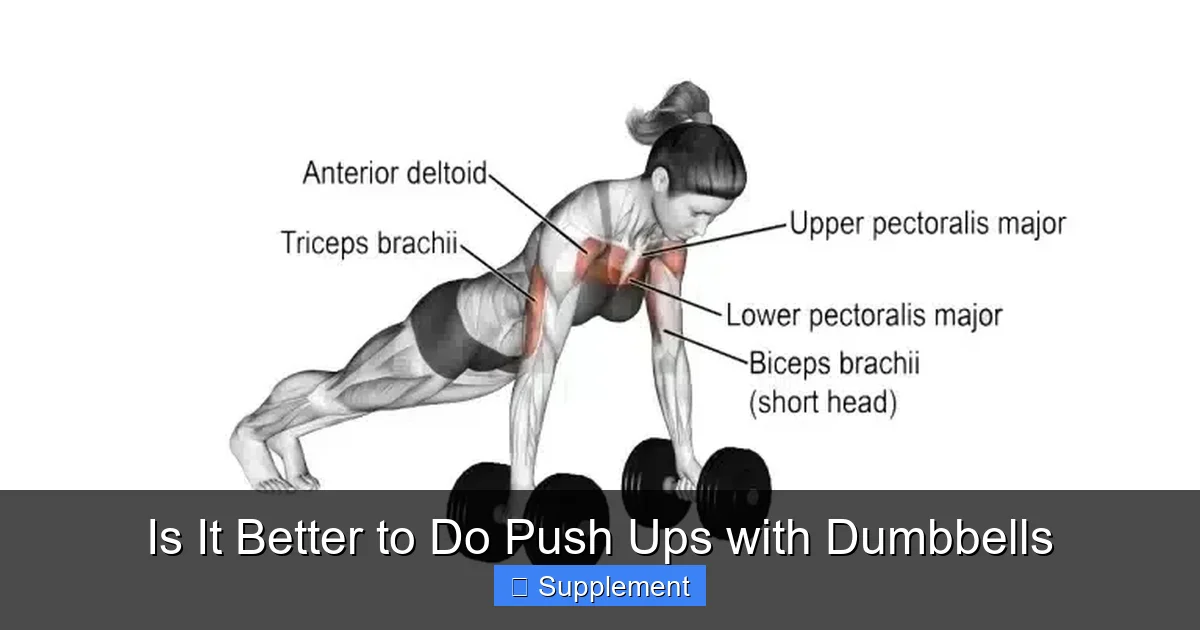
Visual guide about Is It Better to Do Push Ups with Dumbbells
Image source: fitliferegime.com
Ideal Candidates:
- Intermediate to Advanced Lifters: You can perform 3+ sets of 20-25+ perfect, slow, controlled standard push-ups with full range of motion.
- Those Seeking a “Pump” or Hypertrophy: If your goal is muscle growth and a deep stretch feels good for your shoulders, the increased ROM is a potent tool.
- People with “Sticky” Lockouts: The instability at the top of the movement can help strengthen the triceps and shoulders in the final phase of the press.
- Athletes Needing Functional Stability: The stabilizer engagement mimics the unpredictable forces encountered in sports.
Who Should Be Cautious or Avoid:
- Beginners: Master the floor push-up first. Build a baseline of 30+ perfect reps before considering this.
- Anyone with Wrist Pain or Limited Mobility: The extended grip will likely aggravate the issue. Work on wrist mobility drills first or stick to fist push-ups or push-up handles.
- Those with Unstable Shoulders: If you have a history of shoulder dislocation, instability, or rotator cuff tears, the instability load could be problematic. Consult a physical therapist.
- Home Gym Warriors with Light Dumbbells: Using 5lb dumbbells for push-ups is pointless; the instability will dominate, and you won’t load the primary movers effectively. You need enough weight that the primary movers are the limiting factor, not the stabilizers.
How to Perform Dumbbell Push-Ups Correctly: A Step-by-Step Guide
Assuming you’ve decided to try them, here is the definitive protocol for safety and effectiveness.
Setup & Equipment
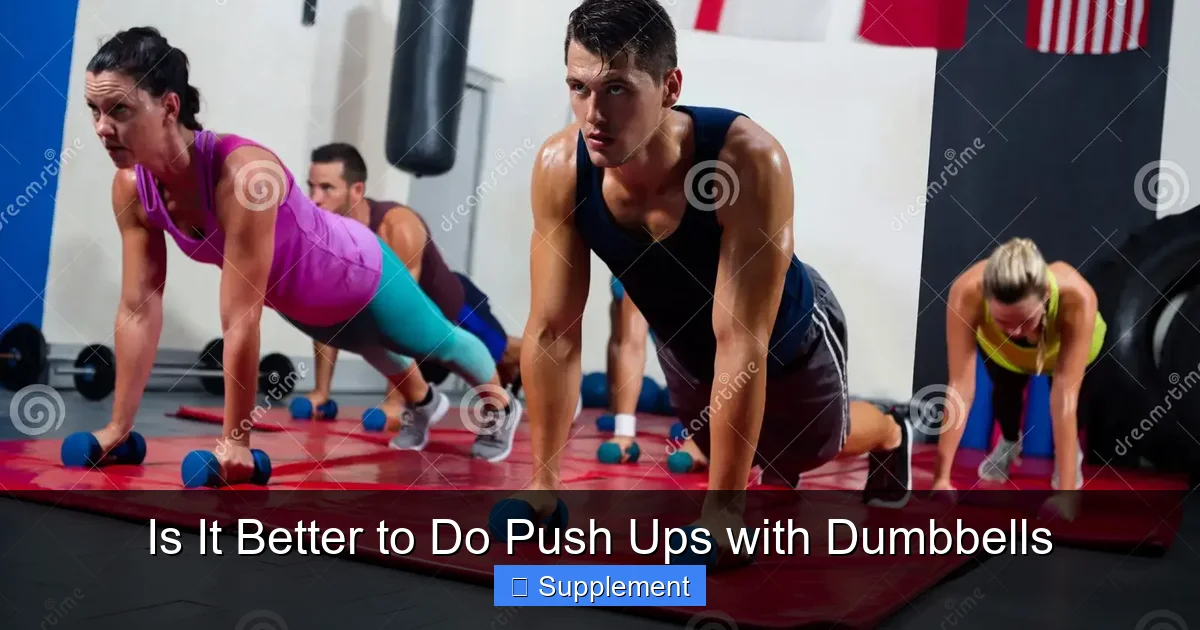
Dumbbells: Use hexagonal (hex) or “power block” style dumbbells. They have a flat, wide base that is far more stable on the floor than round, tapered dumbbell handles. Avoid using round-ended dumbbells; they are a tipping hazard. Choose a weight that allows you to perform 8-12 reps with perfect form. For most men starting out, this might be 20-35 lbs per hand. For women, 10-25 lbs. The weight should feel challenging but not impossible to stabilize.
Surface: A firm, non-slip surface is non-negotiable. A rubber gym floor, a yoga mat on a hard floor, or a turf surface is ideal. Never do these on a carpet or slick hardwood.
The Execution
- Place the Dumbbells: Position the dumbbells on the floor slightly wider than shoulder-width apart, parallel to each other. The handles should be oriented so you can grip them comfortably (usually the handles will be parallel to your body).
- Grip and Assume Position: Grip the handles firmly. Step back into a high plank position. Your body should form a straight line from head to heels. Engage your core and glutes. Your hands are now directly on the dumbbells, which are your base.
- The Descent: With control, bend your elbows and lower your chest toward the floor. Keep your elbows tucked at a 45-degree angle to your body (not flared out to 90 degrees). Lower yourself until your chest is just above the floor or lightly touches it. The dumbbells should remain stable and level.
- The Ascent: Push through your palms, driving your body back to the starting position. Focus on squeezing your chest and triceps. Your core must remain tight throughout to prevent your hips from sagging or piking.
- Repeat: Maintain a controlled tempo. A 2-second descent and 1-second explosive ascent (without locking out elbows aggressively) is a good rhythm.
Common Mistakes to Avoid
- Letting the Dumbbells Tilt: This is the #1 mistake. It means your grip is uneven, your wrists are weak, or you’re losing core tension. If they tilt, stop the set. Your stabilizers have failed.
- Sagging Hips: This takes work away from your chest and puts stress on your lower back. Keep your body rigid.
- Shrugging Shoulders: Keep your shoulders pulled down and back, away from your ears. Don’t let them creep up toward your ears.
- Bouncing at the Bottom: Using momentum to “bounce” out of the bottom position removes tension and risks injury. Control the entire range.
- Using Too Heavy a Weight: If you can’t complete 5 reps with perfect, stable form, the weight is too heavy. Ego-lifting here is a fast track to a rolled wrist or a tweaked shoulder.
Alternatives & When to Choose What
The dumbbell push-up is one tool in a large toolbox. Here’s how it compares to other common variations and when to use each.
Standard Floor Push-Up
When to use it: Always. It’s the foundational movement. Use it for warm-ups, high-rep endurance work, and as the baseline to measure progress. It’s the safest, most accessible option.
Push-Ups with Push-Up Handles/Grips
These are similar to dumbbells but with a fixed, stable grip and often a rotating handle. They increase ROM slightly and are generally more wrist-friendly than the floor. They are a great middle-ground between floor push-ups and dumbbells, offering increased ROM without the rolling instability.
Weighted Vest Push-Ups
When to use it: When your primary goal is maximal strength and loading the primary movers (chest, triceps, shoulders) in a stable environment. The weight is centered on your torso, creating less torque on your wrists and shoulders. You can typically load more total weight than with dumbbells. Best for advanced lifters who have mastered all bodyweight variations.
Archer Push-Ups & Pavel Push-Ups
These are bodyweight progressions that shift load to one side at a time, building immense unilateral strength and core stability without equipment. They are more skill-dependent but excellent for building the strength to eventually do one-arm push-ups.
Decline Push-Ups (Feet Elevated)
This increases the load on the upper chest and shoulders by shifting your center of gravity. It’s a pure strength progression using only bodyweight. It’s a fantastic step before adding external load.
Decision Flow: Can you do 30 perfect floor push-ups? Yes -> Try decline push-ups. Can you do 15 perfect decline push-ups? Yes -> Add a weighted vest. Want more stabilizer work and chest stretch and have good wrists? -> Try dumbbell push-ups with light weight. Have wrist pain? -> Use push-up handles or stick to floor variations.
The Verdict: Is It Better?
So, we return to the central question. Is it better? The answer is: it’s better for specific purposes, not universally.
If your goal is to maximize chest muscle growth through a deep stretch and you have healthy wrists, then yes, dumbbell push-ups can be a superior hypertrophy tool compared to standard floor push-ups. The increased ROM is a significant variable for muscle stimulation.
If your goal is to build raw, maximal pushing strength with the heaviest possible load, then no, a weighted vest is likely a better, more stable option.
If your goal is to improve overall upper-body stability and joint health for sports, yes, the instability component is highly beneficial, but it must be implemented intelligently with light weight and perfect form.
For the general fitness enthusiast looking to get stronger and build muscle, dumbbell push-ups are a valuable variation to cycle into your routine after you’ve built a solid foundation. They are not a replacement for the standard push-up but a progression from it. Think of them as a specialized tool, not the universal hammer. The “best” exercise is the one you can perform safely, consistently, and that aligns with your specific goals.
Final Recommendation: Master the standard push-up. Then, experiment with dumbbell push-ups using light dumbbells (start with 10-15 lbs) for 2-3 sets of 8-12 reps at the end of your workout. Focus intensely on keeping the dumbbells level. If your wrists protest, discontinue them. If they feel good and you see progress, gradually increase the weight. Cycle them in for 4-6 week blocks before returning to a phase of weighted vest or decline push-ups to continue overloading the primary movers in a stable environment.
Frequently Asked Questions
Are dumbbell push-ups better for building chest muscle?
They can be, primarily due to the increased range of motion which provides a deeper stretch on the pectoral muscles. This extra stretch is a potent stimulus for muscle growth. However, you must use appropriate weight and maintain perfect form; the instability shouldn’t compromise the primary movement.
My wrists hurt during dumbbell push-ups. What should I do?
Stop immediately. Wrist pain is a sign that this variation isn’t suitable for your current joint mobility. Focus on improving wrist flexibility with stretches. Consider using push-up handles (which often have a neutral grip) or stick to floor push-ups and fist push-ups. Do not push through wrist pain.
How heavy should the dumbbells be for dumbbell push-ups?
Choose a weight that allows you to perform 8-12 controlled, stable repetitions. The limiting factor should be your chest and triceps fatiguing, NOT your ability to keep the dumbbells from tipping. For most people starting, this is between 10-25 lbs per hand. Heavier is not better if you lose stability.
Should beginners try dumbbell push-ups?
No. Beginners should first build proficiency with standard push-ups, aiming for 3 sets of 15-20 perfect reps. Dumbbell push-ups introduce a significant stability challenge that can mask weak primary movers and lead to poor habits or injury. Master the basics first.
Can I do dumbbell push-ups every day?
It’s not recommended. Like any strength exercise, your pushing muscles (chest, shoulders, triceps) need 48-72 hours of recovery to repair and grow. Performing them daily leads to overtraining and increases injury risk. 2-3 times per week with at least one day of rest in between is optimal.
What’s the main mistake people make with dumbbell push-ups?
The biggest mistake is using dumbbells that are too light or too heavy. Too light (e.g., 5 lbs), and the instability makes the movement about balancing, not building strength. Too heavy, and you’ll sacrifice form, let the dumbbells tilt, and risk injury. The goal is to load the primary movers while *just* managing the instability. Start light and focus on control.