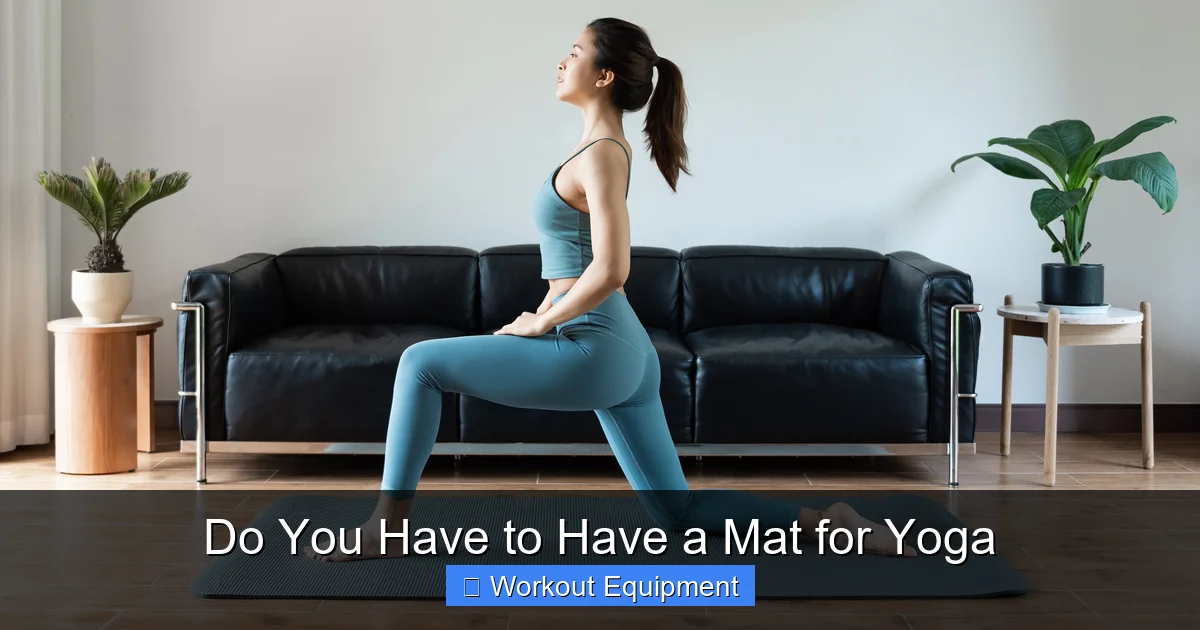
Do You Have to Have a Mat for Yoga
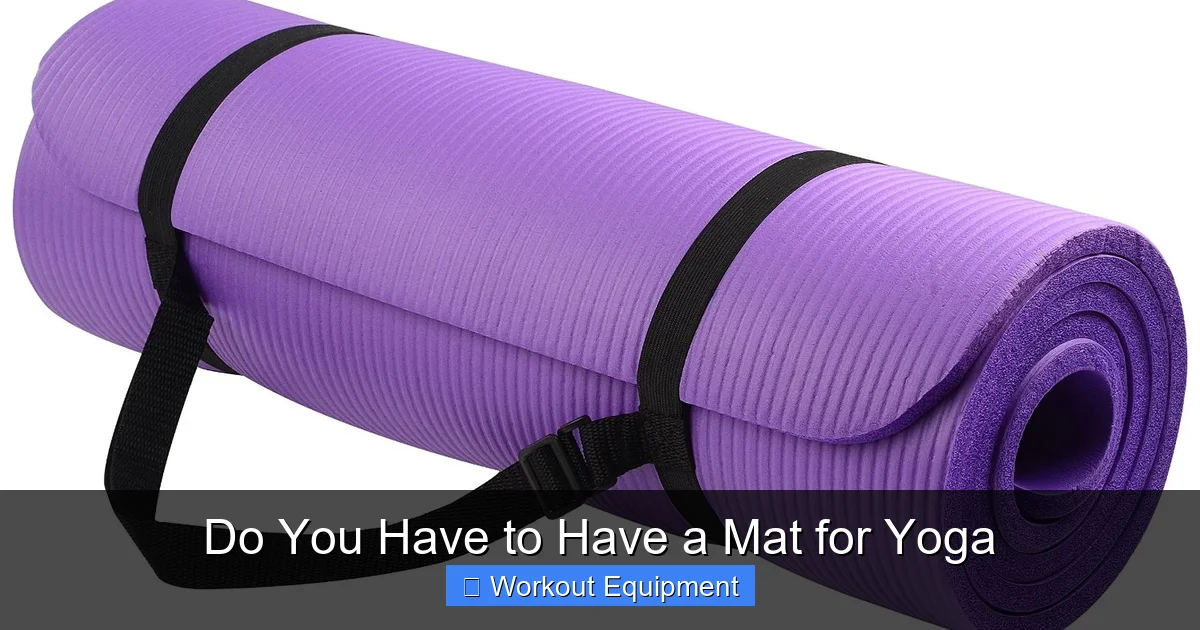
While a yoga mat is not an absolute legal requirement to practice yoga, it is overwhelmingly recommended for the vast majority of practitioners. The primary reasons are safety, hygiene, and providing a consistent, non-slip surface that enhances stability and comfort. Practicing on a bare floor, carpet, or towel can lead to injuries, poor alignment, and an unstable practice. For most people, in most settings, a dedicated yoga mat is a crucial piece of equipment that supports a sustainable and effective practice.
Key Takeaways
- A yoga mat is not mandatory, but it is highly advisable for safety and hygiene. It provides cushioning for joints and a grippy surface to prevent slips and falls.
- The main purpose of a mat is to create a personal, clean, and stable space. This defines your practice area and offers psychological separation from the ground.
- Different surfaces require different considerations. A hard floor needs cushioning; a carpet can be uneven and trap bacteria; grass or sand is unpredictable.
- Alternatives exist but are often compromises. Towels, rugs, or blankets lack consistent grip and adequate joint protection compared to a proper mat.
- Choosing a mat depends on your practice style, body type, and environment. Consider thickness, material (PVC, TPE, natural rubber, cork), and texture based on your needs for grip, portability, and eco-consciousness.
- Proper mat care is part of the practice. Regular cleaning extends its life and maintains hygiene, preventing odors and bacteria buildup.
- For travel or specific styles, a travel mat or mat towel can be a perfect secondary solution. You can often rent a mat at studios, but owning your own is more hygienic and consistent.
📑 Table of Contents
- The Great Yoga Mat Debate: Necessity or Nice-to-Have?
- Why a Mat Isn’t Just a “Mat”: The Core Functions
- The Surface Underfoot: How Your Environment Changes the Equation
- Alternatives and Workarounds: When a Mat Isn’t an Option
- Choosing Your Perfect Mat: It’s Not One-Size-Fits-All
- Care and Keeping of Your Yoga Mat: A Long-Term Relationship
- The Final Stretch: Making Your Decision
The Great Yoga Mat Debate: Necessity or Nice-to-Have?
So, you’re thinking about starting yoga. You’ve seen the beautiful, colorful mats rolled up in studios and online, and you’ve heard the gentle *thwump* as someone lays theirs down. But then a thought strikes: do you actually need one? Can’t you just use that old towel in the closet or practice on the living room rug? The question “Do you have to have a mat for yoga?” is one of the most common for beginners, and the answer is more nuanced than a simple yes or no. Let’s unravel this together, like peeling the layers off a very practical onion.
The short, practical answer is that while you can physically perform yoga poses without a mat, for 95% of people in 95% of situations, a dedicated yoga mat is not just a luxury—it’s a fundamental piece of safety equipment. Think of it like this: you can go for a run in your everyday shoes, but specialized running shoes protect your joints, improve performance, and prevent blisters. A yoga mat serves a similar protective and functional purpose for your practice. It’s the foundation upon which you build your entire asana (posture) practice. Without a stable, predictable foundation, you’re asking your body to work harder for balance and alignment, increasing the risk of strain or injury.
Why a Mat Isn’t Just a “Mat”: The Core Functions
To understand why a mat is so crucial, we need to break down exactly what it does. It’s not merely a piece of padded rubber you stand on. It’s an active tool that interacts with your body and your environment in several key ways.
Visual guide about Do You Have to Have a Mat for Yoga
Image source: protekgr.com
Safety First: Grip and Stability
The single most important function of a yoga mat is to provide traction. When you move into a Downward-Facing Dog or a Warrior III pose, your hands and feet are bearing weight and often sweating. On a hard floor, even a polished one, your palms and soles can slide. On a carpet, your feet might sink or catch unpredictably. A mat with a good texture creates friction, locking your limbs in place. This stability is what allows you to hold poses with confidence, focus on your alignment, and transition safely without worrying about your hands flying out from under you or your feet slipping out from behind. A slip can lead to a twisted ankle, a wrist sprain, or a sudden fall that jars your spine. The grip transforms the floor from a potential hazard into a reliable partner in your practice.
Cushioning and Joint Protection
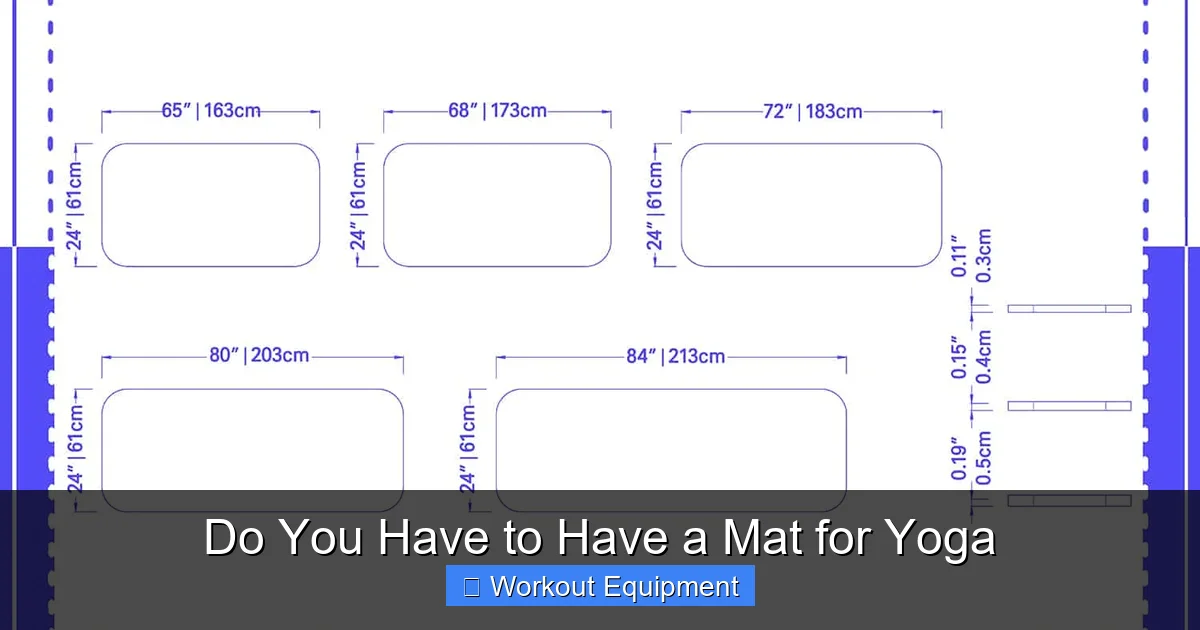
Next, consider the cushioning. Yoga involves putting direct pressure on delicate joints—knees in Low Lunge, hips in Pigeon Pose, sitting bones in Seated Forward Folds. On a concrete or hardwood floor, there is zero shock absorption. You’re essentially placing bone directly on a hard surface. Over time, this can cause discomfort, bruising, and even long-term stress on the joints. A mat provides a layer of padding that distributes pressure and acts as a shock absorber. The thickness of a mat (typically 3mm to 6mm) is a personal preference, but even a thin 3mm mat makes a dramatic difference in comfort compared to no mat at all. For those with sensitive knees, hips, or lower backs, a thicker mat (5mm or 6mm) can be a game-changer, making poses accessible that would otherwise be painful.
Hygiene and the “Personal Bubble”
Let’s talk about the less glamorous, but critically important, aspect: hygiene. A yoga mat is your personal, designated space. It creates a barrier between you and the floor, which could be a studio floor cleaned once a day, a hotel carpet, or your own living room rug that collects dust, skin cells, and who knows what else. When you sweat—and you will sweat—that moisture goes into the mat’s surface, not directly into the carpet or floor. This makes your practice more sanitary for you and for the next person if you’re in a shared space. Most mats are designed to be wiped down easily with a simple cleaner, something you absolutely cannot do with a studio’s permanent floor or your favorite Persian rug. This personal “bubble” is also psychological; it helps mark the boundary of your practice, signaling to your brain that it’s time to focus and connect with your body.
The Surface Underfoot: How Your Environment Changes the Equation
Now, let’s get practical. The necessity of a mat is heavily influenced by where you plan to practice. The same body on different surfaces faces different challenges.

Visual guide about Do You Have to Have a Mat for Yoga
Image source: barefootyoga.com
Hard Floors (Wood, Tile, Concrete, Laminate)
On a hard, smooth surface, a yoga mat is non-negotiable for safety. The combination of potential slipping and zero cushioning makes it the riskiest surface to practice on without a mat. Your knees will complain immediately in any kneeling or seated pose. Your wrists will ache in Plank or Dolphin Pose. The lack of grip is the biggest danger—your hands will slide forward in Downward Dog, compromising your spine’s alignment. If you have no other option, you must use a thick, non-slip rug or blanket, but even that is a poor substitute for a proper mat’s engineered texture and material.
Carpet and Rugs
Many people think “I have a plush carpet, that’s perfect!” Unfortunately, it’s often the worst of both worlds. Carpet is unstable and unhygienic. Your feet can sink unevenly, making balance poses like Tree Pose incredibly tricky as your foundation shifts. The carpet pile can catch on your toes or hands, causing sudden tugs. From a hygiene standpoint, carpets are notorious for harboring dust mites, bacteria, and allergens that get kicked up with every movement. A yoga mat placed on top of carpet solves the instability (by providing a firm, flat surface) and the hygiene issue (by creating a barrier). However, some very low-pile carpets might be acceptable for a gentle, restorative practice if a mat isn’t available, but it’s far from ideal.
Outdoor Surfaces (Grass, Sand, Pavement)
Practicing outdoors is wonderful for connecting with nature, but it introduces a new set of variables. Grass can be wet, uneven, and buggy. Sand is, by definition, shifting and unstable. Pavement is hard and hot/cold. In these scenarios, a mat is again your best friend. A standard mat provides a clean, dry, and stable island in an unpredictable environment. For sand, some practitioners even use a special “sand mat” with a tighter weave to prevent grains from working their way up. The cushioning on grass or pavement protects your bones. The grip keeps you from sliding on dewy grass. The barrier keeps dirt and insects off your skin. For outdoor yoga, a mat isn’t just helpful; it’s essential for a comfortable and safe experience.
Alternatives and Workarounds: When a Mat Isn’t an Option
Life happens. You’re traveling, your mat is in the wash, or you’re at a friend’s house. Are you doomed to skip your practice? Absolutely not. But you must understand that any alternative is a compromise on the three core principles: grip, cushioning, and hygiene.
Visual guide about Do You Have to Have a Mat for Yoga
Image source: cdn.mos.cms.futurecdn.net
The Trusty Towel (Especially the “Yoga Towel”)
A large, thick beach towel or a specialized microfiber yoga towel is the most common substitute. Placed on a hard floor, it offers some cushioning but almost zero grip. It will bunch up, slide around, and become a tripping hazard. Its main use is actually on top of a mat for hot yoga or very sweaty practices, as it wicks moisture and maintains the mat’s grip underneath. Using it alone on a hard floor is risky. On carpet, it might provide a slightly cleaner surface but does nothing for instability.
Blankets and Rugs
A thick, dense fleece blanket or a low-pile rug can provide decent cushioning on a hard floor. However, they are almost universally terrible for grip. They will slide unless you place something non-slip underneath (like a piece of shelf liner or a non-slip pad meant for rugs). They also absorb sweat and become heavy and difficult to move. A folded blanket can be a good supplement for knees in specific poses on a mat, but as a full-practice substitute, it falls short.
The “Bare-Mat” Approach: When It *Might* Work
The only scenario where practicing without any mat or substitute is remotely acceptable is on a very soft, consistent, and clean surface, like a thick gymnasium floor (think basketball court) or a very dense, even foam pad. Even then, you lose the defined personal space and the ease of cleaning. For a gentle, restorative, or meditation-focused practice where you are mostly seated or lying still, the need for grip is reduced. But for any vinyasa (flow), strength-based, or balancing practice, going mat-less is inviting injury. It’s also worth noting that in many traditional yoga lineages in India, practice was often done on simple cotton rugs or even directly on packed earth. But those environments and body conditioning are vastly different from the average modern practitioner sitting at a desk all week.
Choosing Your Perfect Mat: It’s Not One-Size-Fits-All
Okay, you’re convinced a mat is a good idea. But the market is overwhelming! Thickness, material, texture, color—where do you start? The right mat for you depends on your individual practice and priorities.
Thickness: Finding the Sweet Spot
Mat thickness is measured in millimeters (mm). Standard is 3mm to 4mm. This is the Goldilocks zone for most people—enough cushioning for general comfort and joint protection, but not so thick that you lose connection with the ground and stability in balancing poses. Your feet can sink into a very thick mat, making it harder to feel stable. Thick mats (5mm-6mm) are excellent for those with sensitive joints, older practitioners, or anyone doing a lot of floor-based restorative or yin yoga. However, they can be heavier and less stable for standing poses. Ultra-thin “travel” mats (1mm-2mm) prioritize portability and a strong ground-feel (great for advanced balancers!) but offer minimal cushioning. They’re best used on already-carpeted floors or as a top layer over a studio’s loaner mat for hygiene.
Material Matters: PVC, TPE, Rubber, Cork, and More
This is where eco-consciousness and performance intersect.
- PVC (Polyvinyl Chloride): The original, most common, and usually most affordable. It’s durable, provides good grip (especially when wet), and is easy to clean. The major downside is that it’s not biodegradable and its production is chemically intensive. It’s also the heaviest material.
- TPE (Thermoplastic Elastomer): A popular “eco-friendlier” alternative. It’s lighter, often recyclable, and free of heavy metals and latex. Performance-wise, it can be slightly less grippy than high-quality PVC when dry but performs well when moist. It’s a good middle ground for many.
- Natural Rubber: The premium choice for grip and eco-credentials (biodegradable, often sustainably sourced). It offers exceptional traction, especially when combined with a textured surface. It’s naturally antimicrobial. Downsides: it’s heavier, can have a strong initial smell, and is not suitable for those with latex allergies (though many are latex-free). It also loses grip on some polished wood floors.
- Cork: Gaining massive popularity. Cork is naturally antimicrobial, sweat-activated (gets grippier as you sweat), sustainable (harvested from tree bark without harming the tree), and provides a uniquely comfortable, warm feel. It’s often layered over natural rubber. It’s an excellent all-around performer, especially for hot yoga.
- Cotton/Hemp (Rugs): Traditional and beautiful, but they lack the consistent, engineered grip and cushioning of a synthetic/rubber mat. Best for gentle, seated practices or as a decorative overlay.
Texture and Design
You’ll see mats with raised patterns, geometric designs, or a smooth finish. Texture equals grip. A deeply embossed or “alignment” pattern with raised lines will provide more friction for your hands and feet. A smoother mat will feel sleeker but may be slippery when dry. Consider your practice: hot yogis usually prioritize maximum grip, so a textured mat is key. If you do a lot of flowing vinyasa, you need grip in all directions. For restorative yoga where you mostly lie still, texture is less critical.
Care and Keeping of Your Yoga Mat: A Long-Term Relationship
You’ve invested in a mat. Now, treat it right, and it will serve you for years. Proper care is an extension of the yogic principle of saucha (cleanliness).
Regular Cleaning: It’s Not Optional
Your mat is a sweat magnet. Every practice deposits skin cells, oils, and bacteria onto its surface. A quick wipe-down after every few uses with a DIY mat cleaner (a simple mix of water, white vinegar, and a few drops of essential oil like tea tree or lavender) is the gold standard. For a deeper clean (once a month or if it gets really funky), you can hand-wash it in a tub with mild detergent and hang it to dry completely—never put it in the dryer. The sun is a natural disinfectant, but prolonged direct UV exposure can degrade some materials, especially PVC. A quick air-dry in shade is best. Never use harsh chemicals like bleach or solvents, as they can break down the mat’s material and grip.
Storage: Roll, Don’t Fold
Always store your mat rolled up, not folded. Folding creates permanent crease lines that can weaken the material and eventually crack. Roll it from the end opposite the branding/logo so the logo is on the outside when rolled. This prevents the printed design from cracking. Store it in a cool, dry place, away from direct heat or sunlight, which can cause warping or material breakdown. If you use a mat bag, make sure the mat is completely dry before storing it in a confined space to prevent mildew.
The Final Stretch: Making Your Decision
So, do you have to have a mat for yoga? The definitive, practical answer is: Yes, you really should. The benefits of safety, hygiene, comfort, and enhanced proprioception (your body’s sense of its position in space) far outweigh the minimal cost and storage space of a good mat. It is the one piece of equipment that directly and consistently impacts the quality and safety of every single pose you do.
Think of your yoga mat as your first true tool on the path. It’s not a barrier between you and the earth; it’s a respectful interface that allows you to engage with your practice more deeply, more safely, and more sustainably. It’s your personal sanctuary, your non-slip promise, and your cushion of care all in one. Skipping it is like trying to paint a masterpiece on a dirty, wobbly canvas. You might eventually create something, but you’re fighting the foundation every step of the way. Invest in the foundation. Your future, injury-free, deeply-connected self will thank you for it.
Frequently Asked Questions
Can I use a regular towel or blanket instead of a yoga mat for a home practice?
For a gentle, seated, or restorative practice, a folded blanket might offer enough cushioning. However, for any active, standing, or balancing practice, a towel or blanket is a serious safety risk due to its lack of grip. It will slide, bunch up, and provide unstable footing, increasing your chance of injury. It’s a temporary workaround, not a substitute.
What’s the ideal thickness for a yoga mat?
For most practitioners, a 3mm or 4mm mat is the ideal sweet spot, offering cushioning without sacrificing stability. If you have sensitive knees, hips, or a back injury, consider a 5mm or 6mm mat for extra padding. Advanced practitioners who prioritize “ground feel” for balance may prefer a thinner 2mm travel mat on a suitable surface.
Are eco-friendly yoga mats (cork, natural rubber) worth the extra cost?
For many, yes. Eco-friendly mats like cork and natural rubber offer superior grip (especially when wet), natural antimicrobial properties, and are made from sustainable, biodegradable materials. They often have a longer lifespan and a more premium feel. If you practice hot yoga or sweat a lot, the sweat-activated grip of cork is a significant advantage. The cost reflects the quality of materials and ethical manufacturing.
How often should I clean my yoga mat?
You should give your mat a quick wipe-down with a mat-specific cleaner or a diluted vinegar solution after every 2-3 uses, or at least once a week if you practice daily. A deep clean (hand-wash) is recommended every 1-2 months, or immediately if you’ve been sick or notice an odor. Never let sweat and grime sit on it for long periods.
Is it gross to use a rental mat at a yoga studio?
From a hygiene perspective, yes, it’s the least ideal option. Studio mats are cleaned infrequently (often just a surface spray) and are used by many people. You are exposed to other people’s sweat, skin cells, and bacteria. If you must use one, bring your own towel to lay on top as a barrier. For peace of mind and health, investing in your own mat is highly recommended.
My hands/feet slip even on my mat. What can I do?
First, ensure your mat is clean—dirt and old sweat film reduce grip. Second, you might need a mat with more texture. Third, for hot yoga or sweaty practices, use a yoga towel on top of your mat; it wicks moisture while maintaining grip. You can also wash your hands and feet before practice to remove oils, and consider using a rosin bag (like gymnasts use) for extra dry-hand grip in very challenging poses.