Is Barbell Row and Dumbbell Row the Same

The barbell row and dumbbell row are not the same exercise. While both target your back muscles, they differ in grip, range of motion, and muscle activation. The barbell row lets you lift heavier weight, while the dumbbell row offers more isolation and flexibility.
Have you ever stood in front of a loaded barbell and wondered if a barbell row and dumbbell row would give you the same results? Many gym-goers assume these two rowing exercises are interchangeable. They are not. While both movements target your back, the way they work your muscles is quite different.
The barbell row lets you load more weight on the bar. This makes it a go-to for people chasing raw strength and muscle size. On the other hand, the dumbbell row gives each arm its own path of movement. This helps fix imbalances and improves your mind-muscle connection.
In this article, we will break down everything you need to know. You will learn how each row works, which muscles they hit, and how to pick the right one for your goals. Whether you are a beginner or a seasoned lifter, this guide has something for you.
Key Takeaways
- Different equipment changes everything: The barbell row and dumbbell row recruit muscles differently due to grip and movement patterns.
- Barbell rows build raw strength: They allow heavier loading, making them ideal for progressive overload and overall back development.
- Dumbbell rows offer more control: Each arm works independently, helping fix muscle imbalances and improve form.
- Both are compound movements: They engage multiple muscle groups including lats, traps, and rhomboids.
- Form matters more than equipment: Proper technique prevents injury and maximizes results regardless of which row you choose.
- Choose based on your goals: Strength gains favor barbell rows, while sculpting and balancing favor dumbbell rows.
- You can do both: Combining the two in your workout routine gives you the best of both worlds.
📑 Table of Contents
What Is a Barbell Row?
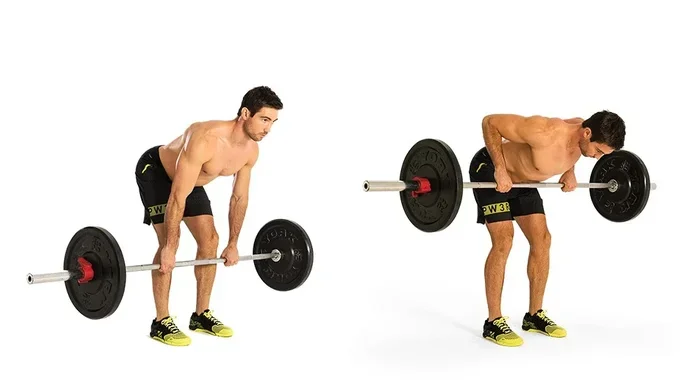
The barbell row is a compound movement that involves pulling a loaded barbell toward your lower chest or belly. You bend at the hips, keep your back straight, and pull the weight up. It is one of the most popular back exercises in strength training.
Most lifters use an overhand grip when performing the barbell row. This places more focus on the upper back and traps. Some prefer an underhand grip, which shifts the work toward the lower lats. Either way, the barbell row is a powerhouse for building a strong, thick back.
Muscles Worked in the Barbell Row
The barbell row hits several muscles at once. Here is a quick breakdown:
- Latissimus dorsi (lats) – the primary mover
- Trapezius – stabilizes the shoulder blades
- Rhomboids – pulls the shoulders back
- Rear deltoids – assists in shoulder extension
- Biceps – helps with the pulling motion
- Erector spinae – keeps your spine stable
Because so many muscles kick in, the barbell row is a fantastic upper body workout. It builds both size and functional strength. You can also adjust your foot stance and torso angle to shift the focus slightly.
What Is a Dumbbell Row?
The dumbbell row uses a single dumbbell instead of a barbell. You typically place one hand and knee on a bench, then pull the dumbbell up with the other arm. This unilateral exercise lets each side of your back work independently.
Because you are not limited by a bar, the dumbbell row allows a greater range of motion. You can also twist your torso slightly at the top of the movement, which adds a nice squeeze to the lats. This makes the dumbbell row a favorite for those who want to focus on muscle detail and shape.
Muscles Worked in the Dumbbell Row
The dumbbell row targets the same general areas as the barbell row. However, the single-arm nature changes the emphasis slightly:
- Latissimus dorsi – heavily activated, especially at the top
- Rhomboids – works hard to stabilize the shoulder blade
- Rear deltoids – involved in the lockout phase
- Biceps and forearms – both work hard during the pull
- Core muscles – stabilize the spine against rotation
One big advantage of the dumbbell row is that it forces your core to work harder. Since each arm lifts its own weight, your midsection has to prevent your torso from twisting. This makes the dumbbell row a great core and back combo exercise.
Key Differences Between Barbell Row and Dumbbell Row
Now that you know what each exercise involves, let us look at the main differences. These differences matter a lot when you are planning your workout routine.
Grip and Hand Position
The barbell row requires both hands on a single bar. This means both arms move in perfect sync. Your grip width changes which muscles get more attention. A wider grip hits the upper back more, while a narrower grip targets the lats.
With the dumbbell row, each hand holds its own weight. There is no bar connecting the two sides. This gives you freedom to adjust your wrist angle and grip position for each rep. Some people find this more comfortable for their joints and wrists.
Weight Capacity and Loading
If your goal is to get stronger, the barbell row has a clear edge. You can load a barbell with plates far beyond what a single dumbbell allows. This makes it easier to apply progressive overload, which is the key principle behind muscle growth.
Dumbbells have a weight limit too. Most gyms carry dumbbells up to 100 or 150 pounds. For advanced lifters, this may not be enough resistance. That said, you can always use heavier dumbbells or a trap bar as an alternative.
Range of Motion and Muscle Stretch
The dumbbell row allows a deeper stretch at the bottom of each rep. Since your arm hangs freely, you can lower the dumbbell further than you would with a barbell. This full stretch under tension is excellent for muscle growth and activation.
The barbell row, however, keeps both arms locked together. This limits how far down you can go. But the fixed position also provides more stability, which lets you lift heavier. It is a trade-off between range of motion and load.
Core Engagement and Stability
Because the dumbbell row is a one-sided movement, it challenges your core in a unique way. Your body wants to rotate toward the working arm. Your deep core muscles must fight that rotation to keep you stable.
The barbell row is more symmetrical. Both sides pull at the same time, so there is less rotational force to deal with. However, your erector spinae still work hard to keep your spine from rounding. Both exercises build a strong core, but in different ways.
Which One Is Better for Your Goals?
Choosing between the barbell row and dumbbell row depends on what you want to achieve. Let us look at different goals and which row fits best.
For Building Raw Strength
If your main goal is getting stronger, go with the barbell row. The ability to add heavy plates means you can push your limits. Strength athletes and powerlifters often include the barbell row in their training programs for this reason.
Start with a weight that challenges you for 5 to 8 reps. Focus on keeping your back flat and pulling with your elbows. Over time, increase the weight gradually. This steady progression will build serious back strength.
For Muscle Size and Hypertrophy
Both exercises can build muscle, but they do it differently. The barbell row lets you use heavier loads, which is great for myofibrillar hypertrophy. The dumbbell row offers a longer stretch and better contraction, which supports sarcoplasmic hypertrophy.
For the best results, consider using both in your routine. You might do heavy barbell rows on one day and lighter dumbbell rows on another. This combination hits your back from every angle.
For Fixing Muscle Imbalances
If one side of your back is stronger than the other, the dumbbell row is your best friend. Since each arm works alone, you cannot let your dominant side take over. This unilateral training helps even out strength differences over time.
The barbell row, by contrast, can let your stronger side compensate. This is not always a bad thing, but if imbalance is your concern, stick with dumbbells for a while.
For Beginners
If you are new to weight training, start with the dumbbell row. It is easier to learn proper form without a bar balancing across your back. You also have a lower risk of injury because the weight is more manageable.
Once you feel confident, add the barbell row to your program. The barbell row teaches you how to handle heavier loads and builds a foundation for more advanced exercises. Think of the dumbbell row as your stepping stone.
Common Mistakes to Avoid
No matter which row you choose, poor form will hold you back. Here are some common mistakes and how to fix them.
Rounding Your Lower Back
This is the number one mistake in both exercises. A rounded back puts dangerous pressure on your spine. Always brace your core before you pull. Think of your torso as a solid block that does not move.
Using Momentum to Pull
Some people swing their body back to help lift the weight. This takes the work away from your back and puts stress on your lower back. Slow down each rep. Pull with control and feel your back muscles doing the work.
Shrugging Your Shoulders Up
Lifting your shoulders toward your ears recruits your traps too much and takes work away from the lats. Keep your shoulders pulled down and back. Think about squeezing your shoulder blades together at the top of each rep.
Choosing Too Much Weight
It is tempting to grab a heavy weight to look impressive. But if your form breaks down, you are just asking for trouble. Start lighter and focus on feeling the target muscles work. You can always add weight next session.
Expert Insights and Practical Tips
Strength coaches often recommend pairing the barbell row with the dumbbell row for a well-rounded back workout. The barbell row builds the foundation of strength, while the dumbbell row adds detail and balance. Think of them as complementary tools, not competitors.
Here are some quick tips to get more out of your rowing work:
- Pause at the top of each rep for one to two seconds. This increases time under tension.
- Use a slow eccentric (lowering phase). Control the weight down for three seconds.
- Train your rows after compound pushes like bench press, not before.
- Vary your grip to target different parts of your back.
- Keep your neck neutral and look at the floor in front of you.
Some lifters also wonder about the difference between a t-bar row and a standard barbell row. While both are rowing movements, the t-bar row uses a special handle that changes the angle of pull. If you want to explore that, check out our guide on is barbell row and t bar row the same for a detailed comparison.
Another useful comparison is between the barbell row and the dumbbell bench press. Both are free weight exercises, but they target different muscle groups. The barbell row focuses on your back, while the dumbbell bench press targets your chest and shoulders. Understanding these differences helps you build a balanced upper body program.
How to Program Rows Into Your Workout
Adding rows to your routine is simple. Here are a few ways to structure them:
- Strength Focus: 4 sets of 5 reps with heavy weight on the barbell row. Rest 2 to 3 minutes between sets.
- Hypertrophy Focus: 3 sets of 8 to 12 reps on both the barbell and dumbbell row. Rest 60 to 90 seconds between sets.
- Balanced Approach: Alternate barbell and dumbbell rows across different training days. Do barbell rows on Day 1 and dumbbell rows on Day 3.
- Finisher: Add a light set of dumbbell rows at the end of your back workout for a pump and extra volume.
The key is consistency. Pick a structure that fits your schedule and stick with it for at least four to six weeks before making changes. Your back muscles need time to adapt and grow.
Final Thoughts
The barbell row and dumbbell row are both excellent exercises. They are not the same, but they both deserve a place in your training plan. The barbell row builds strength and allows heavy loading. The dumbbell row offers control, balance, and a deep stretch.
If you are still unsure which to pick, start with the dumbbell row. It is forgiving and easy to learn. Then gradually add the barbell row as your confidence grows. Over time, you will have the best of both worlds.
Remember, the best exercise is the one you can do with proper form and consistency. Focus on that, and your back will thank you. For more comparisons on rowing variations, you can also read about are t bar rows and barbell rows the same to expand your knowledge of back exercises.
Now go hit your rows with purpose. Your back is waiting.
Frequently Asked Questions
Can I do barbell rows and dumbbell rows on the same day?
Yes, you can. Many lifters pair both exercises in a single back workout. Just make sure you manage your volume and rest enough between sets. Start with the barbell row for heavy strength work, then finish with dumbbell rows for detail and balance.
Is the barbell row better than the dumbbell row for building back size?
Not necessarily. The barbell row lets you lift heavier, which is great for overall size. But the dumbbell row provides a deeper stretch and better muscle contraction. Using both exercises together gives you the best results for back size and shape.
Which row is safer for beginners?
The dumbbell row is generally safer for beginners. It is easier to learn proper form without balancing a heavy barbell. You also have a lower risk of lower back strain. Once you master the dumbbell row, you can progress to the barbell row.
How often should I train rows per week?
Most people benefit from training rows 1 to 3 times per week. This gives your back muscles enough stimulus to grow while allowing proper recovery. Listen to your body and adjust frequency based on your overall workout volume and recovery capacity.
Can rows help improve my deadlift?
Yes, they can. Rows strengthen your upper back, which helps you maintain a tight position during deadlifts. A stronger back also improves your grip and overall pulling power. Many powerlifters include both barbell and dumbbell rows in their training.
What weight should I start with for dumbbell rows?
Start with a weight you can control for 10 to 12 reps with perfect form. Focus on feeling your back muscles work, not on lifting heavy. Once you can complete 3 sets of 12 reps comfortably, increase the weight by 5 to 10 pounds.
=== CONCLUSION ===
The barbell row and dumbbell row are two distinct but equally valuable back exercises. They target similar muscle groups but offer different benefits. The barbell row builds raw strength and allows heavy loading. The dumbbell row provides unilateral training, better range of motion, and improved muscle balance.
Your choice between the two should depend on your goals, experience level, and available equipment. For the best results, consider incorporating both into your strength training routine. This combination approach ensures you develop a strong, balanced, and well-sculpted back.
Start with what feels right for you, focus on proper form, and progress steadily. Your back muscles will grow stronger and more defined with consistent effort. Now it is your turn to hit the gym and put these tips into action.