How to Do an Rdl with a Barbell
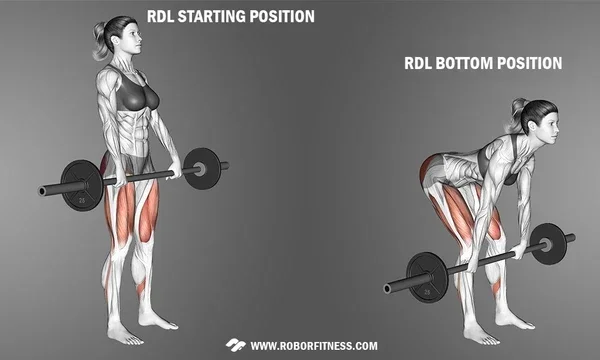
The barbell RDL is one of the best exercises for building stronger hamstrings, glutes, and a powerful posterior chain. In this guide, you’ll learn the proper barbell RDL form, step-by-step instructions, common mistakes to avoid, and expert tips to get the most out of every rep.
Key Takeaways
- Hip hinge is king: The barbell RDL is a hip hinge movement that targets your posterior chain more effectively than squats.
- Form over weight: Proper barbell RDL form prevents injury and maximizes muscle engagement in your hamstrings and glutes.
- Controlled tempo matters: Slowing down the eccentric (lowering) phase increases time under tension for better muscle growth.
- Avoid common mistakes: Rounding your back, using too much weight, and losing hip contact are errors that can derail your progress.
- Variations keep it fresh: Single-leg RDLs, dumbbell RDLs, and deficit RDLs add variety and challenge to your training.
- Program smart: The barbell RDL fits best on leg day or as a posterior chain accessory work.
📑 Table of Contents
What Is a Barbell RDL and Why Should You Care?
The Romanian deadlift, or RDL, is a deadlift variation that focuses on your posterior chain. Unlike a conventional deadlift that starts from the floor, the barbell RDL begins with the barbell at hip level. You hinge at the hips, lower the bar along your legs, and return to standing.
This movement is a staple in strength training programs for good reason. It builds serious strength in your hamstrings, glutes, and lower back. It also improves hip mobility and teaches you a proper hip hinge pattern. That pattern carries over to almost every other compound lift you do.
If you want bigger glutes, stronger legs, and a more resilient lower back, the barbell RDL belongs in your routine. It’s simple, effective, and scales well from beginner to advanced lifters.
How the Barbell RDL Differs From a Conventional Deadlift
People often confuse the RDL with the conventional deadlift. Here is a quick comparison:
| Feature | Barbell RDL | Conventional Deadlift |
|---|---|---|
| Starting position | Bar at hip level | Bar on the floor |
| Primary muscles | Hamstrings and glutes | Full body, more back |
| Range of motion | Hip hinge only | Full squat to standing |
| Best for | Posterior chain | Total body strength |
Both are excellent barbell exercises. But they serve different purposes. The RDL isolates the hip hinge beautifully. The conventional deadlift builds raw total-body power. Many lifters do both.
For comparison, if you want to explore other barbell hinge movements, check out our guide on How To Do a Bent Over Row With Barbell to complement your posterior chain work.
Muscles Worked During the Barbell RDL
The barbell RDL is a posterior chain powerhouse. Here are the key muscles it targets:
- Hamstrings: These are the stars of the show. They control the hip hinge and eccentric lowering phase.
- Glutes: Your glutes drive hip extension as you stand back up. They work hard through the entire movement.
- Erector spinae (lower back): These muscles keep your spine neutral and stable throughout the lift.
- Adductors: The inner thigh muscles help stabilize your legs during the hinge.
- Core: Your abs and obliques brace to protect your spine under load.
- Lats: They help keep the bar close to your body during the descent.
Because the barbell RDL hits so many muscles at once, it is a very efficient exercise. You get a lot of bang for your buck with each rep. This makes it perfect for leg day or any strength training session focused on posterior chain development.
Why Posterior Chain Training Matters
Your posterior chain is the group of muscles on the back side of your body. It includes your hamstrings, glutes, and lower back. A weak posterior chain leads to poor posture, lower back pain, and underperformance in sports and daily activities.
Strong posterior chain muscles also help with hip extension, which is the foundation of jumping, running, and lifting. The barbell RDL directly trains this pattern. It is one of the best hamstring exercises you can do.
How To Do a Barbell RDL: Step-by-Step Guide
Now let’s get into the meat and potatoes. Here is a detailed breakdown of proper barbell RDL form.
Step 1: Set Up Your Starting Position
- Stand with your feet hip-width apart. Your toes should point slightly outward.
- Position the barbell at hip level. You can clean it up from the floor or have a partner load it for you.
- Grip the bar with an overhand or mixed grip, just outside your hips.
- Pull your shoulders back and down. Keep your chest open and proud.
- Brace your core as if someone is about to push your stomach.
Step 2: Initiate the Hip Hinge
- Keep your knees slightly bent. A soft bend is fine, but do not squat.
- Push your hips straight back. Imagine you are closing a car door with your backside.
- Let the barbell travel down the front of your thighs and shins.
- Keep the bar in contact with your legs the entire time. This is a key part of barbell RDL form.
Step 3: Lower Until You Feel a Deep Stretch
- Continue hinging until you feel a strong stretch in your hamstrings. For most people, this is just below the knees.
- Your back should stay completely neutral. Do not round it.
- Your shins should remain roughly vertical. Do not let them tilt forward too much.
Step 4: Return to Standing
- Squeeze your glutes and drive your hips forward to stand up.
- Think of it as pushing the floor away with your feet while pulling your hips forward.
- Keep the bar close to your body on the way up.
- Stand fully tall at the top. Squeeze your glutes hard. Do not lean back.
Breathing and Bracing Tips
- Take a deep breath into your belly before you start the descent.
- Hold that breath as you lower the bar. This is your brace.
- Exhale as you stand back up and reset.
Quick Tips for Perfect Barbell RDL Form
- Start with an empty barbell to learn the movement pattern before adding weight.
- Film yourself from the side to check your form.
- Keep your arms straight throughout the movement. They act as hooks, not lifters.
- Focus on squeezing the bar off the floor with your lats to keep it close to your body.
- Use progressive overload slowly. Add weight only when your form is rock solid.
Want to build more leg and hip strength? Our guide on How To Set Up for a Barbell Hip Thrust pairs perfectly with RDL work for a complete posterior chain session.
Common Mistakes To Avoid During the Barbell RDL
Even experienced lifters make mistakes with the barbell RDL. Here are the most common ones to watch out for:
Mistake 1: Rounding Your Back
This is the biggest danger. When you lose your hip hinge, your lower back rounds. That puts enormous pressure on your spinal discs. Always prioritize a neutral spine. If you feel your back starting to round, stop the descent and return to standing.
Mistake 2: Squatting Instead of Hinging
Many beginners bend their knees too much. This turns the RDL into a squat. Remember: the RDL is a hip hinge exercise. Your knees stay mostly still. The movement happens at your hips, not your knees.
Mistake 3: Letting the Bar Drift Away From Your Body
The bar should travel in a straight line down the front of your legs. If it floats away, you lose tension on your hamstrings and put stress on your lower back. Keep it glued to your thighs and shins.
Mistake 4: Using Too Much Weight
The barbell RDL is not about ego lifting. Start lighter than you think you need to. Build the movement pattern first. Then increase weight over weeks. Eccentric loading (the lowering phase) is where the magic happens. You need control, not just raw weight.
Mistake 5: Losing Hip Contact
Your hips should maintain contact with the bar and your legs throughout. If your hips shoot up before the bar reaches your knees, you are losing the hinge. This often happens when the weight is too heavy. Lighten it up and focus on the movement quality.
Mistake 6: Not Engaging Your Lats
Your lats help pull the bar into your body. If you ignore them, the bar floats away. Before you start the hinge, pull your lats in like you are trying to crack a walnut under your armpits. This simple cue keeps the bar tight to your body.
Barbell RDL Variations and Alternatives
If you want to spice up your training or work around limitations, these RDL technique variations are worth trying:
Single-Leg Barbell RDL
Stand on one leg and hold the barbell in the opposite hand. This version challenges your balance and exposes weak links in each leg. It is fantastic for strength training and injury prevention. Many athletes use it as a diagnostic tool.
Deficit Barbell RDL
Stand on a raised platform or weight plate. This increases the range of motion and demands more hamstring flexibility. It is a great advanced variation for lifters who want extra stretch under load.
Dumbbell RDL
Hold a dumbbell in each hand instead of a barbell. The dumbbell RDL is easier on the grip and allows a natural range of motion. It is also a great option for home workouts.
Kettlebell RDL
A kettlebell swings between your legs during the hinge. This variation has a different center of gravity and teaches you to track the weight with your vision. If you want to explore kettlebell deadlift patterns, check out our guide on How To Do a Proper Deadlift With Kettlebell for more ideas.
Paused Barbell RDL
Pause at the bottom of the movement for 2-3 seconds. This eliminates momentum and forces your hamstrings to work hard under static load. It is an excellent strength builder.
Tempo Barbell RDL
Use a slow counting tempo, like 4 seconds down, 1 second pause, 2 seconds up. This increases time under tension and promotes muscle growth. It is one of the best hypertrophy techniques for the posterior chain.
How To Program the Barbell RDL Into Your Routine
Knowing how to do the barbell RDL is only half the battle. You also need to program it correctly.
When to Do the Barbell RDL
- Leg day: The RDL makes a great hamstring and glute finisher on leg day.
- Posterior chain day: Some programs dedicate a full day to back-of-the-body work. The RDL is a natural centerpiece.
- After compound lifts: Place it after squats or deadlifts as an accessory movement.
Sets, Reps, and Weight Guidelines
- Strength: 3-4 sets of 5-8 reps with a challenging weight. Rest 2-3 minutes between sets.
- Hypertrophy: 3-4 sets of 8-12 reps with moderate weight. Rest 60-90 seconds between sets.
- Technique practice: 2-3 sets of 10-15 reps with light weight. Focus on perfect form.
Sample Weekly Programming
Here is a simple example of how to include the barbell RDL in your week:
- Monday (Leg Day): Squats (3×6), Barbell RDL (3×8), Leg Curls (3×12), Glute Bridges (3×10).
- Wednesday (Upper Body): Bench Press, Bent Over Rows, Pull-Ups, Shoulder Press.
- Friday (Posterior Chain Focus): Barbell Hip Thrusts (3×8), Single-Leg RDL (3×10 each), Romanian Deadlift (3×6), Calf Raises (3×15).
For those interested in complementary barbell exercises, the bent over row is a fantastic upper body counterpart. You can learn more about proper form in our detailed guide on How To Do a Bent Over Row With Barbell.
Progressive Overload for the Barbell RDL
To keep making progress, you need to challenge yourself over time. Progressive overload means gradually increasing the demands on your muscles. Here is how to apply it to the RDL:
- Add 2.5-5 lbs every 1-2 weeks when you can complete all sets and reps with good form.
- Increase reps within your target range before adding weight.
- Improve your tempo or pause duration before loading up the bar.
- Reduce rest time between sets for added intensity.
Expert Insights on Barbell RDL Programming
Strength coaches often recommend the barbell RDL as a primary accessory lift. It is one of the few exercises that directly trains hip hinge strength in a controlled manner. Many powerlifters and Olympic weightlifters include it in their regular rotation. The key is consistency and patience. Do not rush the weight. Build the movement first, then build the load.
Common Questions About Programming the RDL
People often ask whether the RDL should go before or after deadlifts. The answer is simple: do it after. Your lower back is already fatigued from deadlifting. The RDL demands a strong posterior chain. Save it for when you still have some energy left but your main lifts are done.
Conclusion
The barbell RDL is a foundational exercise for anyone serious about building strength, muscle, and resilience. It targets your posterior chain with surgical precision. It teaches you a proper hip hinge that protects your back and improves athletic performance. Whether you are a beginner learning the basics or an advanced lifter chasing progressive overload, the RDL has something to offer.
Master the step-by-step form outlined in this guide. Avoid the common mistakes that trip up so many lifters. Experiment with variations to keep your training fresh. And program it wisely into your weekly routine. The barbell RDL will reward your effort with stronger hamstrings, more powerful glutes, and a more confident lift overall.
Now grab a barbell, start light, and own that hip hinge. Your posterior chain will thank you.