How to Get a Wide Back with Dumbbells

You can build a wide, powerful back using nothing but dumbbells and smart training. This How to Get a Wide Back with Dumbbells guide shows you the exact workouts to widen your lats, thicken your traps, and carve a V-taper. Follow the step-by-step routines, avoid common errors, and transform your physique with these dumbbell back exercises.
Key Takeaways
- Progressive overload is essential for building a wider back with dumbbells.
- Mind-muscle connection ensures your lats are doing the work, not your arms.
- Vary your angles to hit all back fibers and maximize width.
- Control the eccentric phase to stimulate muscle fibers and prevent injury.
- Train your back twice weekly with adequate rest for optimal growth.
- Pair dumbbell work with proper nutrition and sleep for recovery.
📑 Table of Contents
- Why Building a Wide Back with Dumbbells Is a Game-Changer
- What Makes a Back “Wide” and Why It Matters
- Best Dumbbell Exercises for Building a Wide Back
- Proper Form and Technique Tips for Wide Back Training
- Sample Wide Back with Dumbbells Workout Plan
- Common Mistakes That Slow Down Your Progress
- Expert Tips for Maximizing Back Width with Dumbbells
- Key Takeaways: Building a Wide Back with Dumbbells
Why Building a Wide Back with Dumbbells Is a Game-Changer
A wide back with dumbbells is one of the most sought-after physique goals in fitness. Whether you want that dramatic V-taper or simply more definition in your upper body, dumbbells can absolutely get you there. You do not need fancy cable machines or a full gym setup. A pair of dumbbells and solid technique are all you need to build a wide, powerful back.
Training for back width targets some of the biggest muscles in your body. Your lats, rhomboids, and rear deltoids all play a role in creating that broad, thick look. When these muscles grow, your torso naturally appears wider and more balanced. It also improves your posture and makes everyday movements feel stronger.
In this guide, you will learn the best exercises, proper form tips, and a complete workout plan. Everything is designed so you can do it at home or in any gym with just a set of dumbbells. Let us get into it.
What Makes a Back “Wide” and Why It Matters
The Muscles Behind Back Width
To build a wide back, you need to understand which muscles create that look. It is not just one muscle. It is a combination of several key players working together.
- Latissimus dorsi (lats): These are the big wing-shaped muscles on either side of your back. They are the primary drivers of back width. When they grow, your torso looks wider from the front and back.
- Rear deltoids: The back part of your shoulder muscles. These add width at the top and give your shoulders a rounder, more defined look.
- Rhomboids: Located between your shoulder blades, these muscles thicken your upper back and improve that “wide” look from behind.
- Trapezius (traps): The upper portion of your traps adds width near your neck and shoulders. Think of the top of a thick bookshelf.
When you train all of these muscles with back width exercises, you build a balanced, three-dimensional back. That is what separates a wide back from just a flat one.
The V-Taper: Your Ultimate Goal
Most people who want a wide back are chasing the V-taper. This is when your shoulders are wide, your waist is narrower, and the slope from shoulders to hips looks dramatic. It is a hallmark of a well-built physique.
To develop a V-taper, you need to focus on lateral (side-to-side) movements and pulling exercises. Dumbbells are surprisingly effective for this because they allow a full range of motion and let you feel each muscle working.
Best Dumbbell Exercises for Building a Wide Back
1. Dumbbell Rows (The Foundation)
Dumbbell rows are the bread and butter of back width training. They target your lats, rhomboids, and middle traps. There are several variations, and each one hits the muscles slightly differently.
You can do bent-over rows, single-arm rows, or chest-supported rows. For building width, the bent-over position tends to be most effective because it places more tension on the lats. If you want detailed guidance on form, check out how to do a bent over row with dumbbells for a step-by-step breakdown.
- Bent-Over Two-Arm Row: Great for overall back thickness and width. Use moderate weight and focus on squeezing at the top.
- Single-Arm Row: Lets you isolate each side and use slightly heavier weight. Excellent for lats.
- Chest-Supported Row: Takes the lower back out of the equation. Perfect for isolating the upper back.
2. Dumbbell Pullover (The Secret Weapon)
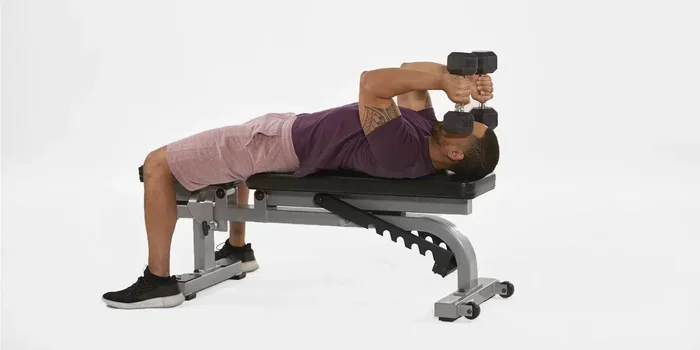
The dumbbell pullover is often overlooked, but it is one of the best exercises for stretching and widening the lats. You lie on a bench (or the floor) and lower the dumbbell behind your head in a slow arc. This creates a deep stretch in the lats that few other movements can match.
This exercise also hits the serratus muscles along your ribs, which add to the visual width of your midsection. It is a must-add to any back sculpting routine.
3. Lateral Raises (Shoulder Width Builder)
While not a traditional back exercise, lateral raises with dumbbells directly contribute to the appearance of a wider back. They target the rear and middle deltoids, which frame your back from the top.
Keep the weight light and control the movement. Lift to shoulder height, pause for a second, and lower slowly. For more shoulder-focused tips, you can read about how to get big shoulders with dumbbells to round out your upper body training.
4. Prone Y-Raises and T-Raises
These are bodyweight-style movements done with light dumbbells. You lie face down on a bench or the floor and raise the dumbbells into a “Y” or “T” shape. These target the rear deltoids and lower traps beautifully.
They are perfect for finishing your back workout and adding that last bit of definition. Think of them as the detail work that makes your back look 3D.
5. Dumbbell Shrugs for Upper Back Width
Shrugs target the upper traps and add mass near the top of your back. While they do not directly widen the lats, they contribute to overall back definition and the illusion of width. Use heavy weight and full range of motion. Hold the top position for two seconds on each rep.
| Exercise | Primary Muscles | Difficulty | Best For |
|---|---|---|---|
| Bent-Over Dumbbell Row | Lats, Rhomboids, Middle Traps | Intermediate | Overall back width and thickness |
| Dumbbell Pullover | Lats, Serratus, Chest | Beginner | Lats stretch and V-taper |
| Lateral Raises | Rear Delts, Middle Delts | Beginner | Shoulder width and back framing |
| Prone Y/T-Raises | Rear Delts, Lower Traps | Beginner | Rear delt definition and posture |
| Dumbbell Shrugs | Upper Traps | Intermediate | Upper back mass and height |
| Single-Arm Dumbbell Row | Lats, Rhomboids | Intermediate | Lat isolation and unilateral strength |
Proper Form and Technique Tips for Wide Back Training
Mind-Muscle Connection Is Everything
The biggest mistake people make when training their back is using momentum. You see guys pulling dumbbells with their arms and shoulders, barely touching the back muscles. This is not going to build width.
Focus on the mind-muscle connection. Before each rep, think about the muscle you are targeting. Feel it contract. Squeeze at the top. This mental focus has been shown to improve muscle activation significantly.
Scapular Retraction: The Key to Back Width
Scapular retraction means pulling your shoulder blades together. This movement is critical for targeting the rhomboids and middle traps. Every row and pull should end with a strong squeeze between the shoulder blades.
Here is a quick way to practice it:
- Stand with your arms at your sides.
- Pull your shoulder blades back and together like you are holding a pencil between them.
- Hold for two seconds, then release.
Apply this squeeze to every pulling exercise. It transforms the effectiveness of each rep.
Controlled Eccentric Movement
The lowering (eccentric) phase of each exercise is just as important as the lifting phase. Lower the dumbbell slowly over 2-3 seconds. This creates more muscle damage and promotes growth. Do not just let gravity do the work.
Sample Wide Back with Dumbbells Workout Plan
The Complete Routine
Here is a practical wide back with dumbbells workout you can do 1-2 times per week. Rest 60-90 seconds between sets. Adjust weights so that the last 2 reps of each set are challenging but doable.
| Exercise | Sets | Reps | Rest |
|---|---|---|---|
| Bent-Over Dumbbell Row | 4 | 8-12 | 90 sec |
| Single-Arm Dumbbell Row | 3 | 10-12 | 60 sec |
| Dumbbell Pullover | 3 | 12-15 | 60 sec |
| Lateral Raises | 3 | 12-15 | 45 sec |
| Prone T-Raises | 3 | 12-15 | 45 sec |
| Dumbbell Shrugs | 3 | 10-12 | 60 sec |
Start with the bent-over row as your first exercise. This is your heavy compound movement. From there, work your way through the list. You can swap exercises if you have access to a bench for chest-supported variations.
For beginners, how to workout with dumbbells at home for beginners is a great resource to build a foundation before tackling more advanced back exercises. Start light, learn the movements, and build up gradually.
Common Mistakes That Slow Down Your Progress
Using Too Much Weight
This is the number one mistake. When you go too heavy, your body recruits other muscles to compensate. Your lower back rounds, your arms take over, and the target muscles barely work. Choose a weight that allows you to feel the muscles working through the full range of motion.
Ignoring the Rear Delts
Many lifters skip rear delt work because it feels less impressive. But rear deltoids are essential for back width. Without them, your shoulders look narrow even if your lats are developed. Add lateral raises and prone raises to every back session.
Rushing Through Reps
Speed kills gains. If you are bouncing and swinging, you are using momentum, not muscle. Slow down each rep. Pause at the peak contraction. Lower the weight with control. This one change can make a massive difference in your results.
Neglecting Progressive Overload
Progressive overload means gradually increasing the stress on your muscles over time. This can mean adding weight, doing more reps, or adding sets. Without it, your muscles have no reason to grow. Track your workouts and aim to improve slightly each session.
Expert Tips for Maximizing Back Width with Dumbbells
Train Back Frequently
Unlike some muscle groups, the back responds well to frequent training. Aim to hit your back muscles 2-3 times per week. You do not need to go heavy every session. Even lighter, higher-rep sessions stimulate growth when done consistently.
Vary Your Angles
Your back is a 3D structure. To fully develop it, you need to attack it from multiple angles. Bent-over rows hit the lats differently than chest-supported rows. Pullovers stretch them differently than shrugs. Variety is key to building complete back width.
Pair Back Work with Proper Nutrition
No exercise will build a wide back without the right fuel. Make sure you are eating enough protein to support muscle growth. Aim for roughly 0.7-1 gram of protein per pound of body weight each day. Pair this with a slight calorie surplus if your goal is to build mass.
Rest and Recovery Matter
Muscles grow outside the gym, during rest. Give your back 48-72 hours between intense sessions. Sleep at least 7-8 hours per night. Your body repairs and builds muscle while you rest.
Consider Your Overall Upper Body Balance
A wide back looks best on a balanced physique. If you are building width, do not neglect your posterior chain and other muscle groups. Training your shoulders, arms, and chest alongside your back creates a proportional, aesthetic look. For ideas on building arm size with dumbbells, check out how to get bigger arms at home with dumbbells to complement your back training.
Quick Tips for Faster Results
- Always warm up your upper back and shoulders before lifting heavy.
- Use a spotter or mirror to check your form on bent-over rows.
- Keep your core tight during every exercise to protect your lower back.
- Film yourself to spot form breakdown during the last few reps.
- Focus on the eccentric (lowering) phase for extra muscle stimulation.
- Stretch your lats and upper back between sets for better range of motion.
Key Takeaways: Building a Wide Back with Dumbbells
Building a wide back with dumbbells is absolutely achievable at home or in any gym. You do not need cables, machines, or anything fancy. Here is what you need to remember:
- Target all the muscles that create width: lats, rear delts, rhomboids, and traps.
- Use a variety of exercises including rows, pullovers, lateral raises, and shrugs.
- Prioritize proper form and the mind-muscle connection over heavy weight.
- Follow progressive overload to keep your muscles growing.
- Train your back 2-3 times per week with a structured plan.
- Support your training with proper nutrition and recovery.
The path to a wide, powerful back is straightforward but requires consistency. Stick with your plan, track your progress, and trust the process. In a few months, you will look back and be amazed at the transformation. Start your next back session today and take the first step toward the V-taper you have been chasing.