How to Get Ripped at Home with Dumbbells

Getting ripped at home with dumbbells is entirely achievable with the right plan. You do not need a fancy gym or expensive equipment to build a shredded physique. This guide covers the best dumbbell exercises, workout splits, and nutrition strategies to help you burn fat and build muscle from the comfort of your living room.
You have probably seen those fitness influencers on social media with carved abs and shredded arms, and you wonder if you can look like that too. The good news is that you absolutely can. You do not need a gym membership or a garage full of equipment. All you need is a pair of dumbbells and the willingness to show up.
Getting ripped at home with dumbbells has become one of the most popular fitness goals in recent years. People want a lean, defined physique, and they want it without the commute to a gym. Whether you are a complete beginner or someone who has been training for a while, dumbbells give you everything you need to transform your body.
In this guide, we will walk you through every step of the process. From the best exercises to how you should structure your weekly routine, from nutrition hacks to common mistakes that slow you down. By the end, you will have a clear roadmap to start your transformation today.
Key Takeaways
- Dumbbells are all you need: A single pair of adjustable dumbbells can deliver a full-body workout that builds muscle and burns fat effectively.
- Compound movements are king: Exercises like squats, presses, and rows hit multiple muscle groups at once for maximum efficiency.
- Progressive overload drives results: Gradually increasing weight, reps, or sets keeps your muscles growing and adapting over time.
- Nutrition is just as important as training: A slight caloric deficit combined with high protein intake is the foundation of getting ripped.
- Consistency beats perfection: Sticking to a simple plan week after week delivers better results than chasing the perfect routine.
- Rest and recovery matter: Muscles grow during rest, so sleep and rest days are non-negotiable parts of any shredding plan.
📑 Table of Contents
Why Dumbbells Are Perfect for Getting Ripped
You might wonder why dumbbells stand out among all the home fitness options. The answer is simple. Dumbbells are versatile, affordable, and incredibly effective. They allow you to target every major muscle group in your body with a single pair.
Unlike machines that lock you into a fixed path, dumbbells let your joints move freely. This means you work your stabilizer muscles alongside your prime movers. The result is a more balanced, functional physique that looks good and performs well.
Space and Cost Efficiency
Let us be real. Not everyone has room for a power rack or a cable machine. A pair of adjustable dumbbells takes up barely any floor space. You can store them in a closet or under a bed. And compared to a gym membership over a year, the one-time investment pays for itself many times over.
If you are just starting out, check out our guide on how to workout with dumbbells at home for beginners to build a solid foundation before diving into advanced routines.
Functional Strength and Muscle Balance
One of the biggest advantages of dumbbell training is that it exposes and fixes muscle imbalances. Your left arm might be slightly stronger than your right. With a barbell, the stronger side can compensate. With dumbbells, each arm works independently. This leads to more symmetrical muscle development and fewer injuries over time.
The Best Dumbbell Exercises for a Ripped Physique
Not all dumbbell exercises are created equal. Some movements torch multiple muscle groups at once and torch calories like crazy. Others isolate specific muscles for that finishing touch. You need both types in your routine.
Here are the top exercises you should build your program around:
- Goblet Squats: A killer lower-body exercise that also engages your core. Hold one dumbbell at your chest and squat deep for maximum muscle activation.
- Dumbbell Bench Press: This hits your chest, shoulders, and triceps all at once. It is the upper-body equivalent of a squat for your torso.
- Bent-Over Rows: Essential for building a thick back and improving posture. Pull the dumbbells toward your hips while keeping your back flat.
- Dumbbell Shoulder Press: Standing shoulder presses build broad, capped shoulders that create that V-taper look every shredded person has.
- Dumbbell Lunges: Single-leg movements build functional leg strength and challenge your balance and stability.
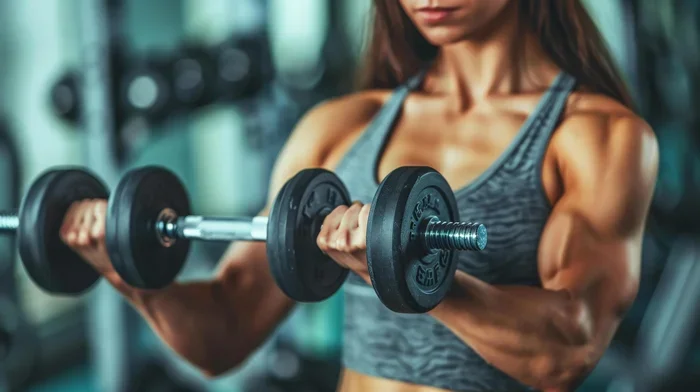
- Dumbbell Curls and Tricep Extensions: These isolation moves carve your arms and give you that defined look when body fat drops low enough.
For a complete arm-building routine, you can also explore our article on how to build arm muscles at home with dumbbells for targeted exercises and rep schemes.
Compound vs. Isolation Movements
Compound movements like squats and presses should make up about 70 to 80 percent of your routine. They burn more calories and stimulate more muscle growth. Isolation exercises like curls and extensions fill in the gaps and help you carve out detail. Think of compounds as the foundation and isolations as the finishing touches.
How to Structure Your Home Workout Plan
Having the right exercises is only half the battle. You also need a smart plan that tells you when to train what. A well-structured dumbbell workout plan keeps you organized, ensures balanced development, and prevents overtraining.
Full-Body Workouts (3 Days Per Week)
For most people training at home, a full-body routine 3 times per week is the sweet spot. Each session hits every major muscle group. This frequency maximizes muscle stimulation while giving your body enough rest between sessions.
A sample weekly split looks like this:
- Monday: Full-body dumbbell workout
- Tuesday: Rest or light cardio
- Wednesday: Full-body dumbbell workout
- Thursday: Rest or light cardio
- Friday: Full-body dumbbell workout
- Saturday: Active recovery (walking, stretching)
- Sunday: Complete rest
Push-Pull Split (4 Days Per Week)
Once you have been training consistently for 8 to 12 weeks, you might want to step up to a push-pull split. This divides your workouts into pushing movements (chest, shoulders, triceps) and pulling movements (back, biceps). This allows you to train each muscle group with more volume and intensity.
If you want a structured plan for building chest muscles specifically, check out how to build chest muscles at home with dumbbells for a detailed chest-focused routine you can add to your split.
Progressive Overload: The Key to Continuous Gains
Your muscles adapt to stress. If you lift the same weight for the same reps every week, your body has no reason to change. Progressive overload means gradually increasing the challenge. You can do this by adding weight, adding reps, adding sets, or reducing rest time between sets.
Keep a training log. Write down what you lifted and for how many reps. Each week, aim to improve slightly. Even adding one extra rep or 2.5 pounds makes a huge difference over months and years.
Nutrition Tips to Support Your Shredding Goals
You cannot out-train a bad diet. This is the single most important truth in fitness. Even the best dumbbell workout plan will not get you ripped if your nutrition is off. You need to fuel your body correctly to reveal the muscle you are building underneath.
Caloric Deficit for Fat Loss
To get ripped, you need to lose body fat while preserving muscle. This requires a slight caloric deficit, typically 300 to 500 calories below your maintenance level. Too large a deficit will cause muscle loss along with fat loss, which is the opposite of what you want.
Use a simple online calculator to estimate your daily calorie needs. Then subtract 300 to 500 calories from that number. Track your intake for at least two weeks to make sure you are hitting your target consistently.
Protein: Your Best Friend
Protein is the building block of muscle. When you are in a caloric deficit, your body is at risk of breaking down muscle for energy. Eating enough protein prevents this. Aim for 0.7 to 1 gram of protein per pound of body weight each day.
Good protein sources include chicken breast, eggs, Greek yogurt, fish, tofu, and protein powder. Spread your protein intake across 3 to 5 meals throughout the day for optimal muscle protein synthesis.
Hydration and Micronutrients
Water plays a huge role in how your muscles look and perform. Even mild dehydration can reduce strength and recovery. Drink at least 8 to 10 glasses of water daily, and more on training days.
Do not forget your vegetables and fruits. They provide essential vitamins and minerals that support hormone function, recovery, and overall health. A shredded physique is not just about muscle and low body fat, it is also about looking healthy and vibrant.
Common Mistakes That Slow Down Your Progress
Most people who fail to get ripped at home do not lack talent or genetics. They make avoidable mistakes that stall their progress. Here are the most common ones:
- Skipping progressive overload: If you never challenge your muscles more, they have no reason to change. This is the number one mistake beginners make.
- Neglecting nutrition: Training hard but eating junk food will not get you shredded. Diet is the engine, training is the steering wheel.
- Overtraining: More is not always better. Muscles grow during rest, not during the workout. Give your body time to recover.
- Poor form for ego lifts: Swinging heavy dumbbells with bad form leads to injuries and wasted effort. Always prioritize clean technique over heavy weight.
- Inconsistency: Working out hard for two weeks and then quitting for a month gets you nowhere. Show up regularly, even when you do not feel like it.
If you are carrying extra weight around your midsection and want to target that area, our guide on how to get rid of belly fat with dumbbells offers specific strategies that complement your overall shredding plan.
Expert Tips for Faster Results
Here are some proven strategies that take your results from good to great:
- Add tempo training: Slow down the eccentric (lowering) phase of each rep. A 3-second lowering phase increases time under tension and drives more muscle growth.
- Use supersets: Pair two exercises back to back with no rest. This keeps your heart rate elevated and boosts fat burning during your workout.
- Train to near failure: On your last set of each exercise, push close to momentary failure. This sends a strong growth signal to your muscles.
- Prioritize sleep: Growth hormone is released during deep sleep. Aim for 7 to 9 hours per night. Poor sleep sabotages both fat loss and muscle building.
- Track progress with photos: The scale does not tell the whole story. Take front, side, and back photos every two weeks. You will see changes that the mirror might miss day to day.
- Stay patient: Getting ripped takes months, not weeks. Trust the process, stay consistent, and the results will come.
If you want to build a complete physique with dumbbells and learn how to train every muscle group effectively, our article on how to build muscle at home with only dumbbells is an excellent resource to round out your training knowledge.
Quick Tips for Everyday Consistency
- Set a fixed workout time each day so it becomes a habit.
- Prepare your dumbbells and water bottle the night before.
- Keep your workouts under 60 minutes to stay focused and efficient.
- Find a workout partner or online community for accountability.
- Celebrate small wins like adding a new rep or increasing weight.
Conclusion
Getting ripped at home with dumbbells is one of the most efficient and accessible paths to a transformed physique. You have everything you need right now. A pair of dumbbells, a willingness to learn, and the discipline to show up consistently. The exercises, the nutrition strategies, and the training principles in this guide give you a complete blueprint for success.
Remember, the journey to a shredded physique is not about perfection. It is about making better choices every single day. Some weeks will be great, and some will be tough. That is normal. What matters is that you keep going. Start with a simple plan, focus on progressive overload, eat enough protein, get your rest, and trust that the work will pay off.
Your ripped physique is not somewhere far away. It is built one dumbbell rep at a time, right in the comfort of your own home. Now go get after it.
Frequently Asked Questions
Can I really get ripped with just dumbbells at home?
Absolutely. Dumbbells allow you to train every major muscle group with compound and isolation movements. Combined with proper nutrition and consistency, dumbbells alone are more than enough to build a ripped physique at home.
How long does it take to get ripped with dumbbells?
Timeline varies based on your starting point, diet, and consistency. Most people see noticeable changes in 8 to 12 weeks. A truly ripped physique typically takes 6 months to 2 years of dedicated training and nutrition.
Do I need adjustable dumbbells or fixed-weight dumbbells?
Adjustable dumbbells are the best choice for most home users. They let you increase weight as you get stronger without buying multiple pairs. Fixed-weight dumbbells work too if you have space and budget for a full set.
How often should I train to get ripped at home?
Training 3 to 5 days per week is ideal. A full-body routine 3 times per week works great for beginners. More advanced lifters may benefit from a push-pull split 4 times per week with adequate rest days.
What should I eat to get ripped with dumbbell training?
Focus on a slight caloric deficit, high protein intake (0.7 to 1 gram per pound of body weight), plenty of vegetables, and adequate hydration. Avoid processed foods and prioritize whole, nutrient-dense meals to support muscle building and fat loss.
Is cardio necessary when trying to get ripped with dumbbells?
Cardio is not mandatory but it helps. Adding 2 to 3 sessions of light cardio per week, such as brisk walking or cycling, accelerates fat loss. You can also incorporate HIIT-style dumbbell circuits for a cardio and strength combo workout.