Can You Do Bent Over Rows with Dumbbells
Yes, you absolutely can do bent over rows with dumbbells, and they are one of the best back exercises you can do at home or in the gym. This movement targets your lats, rhomboids, and rear delts while also engaging your core and posterior chain. Whether you are a beginner or advanced lifter, the dumbbell bent over row is a versatile and effective exercise for building upper body strength.
Can you do bent over rows with dumbbells? The short answer is a resounding yes. This exercise is a staple in many dumbbell workouts and for good reason. It builds a strong, muscular back, improves posture, and helps you lift heavier in other movements. Whether you are training at home or in a crowded gym, the dumbbell bent over row is one of the most practical back exercises with dumbbells you can perform.
Many people assume they need a barbell or a cable machine to work their back effectively. That is simply not true. A pair of dumbbells gives you everything you need. The dumbbell row exercise allows each arm to work independently, which helps correct muscle imbalances and improves overall coordination. In this guide, we will cover everything you need to know about performing this movement correctly, the benefits it offers, and how to add it to your routine.
Key Takeaways
- Dumbbell bent over rows work multiple back muscles including the lats, rhomboids, traps, and rear deltoids for balanced upper body development.
- You can easily modify the exercise by adjusting your stance, grip, or weight to match your fitness level and goals.
- Proper form is essential to avoid injury and maximize muscle engagement during every rep.
- Dumbbell rows are a great barbell row alternative that offers more range of motion and reduces spinal compression.
- Common mistakes include rounding the back and using momentum instead of controlled muscle contractions.
- This exercise fits into any dumbbell workout routine, whether you train at home or in a gym setting.
- Variations like single-arm rows and renegade rows add challenge and target stabilizing muscles.
📑 Table of Contents
- What Is a Bent Over Row with Dumbbells?
- Why You Should Add Bent Over Dumbbell Rows to Your Routine
- How to Perform a Bent Over Row with Dumbbells
- Common Mistakes to Avoid
- Variations of the Dumbbell Bent Over Row
- How to Program Bent Over Rows Into Your Workout
- Dumbbell Rows vs. Barbell Rows: Which Is Better?
- Final Thoughts
What Is a Bent Over Row with Dumbbells?
The dumbbell bent over row is a compound pulling exercise that targets your upper and middle back. You hold a dumbbell in each hand, hinge at the hips, and pull the weights toward your torso. This movement is a cornerstone of many dumbbell back workout programs and is often compared to the barbell bent over row.
Unlike barbell rows, dumbbell rows allow a natural range of motion for each arm. This means less stress on your lower back and shoulders. The exercise also engages your posterior chain, which includes your hamstrings, glutes, and spinal erectors. These muscles work together to keep your torso stable throughout the movement.
Muscles Worked
The primary muscles targeted during the dumbbell bent over row include:
- Latissimus dorsi (lats) — the large muscles on the sides of your back
- Rhomboids — located between your shoulder blades
- Trapezius — the upper and middle traps
- Rear deltoids — the back portion of your shoulders
- Erector spinae — the muscles running along your spine
- Biceps — secondary movers during the pull
Because each arm works independently, this exercise also activates your core muscles to maintain balance and stability. This makes it an excellent rowing exercise for overall upper body development.
Why You Should Add Bent Over Dumbbell Rows to Your Routine
If you are still on the fence about adding this movement to your program, consider these benefits. The dumbbell bent over row offers advantages that few other exercises can match.
1. Improved Posture
Most people spend hours hunched over desks and phones. This weakens the muscles in your upper back. The dumbbell row exercise strengthens these muscles and pulls your shoulders back. Over time, you will notice a significant improvement in your posture and spinal alignment.
2. Balanced Muscle Development
Because you hold a dumbbell in each hand, both arms must work equally. This helps correct muscle imbalances that can develop from favoring one side. Balanced development reduces your risk of injury and improves overall strength training performance.
3. Versatility and Accessibility
You do not need a fancy gym to do this exercise. A set of dumbbells and a flat surface are all you need. This makes it perfect for home workouts and dumbbell workouts of all levels. You can also easily adjust the weight to match your current strength level.
4. Lower Back Friendly
Compared to barbell rows, the dumbbell version places less compressive force on your spine. The free movement of each arm allows for a more natural rowing movement. This makes it a safer option for people with mild lower back concerns or those who want to train their back without excessive spinal load.
How to Perform a Bent Over Row with Dumbbells
Proper form is the key to getting the most out of this exercise and staying injury-free. Follow these steps carefully to nail your technique.
Step-by-Step Instructions
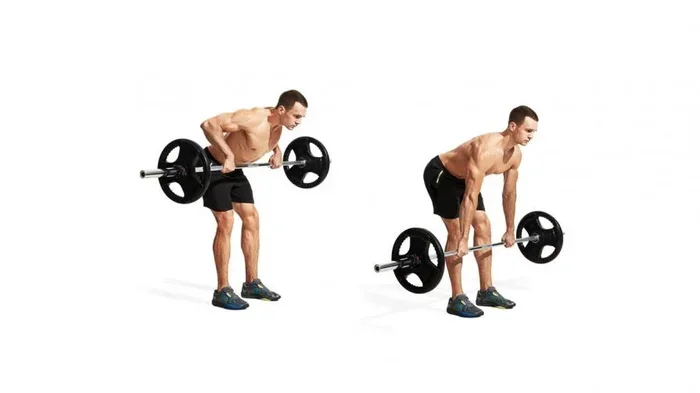
- Stand with your feet shoulder-width apart. Hold a dumbbell in each hand with your palms facing your body.
- Hinge at your hips and push your butt back until your torso is nearly parallel to the floor. Keep a slight bend in your knees.
- Let your arms hang straight down from your shoulders. Your back should be flat, and your core should be tight.
- Pull the dumbbells toward your lower chest by driving your elbows back and squeezing your shoulder blades together.
- Pause for a second at the top and feel the contraction in your back muscles.
- Lower the weights slowly back to the starting position with full control.
- Repeat for the desired number of reps.
Focus on keeping your neck neutral throughout the movement. Do not look up or round your spine. Imagine a straight line from your head to your tailbone. This is the foundation of good proper form for any rowing exercise.
Breathing Tips
Breathe out as you pull the dumbbells up toward your torso. Breathe in as you lower them back down. This breathing pattern helps maintain core stability and provides consistent energy throughout each rep.
Common Mistakes to Avoid
Even though the dumbbell bent over row is a relatively simple movement, many people make mistakes that reduce its effectiveness or increase injury risk.
Mistake 1: Rounding Your Back
This is the most common error. When your spine rounds, you put unnecessary pressure on your lower back discs. Keep your chest up and your back flat throughout the entire movement. Think about squeezing a pencil between your shoulder blades to reinforce good posture.
Mistake 2: Using Momentum
Swinging the dumbbells or using your legs to help pull the weight takes the work away from your back muscles. Use a controlled tempo. If you find yourself swinging, the weight is too heavy. Reduce the load and focus on controlled muscle contractions.
Mistake 3: Shrugging Your Shoulders
Lifting your shoulders toward your ears engages the wrong muscles and can cause neck tension. Keep your shoulders pulled down and back. Think about putting your shoulder blades into your back pockets as you pull.
Mistake 4: Partial Reps
Cutting the range of motion short limits muscle activation. Lower the dumbbells fully until your arms are straight, and pull them all the way to your torso. Full range of motion is essential for building strength and muscle.
Variations of the Dumbbell Bent Over Row
Once you have mastered the standard dumbbell bent over row, you can try these variations to keep your workouts challenging and engaging.
Single-Arm Dumbbell Row
In this variation, you support one hand and knee on a bench while rowing with the opposite arm. This allows you to focus on one side at a time and often lets you use a heavier weight. It is an excellent row variation for addressing muscle imbalances.
Renegade Row
The renegade row combines a push-up position with a dumbbell row. You row one dumbbell at a time while stabilizing your body with the other arm and your feet. This dumbbell exercise heavily engages your core and improves overall stability and strength.
Chest-Supported Dumbbell Row
Set an incline bench to about 30 to 45 degrees and lie face down with your chest supported. This eliminates lower back strain entirely and isolates the back muscles. It is a fantastic option for people who want to focus purely on their upper back without any spinal involvement.
How to Program Bent Over Rows Into Your Workout
Adding the dumbbell row exercise to your routine is straightforward. Here are some practical guidelines to help you get started.
Recommended Sets and Reps
- Strength: 4 sets of 5 to 8 reps with heavier dumbbells
- Hypertrophy: 3 to 4 sets of 8 to 12 reps with moderate weight
- Endurance: 3 sets of 15 to 20 reps with lighter dumbbells
Pairing With Other Exercises
The dumbbell bent over row pairs well with pressing movements like chest press with dumbbells or overhead presses. A common dumbbell workout split includes a rowing exercise on the same day as a bench press or push movement. This creates a balanced program that targets both pushing and pulling muscles.
If you are doing a full body workout with just dumbbells, the bent over row is a must-include. It complements squats, lunges, and pressing movements perfectly. For more ideas on building a complete routine, you can check out can you do a full workout with just dumbbells for comprehensive guidance.
Progressive Overload
Like any strength training exercise, you need to progressively increase the challenge over time. This means adding weight, increasing reps, or adding sets as you get stronger. Track your workouts and aim to improve slightly each week. This principle applies to all dumbbell exercises and is the key to long-term progress.
Dumbbell Rows vs. Barbell Rows: Which Is Better?
Both the dumbbell bent over row and the barbell bent over row are excellent back exercises, but they serve slightly different purposes.
| Feature | Dumbbell Bent Over Row | Barbell Bent Over Row |
|---|---|---|
| Range of Motion | Greater natural ROM for each arm | More restricted ROM |
| Spinal Load | Lower compression on spine | Higher compression on spine |
| Muscle Imbalance Correction | Each arm works independently | Both arms work together |
| Weight Capacity | Limited by individual dumbbell weight | Can load heavier total weight |
| Core Engagement | Higher stabilization demand | More stable base |
| Best For | Home workouts, beginners, injury prevention | Advanced lifters, max strength building |
Both exercises are valuable tools. Many lifters use both in their programs at different times. If you are training at home or prefer a barbell row alternative, the dumbbell version is an excellent choice. For more on this topic, you can explore how to do a bent over row with dumbbells for a deeper dive into technique and programming.
Final Thoughts
The dumbbell bent over row is one of the most effective and accessible back exercises you can do. It builds muscle, improves posture, and strengthens your entire upper body. Whether you are a complete beginner or an experienced lifter, this movement belongs in your dumbbell workout routine.
Focus on proper form first, then gradually increase the weight and volume over time. Avoid the common mistakes we covered, and try different variations to keep your training fresh and challenging. You do not need a gym membership or expensive equipment to build a strong, muscular back. A pair of dumbbells and a little consistency is all it takes.
For those who want to expand their home training knowledge, what exercises can I do with dumbbells at home offers excellent additional ideas to round out your routine.
Start adding bent over rows with dumbbells to your next session. Your back will thank you.
Frequently Asked Questions
Can beginners do bent over rows with dumbbells?
Absolutely. The dumbbell bent over row is one of the most beginner-friendly back exercises. Start with light weights and focus on mastering your form before increasing the load. A lighter weight also helps you build the necessary core stability for this movement.
How often should I do bent over dumbbell rows?
You can perform this exercise 2 to 3 times per week with at least 48 hours of rest between sessions. This allows your back muscles to recover and grow. Pair it with other dumbbell back exercises for a well-rounded routine.
Can I do bent over rows with one dumbbell?
Yes, the single-arm dumbbell row is a popular variation. You use one dumbbell while supporting yourself with the other hand and knee on a bench. This is a great way to address muscle imbalances and focus on each side individually.
What weight dumbbells should I use for bent over rows?
Start with a weight that allows you to complete 8 to 12 reps with good form. You should feel challenged by the last few reps but not lose your posture. As you get stronger, gradually increase the weight. For guidance on selecting the right weight, check out how do you know what weight dumbbells to use.
Are dumbbell rows as effective as barbell rows?
Yes, dumbbell rows are highly effective and offer some unique advantages over barbell rows. They provide a greater range of motion, reduce spinal compression, and help correct muscle imbalances. Both exercises are valuable, and many lifters benefit from including both in their program.
Can bent over dumbbell rows help with back pain?
When performed with proper form, the dumbbell bent over row can strengthen the muscles that support your spine and improve posture, which may help reduce certain types of back pain. However, if you have chronic or acute back pain, consult a healthcare professional before starting any new exercise program.