What Exercises Can I Do with Dumbbells at Home
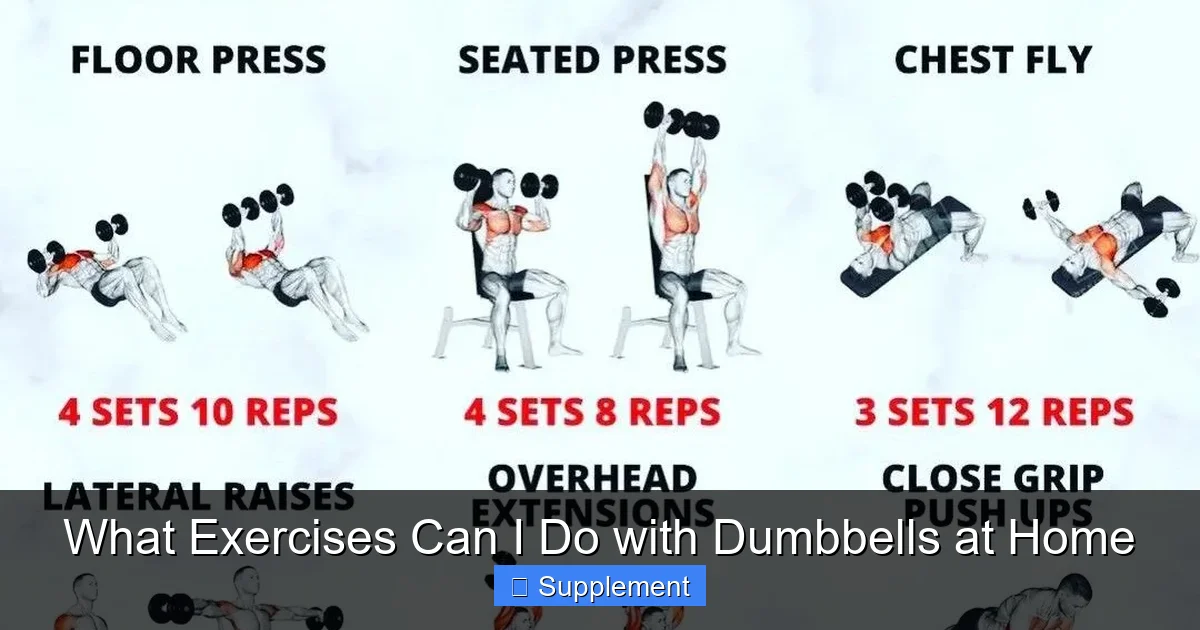
Unlock a complete gym experience at home with just a set of dumbbells. This comprehensive guide provides you with effective, scalable exercises for every major muscle group, structured workout routines, and crucial safety advice. Whether you’re a beginner or looking to diversify your training, you’ll learn how to build strength, muscle, and endurance effectively and safely in your own space.
Key Takeaways
- Dumbbells offer unmatched versatility: A single pair can target every muscle group through pressing, pulling, squatting, and hinging movements, making them ideal for efficient home workouts.
- Master fundamental movement patterns: Focus on squats, hinges, presses, rows, and core anti-rotation to build a balanced, functional physique and prevent injury.
- Progressive overload is non-negotiable: To see results, you must gradually increase the challenge by adding weight, reps, sets, or improving technique and mind-muscle connection over time.
- Form trumps ego every time: Using lighter weights with perfect technique is infinitely more effective and safer than using heavy weights with poor form, which leads to plateaus and injury.
- Structure your workouts for consistency: Choose a sustainable split (full-body, upper/lower) and schedule your sessions like important appointments to build a lasting habit.
- Safety and recovery are part of the workout: Always warm up, listen to your body’s signals, prioritize sleep and nutrition, and take rest days to allow muscles to repair and grow stronger.
- Your home gym is only as good as your mindset: Consistency, patience, and a focus on the process—not just the outcome—are the true keys to long-term success with dumbbell training.
📑 Table of Contents
- Your Powerhouse at Home: Why Dumbbells Are the Ultimate Tool
- Building Your Foundation: The Essential Dumbbell Exercise Library
- Crafting Your Perfect Home Dumbbell Routine
- Safety, Form, and Common Pitfalls: Protecting Your Investment
- Beyond the Basics: Maximizing Your Home Dumbbell Training
- Your Journey Starts With One Rep
Your Powerhouse at Home: Why Dumbbells Are the Ultimate Tool
Let’s be honest. The idea of building a strong, capable body often conjures images of crowded commercial gyms, complex machines, and intimidating racks of iron. But what if I told you the most potent tool for transforming your physique and fitness is compact, affordable, and sits quietly in a corner of your living room? Enter the humble dumbbell. This simple piece of equipment is a gateway to a world of strength. Unlike fixed machines that guide your movement, dumbbells demand stability and engagement from your supporting muscles, leading to more functional, real-world strength. They allow for a greater range of motion and naturally correct muscle imbalances since each arm works independently.
The beauty of dumbbell exercises at home lies in their sheer scalability and adaptability. Whether you have a single 10lb pair or an adjustable set going up to 50lbs, the principles remain the same. You can perform explosive, full-body movements or isolate a single muscle with laser focus. This guide isn’t just a list of moves; it’s your blueprint for building a personalized, effective, and safe home strength training practice. We’ll break down the essential exercises, how to string them together into routines, and the mindset shifts that make the difference between a fleeting attempt and a lifelong habit.
The Five Fundamental Movement Patterns
Before we dive into specific exercises, we need to understand the core movement patterns that form the foundation of all strength training. Every effective dumbbell routine will include variations of these five patterns. Mastering them ensures you build a balanced body and reduces your risk of injury.
- The Squat Pattern: This involves bending at the hips and knees to lower your body. It primarily targets the quadriceps, glutes, and hamstrings. Think Goblet Squats and Dumbbell Front Squats.
- The Hinge Pattern: This is a hip-dominant movement where you push your hips back while keeping a flat back. It’s the primary driver for your posterior chain (glutes, hamstrings, back). The Dumbbell Romanian Deadlift is the quintessential example.
- The Pressing Pattern: Pushing weight away from your body, either vertically (overhead) or horizontally (in front of you). This builds your chest, shoulders, and triceps. Dumbbell Bench Press and Overhead Press are key here.
- The Pulling Pattern: Bringing weight toward your body, again either vertically (chin-ups/pulls with a band) or horizontally (rows). This develops your back and biceps. Dumbbell Rows are a cornerstone.
- The Core Anti-Rotation/Carry: Your core’s job is to resist force and stabilize your spine. Exercises like Farmer’s Walks and Pallof Presses train this critical function, translating to a stronger, more resilient midsection.
Building Your Foundation: The Essential Dumbbell Exercise Library
Now for the fun part. Let’s build your exercise library, categorized by movement pattern. For each, we’ll cover setup, execution, and key form cues. Remember, quality always beats quantity. Start light to master the movement.
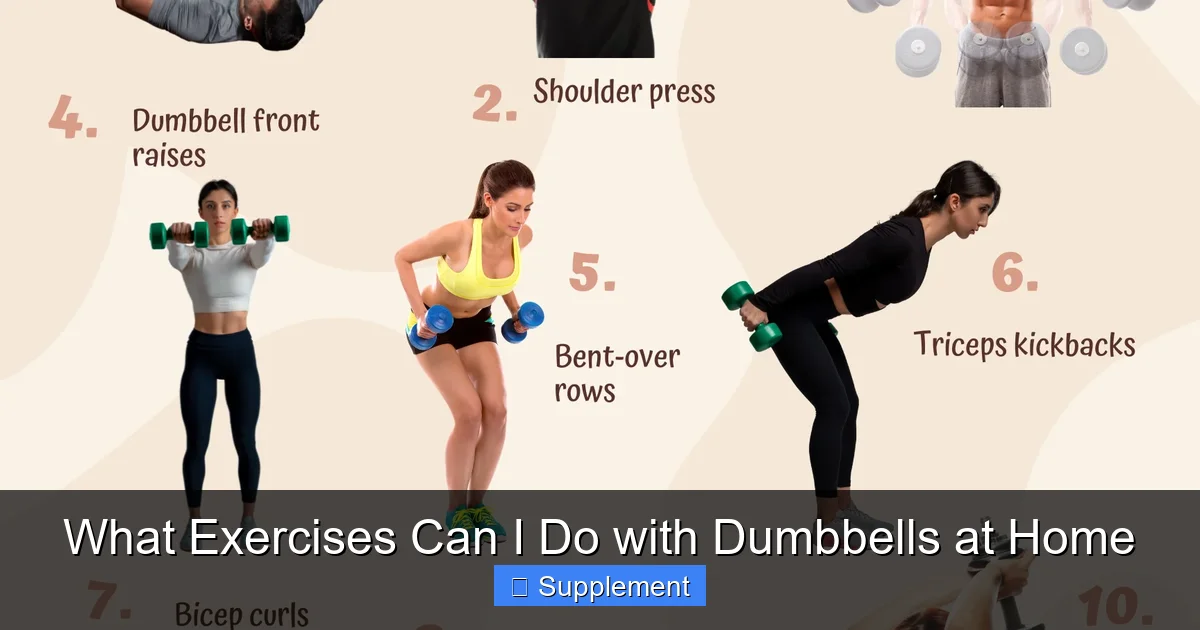
Visual guide about What Exercises Can I Do with Dumbbells at Home
Image source: i.pinimg.com
Lower Body Powerhouses: Squats & Hinges
1. Goblet Squat: The ultimate teaching tool for the squat pattern. Hold one dumbbell vertically against your chest, elbows pointing down. Feet slightly wider than shoulder-width, toes out. Squat down as if sitting in a chair, keeping your chest up and back flat. Go as deep as you can while maintaining a proud chest. Drive through your heels to stand.
Tip: If your heels lift, place a small book or weight plate under them to improve ankle mobility temporarily.
2. Dumbbell Romanian Deadlift (RDL): The king of the hinge. Hold a dumbbell in each hand in front of your thighs. With a slight bend in the knees, push your hips straight back as if you’re trying to touch the wall behind you with your butt. Keep the dumbbells close to your shins. You’ll feel a deep stretch in your hamstrings. Drive your hips forward to return to standing, squeezing your glutes at the top.
Tip: Your back must stay neutral. If you feel rounding, reduce the weight or the range of motion.
3. Dumbbell Split Squat (or Rear-Foot-Elevated Split Squat): A fantastic single-leg exercise that builds balance and unilateral strength. Stand about 3 feet in front of a couch or chair. Place the top of one foot on the seat behind you. Lower your back knee straight down toward the floor while keeping your front knee behind your toes. Push through your front heel to rise.
Tip: Keep your torso upright. If you feel cramped, take a slightly longer stride.
Upper Body Pushing: Chest, Shoulders & Triceps
4. Dumbbell Floor Press: A safer, more stable alternative to the bench press for home. Lie on the floor with knees bent. Hold dumbbells above your chest, palms facing forward. Lower the weights until your triceps lightly touch the floor, then press back up. The floor stops you from over-extending, protecting your shoulders.
Tip: Actively press your shoulders into the floor throughout the movement to create a stable base.
5. Dumbbell Overhead Press (Seated or Standing): The premier shoulder builder. Sit on a bench with back support or stand with a slight knee bend. Hold dumbbells at shoulder height, palms forward. Press the weights directly overhead until your arms are fully extended, but don’t lock out. Control them back to the start.
Tip: Brace your core and glutes hard as you press to prevent arching your back, especially when standing.
6. Dumbbell Floor Skull Crushers: An isolation move for triceps. Lie on the floor, holding two dumbbells directly above your chest, palms facing in (neutral grip). Keeping your upper arms stationary and perpendicular to the floor, bend your elbows to lower the weights toward your forehead. Extend back up.
Tip: The floor limits the stretch, making this easier on the elbows than a traditional bench skull crusher.
Upper Body Pulling: Back & Biceps
7. Dumbbell Bent-Over Row (Two-Arm or Single-Arm): The foundational back exercise. Hinge at your hips until your torso is nearly parallel to the floor, back flat. Let dumbbells hang below your shoulders. Pull the weights to your torso, squeezing your shoulder blades together. Lower with control.
Tip: For a single-arm row, brace one hand and knee on a bench or couch. This allows for a greater range of motion and better isolation.
8. Dumbbell Renegade Row: A brutal core and back combo. Start in a high plank position, hands on dumbbells, feet wide for stability. Keeping your hips perfectly still (no twisting!), row one dumbbell to your side. Alternate sides. This is an anti-rotation core challenge disguised as a row.
Tip: If your hips sway, widen your stance or drop to your knees.
9. Dumbbell Pullover: A unique exercise that hits the lats, chest, and serratus anterior. Lie perpendicular across a bench or couch, with only your upper back supported. Hold one dumbbell with both hands above your chest. With a slight bend in your elbows, lower the weight back over your head in a wide arc until you feel a deep stretch in your lats. Pull it back to the start.
Tip: Focus on the stretch and the mind-muscle connection with your lats, not on moving a heavy weight.
Core Crushers: Stability & Strength
10. Dumbbell Farmer’s Walk: The ultimate functional core and grip builder. Pick up a heavy dumbbell in each hand (as heavy as you can hold with good posture). Walk slowly and deliberately for a set distance or time. Keep your shoulders back and down, core braced as if preparing for a punch.
Tip: Don’t just walk; actively squeeze the dumbbell handles as hard as possible to engage your forearms and entire upper body.
11. Dumbbell Pallof Press: The gold standard for anti-rotation core training. You need an anchor point like a heavy couch leg or a door anchor. Attach a resistance band or hold a dumbbell with both hands at chest height, standing perpendicular to the anchor. With both hands, press the weight straight out in front of you. The band/dumbbell will try to rotate your torso—resist that twist! Hold for a second, then bring it back.
Tip: The farther your hands are from your chest, the harder it is. Start close in.
12. Dumbbell Russian Twist: A classic for rotational strength. Sit on the floor, knees bent, feet flat. Lean back slightly, keeping your back straight. Hold one dumbbell with both hands. Twist your torso to touch the weight to the floor beside your hip, then twist to the other side. Keep your legs relatively stable; the movement comes from your ribs.
Tip: To make it harder, lift your feet off the ground. To make it easier, place your heels on the floor for more support.
Crafting Your Perfect Home Dumbbell Routine
Knowing the exercises is one thing; putting them together into a coherent, effective program is another. The key is structure, balance, and progressive overload. You don’t need to do every exercise in every workout. Instead, we use “splits” to organize our weekly training, allowing muscles to recover while we work others.
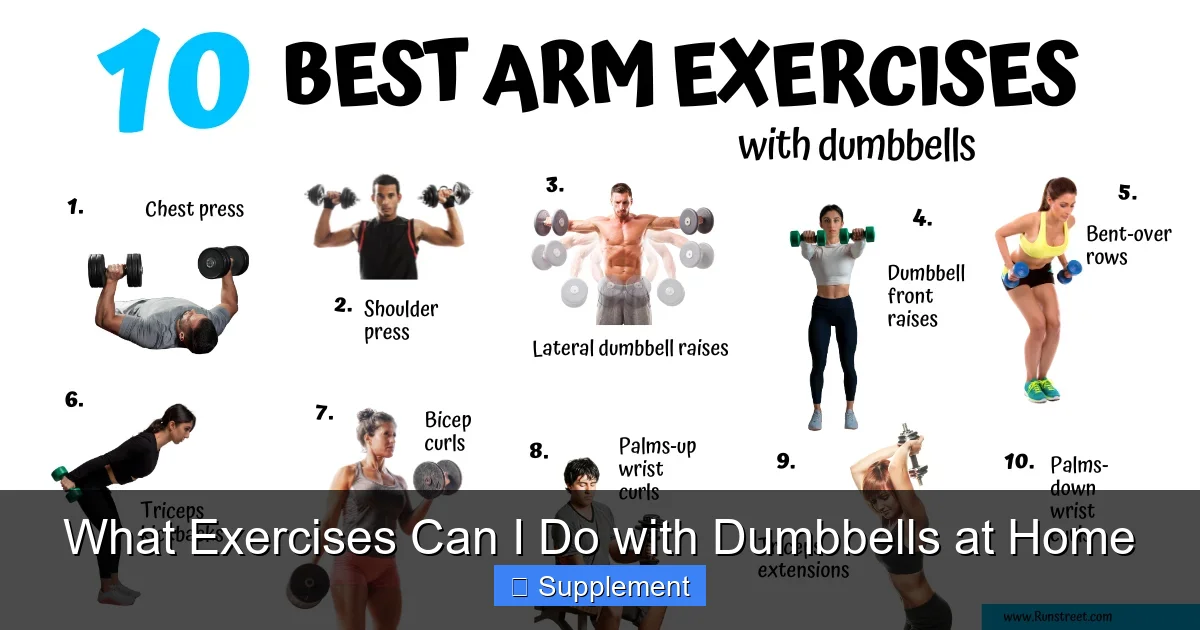
Visual guide about What Exercises Can I Do with Dumbbells at Home
Image source: images.squarespace-cdn.com
Sample Routine 1: The Full-Body Blast (3 Days/Week)
Ideal for beginners or those with limited time (e.g., Monday, Wednesday, Friday). You’ll hit all major movement patterns each session.
- A1. Goblet Squat: 3 sets of 8-12 reps
- B1. Dumbbell Romanian Deadlift: 3 sets of 10-15 reps
- C1. Dumbbell Floor Press: 3 sets of 8-12 reps
- C2. Dumbbell Bent-Over Row: 3 sets of 10-15 reps
- D1. Dumbbell Overhead Press: 3 sets of 10-15 reps
- E1. Farmer’s Walk: 3 sets of 30-60 seconds
How to use it: Rest 60-90 seconds between sets. Start with weights that feel challenging but allow you to complete all reps with good form. The last 2-3 reps of each set should be difficult but not impossible.
Sample Routine 2: The Upper/Lower Split (4 Days/Week)
Great for intermediate lifters wanting more volume per muscle group. Day 1: Lower Body. Day 2: Upper Body. Day 3: Rest. Day 4: Lower Body (different exercises). Day 5: Upper Body (different exercises). Days 6-7: Rest.
Lower Body Day Example:
- Dumbbell Split Squat: 4×8-10 per leg
- Dumbbell Romanian Deadlift: 4×10-12
- Dumbbell Goblet Squat: 3×12-15
- Farmer’s Walk: 3×40-60 sec
Upper Body Day Example:
- Dumbbell Floor Press: 4×8-10
- Single-Arm Dumbbell Row: 4×10-12 per arm
- Dumbbell Overhead Press: 3×10-12
- Dumbbell Pullover: 3×12-15
- Dumbbell Floor Skull Crushers: 3×10-15
Progressive Overload: How to Get Stronger
This is the most critical concept. Your body adapts to stress. To keep getting stronger and building muscle, you must consistently provide a *new* stress. Here’s how, in order of priority:
- Add Weight: Once you can complete all prescribed reps and sets with perfect form, increase the weight on your next session (even if it’s just 2.5lbs).
- Add Reps: If you can’t add weight yet, aim to do one more rep per set with the same weight.
- Add Sets: Gradually increase the number of sets for an exercise from 3 to 4.
- Improve Form & Mind-Muscle Connection: Sometimes, progress is about performing the same weight with better technique, a slower tempo, or a stronger mental focus on the working muscle.
- Decrease Rest Time: Shortening rest periods (from 90s to 60s) increases workout density and metabolic stress.
Track your workouts in a notebook or phone app. Writing down “3×10 @ 25lbs” is your map to progress.
Safety, Form, and Common Pitfalls: Protecting Your Investment
Your body is your most valuable asset. Dumbbell training is incredibly safe when done correctly, but poor form can lead to strains and setbacks. Let’saddress the most common mistakes.
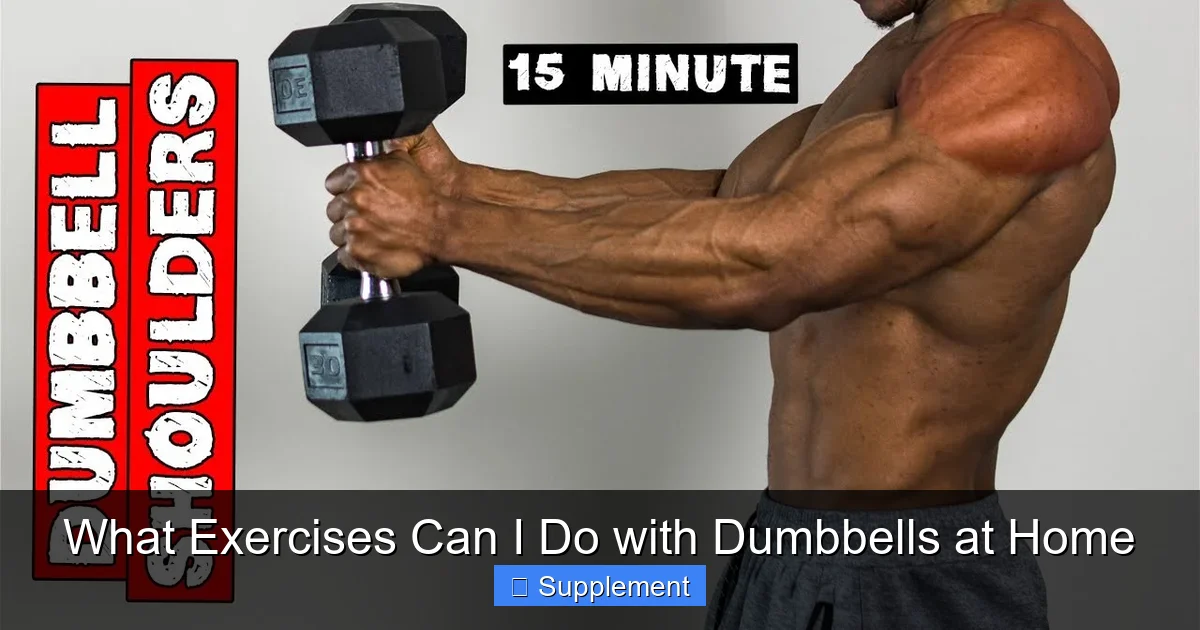
Visual guide about What Exercises Can I Do with Dumbbells at Home
Image source: i.ytimg.com
The Non-Negotiable Warm-Up
Never skip this. Spend 5-10 minutes preparing your muscles and joints. A good warm-up includes:
- General Cardio: 3-5 minutes of brisk walking, jumping jacks, or stair climbing to raise core temperature.
- Dynamic Stretches: Leg swings, arm circles, torso twists, cat-cow stretches. Move through ranges of motion you’ll use in your workout.
- Movement-Specific Drills: Do 2 light sets of your first exercise (e.g., Goblet Squats with just the bar or a very light dumbbell) to practice the pattern and activate the right muscles.
Form Checks for the Big Lifts
For Squats & Lunges: Knees should track over your toes, not cave in. Chest up, back flat. Weight in your heels/mid-foot.
For Hinges (RDLs, Rows): The mantra is “hip hinge, not back bend.” Push your hips back first. Your back should remain in a neutral, braced position throughout. Imagine a rod down your spine.
For Presses: Don’t flare your elbows out excessively on the bench press; keep them at a 45-degree angle to your torso for shoulder health. On overhead presses, don’t arch your back excessively; brace your core.
When to Stop: Listening to Pain vs. Discomfort
Muscle “burn” and fatigue are part of the process. Sharp, joint-specific pain is not. If you feel a tweak in your shoulder during a press, stop immediately. “Pushing through” sharp pain is how injuries happen. Discomfort from a muscle working hard is okay; pain in a tendon, ligament, or joint is a stop sign. It’s better to miss one rep than to miss weeks of training due to an avoidable injury.
Beyond the Basics: Maximizing Your Home Dumbbell Training
Once you’ve mastered the fundamental exercises and built a consistent routine, you can layer in advanced techniques to break plateaus and keep your workouts fresh.
Tempo Training: Control the Clock
Instead of just lifting and lowering, assign a specific time to each phase. A common template is “3-1-2-0”:
- 3: 3 seconds to lower the weight (eccentric phase).
- 1: 1-second pause at the bottom/stretched position.
- 2: 2 seconds to lift the weight (concentric phase).
- 0: 0-second pause at the top (no locking out or resting).
Slowing down the eccentric (lowering) phase increases time under tension, a key driver of muscle growth. Try this on your Goblet Squats or RDLs.
Unilateral Focus: Fix Imbalances
We all have a dominant side. Using two dumbbells can allow the stronger side to compensate. Incorporate single-arm (like single-arm rows) and single-leg (like split squats) exercises. You’ll often find one side is significantly weaker. Start your sets with the weaker side and match the reps/sets with the stronger side. This builds symmetry and stability.
The Density Finisher: Farmer’s Walks & Complexes
To boost conditioning and work capacity, finish your workout with a “finisher.” A Farmer’s Walk is perfect—grab the heaviest dumbbells you can hold and walk until your grip fails. You can also create a “dumbbell complex”: a sequence of exercises performed back-to-back without putting the weight down (e.g., 5 cleans, 5 presses, 5 squats). This torches calories and builds mental toughness.
Your Journey Starts With One Rep
We’ve covered a vast landscape—from the foundational movement patterns to sample routines, from the critical concept of progressive overload to the finer points of tempo and unilateral training. The truth is, the most sophisticated routine is worthless without consistency. The power of dumbbell exercises at home is that they remove every possible barrier. No commute to the gym. No waiting for equipment. No intimidation factor. It’s just you, your dumbbells, and the space to move.
Start where you are. If that means doing three sets of ten Goblet Squats with a 15lb dumbbell three times this week, do it. Celebrate that. Then next week, aim for 12 reps, or try the same 10 reps with a 20lb dumbbell. This is a marathon of small, consistent improvements. Your home gym is a testament to your commitment to yourself. It’s not about having the most expensive equipment; it’s about making the most of what you have. Pick up the dumbbell. Focus on your form. Breathe. And do one rep. Then do another. That’s how strength is built—one intentional, powerful movement at a time.
Frequently Asked Questions
How often should I do dumbbell workouts at home for best results?
For most people, training each muscle group 2-3 times per week is optimal for strength and muscle growth. This translates well to a 3-day full-body routine or a 4-day upper/lower split. Ensure you have at least one full rest day between sessions targeting the same muscle groups to allow for recovery.
How heavy should my dumbbells be as a beginner?
>Start with a weight that allows you to complete all prescribed reps with perfect form, where the last 2-3 reps feel challenging but not like a struggle to complete. For many beginners, a pair of 10-15lb dumbbells is a great starting point for upper body exercises, and 20-25lbs for lower body moves like Goblet Squats. The goal is to learn the movement, not to lift maximal weight.
Can I build significant muscle with just dumbbells at home?
Absolutely. Building muscle (hypertrophy) is a product of mechanical tension, metabolic stress, and muscle damage—all of which can be achieved effectively with dumbbells. By systematically applying progressive overload (adding weight, reps, or sets over time) and focusing on a full range of motion, you can absolutely build a strong, muscular physique using only dumbbells.
What should I do if I don’t have a bench?
You can have an incredibly effective workout without a bench. Use the floor for pressing exercises (Floor Press, Skull Crushers). Perform rows and presses standing or seated on a sturdy chair. For split squats, use your couch or a chair for rear-foot elevation. Get creative with stable surfaces like a low, sturdy coffee table for supported movements.
My muscles are very sore after my first workout. Should I train through the soreness?
No. The soreness you feel 24-72 hours after a new workout is Delayed Onset Muscle Soreness (DOMS). It’s a normal sign of muscle adaptation. You should not train the same sore muscle group intensely again until the soreness subsides significantly. Active recovery (light walking, stretching) is fine, but avoid heavy loading on severely sore muscles as it can hinder recovery and increase injury risk.
How can I ensure I’m using proper form without a trainer?
Use multiple resources: Watch reputable fitness videos from certified trainers that break down each exercise. Record yourself performing the movement from the side and front with your phone and compare it to the demo. Start with very light weight or even just your bodyweight to practice the movement pattern. Focus on key cues like “chest up,” “back flat,” and “knees over toes.” If something feels painful, not just challenging, stop and reassess your form.