What Muscles Does a Weighted Jump Rope Work
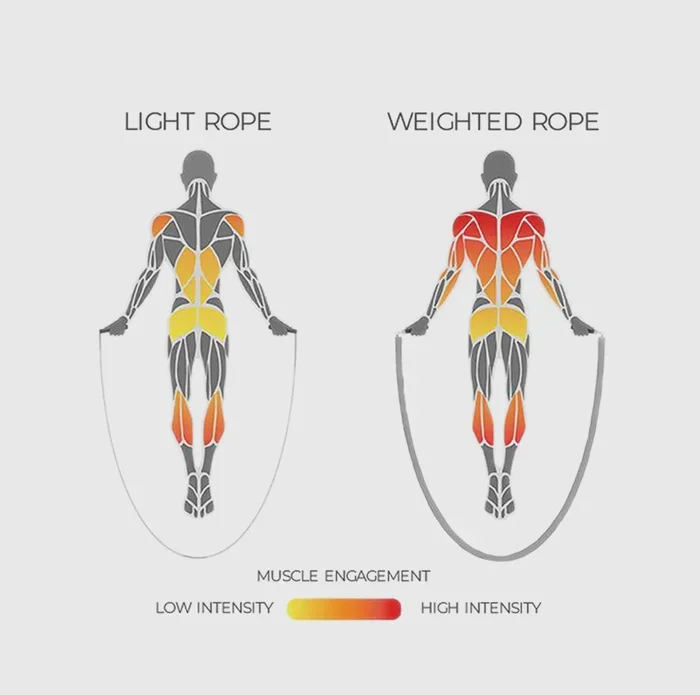
So, what muscles does a weighted jump rope work? A weighted jump rope is one of the most effective tools for building full-body strength, toning muscles, and boosting cardiovascular fitness. This article breaks down exactly which muscle groups get activated and how to maximize your results.
This is a comprehensive guide about What Muscles Does A Weighted Jump Rope Work.
Key Takeaways
- Full Body Activation: A weighted jump rope works muscles from your shoulders and arms all the way down to your calves and feet.
- Upper Body Strength: The added resistance targets shoulders, biceps, triceps, and forearm muscles more than a standard rope.
- Lower Body Power: Your calves, quads, hamstrings, and glutes work overtime to power each jump.
- Core Engagement: Maintaining balance during weighted jumps deeply activates your abs, obliques, and lower back.
- Cardio and Metabolism: Weighted jump rope training elevates your heart rate and boosts metabolic rate for efficient calorie burning.
- Bone Density: The impact of jumping helps strengthen bones and improve overall functional fitness.
[FEATURED_IMAGE_PLACEHOLDER]
What Muscles Does a Weighted Jump Rope Work?
If you have ever watched someone pick up a weighted jump rope and thought, “That looks tough,” you are not wrong. A weighted jump rope is not your average gym toy. It is a serious fitness tool that fires up nearly every major muscle group in your body. From the moment you start swinging, your body has to work harder against the added resistance.
So, what muscles does a weighted jump rope work? The short answer is: almost all of them. Unlike a light speed rope that mainly targets your hands and wrists, a weighted rope adds resistance that challenges your shoulders, arms, back, core, legs, and even your feet. It is truly a full body workout packed into one simple movement.
The beauty of this exercise lies in its simplicity. You do not need a gym membership or fancy equipment. All you need is a weighted jump rope, a small space, and the willingness to sweat. Whether you are a beginner or a seasoned athlete, this tool scales with you. You can adjust the weight, speed, and intensity to match your fitness level.
Many people turn to weighted jump rope training because it delivers results fast. It builds muscle, burns fat, and improves cardiovascular fitness all at the same time. That is a rare combination in the fitness world. Let us break down exactly which muscles get involved and how you can make the most of every rep.
Upper Body Muscles Targeted by a Weighted Jump Rope
One of the biggest surprises for first-time users is how much upper body work a weighted jump rope actually does. You might think it is mostly a leg exercise. Think again. Your upper body plays a massive role in controlling the rope and maintaining proper form.
Shoulders
The shoulder muscles are the engines that drive the rotation of the rope. With a weighted rope, the resistance is significantly higher. Your anterior deltoids, lateral deltoids, and rear deltoids all fire together to keep the rope spinning smoothly. Over time, this builds strong, defined shoulders without the need for heavy dumbbells.
Think of your shoulders as the steering wheel of the jump rope. Every turn, every rotation, they are in control. The heavier the rope, the harder they have to work. This is why weighted jump rope exercises are so effective for shoulder toning and strength building.
Arms, Biceps, and Triceps
Your arms do more than just hold the rope. The biceps and triceps constantly engage to stabilize your elbows and control the swinging motion. The forearm muscles work even harder. Gripping the handles and fighting the rope’s momentum builds serious grip strength and arm definition.
If you have ever tried a heavy jump rope, you know that burning feeling in your forearms after just a few minutes. That is your muscles adapting to the resistance. It is like a resistance training session hidden inside a cardio exercise.
Back Muscles
Your back muscles, including the lats and traps, also get involved. They help stabilize your posture and keep your shoulders aligned during each rotation. A strong back is essential for maintaining proper form, especially as you increase speed or duration.
For those looking to improve posture and build a stronger back, incorporating a weighted jump rope into your routine can be a game changer. It complements exercises like rows and pull-ups beautifully. For more on the overall benefits of this equipment, check out our detailed guide on the benefits of a weighted jump rope.
Lower Body Muscles Engaged During Jump Rope Workouts
Now let us talk about the lower body. When you jump, your legs do the heavy lifting. Pun intended. The weighted jump rope demands more explosive power from your lower body compared to a standard rope.
Calves and Ankles
Your calf muscles are the stars of the show. Every single jump requires push-off power from the balls of your feet. The calves contract repeatedly to lift your body off the ground. With a weighted rope, the demand increases because your body is working against greater momentum.
The ankle stabilizers also play a key role. They keep your joints safe and help you maintain balance during rapid jumps. Strong calves and ankles mean better stability in everyday life too. This kind of functional fitness translates directly to sports, running, and even walking on uneven surfaces.
Quads, Hamstrings, and Glutes
Your quadriceps and hamstrings work together to absorb the impact of each landing and power the next jump. The glute muscles join in as well, especially when you jump higher or faster. Together, these muscles form the powerhouse of your lower body.
Think of it this way. A weighted jump rope is like a mini HIIT training session for your legs. You get the benefits of explosive movement without needing a treadmill or squat rack. It is efficient, effective, and easy on the joints when done correctly.
Feet and Toes
Even your feet and toes get a workout. The intrinsic muscles in your feet grip the ground and help you stay balanced. This might seem minor, but strong foot muscles are important for overall agility and injury prevention.
Core Muscles and Stability
Here is where things get really interesting. Your core muscles are the unsung heroes of every jump rope session. They may not get all the attention, but without them, nothing would work.
Your abdominal muscles, including the rectus abdominis and the deeper transverse abdominis, constantly engage to keep your torso upright and stable. Your obliques work to prevent unwanted twisting. And your lower back muscles support your spine throughout every set.
A weighted jump rope makes core engagement even more intense. The added weight creates more rotational force, which your core has to counteract. This is why many people notice their midsection getting tighter and stronger after consistent jump rope training.
Good balance and coordination are also core functions. The rhythmic nature of jumping rope trains your brain and body to work together seamlessly. Over time, you develop better proprioception, which is your body’s sense of where it is in space. This is a huge benefit for athletes and older adults alike.
Want to know more about how jump rope targets specific body areas? Our article on what part of the body does jump rope target goes deep into this topic.
Cardiovascular and Metabolic Benefits of Weighted Jump Ropes
Beyond muscle building, a weighted jump rope delivers serious cardiovascular benefits. It is one of the few exercises that simultaneously trains your heart, lungs, and muscles. This is what makes it such a powerful tool for overall health.
Heart Health and Endurance
Jumping rope raises your heart rate quickly and keeps it elevated. This strengthens your heart muscle over time and improves endurance building. Your lungs also become more efficient at delivering oxygen to your working muscles. The result? Better stamina in daily life and during other workouts.
Studies have shown that jump rope training can match or even exceed the cardiovascular benefits of running. Add the weighted element, and you get an even greater challenge for your cardiovascular system.
Metabolic Rate and Weight Loss
One of the biggest draws of weighted jump rope training is its impact on your metabolic rate. The combination of resistance and cardio creates an “afterburn” effect. This means your body continues to burn calories long after your workout ends.
This is often referred to as EPOC (Excess Post-Exercise Oxygen Consumption). Weighted jump rope training triggers a strong EPOC response because it demands so much from your muscles. If you are looking for a weight loss exercise that actually works, this is it.
Additionally, the bone density benefits should not be ignored. The impact of jumping stimulates bone growth and helps prevent osteoporosis. This makes weighted jump rope training valuable for people of all ages, especially those concerned about long-term bone health.
How to Get the Most Out of Your Weighted Jump Rope Workout
Knowing which muscles work is only half the battle. You also need to train smart. Here are some practical tips to maximize your results and stay safe while using a weighted jump rope.
Choose the Right Weight
Not all weighted jump ropes are the same. Some have 1-pound handles, while others go up to 4 pounds or more. Beginners should start lighter and gradually increase the weight. Your form matters more than the number on the handle. If you cannot maintain proper technique, the rope is too heavy.
For those curious about whether a weighted rope is right for them, our guide on is it better to use a weighted jump rope offers helpful insights and comparisons. You can also explore more about what muscles do you use when you jump rope in our dedicated breakdown.
Focus on Form
Good form is everything. Keep your jumps small and light. Land on the balls of your feet, not your heels. Keep your core tight and your shoulders relaxed. Avoid swinging too fast at the expense of control. Quality beats quantity every single time.
Build a Progressive Routine
Start with 30-second intervals and rest for 30 seconds between sets. As you get stronger, increase the work time and reduce the rest. Here is a simple starter routine:
- Warm-up: 3 minutes of light jumping with a standard rope or slow weighted rope.
- Interval 1: 45 seconds of fast jumping, 30 seconds rest.
- Interval 2: 45 seconds of single-leg jumps, 30 seconds rest.
- Interval 3: 45 seconds of double-unders or high knees, 30 seconds rest.
- Cool-down: 3 minutes of slow jumping and stretching.
Quick Tips for Success
- Wear supportive shoes to protect your joints.
- Use a timer app to track your intervals.
- Train 3 to 4 times per week for best results.
- Pair your jump rope sessions with strength training for balanced muscle development.
- Listen to your body. Rest when you need to.
Common Mistakes to Avoid
- Using a rope that is too heavy too soon.
- Jumping too high and landing hard on your heels.
- Neglecting warm-up and cool-down periods.
- Holding the handles too tightly, which causes forearm fatigue.
- Ignoring upper body engagement and letting your arms hang loose.
Expert Insights on Weighted Jump Rope Training
Fitness experts consistently praise the weighted jump rope for its versatility and efficiency. It is one of the rare exercises that combines cardio, strength, and coordination into one movement. Certified trainers often recommend it as a warm-up tool or a standalone conditioning workout.
“The weighted jump rope is hands down one of the best tools I recommend to my clients,” says one trainer. “It works almost every muscle group, improves coordination, and the calorie burn is incredible. Plus, it is fun. People stick with it because it does not feel like a chore.”
The key to long-term success is variety. Mix up your routines. Try different jump styles. Challenge yourself with heavier ropes as you progress. The more you vary the stimulus, the more your muscles will grow and adapt. This is the principle of progressive overload, and it applies perfectly to weighted jump rope training.
Conclusion
So, what muscles does a weighted jump rope work? The answer is clear: it works virtually your entire body. Your shoulders, arms, back, core, calves, quads, hamstrings, glutes, and even your feet all play a role. On top of that, you get powerful cardiovascular and metabolic benefits that few other exercises can match.
A weighted jump rope is more than a toy. It is a legitimate fitness tool that delivers real results. Whether you want to build muscle, burn fat, improve endurance, or boost your overall health, this simple device can help you get there.
The best part? You can start today. Grab a weighted jump rope, find some open space, and give it a try. You will be amazed at how quickly your body responds. Stay consistent, focus on form, and watch the transformation unfold. Your body will thank you for it.
Frequently Asked Questions
What muscles does a weighted jump rope work the most?
A weighted jump rope works your shoulders, calves, core, and forearms the most. These muscles are constantly engaged to control the rope’s momentum and maintain balance during each jump. Your legs and back also receive significant activation.
Is a weighted jump rope better than a regular jump rope for building muscle?
Yes, a weighted jump rope provides more resistance, which means your muscles have to work harder with each rotation. This leads to greater muscle engagement and strength gains compared to a standard light rope. It is especially effective for toning your arms and shoulders.
How long should I jump rope to see results?
Most people start seeing noticeable results within 3 to 4 weeks of consistent training, jumping 3 to 4 times per week. Start with 15 to 20 minute sessions and gradually increase the duration as your fitness improves. Consistency is more important than duration.
Can a weighted jump rope help with weight loss?
Absolutely. A weighted jump rope combines cardio and resistance training, which creates a strong calorie burn during and after your workout. It elevates your metabolic rate and triggers the afterburn effect, making it one of the most efficient weight loss exercises available.
Is jumping rope with weights bad for your knees?
When done correctly, it is not bad for your knees. The key is to land softly on the balls of your feet and keep your jumps small. Wearing supportive shoes and using proper form greatly reduces joint stress. If you have existing knee issues, consult a doctor before starting.
What is the best weight for a beginner weighted jump rope?
Beginners should start with a rope that has 1 to 1.5-pound handles. This provides enough resistance to build strength without overwhelming your muscles or compromising your form. As you get stronger, you can move up to 2 or 3-pound ropes for a bigger challenge.