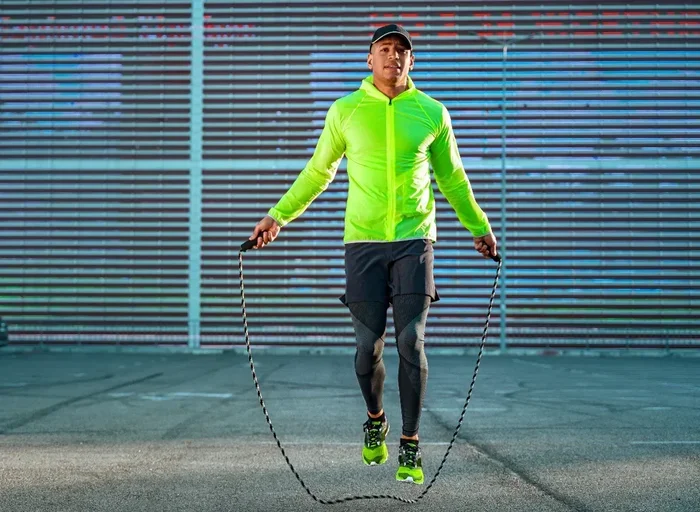
What Muscles Do You Use to Jump Rope

Jumping rope is a full-body exercise that works your calves, quads, glutes, core, shoulders, arms, and back muscles. When you learn what muscles do you use to jump rope, you unlock the secret to a highly efficient cardio and strength workout that burns calories and builds endurance in under 15 minutes.
Key Takeaways
- Lower Body Power: Your calves, quads, hamstrings, and glutes do the heavy lifting with every jump.
- Core Stability: Your abs and obliques keep your torso stable and upright throughout the movement.
- Upper Body Engagement: Your shoulders, forearms, biceps, and triceps all work to turn the rope.
- Cardiovascular Boost: Jump rope training strengthens your heart and lungs while burning serious calories.
- Coordination and Agility: The exercise trains your brain and muscles to work together seamlessly.
- Low Impact Option: You can adjust intensity to make it joint-friendly while still building strength.
📑 Table of Contents
- What Muscles Do You Use to Jump Rope
- The Lower Body Muscles: Your Powerhouse
- The Core Muscles: Your Stability Center
- The Upper Body Muscles: More Than Just Arms
- The Cardiovascular System: Your Heart and Lungs
- Small but Mighty: Often Overlooked Muscles
- How to Maximize Muscle Engagement While Jumping Rope
- Jump Rope vs. Other Exercises: Muscle Comparison
- How Long Should You Jump Rope to See Results?
- Common Mistakes That Reduce Muscle Activation
- Final Thoughts
What Muscles Do You Use to Jump Rope
Jumping rope might look simple. You pick up a rope, swing it over your head, and hop over it. But underneath that seemingly easy motion, your body is pulling off a complex, full-body movement. What muscles do you use to jump rope? More than you probably think.
From the muscles in your feet to the ones in your shoulders, rope jumping recruits nearly every major muscle group. It is one of the most efficient full body workouts you can do. You do not need a gym membership. You do not need fancy equipment. Just a rope and a little space.
Whether you are a beginner trying to get fit or an athlete looking to sharpen your agility, understanding the muscles involved helps you train smarter. Let us break down exactly what happens in your body every time you pick up that rope.
The Lower Body Muscles: Your Powerhouse
Your legs do the majority of the work when you jump rope. Every leap off the ground fires up multiple muscle groups in your lower body. These muscles generate the force needed to lift you even just a few inches off the floor.
Calves (Gastrocnemius and Soleus)
Your calves are the stars of the show. They push you off the ground with every single jump. The gastrocnemius is the big muscle you can see on the back of your lower leg. The soleus sits underneath it. Together, they handle the repetitive pushing motion that makes rope jumping so effective.
Over time, regular jump rope training builds lean, defined calf muscles. This is why boxers and sprinters often include rope jumping in their routines.
Quadriceps
Your quads sit on the front of your thighs. They help straighten your knee as you push off the ground. While they do not work as hard as your calves, they still play a key role in stabilizing your legs during each jump.
Hamstrings and Glutes
Your hamstrings run along the back of your thighs. Your glutes are your butt muscles. Both work together to extend your hip and control your landing. They absorb the impact every time your feet touch the ground.
This makes rope jumping a great lower body strength exercise too. It does more than just build endurance. It shapes and tones your legs over time.
The Core Muscles: Your Stability Center
Your core is the bridge between your upper and lower body. Without it, you would wobble and lose balance with every jump. What muscles do you use to jump rope in your midsection? Several important ones.
Rectus Abdominis (Your Six-Pack Muscles)
This is the muscle most people think of when they hear “abs.” It runs along the front of your torso. During rope jumping, it keeps your spine straight and your torso stable. You are not doing crunches. But your abs are still working hard the entire time.
Obliques
Your obliques sit on the sides of your waist. They help you rotate and stabilize your trunk. When you change direction or adjust your posture mid-jump, your obliques kick in to keep you balanced.
Transverse Abdominis
This is the deepest core muscle. It wraps around your spine like a natural weight belt. It protects your lower back and keeps your posture aligned. Rope jumping naturally engages this muscle because you need a strong center to maintain rhythm.
A strong core does more than help you jump better. It improves your posture, reduces back pain, and supports nearly every movement you do in daily life.
The Upper Body Muscles: More Than Just Arms
Many people think rope jumping is all about the legs. But your upper body plays a surprisingly big role. Your arms and shoulders are responsible for turning the rope in a smooth, consistent arc.
Shoulders (Deltoids)
Your shoulder muscles, especially the deltoids, control the circular motion of the rope. They keep your arms positioned correctly and prevent the rope from dragging. After a longer session, you will feel the burn in your shoulders. That is a sign they are working.
Forearms and Wrists
The forearm muscles are where most of the rope-turning action happens. Your wrists flex and extend rapidly to keep the rope spinning at the right speed. Strong forearms give you better control and less fatigue.
If you want to build grip strength, rope jumping is a surprisingly effective way to do it. Over time, your forearm endurance improves significantly.
Biceps and Triceps
Your biceps on the front of your upper arms and your triceps on the back both assist in maintaining the rope’s circular path. They do not work as intensely as your shoulders and forearms, but they still contribute to the movement. This makes rope jumping a subtle but effective upper body workout as well.
Back Muscles (Trapezius and Rhomboids)
Your upper back muscles help keep your shoulders back and your chest open. The trapezius and rhomboids stabilize your shoulder blades during the repetitive swinging motion. This is especially important if you jump for longer periods.
The Cardiovascular System: Your Heart and Lungs
Rope jumping is not just about muscles. It is one of the best cardiovascular exercises you can do. Your heart and lungs work overtime to supply oxygen to all the muscles you are using.
When you jump rope, your heart rate rises quickly. This improves your cardiovascular endurance over time. Your lungs become more efficient at taking in oxygen. Studies show that consistent jump rope training can improve your VO2 max, which is a key measure of fitness.
The beauty of this exercise is that you can adjust the intensity. Go slow for a warm-up. Go fast for a high-intensity interval session. Either way, your heart and lungs get a serious workout.
Small but Mighty: Often Overlooked Muscles
Beyond the big muscle groups, several smaller muscles play important roles in rope jumping. These often get overlooked, but they are essential for smooth, efficient movement.
- Hip Flexors: These muscles lift your knees with each jump. They are crucial for maintaining a quick cadence.
- Intrinsic Foot Muscles: The small muscles in your feet help absorb impact and maintain balance on the balls of your feet.
- Erector Spinae: These muscles run along your spine. They keep your back straight and prevent you from slouching.
All of these muscles work together to create the fluid, rhythmic motion of rope jumping. It is truly a full-body movement that builds coordination and strength simultaneously.
How to Maximize Muscle Engagement While Jumping Rope
Now that you know what muscles do you use to jump rope, here are some tips to get the most out of every session.
- Land on the balls of your feet. This engages your calves more and reduces impact on your knees.
- Keep your core tight. A braced core protects your lower back and improves stability.
- Use your wrists, not your arms. This reduces shoulder fatigue and makes the rope turn more smoothly.
- Vary your jump styles. Single-leg hops, double-unders, and criss-cross tricks recruit different muscles and keep your workouts fun.
- Start slow and build up. If you are new, begin with short sessions and gradually increase duration.
If you want to add variety to your routine, check out how to do the criss-cross jump rope trick to challenge your coordination and engage even more muscles.
Jump Rope vs. Other Exercises: Muscle Comparison
How does rope jumping compare to other popular exercises? Here is a quick look at what sets it apart.
| Exercise | Primary Muscles Worked | Cardio Benefit | Time Efficiency |
|---|---|---|---|
| Jump Rope | Full body (calves, core, shoulders, arms) | Excellent | Very High |
| Running | Legs, glutes, core | Excellent | Moderate |
| Rowing Machine | Legs, back, arms, core | Very Good | High |
| Cycling | Legs, glutes | Good | Moderate |
Jump rope training stands out because it hits more muscle groups in less time. You get a cardio and strength combo in a single workout. That is why so many athletes and fitness enthusiasts swear by it.
For more on how jump rope compares to other exercises, you might enjoy our article on what muscles you use on a rowing machine to see how the two stack up.
How Long Should You Jump Rope to See Results?
The duration of your sessions matters. If your goal is weight loss, consistency and intensity both play a role. Even 10 to 15 minutes of jumping rope can burn a significant number of calories. Over time, this adds up to real results.
For beginners, start with 5 to 10 minute sessions. As your endurance improves, work your way up to 20 or 30 minutes. You can also mix in intervals. Jump fast for 30 seconds, rest for 30 seconds, and repeat. This approach maximizes both muscle engagement and calorie burn.
If you are curious about specific timeframes for weight loss goals, check out how long you should jump rope to lose weight for detailed guidance.
Common Mistakes That Reduce Muscle Activation
Avoid these common errors to make sure you are getting the most out of every jump.
- Jumping too high: You only need a few inches of clearance. Jumping higher wastes energy and increases impact on your joints.
- Leaning back: This takes your core out of the equation and strains your lower back. Stay upright.
- Using your whole arm: Let your wrists do the work. Your arms should stay close to your sides.
- Wearing the wrong shoes: Proper footwear absorbs impact and supports your feet. Check out the best shoes to jump rope in for recommendations.
- Skipping warm-ups: Cold muscles are more prone to injury. Spend 2 to 3 minutes doing light jumps before going all out.
Final Thoughts
So, what muscles do you use to jump rope? The answer is almost all of them. Your calves, quads, glutes, hamstrings, core, shoulders, arms, forearms, back, and even small stabilizing muscles all pitch in. It is one of the most efficient exercises you can add to your routine.
Whether you want to burn fat, build endurance, improve coordination, or simply get a quick workout at home, rope jumping delivers. It requires minimal equipment, takes up very little space, and offers maximum results.
Start with short sessions. Focus on proper form. Gradually increase your intensity and duration. Your body will thank you. And the best part? You can do it almost anywhere. All you need is a rope and the willingness to move.
Grab your rope, find a clear spot, and start jumping. Your muscles are ready.
Frequently Asked Questions
What muscles do you use to jump rope the most?
The calves and forearms are the most active muscles during rope jumping. Your calves push you off the ground with every jump, while your forearms control the rope’s rotation. Your core and shoulders also work hard to keep you stable and upright throughout the movement.
Is jumping rope a full body workout?
Yes, absolutely. Jumping rope activates your lower body, core, and upper body muscles all at once. It is one of the rare exercises that delivers both cardiovascular and strength benefits simultaneously. This makes it incredibly efficient for people short on time.
Can jumping rope help you lose weight?
Yes, rope jumping burns a high number of calories in a short amount of time. It boosts your metabolism and builds lean muscle, both of which support weight loss. For specific duration recommendations, check out how long you should jump rope to lose weight for tailored guidance.
Do you need a lot of space to jump rope?
Not at all. You only need a few feet of clearance above your head and enough room to stand comfortably. The exact space depends on the rope length and your height. For more details, see how much room you need to jump rope safely.
What happens to your body when you jump rope regularly?
Regular rope jumping improves cardiovascular health, builds lean muscle, and boosts coordination. Over time, you will notice better endurance, stronger legs, and improved agility. It also supports bone density and can help reduce stress levels.
How long should a beginner jump rope for?
Start with 5 to 10 minute sessions and focus on maintaining a steady rhythm. As your fitness improves, gradually increase the duration to 20 or 30 minutes. Consistency matters more than intensity when you are just starting out.