How Long to Row 2000m on Rowing Machine

Rowing 2000 meters on a rowing machine typically takes between 6 and 12 minutes depending on your fitness level, technique, and training goals. This guide breaks down average times for beginners, intermediate, and advanced rowers so you know exactly what to expect. You will also learn how to improve your 2000m rowing time with proven training tips and pacing strategies.
Rowing 2000 meters on a rowing machine is one of the most popular benchmark workouts in indoor fitness. Whether you are testing your rowing machine endurance or chasing a personal best, knowing how long it should take helps you set realistic goals. This distance hits a sweet spot where both cardio fitness and rowing technique matter equally.
The 2000m row is a standard test used by athletes, coaches, and fitness enthusiasts worldwide. It challenges your aerobic and anaerobic systems at the same time. Unlike shorter sprints, this distance demands sustained effort. Unlike longer rows, it requires enough intensity to push your limits without burning out too early.
In this guide, we will walk through average times for every fitness level, break down what affects your pace, and share practical tips to help you row faster. We will also compare the 2000m row to other common distances so you can benchmark your progress. By the end, you will have a clear roadmap for your next indoor rowing session.
Key Takeaways
- Beginners: Most new rowers finish 2000m in 9 to 12 minutes with proper form.
- Intermediate rowers: Aim for 7 to 9 minutes as you build endurance and power.
- Advanced athletes: Competitive rowers often complete 2000m in under 6 minutes.
- Pacing matters: A steady split time keeps your energy balanced across the full distance.
- Training tips: Consistent practice, interval workouts, and technique refinement all speed up your time.
- Compare distances: Understanding how 2000m stacks up against a mile or 5K helps set realistic goals.
📑 Table of Contents
Average Time to Row 2000m by Fitness Level
Your current fitness level is the biggest factor in determining how long your 2000m row will take. Other things matter too, like your age, weight, and rowing experience. But fitness level gives you a solid starting point for setting expectations.
Beginner Rowers (9 to 12 Minutes)
If you are new to indoor rowing, finishing 2000m in about 9 to 12 minutes is a great benchmark. At this stage, your body is still adapting to the rowing motion and the full-body effort it requires. You may feel winded halfway through, and that is completely normal.
Focus on building consistency before chasing speed. A steady stroke rate between 20 and 24 strokes per minute works well for beginners. Your split time should hover around 2:00 to 2:30 per 500 meters. This keeps your energy spread evenly across the full distance.
Many beginners make the mistake of starting too fast. They sprint the first 500m and then struggle badly in the second half. A controlled start saves your energy and helps you finish strong.
Intermediate Rowers (7 to 9 Minutes)
Once you have been rowing regularly for a few months, you should see your time drop to the 7 to 9 minute range. Your rowing technique becomes more automatic, and your muscles are better at handling the repeated motion. This is where indoor rowing starts to feel rewarding.
At this level, aim for a split time of about 1:40 to 2:00 per 500 meters. Your stroke rate can climb to 26 or 28 strokes per minute during the harder pieces. You will also notice better breathing control and less fatigue in your arms and back.
Intermediate rowers benefit a lot from interval training on the rowing machine. Alternating between hard pushes and easy recovery rows builds both speed and cardiovascular endurance. This type of training directly translates to faster 2000m row times.
Advanced and Competitive Rowers (Under 6 Minutes)
Experienced rowers and competitive athletes often finish 2000m in under 6 minutes. Some elite athletes even break the 5-minute mark. At this level, every second counts, and rowing efficiency becomes the difference-maker.
Advanced rowers maintain a split time of 1:30 or faster per 500 meters. Their stroke rate stays between 28 and 34 strokes per minute, depending on the piece of the row. These athletes have mastered the drive and recovery cycle, making each stroke powerful and smooth.
If you are aiming for this level, you need a structured training plan. Long endurance rows, short sprints, and technique drills all play a role. For more context on how this distance compares to others, check out how long it takes to row 5K on a rowing machine.
What Affects Your 2000m Rowing Time
Several factors influence how fast you can row 2000 meters. Understanding these helps you focus on the areas that will give you the biggest improvements.
Rowing Technique and Form
Proper rowing form is the single most important factor in your speed. A clean, efficient stroke transfers more power with less effort. This means you waste less energy and can sustain a faster pace for longer.
The rowing stroke has four key phases:
- Catch: Your shins are vertical and your arms are extended forward.
- Drive: You push with your legs, then pull with your arms and back.
- Recovery: You reverse the motion, extending your arms first, then leaning forward.
- Catch again: You return to the starting position smoothly.
Many people rush the recovery phase. Slowing down during recovery actually gives you more power on the drive. Think of it like breathing in before you breathe out. A smooth rhythm makes the whole rowing workout more efficient.
Fitness Level and Cardiovascular Endurance
Your cardiovascular fitness directly impacts how long you can maintain a strong pace. Rowing 2000m is roughly 90% aerobic and 10% anaerobic. This means your heart and lungs do most of the work.
People with better aerobic endurance recover faster between strokes and maintain a steady output. Regular cardio training outside of rowing also helps. Activities like running, cycling, or swimming build a strong heart base that supports faster rowing times.
Body Weight and Strength
Your body weight plays a role in rowing speed. Heavier rowers tend to generate more power but also carry more weight to move. Lighter rowers often have an advantage on the machine because less mass needs to be propelled forward.
However, functional strength matters just as much as body weight. Strong legs, a solid core, and powerful back muscles all contribute to a stronger drive phase. Building rowing-specific strength through gym work or resistance training can shave significant time off your 2000m effort.
Machine Type and Resistance Settings
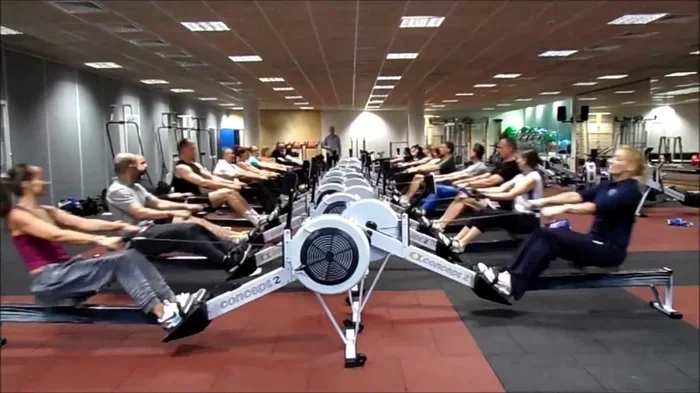
Not all rowing machines are created equal. Air rowers like the Concept2 feel different from magnetic rowers or water rowers. Each type has its own resistance curve and feel.
Air rowers are the most common in gyms and competitions. They offer a realistic on-water rowing feel and respond to how hard you pull. Adjusting resistance on your rowing machine correctly can make your training more effective and your 2000m time more accurate.
How to Improve Your 2000m Rowing Time
Want to get faster? There are specific training methods that target the 2000m distance and help you push past plateaus. Here are the most effective strategies.
Practice Interval Training
Interval workouts are one of the best ways to improve your rowing speed. They train your body to handle high-intensity efforts and recover quickly. This is exactly what the 2000m row demands.
Try this simple interval session:
- Row 500m at a hard pace (about 85 to 90 percent effort).
- Rest for 1 minute at an easy pace.
- Repeat 3 to 4 times.
- Cool down with 5 minutes of easy rowing.
Doing this 2 to 3 times per week builds both speed endurance and mental toughness. Over time, you will notice your split times dropping across the full 2000m distance.
Focus on Your Split Time
A split time is how long it takes you to row 500 meters. For a 2000m row, your split time is the key metric to watch. Instead of staring at the total clock, focus on hitting consistent splits for each 500m segment.
For example, if your goal is to finish 2000m in 8 minutes, you need a split of 2:00 per 500m. Breaking the row into four manageable chunks makes the distance feel less daunting. This strategy works whether you are a beginner or an advanced rower.
Work on Your Stroke Rate
Your stroke rate is the number of strokes you take per minute. A higher stroke rate does not always mean a faster row. Sometimes, longer, more powerful strokes are more efficient.
For 2000m rowing, a stroke rate between 26 and 30 is usually ideal. This gives you enough power without burning out too quickly. Focus on making each stroke count rather than just spinning through reps as fast as possible.
Compare with Other Distances
Benchmarking your 2000m time against other distances gives you a fuller picture of your rowing fitness. For instance, rowing a mile is slightly longer than 2000m (1609m), so your mile time should be a bit slower. Comparing distances helps you understand where your strengths and weaknesses lie.
Similarly, how long you should spend on a rowing machine for general fitness differs from the focused effort of a 2000m test. Understanding these differences helps you train smarter, not just harder.
Common Mistakes to Avoid During Your 2000m Row
Even experienced rowers make mistakes that slow them down. Knowing what to avoid saves you time and frustration.
Starting Too Fast
The most common error is going all out in the first 200 to 300 meters. You feel fresh and strong, so you push hard. But then your pace falls apart in the second half. You fade, your form breaks down, and your final time suffers.
Instead, start at about 90 to 95 percent of your max effort. Save a little energy for the last 500 meters, where you can really dig in and push. A strong finish often makes up for a slightly slower start.
Poor Posture and Body Position
Rounding your back or hunching your shoulders wastes energy and increases injury risk. Keep your back straight and your core engaged throughout the row. Your arms should stay relaxed, and your shoulders should be pulled back slightly.
Good posture also helps you breathe more effectively. When your chest is open, oxygen flows freely to your muscles. This delays fatigue and keeps your rowing performance steady from start to finish.
Ignoring the Recovery Phase
The recovery phase is just as important as the drive. Many people rush through it, which leads to sloppy form and wasted energy. Take your time during recovery. Let the machine do the work as you glide forward smoothly.
A well-paced recovery also helps regulate your heart rate. It gives your body brief moments to reset before the next powerful drive. This rhythm is what separates efficient rowers from those who just grind through the workout.
How the 2000m Row Compares to Other Distances
The 2000m row is a popular benchmark, but how does it stack up against other common rowing distances? Understanding the differences helps you set better goals and train more effectively.
| Distance | Approximate Meters | Typical Beginner Time | Typical Advanced Time |
|---|---|---|---|
| 500m Sprint | 500m | 2:00 to 2:30 | Under 1:30 |
| 1000m | 1000m | 4:30 to 5:30 | Under 3:30 |
| 2000m | 2000m | 9:00 to 12:00 | Under 6:00 |
| 1 Mile | 1609m | 10:00 to 13:00 | Under 7:00 |
| 5000m | 5000m | 20:00 to 28:00 | Under 15:00 |
The 2000m row is often called the “mile” of indoor rowing. It is long enough to test endurance but short enough to be run at high intensity. For a deeper look at how long it takes to row a mile specifically, see how long to row a mile on a rowing machine.
Each distance tests a slightly different energy system. Sprints like 500m rely heavily on anaerobic power. Longer rows like 5000m are almost entirely aerobic. The 2000m sits right in the middle, blending both systems beautifully. This is why it is such a popular test of overall rowing fitness.
Final Thoughts on Rowing 2000m
The 2000m row is one of the best full-body workouts you can do on a rowing machine. It tests your strength, endurance, technique, and mental grit all at once. Whether you finish in 6 minutes or 12 minutes, the real goal is continuous improvement.
Focus on building good habits from day one. Work on your rowing technique, train consistently, and track your split times. Over weeks and months, you will see real progress. Celebrate every improvement, no matter how small.
Remember that everyone starts somewhere. The fact that you are here, learning how to get better, already puts you ahead. Lace up your shoes, hop on the machine, and give it your best effort. Your next 2000m row will be better than the last one.
Frequently Asked Questions
What is a good 2000m row time for a beginner?
A good starting point for beginners is between 9 and 12 minutes. Focus on maintaining consistent split times rather than rushing. As you build rowing endurance, your time will naturally improve.
How often should I practice the 2000m row?
Practicing 2 to 3 times per week is ideal for most people. This gives your body enough recovery time between sessions. Consistent practice builds both cardiovascular fitness and rowing technique. For more guidance, check out how often you should row on a rowing machine.
Does body weight affect 2000m rowing time?
Yes, body weight plays a role because heavier individuals generate more power but also move more mass. However, technique and fitness matter just as much, if not more. A lighter rower with poor form will not beat a heavier rower with excellent technique.
What should my stroke rate be during a 2000m row?
A stroke rate of 26 to 30 strokes per minute works well for most rowers. Going too high without power leads to wasted energy. Focus on strong, deliberate strokes rather than rushing through the motion.
Is the 2000m row a good full-body workout?
Absolutely. The 2000m row engages your legs, core, back, and arms throughout the effort. It delivers a powerful cardio workout while also building muscular endurance. Few indoor exercises offer this combination of full-body engagement and cardiovascular benefit.
How can I make my 2000m row faster?
Improving your rowing technique, adding interval training, and focusing on consistent split times are the most effective strategies. Strength training and cardiovascular conditioning outside of rowing also contribute. For tips on boosting your machine settings, see how to increase resistance on a rowing machine.
=== CONCLUSION ===
The 2000m row is a challenging yet rewarding benchmark that measures your overall rowing fitness. Most beginners finish between 9 and 12 minutes, while intermediate and advanced rowers push the boundaries further. Your time depends on factors like technique, cardiovascular endurance, body weight, and training consistency.
Use the tips in this guide to improve your pacing, avoid common mistakes, and set meaningful goals. Track your progress over time and celebrate every personal best. Whether you row for fitness, competition, or fun, the 2000m row will help you grow stronger and more confident on the machine.