Wondering how long to row a mile on a rowing machine? The answer varies by fitness, technique, and intensity, but most beginners finish in 12‑15 minutes while seasoned rowers can dip under 6 minutes. Use our guide to gauge your pace, improve form, and set achievable milestones for faster, stronger rowing sessions.
Key Takeaways
- Average beginner time: 12‑15 minutes per mile for those new to rowing.
- Experienced rower benchmark: 6‑8 minutes per mile is common for regular athletes.
- Key speed drivers: technique, stroke rate, and power output (watts).
- Training tip: Interval workouts shave minutes off your mile time faster than steady‑state rowing.
- Equipment matters: Drag factor and monitor accuracy influence recorded times.
- Goal setting: Use your first timed mile as a baseline; aim to improve 5‑10% each month.
- Safety first: Warm‑up, proper form, and gradual intensity prevent injury and ensure consistent progress.
📑 Table of Contents
- Introduction: Why the Mile Matters
- 1. The Baseline: Typical Mile Times by Fitness Level
- 2. The Science Behind the Clock: What Affects Your Mile Time?
- 3. How to Measure Your Mile Accurately
- 4. Training Strategies to Shorten Your Mile
- 5. Sample 4‑Week Mile‑Improvement Plan
- 6. Common Mistakes and How to Fix Them
- Conclusion: Your Mile, Your Pace
Introduction: Why the Mile Matters
When you first sit on a rowing machine, the display often asks you to “row 1,000 meters.” Most people translate that to “a mile” because it’s a familiar distance. Knowing how long it takes to row a mile helps you set realistic workout goals, track progress, and compare yourself to others in the rowing community.
Unlike running or cycling, rowing combines cardio, strength, and technique in a single motion. That means your mile time is influenced by more than just heart rate—it reflects how well you pull, how efficiently you recover, and how much power you generate each stroke. In this article we’ll break down the numbers, explore the variables, and give you a step‑by‑step plan to improve your time.
1. The Baseline: Typical Mile Times by Fitness Level
Beginners (0‑3 months)
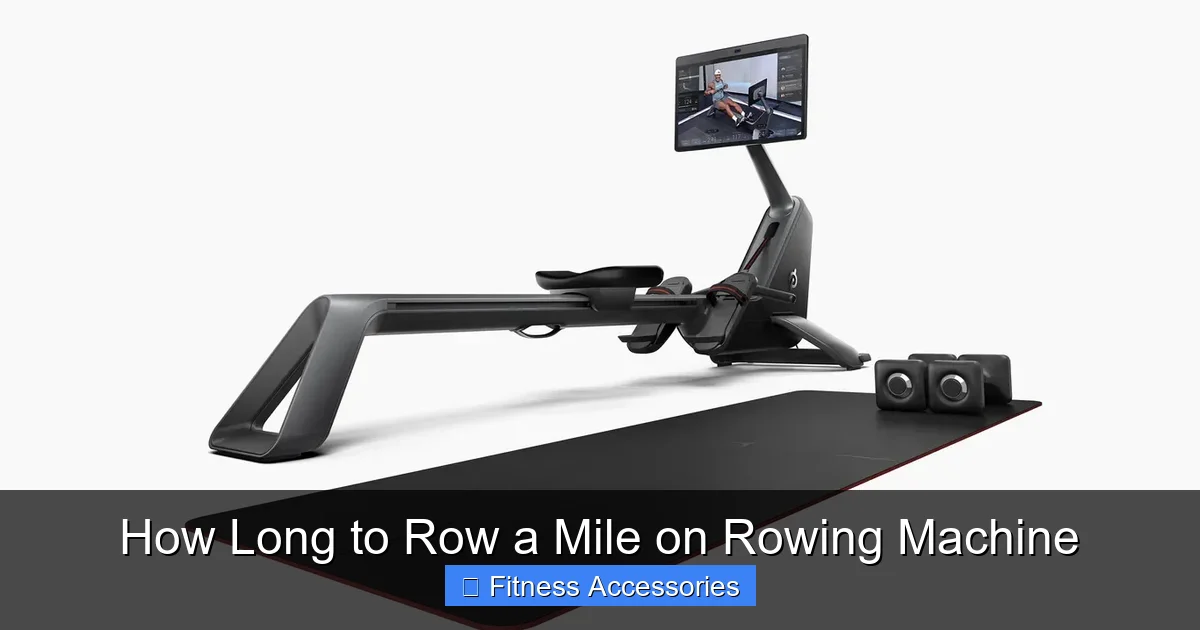
Most people who have never rowed before finish a mile in 12‑15 minutes. Their stroke rate hovers around 20‑22 strokes per minute (spm) and they generate about 80‑100 watts of power. The focus at this stage is learning the catch, drive, finish, and recovery phases.
Visual guide about How Long to Row a Mile on Rowing Machine
Image source: images.axios.com
Intermediate Rowers (3‑12 months)
After a few months of consistent training, the average time drops to 9‑12 minutes. Stroke rate climbs to 24‑26 spm and power output rises to 130‑150 watts. Rowers start adding interval work and pay attention to split times (time per 500 m).
Advanced Athletes (1+ year, regular training)
Seasoned rowers often break the 8‑minute barrier. Competitive indoor rowers target 6‑7 minutes for a mile, maintaining 28‑30 spm and producing 180‑220 watts. Their technique is smooth, and they can sustain high power without a dramatic rise in heart rate.
Elite Rowers
World‑class athletes on a Concept2 can row a mile in under 5 minutes, sometimes as fast as 4:30. These numbers are achieved with stroke rates above 32 spm and power outputs exceeding 260 watts. While most readers won’t need elite benchmarks, they illustrate the upper limits of human performance.
2. The Science Behind the Clock: What Affects Your Mile Time?
Stroke Rate (Spm)
Stroke rate is the number of strokes you take each minute. Higher rates can increase speed, but only if you maintain power per stroke. A common mistake is “spinning” fast with weak pulls, which actually slows you down.
Visual guide about How Long to Row a Mile on Rowing Machine
Image source: topiom.com
Power Output (Watts)
Watts measure how much force you apply. Most rowing machines display average watts for the session. Raising your average by 10‑20 watts can shave 30‑45 seconds off a mile.
Drag Factor
Drag factor (DF) determines how much resistance the flywheel provides. A higher DF feels “heavier” and can improve strength, but may reduce speed for some users. Most gyms set DF between 120‑130; home users can adjust based on comfort.
Technique
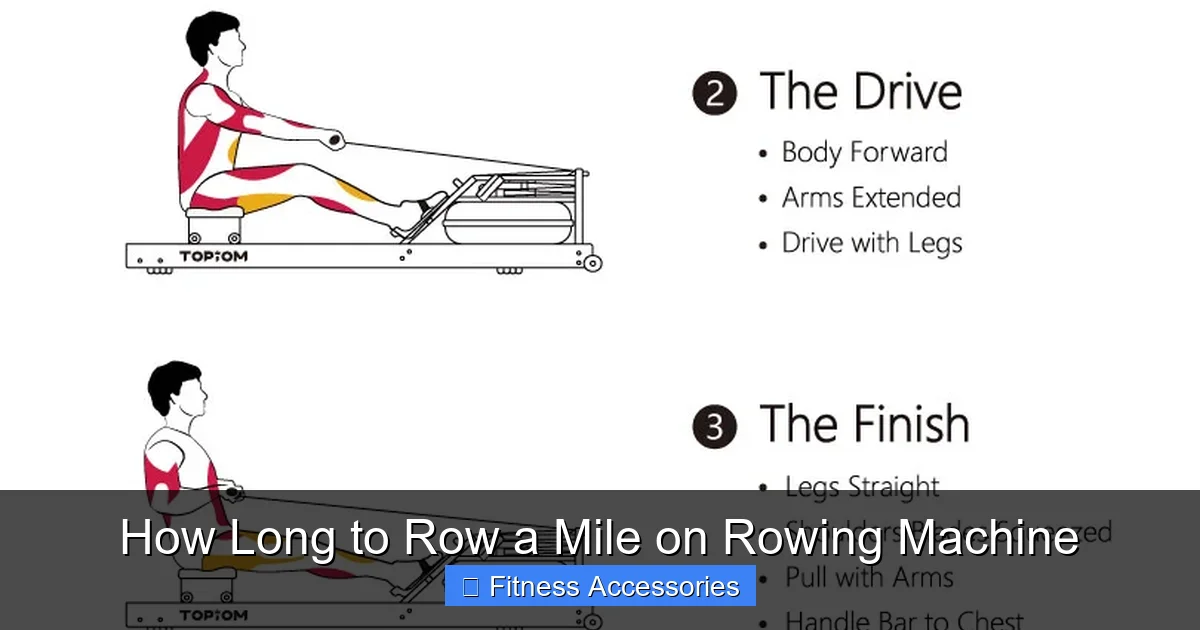
Efficient technique minimizes wasted motion. The four phases—catch, drive, finish, recovery—must flow like a smooth loop. A common cue: “Push with the legs first, then lean back, then pull the handle.”
Fitness Components
- Cardiovascular endurance: Determines how long you can sustain a high stroke rate.
- Muscular strength: Especially in the legs, core, and back, influences power per stroke.
- Flexibility: Allows a full range of motion, preventing a short, choppy stroke.
External Factors
Temperature, humidity, and even the time of day can affect heart rate and perceived effort. A cooler gym often yields faster times because the body doesn’t have to work as hard to cool down.
3. How to Measure Your Mile Accurately
Using the Machine’s Display
Most modern rowing machines (Concept2, WaterRower, NordicTrack) let you set a distance of 1,609 meters, which equals one mile. Select “Mile” on the menu, start the row, and the clock will show your elapsed time.
Manual Calculation
If your machine only displays meters, row 1,609 meters and note the total time. You can also use split times: add the times for three 500‑meter splits and a final 109‑meter segment.
Third‑Party Apps
Apps like “RowPro” or “ErgData” connect via Bluetooth and record detailed metrics—stroke rate, watts, heart rate, and even calorie burn. They provide a more comprehensive view of your performance.
Consistency Tips
- Warm‑up for at least 5 minutes at a light pace.
- Use the same machine and drag setting for each test.
- Record the time at the exact moment the distance hits 1,609 m.
- Repeat the test weekly to track improvement.
4. Training Strategies to Shorten Your Mile
1. Interval Training (HIIT)
Alternate 1‑minute hard rows (80‑90% max effort) with 1‑minute easy recovery. Perform 6‑8 cycles. This boosts both aerobic and anaerobic capacity, leading to faster mile times.
2. Power‑Focused Sessions
Row 4×500 m at a target power of 180‑200 watts, resting 2 minutes between sets. Concentrate on a strong leg drive and a quick, clean finish.
3. Technique Drills
Practice “pause drills”: hold the catch for 2 seconds, then row normally. This reinforces a solid start and improves overall efficiency.
4. Endurance Rows
Do a steady 20‑minute row at a moderate pace (65‑70% max HR). Building a strong aerobic base helps you maintain a higher stroke rate for the entire mile.
5. Strength Training Off the Erg
Incorporate squats, deadlifts, and core work 2‑3 times per week. Stronger legs and a stable core translate directly to higher watts per stroke.
5. Sample 4‑Week Mile‑Improvement Plan
Week 1: Baseline & Technique
- Day 1: Warm‑up 5 min, row 1 mile at a comfortable pace, record time.
- Day 2: 4×500 m intervals, focus on power, 2‑min rest.
- Day 3: Rest or light cross‑training.
- Day 4: 20‑min steady row, maintain a consistent split.
- Day 5: Technique drill – 3×200 m with a 2‑second pause at the catch.
Week 2: Introduce HIIT
- Day 1: 6×1‑min hard/1‑min easy intervals.
- Day 2: 5×500 m power rows, aim to increase watts by 10%.
- Day 3: Rest.
- Day 4: 25‑min steady row, try to lower split by 2‑3 seconds.
- Day 5: Re‑test mile, compare to Week 1.
Week 3: Build Volume
- Day 1: 8×500 m intervals, 90‑second rest.
- Day 2: 30‑min endurance row, focus on smooth recovery.
- Day 3: Strength session (squats, deadlifts).
- Day 4: Technique drill – “double‑pull” (add an extra pull at the finish).
- Day 5: Mile test, aim for a 5‑10% reduction.
Week 4: Peak & Taper
- Day 1: 4×1‑min max effort, full recovery.
- Day 2: Light 15‑min row, keep stroke rate steady.
- Day 3: Rest.
- Day 4: Final mile test – you should see noticeable improvement.
- Day 5: Celebrate and set a new goal!
6. Common Mistakes and How to Fix Them
Over‑Gripping the Handle
Holding the handle too tightly wastes forearm energy and reduces power. Keep your grip relaxed—think “light handshake.”
Starting With the Arms
Many beginners pull with the arms first, which shortens the drive. Remember the sequence: legs → hips → arms.
Skipping the Recovery
A rushed recovery leaves you out of sync and can cause a “choppy” rhythm. Aim for a smooth, slightly longer recovery than the drive.
Ignoring the Split Time
Focusing only on total time can hide pacing issues. Watch the 500‑m split; aim for consistent or slightly negative splits (getting faster each segment).
Neglecting Rest
Rowing is high‑impact on the lower back. Without adequate rest, form deteriorates, increasing injury risk and slowing progress.
Conclusion: Your Mile, Your Pace
How long to row a mile on a rowing machine? The answer depends on where you start, how you train, and how well you master the technique. By understanding the key variables—stroke rate, power, drag, and form—you can set a realistic baseline and systematically shave minutes off your time.
Use the 4‑week plan, track your splits, and stay consistent with strength work. Within a month many beginners drop from 14 minutes to under 11, while intermediate rowers can break the 8‑minute barrier. Remember, progress is personal; celebrate each improvement, no matter how small.
Now grab your water bottle, set the machine to a mile, and start rowing toward a faster, stronger you!
Frequently Asked Questions
How many strokes per minute should I aim for to row a mile quickly?
For most intermediate rowers, 24‑28 spm is a sweet spot. Elite athletes may push 30‑32 spm, but only if they can keep power per stroke high.
Can I use a rowing machine to train for outdoor rowing races?
Yes. The ergometer mimics the same muscle groups and cardio demands. Focus on technique and power, and you’ll translate well to the water.
Do I need to adjust the drag factor for a faster mile?
Not necessarily. A moderate drag (120‑130 on a Concept2) works for most people. Changing it can help you develop strength, but consistency is more important for timing.
How often should I test my mile time?
Test once a week or every two weeks. Too frequent testing can lead to fatigue and skew results.
Is heart rate a good indicator of how fast I’ll row a mile?
Heart rate reflects effort, but mileage is more directly tied to power output and technique. Use HR as a guide, but prioritize split times and watts.
What should I eat before a mile row?
A light snack with carbs and a little protein—like a banana with peanut butter—30‑60 minutes before rowing gives you energy without feeling heavy.