Is the Hip Thrust Machine Better Than Barbell
The hip thrust machine offers a guided path for glute development with less setup, while the barbell provides freedom and heavier progressive overload. Both tools deliver excellent results for lower body strength and muscle building, but the best choice depends on your fitness goals and experience level.
The hip thrust machine has taken the fitness world by storm, and for good reason. It targets the glutes like few other exercises can. But many lifters still wonder whether a barbell hip thrust is the superior choice. The truth is, both options have real merits depending on your fitness goals and training experience.
In this guide, we compare the hip thrust machine against the traditional barbell hip thrust side by side. You will learn about muscle activation, setup differences, and which tool helps you build more lower body strength. We also share practical tips to get the most out of whichever option you choose.
Whether you are a beginner just starting your resistance training journey or an experienced lifter looking to switch things up, this article has you covered. Let us break down everything you need to know about hip thrust machine vs barbell training.
Key Takeaways
- Hip thrust machines are easier to set up and safer for beginners learning glute activation.
- Barbell hip thrusts allow heavier weights and more compound movement benefits.
- Muscle activation can be similar between both options when form is proper.
- Machine convenience saves time in busy gym sessions.
- Progressive overload is easier to track with a barbell over time.
- Your fitness goals and experience should guide which option you choose.
- Both tools work the posterior chain effectively for lower body strength.
📑 Table of Contents
What Is a Hip Thrust Machine?
How It Works
A hip thrust machine is a piece of gym equipment designed specifically for the hip thrust movement. It features a padded platform that rests at hip height and a support structure that holds the barbell or pad in place. You sit with your back against the pad and push through your feet to extend your hips upward.
The machine guides your movement along a fixed path. This means your exercise form stays consistent throughout each rep. There is less need to balance or stabilize, which makes it a great option for those new to glute training. The machine also allows you to focus entirely on squeezing the glutes at the top of the movement, which enhances muscle activation.
Most hip thrust machines use a pin-loaded system where you simply slide a pin to your desired weight. This makes loading and unloading quick and easy. Some models also feature adjustable back pads and foot platforms to accommodate different body sizes and training styles. The overall design removes the guesswork and lets you jump straight into your working sets.
Who It Is Best For
The hip thrust machine is ideal for beginners who want to learn proper glute activation without worrying about balance. It is also great for people who train alone and want a machine convenience factor. If you have limited home gym space, some models are compact and adjustable, making them a practical choice for smaller areas.
Experienced lifters can also benefit from the machine. It serves as a useful accessory for muscle building and high-rep workout routine sessions. The machine can help you isolate the glutes more effectively when you want to finish a session with targeted work. Many advanced athletes use the machine for warm-up sets or pump work after their main barbell hip thrust exercises.
What Is a Barbell Hip Thrust?
Setting Up the Barbell
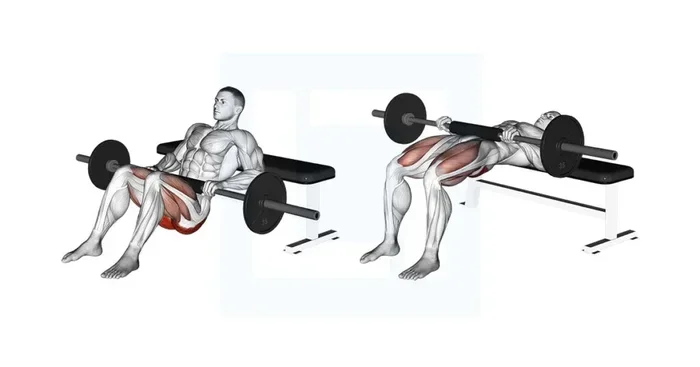
The barbell hip thrust is a free-weight exercise that requires a barbell, a bench, and a pad. You sit on the ground with your upper back resting on the bench and the barbell positioned across your hips. You then push through your feet to lift the barbell weight until your hips are fully extended.
Setting up a barbell hip thrust takes more time and effort. You need to load the plates, position the bench correctly, and make sure the pad is comfortable on the barbell. Setting up for a barbell hip thrust properly is essential for safety and effectiveness. Once set up, you can adjust the barbell weight to match your strength level with precision.
The setup process also means you need enough space in your gym or home gym to accommodate the bench and barbell. For those training in crowded gyms, finding an open spot with a bench can sometimes be a challenge. But once everything is in place, the barbell hip thrust becomes a powerful and efficient lower body strength exercise.
Why Lifters Choose Barbells
Many lifters prefer the barbell because it allows for progressive overload without equipment limits. You can add small plates to increase weight gradually. The barbell also engages more stabilizing muscles because your body is not locked into a fixed path. This means your core, hamstrings, and stabilizers all work harder during each rep.
The barbell hip thrust is a powerful compound movement that builds real-world lower body strength. It trains the posterior chain, including the glutes, hamstrings, and lower back. For athletes and serious lifters, the barbell version often feels more natural and functional. It translates directly to sports performance and everyday movements like jumping, running, and climbing.
Learning how to do a hip thrust with a barbell correctly is key to getting the most out of this exercise. Proper exercise form ensures you target the right muscles and avoid injury. It is worth spending time mastering the movement pattern before adding heavy weight.
If you are training solo, getting the barbell on your hips for hip thrust can be a bit tricky with heavier loads. Using safety pins or a squat rack can make this process much safer and easier. Always prioritize safety when loading and unloading the barbell, especially when working near your maximum capacity.
Hip Thrust Machine vs Barbell: Head-to-Head Comparison
Muscle Activation
When it comes to glute activation, both the hip thrust machine and the barbell deliver strong results. Studies show that hip thrusts are among the best exercises for targeting the gluteus maximus. The machine version can sometimes isolate the glutes slightly better because there is less demand on the hamstrings and lower back. The fixed path means the glutes do the majority of the work.
However, the barbell version recruits more posterior chain muscles as stabilizers. This means you get a broader muscle building effect across the hips, glutes, and thighs. The choice between the two depends on whether you want isolated glute work or a more comprehensive lower body strength exercise. For glute development specifically, both are highly effective when performed with proper technique.
Convenience and Setup
The hip thrust machine wins clearly when it comes to convenience. You step onto the machine, adjust the pad, select your weight, and start training. There is no loading plates or positioning a bench. This makes it perfect for busy gym-goers who want to maximize their workout routine efficiency. You can go from resting to working in seconds.
With a barbell, you need a bench, a pad, and enough space to set up safely. Loading and unloading plates adds time to each session. For those training at home, a home gym setup with a barbell takes up more room and requires more planning. The machine eliminates these friction points and makes your training sessions smoother.
Progressive Overload
Progressive overload is the principle of gradually increasing the stress on your muscles to promote muscle growth. Both tools support this principle, but in different ways.
With a barbell, you can add tiny increments of weight (2.5 to 5 pounds) to keep challenging your muscles. This fine-tuned approach is excellent for advanced lifters who need precise loading. The barbell also allows you to handle heavier absolute weights because your body is not restricted by a machine’s range of motion. This makes the barbell the clear winner for building maximum lower body strength.
The hip thrust machine typically uses a pin-loaded or plate-loaded system that may have larger weight jumps. However, many modern machines offer micro-loading options as well. The machine’s guided path also means you can push closer to failure safely, since the risk of losing balance is minimal. Both tools support long-term strength training progress when used consistently.
| Feature | Hip Thrust Machine | Barbell Hip Thrust |
|---|---|---|
| Setup Time | Quick, under 1 minute | 2-3 minutes with bench and plates |
| Muscle Isolation | High, guided path | Moderate, requires stabilization |
| Weight Progression | Larger jumps typical | Small increments possible |
| Stabilizer Engagement | Low | High |
| Best For | Beginners, solo training | Advanced lifters, athletes |
| Space Required | Machine footprint | Bench + barbell + space |
| Injury Risk | Lower, fixed path | Higher, requires proper form |
| Cost | Higher upfront cost | Lower, uses existing equipment |
Pros and Cons of Each Option
Hip Thrust Machine Pros and Cons
The hip thrust machine offers several clear advantages. It is easy to use, safe for beginners, and requires minimal setup. The guided movement path reduces the risk of injury and helps you maintain proper exercise form throughout each set. The machine also allows you to focus purely on the mind-muscle connection with the glutes.
However, the machine also has drawbacks. It can limit your progressive overload options because weight increments may be too large. Some machines are expensive and take up significant gym equipment space. Additionally, the fixed path may not suit every body type perfectly. If you have shorter or longer legs, the machine’s foot placement may feel awkward. It is always a good idea to test the machine before committing to a purchase for your home gym.
Barbell Hip Thrust Pros and Cons
The barbell hip thrust offers unmatched flexibility in weight selection. You can start light and increase in small steps as you get stronger. The barbell also engages stabilizing muscles, which improves overall lower body strength and functional fitness. The free-weight nature of the exercise means your body adapts to real-world movement patterns.
On the downside, the barbell version requires more setup time and a proper bench. Getting the barbell on your hips can be tricky for solo lifters, especially with heavier weights. There is also a higher learning curve, and poor exercise form can lead to discomfort or injury. You need to be mindful of your positioning and make sure the bench is stable before loading up the barbell.
Which One Builds More Muscle?
The Science Behind Glute Growth
Research on glute development shows that hip thrusts are one of the most effective exercises for building the gluteus maximus. Both the machine and barbell versions activate the glutes at high levels. What matters most for muscle growth is not the equipment but the effort, volume, and consistency of your training.
Muscle growth happens when you challenge your muscles with enough tension and volume over time. Whether you use a hip thrust machine or a barbell, you can achieve this. The key is to train with purpose, track your progress, and gradually increase the demands on your muscles. Studies consistently show that the hip thrust is one of the top exercises for glute activation, regardless of the equipment used.
Your resistance training program should include the right volume for your goals. For muscle building, aim for 3 to 4 sets of 8 to 12 reps. For strength training, use heavier weights for 4 to 6 reps. The machine and barbell both work well within these ranges, so choose based on your preference and available equipment.
Real-World Results
In practice, many lifters find that combining both tools works best. They use the barbell for their main working sets to build strength training foundation. Then they finish with the machine for high-rep glute activation and a deep mind-muscle connection. This approach leverages the strengths of both options and creates a well-rounded lower body strength program.
The barbell provides heavy resistance and compound benefits, while the machine allows for focused, high-rep work without fatigue from setup. Your workout routine can include both if your gym has the equipment available. Many powerlifters and bodybuilders swear by this combination approach for maximizing glute development and overall muscle building.
How to Choose the Right Option for You
Consider Your Fitness Level
If you are new to resistance training or hip thrusts specifically, start with the hip thrust machine. It teaches you the movement pattern safely and helps you develop the mind-muscle connection needed for effective glute training. Once you feel confident and have built a base of strength, you can transition to the barbell or use both tools in your routine.
Experienced lifters who are comfortable with hip thrusts may prefer the barbell for its flexibility and progressive overload potential. However, even advanced lifters benefit from occasional machine work for variety and targeted muscle building. The machine can serve as a valuable accessory exercise that complements your barbell training and helps prevent plateaus in your workout routine.
Think About Your Goals
Your fitness goals should drive your choice. If your primary goal is glute development and you want a simple, efficient exercise, the machine works well. If you are training for athletic performance or want to build maximal lower body strength, the barbell is the better option. The barbell also builds more functional strength that carries over to sports and daily activities.
For those with a home gym, consider your available space and budget. A barbell and bench take up less room than a dedicated hip thrust machine. But if you have the space and budget, owning both gives you the best of both worlds. You can alternate between them based on your training phase and energy levels.
Remember, the best exercise is the one you will do consistently. Choose the option that fits your lifestyle, equipment access, and personal preferences. Consistency in your workout routine matters more than which specific tool you use. Pick the option that keeps you motivated and coming back to the gym.
Common Mistakes to Avoid
Regardless of which option you choose, there are common mistakes that can limit your results or lead to injury. Avoid these pitfalls to get the most out of your hip thrust machine or barbell sessions.
- Rounding your lower back at the top of the movement. Keep a neutral spine throughout every rep to protect your spine and maximize glute activation.
- Using too much weight too soon. Master the movement pattern first with lighter loads before increasing the barbell weight or machine load.
- Skipping the squeeze at the top. Hold the contraction for one to two seconds to maximize glute activation and muscle growth.
- Letting your feet move during the exercise. Keep them planted and drive through your heels for maximum lower body strength development.
- Neglecting warm-up sets. Start with lighter weights to prepare your muscles and joints for the heavier working sets ahead.
- Rushing your reps. Control the tempo on both the lifting and lowering phases to maintain tension on the glutes throughout the full range of motion.
Expert Insights
Many certified strength coaches recommend starting with the hip thrust machine to learn the movement. Once the pattern is locked in, transitioning to the barbell allows for heavier loading and greater strength gains. The machine is not a replacement for free weights, but it is a valuable training tool that belongs in any well-rounded resistance training program.
Coaches also emphasize that glute development depends on more than just one exercise. Your workout routine should include a variety of lower body strength exercises like squats, lunges, and deadlifts alongside hip thrusts. This balanced approach ensures all muscles in the posterior chain develop evenly and reduces the risk of muscle imbalances that can lead to injury.
Top trainers also suggest paying attention to your exercise form cues. Think about pushing the floor away with your feet rather than just lifting the weight. This mental cue helps engage the glutes more effectively and reduces reliance on the hamstrings and lower back. Whether you are using a machine or a barbell, the quality of your muscle building efforts depends on how intentionally you perform each rep.
Final Thoughts
The debate between the hip thrust machine and the barbell does not have a single winner. Both tools are excellent for building glute development, lower body strength, and overall muscle building. The best choice depends on your experience level, fitness goals, and available equipment.
If you want simplicity and safety, the hip thrust machine is a fantastic option. If you want maximum flexibility and heavy loading, the barbell hip thrust wins. Better yet, use both in your workout routine to get the benefits of each. The most important thing is to train consistently, use proper exercise form, and progressively challenge your muscles over time.
Now that you understand the differences, you can make a confident choice. Step into the gym, try both options, and see which one feels best for your body and your strength training goals. Your glutes will thank you. Pick the tool that fits your life, commit to your training, and enjoy the results of stronger, more developed glutes.
Frequently Asked Questions
Is the hip thrust machine better for beginners than a barbell?
Yes, the hip thrust machine is generally better for beginners. It provides a guided movement path that reduces the risk of injury and helps you learn proper glute activation without worrying about balance or setup. Once you are comfortable with the movement, you can transition to the barbell with confidence.
Can you build the same amount of muscle with a hip thrust machine as with a barbell?
Yes, you can build similar amounts of muscle with either tool. The key factors for muscle growth are training volume, effort, and consistency. Both the hip thrust machine and barbell effectively target the glutes. The best choice is the one you can train with regularly and progressively overload over time.
How much weight should I start with on the hip thrust machine?
Start with a weight that allows you to complete 10 to 12 reps with proper exercise form. You should feel a strong burn in your glutes by the last few reps. Avoid choosing a weight that causes your lower back to round or your form to break down. You can increase the load gradually as you get stronger and more comfortable with the movement.
Is the barbell hip thrust better for athletic performance?
The barbell hip thrust is often preferred for athletic performance because it builds lower body strength through a full range of motion and engages stabilizing muscles. The free-weight nature of the barbell translates well to sports and functional movements. However, combining both tools in your training can give you the best results for glute development and overall athleticism.
Can I do hip thrusts at home without a machine?
Absolutely. You can perform a barbell hip thrust at home with just a barbell, a bench, and a pad. This setup takes up minimal space and is very affordable. If you prefer a machine, there are compact hip thrust machines designed for home use that fold up for easy storage and still deliver excellent lower body strength training.
How often should I include hip thrusts in my workout routine?
Most people benefit from training hip thrusts two to three times per week. This frequency allows for enough muscle building stimulus while giving your muscles time to recover between sessions. You can alternate between the machine and barbell on different days to keep your workout routine fresh, challenging, and well-rounded for optimal glute development.
=== CONCLUSION ===
The hip thrust machine and barbell each bring unique strengths to your lower body strength training. The machine offers ease of use, safety, and quick setup, making it perfect for beginners and busy gym-goers. The barbell provides flexibility, precise progressive overload, and greater stabilizer engagement for advanced lifters.
Your fitness goals should guide your choice. If you want focused glute development with minimal fuss, the machine is a great pick. If you want to build raw strength training power and have the setup available, the barbell is hard to beat. And if you have access to both, combining them in your workout routine gives you the best of both worlds.
Start where you are, use proper exercise form, and stay consistent. The right tool is the one you will actually use. Pick your preferred option, commit to your training, and enjoy the results of stronger, more developed glutes. Your lower body strength and muscle building efforts will pay off with consistent work and smart training choices.