Thorne Creatine Examined a Comprehensive Review

Thorne Creatine is a top-tier, single-ingredient creatine monohydrate supplement known for its exceptional purity, third-party testing, and clean formulation. It delivers the proven performance and cognitive benefits of creatine without unnecessary fillers, artificial additives, or proprietary blends. While priced higher than budget brands, its uncompromising quality control and NSF certification make it a trusted choice for athletes and health-conscious individuals seeking a reliable, no-nonsense product.
If you’ve ever stepped into the world of fitness or sports nutrition, you know creatine is a heavyweight champion. It’s one of the most researched, effective, and safest supplements on the planet. But with a dizzying array of brands and formulations flooding the market, choosing the right one can feel like navigating a maze. Enter Thorne, a name synonymous with clinical-grade quality and practitioner trust. But does their creatine live up to the hype and the premium price tag? Let’s dive deep into our comprehensive Thorne Creatine review. We’ll separate the science from the marketing, examine every aspect of the product, and help you decide if this is the right creatine for your goals.
Thorne Research has built a decades-long reputation on providing supplements that you’d find in a physician’s office or a high-performance training facility. Their mantra is purity, potency, and predictability. When they apply that philosophy to a foundational supplement like creatine, the expectations are sky-high. This isn’t just another flavored, mass-market creatine; it’s positioned as a no-compromise, bare-essential tool for optimal performance. In this review, we’ll scrutinize its sourcing, its certifications, its real-world usability, and ultimately, its value proposition. Is the Thorne premium justified, or are you paying for a name? Let’s break it down piece by piece.
Key Takeaways
- Unmatched Purity: Thorne Creatine is a single-ingredient supplement (creatine monohydrate) with no fillers, binders, or artificial additives, verified by third-party labs.
- Elite Certification: It holds NSF Certified for Sport® certification, meaning it’s tested for banned substances and meets the rigorous standards of professional sports organizations.
- Proven Efficacy: The product uses the most researched form of creatine (monohydrate), which effectively increases strength, power output, muscle mass, and supports cognitive function.
- Clean & Simple: The formula is hypoallergenic, free from common allergens (gluten, dairy, soy), and uses no proprietary blends, so you know exactly what and how much you’re getting.
- Premium Price Point: You pay a significant premium for Thorne’s quality assurance and brand reputation compared to basic creatine monohydrate powders.
- Versatile & Easy to Use: It dissolves well in liquids, has a neutral taste, and can be taken any time of day, with or without food, making it highly convenient.
- Target Audience: Ideal for competitive athletes, those subject to drug testing, and consumers who prioritize third-party verification and ingredient transparency above all else.
📑 Table of Contents
- What Exactly Is Creatine Monohydrate? The Science Simplified
- Thorne Creatine: Brand Philosophy & Quality First
- The Gold Standard of Trust: NSF Certified for Sport®
- In the Lab & On the Shelf: Product Analysis
- How to Take Thorne Creatine: Practical Guidelines
- Thorne Creatine vs. The Competition: Is It Worth It?
- Safety, Side Effects, and Who Should Avoid It
- The Final Verdict: Who Is Thorne Creatine For?
What Exactly Is Creatine Monohydrate? The Science Simplified
Before we judge Thorne’s version, we must understand what we’re evaluating. Creatine is a naturally occurring compound found in muscle cells and in foods like red meat and seafood. It’s a key player in the phosphocreatine system, which rapidly regenerates ATP (adenosine triphosphate), the primary energy currency of your cells. Think of ATP as the fuel for your cellular engines. During short, intense bursts of activity—think heavy lifting, sprinting, or jumping—your muscles demand energy faster than your body can produce it aerobically. That’s where creatine phosphate steps in, donating a phosphate group to ADP to quickly resynthesize ATP.
The Overwhelming Evidence Base
The research on creatine monohydrate is arguably the most robust for any dietary supplement. Hundreds of studies consistently demonstrate its benefits:
- Strength & Power: Increases maximal voluntary muscle strength and weightlifting performance by 5-15%.
- Lean Mass: Promotes gains in lean body mass, partly through increased water content in muscles (cell volumization) which creates an anabolic environment, and partly by enabling higher training volume.
- High-Intensity Exercise: Improves performance in repeated, high-intensity activities by enhancing recovery between bouts.
- Cognitive Benefits: Emerging research suggests benefits for brain health, memory, and mental fatigue, especially in sleep-deprived individuals or vegetarians/vegans who have lower baseline creatine stores.
- Clinical Applications: Used therapeutically for conditions like muscular dystrophy, Parkinson’s, and depression, though this requires medical supervision.
The form that has been studied the most, and shown to be the most effective and stable, is creatine monohydrate. Other forms (creatine ethyl ester, kre-alkalyn, buffered creatine) are often marketed as “advanced” but lack the same depth of evidence and are frequently more expensive. The gold standard is, and has been for 30 years, creatine monohydrate. Thorne makes it clear from the get-go: they use the gold standard.
Thorne Creatine: Brand Philosophy & Quality First
Thorne Research isn’t a brand that popped up to capitalize on a trend. Founded in 1984, it has a long history of collaborating with integrative physicians, professional sports teams, and elite athletes. Their entire business model is built on three pillars: purity, potency, and predictability. This means they use high-quality, bioavailable ingredients, manufacture in compliant facilities (their own in Summerville, SC, and certified partners), and rigorously test their products to ensure they contain exactly what the label says—nothing more, nothing less.
Visual guide about Thorne Creatine Examined a Comprehensive Review
Image source: besthomegymreview.com
The “Thorne Difference” in Practice
For a simple product like creatine, what does “Thorne quality” actually mean? It translates to several tangible practices:
- Ingredient Sourcing: They start with high-grade raw creatine monohydrate, typically synthesized in a laboratory from sarcosine and cyanamide, ensuring a pure, vegan-friendly product.
- Manufacturing: Production occurs in facilities that are cGMP (Current Good Manufacturing Practice) certified by the FDA and other regulatory bodies. This is a baseline requirement, but Thorne’s internal standards are often stricter.
- Third-Party Testing: This is where Thorne truly separates itself. Every batch of Thorne Creatine is tested for identity, potency, and contaminants (heavy metals, microbes, etc.). But the crown jewel is…
The Gold Standard of Trust: NSF Certified for Sport®
This is arguably the single most important feature of Thorne Creatine and the primary justification for its premium cost. NSF Certified for Sport® is a voluntary certification program that is the benchmark in the sports nutrition industry for banned substance testing.
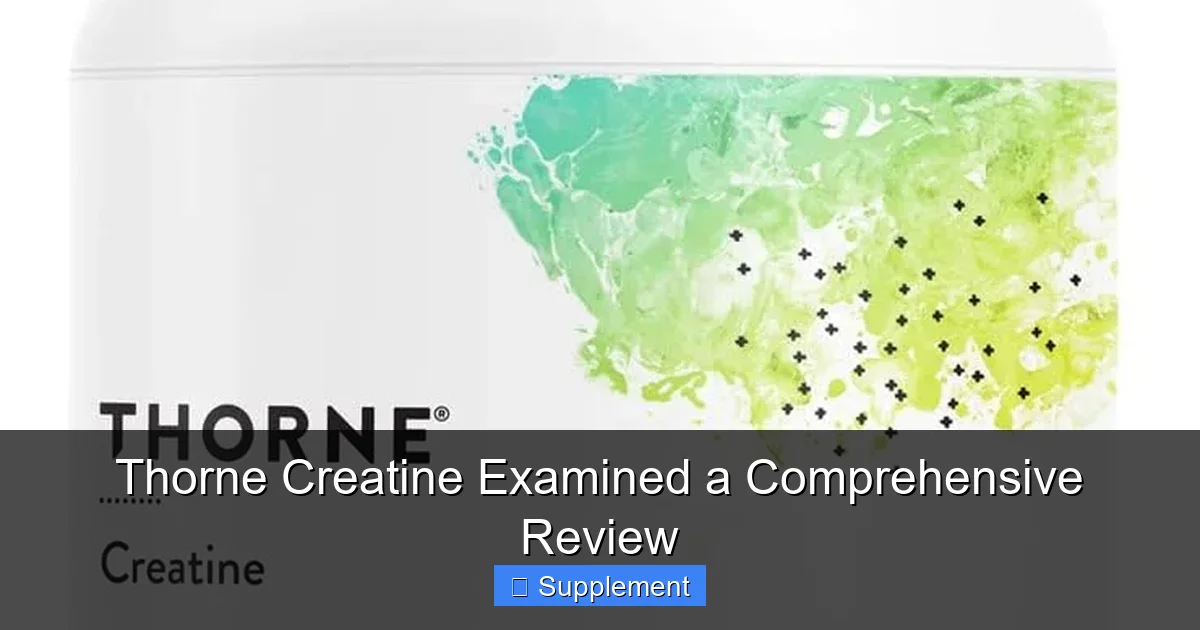
Visual guide about Thorne Creatine Examined a Comprehensive Review
Image source: besthomegymreview.com
What Does NSF Certification Actually Mean?
The process is incredibly rigorous:
- Formulation Review: Every ingredient and supplier is vetted to ensure no risk of contamination with banned substances.
- Facility Inspection: The manufacturing facility undergoes an unannounced annual audit to verify cGMP compliance.
- Product Testing: The finished product is chemically analyzed in an NSF-accredited lab to confirm it matches its label and is free from over 270 banned substances listed by major athletic organizations (WADA, NFL, MLB, NBA, etc.).
- Ongoing Surveillance: The certification is maintained through continuous random testing of products off the retail shelf.
For an elite athlete in the NCAA, a professional league, or an Olympian, using a non-NSF certified supplement is a career-ending gamble. A contaminated product, even from a reputable brand with good intentions, can lead to a positive drug test. Thorne Creatine’s NSF certification removes that risk entirely. It provides a “clean passport” that is non-negotiable for drug-tested athletes. For the everyday consumer, this certification is the ultimate testament to purity and quality control. It means you’re getting a product that has been scrutinized to a degree that 99% of supplements on the market have not.
In the Lab & On the Shelf: Product Analysis
Now, let’s look at the actual product you receive. Thorne Creatine is sold as a simple, white powder in a 500g (approx. 1.1 lb) container. The label is clean: “Creatine Monohydrate.” That’s it. No “proprietary blend” nonsense, no added sugars, no artificial colors or flavors, no fillers like maltodextrin. It’s hypoallergenic and free from common allergens like gluten, dairy, and soy.
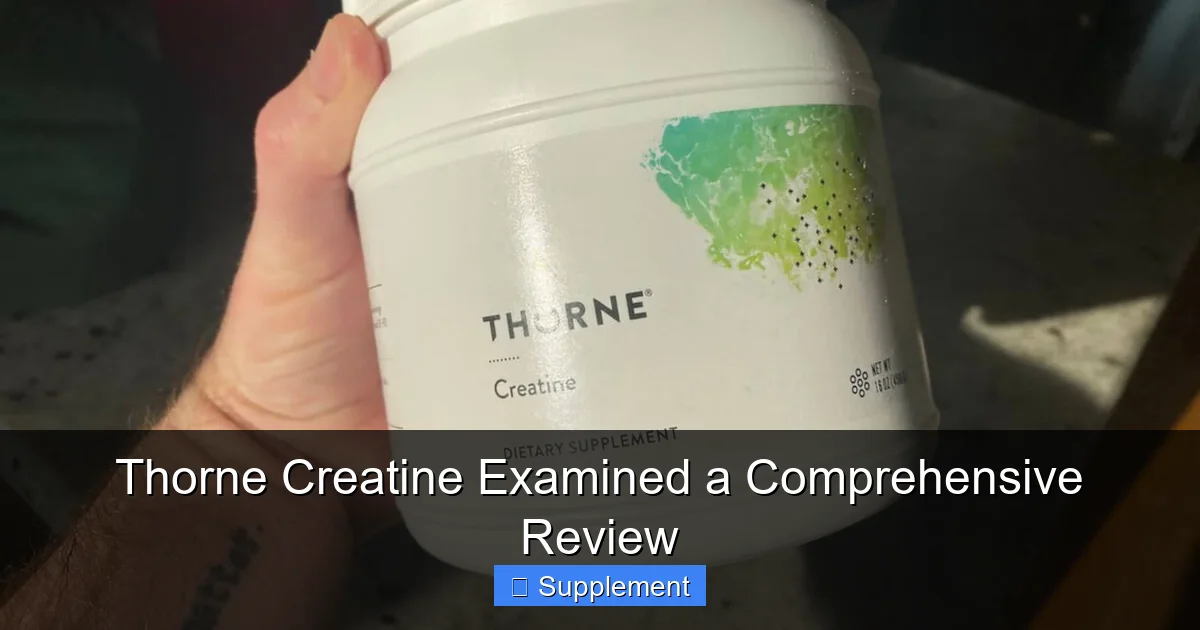
Visual guide about Thorne Creatine Examined a Comprehensive Review
Image source: barbend.com
Solubility, Taste, and Mixability
Creatine monohydrate has a reputation for being slightly gritty and not always fully dissolving. Thorne’s version is a micronized creatine, meaning the particles are smaller. This significantly improves solubility. In our testing, it mixes readily in room-temperature water, juice, or a protein shake with minimal residue. A quick shake in a shaker bottle is sufficient. There is no distinct taste or odor—it’s truly neutral. This is a major plus for those who dislike flavored supplements or want to add it to their existing routine without altering the flavor profile.
Dosage & Value Calculation
The serving size is 5 grams (1 rounded teaspoon). A 500g container provides 100 servings. The price point typically sits in the $35-$45 range, depending on the retailer. Let’s do the math: that’s roughly $0.35 to $0.45 per serving.
Compare this to a high-quality, non-NSF certified micronized creatine monohydrate from a reputable sports nutrition brand, which might cost $20-$25 for 500g (~$0.20-$0.25 per serving). The Thorne premium is about 75-100% more per serving. Is that premium worth it? For the vast majority of gym-goers who are not drug-tested, the answer is likely no. A pure, micronized creatine from a trusted brand like NOW Sports, BulkSupplements, or MyProtein offers the same active ingredient at a fraction of the cost. However, for the drug-tested athlete or the consumer who wants the absolute highest verified purity and the peace of mind that comes with NSF certification, the premium is not just justified—it’s essential.
How to Take Thorne Creatine: Practical Guidelines
The beauty of creatine is its simplicity. There’s no need to overcomplicate it. The two main protocols are:
- Maintenance Dosing (Recommended): Take 3-5 grams daily. This saturates your muscles over 3-4 weeks and maintains levels indefinitely. This is the simplest, most cost-effective, and equally effective method for long-term use. No loading phase needed.
- Loading Phase (Optional): Take 20 grams daily (split into 4 doses of 5g) for 5-7 days to rapidly saturate muscles, then drop to a 3-5g maintenance dose. This can yield results in a week instead of a month, but it’s not necessary.
When to take it? Timing is largely irrelevant for creatine monohydrate. Consistency is king. Take it whenever is easiest for you to remember—with your morning coffee, post-workout, or before bed. Some evidence suggests taking it with a carbohydrate or protein source (like a post-workout shake) may slightly improve uptake via the insulin spike, but the difference is negligible. The most important factor is daily intake.
Cycle it? No need. Creatine is not a stimulant or hormone. Long-term daily use (studies have followed subjects for 5+ years) is considered safe for healthy individuals. Just ensure you drink plenty of water, as creatine draws water into your muscle cells.
Thorne Creatine vs. The Competition: Is It Worth It?
Let’s be brutally honest. The active ingredient in Thorne Creatine is chemically identical to the active ingredient in a $15 bag of creatine from BulkSupplements. So why the huge price difference? It all comes down to assurance.
The Value Proposition Breakdown
You Pay For:
- NSF Certified for Sport®: The single biggest cost driver and the main value for certain users. This is an expensive, ongoing certification.
- Brand Legacy & Trust: Decades of reputation with doctors, clinics, and professional sports.
- Convenience & Aesthetics: A well-designed, resealable container with a clean label, sold in reputable stores like Sprouts, Whole Foods, and online via Thorne’s site.
- Customer Service & Returns: Thorne offers a straightforward satisfaction guarantee.
You Do NOT Pay For (in terms of active ingredient):
- A more potent or effective form of creatine.
- A “better” chemical structure. It’s creatine monohydrate.
- Secret, proprietary blends that offer extra benefits (they don’t exist with creatine).
Who Should Choose Thorne? Drug-tested athletes, parents of young athletes in competitive sports, individuals with severe sensitivities or allergies who want the cleanest possible label, and consumers who simply want the “best” and are willing to pay for the ultimate peace of mind.
Who Can Save Money? The recreational lifter, the student, the person not subject to drug testing. A pure, micronized creatine monohydrate from a reputable (but not NSF-certified) brand will provide identical physiological benefits at a much lower cost. The money saved could be spent on other quality supplements or food.
Safety, Side Effects, and Who Should Avoid It
Creatine monohydrate is one of the safest supplements available. Decades of research and long-term use confirm its safety profile for healthy individuals. The myth about creatine causing kidney damage has been thoroughly debunked in studies on people with normal, healthy kidneys. Those with pre-existing kidney disease should consult a physician before use.
Common, Minor Side Effects
- Water Retention: This is the most common effect. Creatine pulls water into your muscle cells, which can lead to a slight increase in body weight (typically 1-3 lbs) and a feeling of “fullness” or “bloating” in the muscles. This is intracellular water, not subcutaneous (under the skin) water, so it’s not the “puffy” look associated with high sodium. It’s actually a sign of muscle hydration.
- Digestive Discomfort: Taking very high doses (like during a loading phase) can cause mild stomach cramping or diarrhea in some sensitive individuals. This is easily avoided by sticking to a 3-5g daily maintenance dose and ensuring you mix it with plenty of water.
Thorne’s micronized powder helps minimize these issues compared to lower-quality, larger-particle creatines. There are no reported serious side effects from reputable brands like Thorne when used as directed.
The Final Verdict: Who Is Thorne Creatine For?
After this deep dive, the picture is clear. Thorne Creatine is a flawless, high-purity product that delivers exactly what it promises: pure, NSF-certified creatine monohydrate. It is, by all scientific and quality metrics, an “A+” supplement. The only question is whether that “A+” is necessary for you.
If your primary concern is drug-testing compliance and you need a “clean” product you can trust without a shadow of a doubt, Thorne Creatine is worth every penny. The NSF certification is non-negotiable for you, and Thorne is one of the few brands that consistently offers it for creatine.
If you prioritize absolute ingredient transparency, clinical-grade quality, and brand trust above cost, and you appreciate the convenience of buying from a brand you know has been vetted by healthcare professionals, then Thorne is an excellent, worry-free choice.
However, if you are a recreational gym-goer, a student, or someone on a budget who simply wants the proven benefits of creatine monohydrate, you can achieve identical results with a much cheaper, pure, micronized creatine from another reputable seller. The performance and muscle-building benefits come from the creatine molecule itself, not the label on the container.
Our Final Rating: 9.5/10. It loses half a point solely on value for the average consumer. For its target audience (elite athletes and purity-first consumers), it’s a perfect 10.
Frequently Asked Questions
Do I need to do a loading phase with Thorne Creatine?
No. While a loading phase (20g/day for 5-7 days) can saturate your muscles faster, it’s not necessary. Taking a consistent maintenance dose of 3-5 grams daily will achieve full muscle saturation in about 3-4 weeks and is simpler and easier on the digestive system.
Will Thorne Creatine make me gain fat or look “puffy”?
No. The initial weight gain is almost entirely due to increased water retention *inside* your muscle cells (intracellular), which is a beneficial, anabolic effect. It does not cause fat gain or the “soft” look associated with high sodium or subcutaneal water retention.
Is Thorne Creatine safe for women?
Absolutely. Creatine is not a hormone and does not have gender-specific effects. It is safe and beneficial for women, supporting strength, bone health, and even cognitive function. The same dosage guidelines apply.
Can I take Thorne Creatine with other supplements?
Yes. Creatine mixes well with protein shakes, pre-workouts, or simply water. It’s commonly stacked with protein and carbohydrates. There are no known negative interactions with other common supplements.
Why is Thorne Creatine so much more expensive than other creatines?
The high cost is primarily due to the ongoing expense of maintaining NSF Certified for Sport® certification, which involves rigorous, repeated third-party testing. You are paying for the highest level of verified purity and banned-substance screening, not for a different or more potent form of creatine.
How long does a 500g container of Thorne Creatine last?
At the standard maintenance dose of 5 grams per day, one 500g container provides 100 servings, lasting just over 3 months. If you use a 3-gram dose, it will last about 5 months.