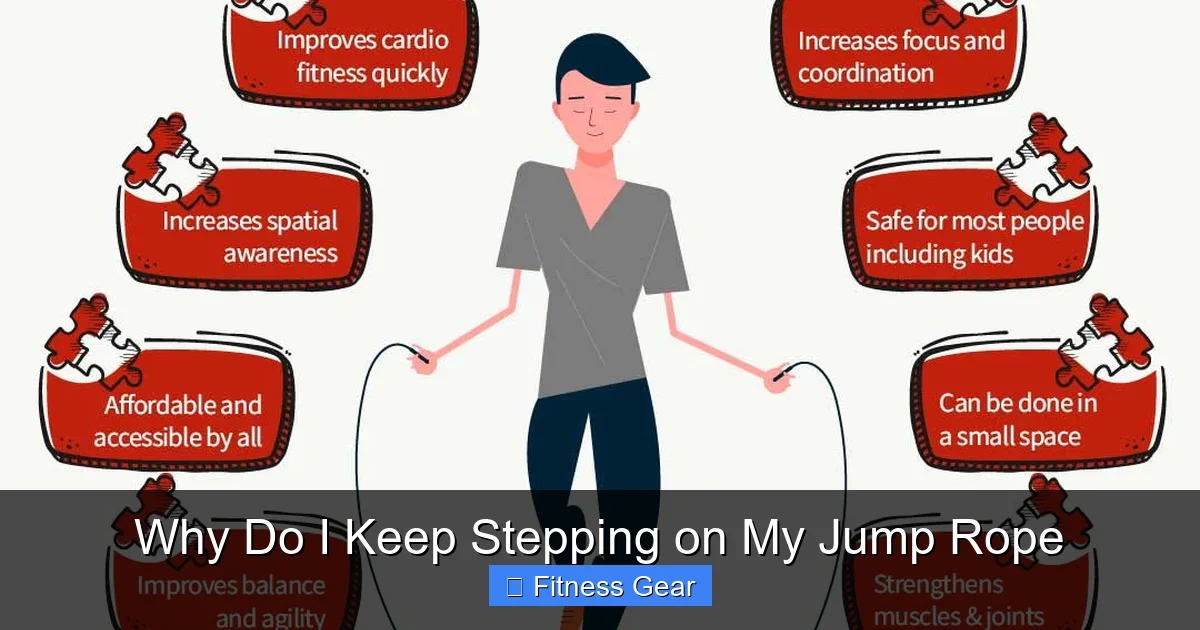
Why Do I Keep Stepping on My Jump Rope

Ever wonder why your jump rope feels like a trip hazard? Most beginners step on the rope because of poor technique, wrong length, or unsuitable surfaces. This guide reveals the hidden causes and gives easy fixes so you can jump smoothly and safely.
Key Takeaways
- Proper rope length matters: A rope that’s too long or too short forces your feet into the swing path.
- Foot placement is key: Landing too far forward or backward makes the rope hit your toes.
- Surface choice impacts control: Hard, uneven floors increase the chance of stepping on the rope.
- Grip and wrist action shape the arc: Loose hands or excessive arm movement create a low, wobbling rope.
- Wear and rope condition count: Frayed or heavy ropes are harder to clear.
- Progressive skill building prevents accidents: Start slow, master timing, then speed up.
- Correct shoes and posture improve safety: Proper footwear and a slight knee bend keep the rope under your feet.
📑 Table of Contents
- Introduction: The Frustration of Stumbling Over Your Own Rope
- 1. Rope Length – The Hidden Culprit
- 2. Foot Placement and Jump Technique
- 3. Surface Selection – The Foundation of a Smooth Jump
- 4. Rope Type and Condition – Not All Ropes Are Created Equal
- 5. Footwear and Posture – The Unsung Heroes
- 6. Progressive Practice – Building Skill Without the Stumbles
- Putting It All Together – A Quick Checklist
- Conclusion: Jump Confidently, Not Clumsily
Introduction: The Frustration of Stumbling Over Your Own Rope
Jump rope is one of the simplest, most effective cardio tools out there. It burns calories, tones legs, and improves coordination—all in a small package you can take anywhere. Yet many beginners (and even seasoned jumpers) ask the same question: “Why do I keep stepping on my jump rope?” The answer is rarely “bad luck.” More often it’s a mix of technique, equipment, and environment.
In this article we’ll break down every reason the rope ends up under your feet, show you how to diagnose the problem, and give you step‑by‑step fixes. Think of it as a friendly chat over a coffee, with plenty of real‑world examples and practical tips you can try right now.
1. Rope Length – The Hidden Culprit
How to Measure the Perfect Length
The first thing to check is the rope’s length. A rope that’s too long will swing low, crossing the ground where your feet land. A rope that’s too short forces you to hop higher, again increasing the chance of a toe‑catch.
Visual guide about Why Do I Keep Stepping on My Jump Rope
Image source: assets-global.website-files.com
Here’s a quick test:
- Stand on the middle of the rope with one foot.
- Pull the handles straight up. The ends should reach roughly to your armpits.
- If the handles are higher than your armpits, cut the rope a few inches. If they’re lower, add a few inches (many ropes have adjustable cords).
Why Length Affects Foot Placement
When the rope is too long, the arc becomes shallow. Your feet naturally land in the path of the rope because the rope doesn’t rise high enough to clear them. Shortening the rope raises the arc, giving your feet a clear lane to jump through.
2. Foot Placement and Jump Technique
Where Should Your Feet Land?
Most people instinctively land on the balls of their feet, which is great for a light bounce. However, if you land too far forward (closer to the toes) or too far back (near the heels), the rope will swing into the spot where you touch the ground.

Visual guide about Why Do I Keep Stepping on My Jump Rope
Image source: lovingfit.com
Try this drill:
- Mark a small “X” on the floor with tape.
- Jump in place, aiming to land with the middle of your foot directly on the X.
- Repeat for 30 seconds, focusing on a neutral foot position.
Common Technique Mistakes
Excessive arm swing: Using big arm movements creates a wide, low arc. Keep your elbows close to your sides and let the wrists do the work.
Leaning forward: A forward lean pushes the rope forward, pulling it under your toes. Keep a slight upright posture with a relaxed neck.
Jumping too high: Higher jumps increase airtime, but they also make timing harder. Aim for a modest 1‑2 inch lift.
3. Surface Selection – The Foundation of a Smooth Jump
Best Surfaces for Jump Rope
Hard, uneven surfaces like concrete or cracked wood can cause the rope to snag or bounce unpredictably. Ideal surfaces include:

Visual guide about Why Do I Keep Stepping on My Jump Rope
Image source: m.media-amazon.com
- Wooden gym floors
- Indoor rubber mats
- Smooth outdoor decks (without loose boards)
If you must jump on concrete, use a high‑quality, lightweight rope and consider a shock‑absorbing mat.
How Surface Affects Rope Arc
Rough surfaces create friction that slows one side of the rope, causing it to dip lower on that side. This uneven arc pulls the rope toward the foot that lands on the high‑friction spot, increasing the chance of stepping on it.
4. Rope Type and Condition – Not All Ropes Are Created Equal
Choosing the Right Rope for Your Skill Level
Beginners benefit from a light, beaded rope that spins slowly and provides tactile feedback. Advanced jumpers often prefer speed ropes (thin cable or PVC) that travel fast but require precise timing.
Key characteristics to consider:
- Weight: Light ropes (≈30‑40 g) are easier to clear.
- Diameter: Thicker ropes are more visible, helpful for learning the arc.
- Material: Vinyl or PVC for speed; beaded nylon for beginners.
When a Worn Rope Becomes a Trip Hazard
Frayed or kinked ropes lose smooth rotation, causing wobble. A rope that’s too heavy will sag more, making it sit lower to the ground. Replace your rope every 6‑12 months if you jump regularly, or as soon as you notice uneven swings.
5. Footwear and Posture – The Unsung Heroes
Choosing Shoes That Help, Not Hinder
Flat‑soles or heavy boots are the worst offenders. Look for shoes with:
- Responsive, low‑profile midsoles (e.g., cross‑trainers)
- A slight heel lift (about 0.5‑1 inch) to keep the rope clear
- Good grip to prevent slipping on smooth floors
Posture Tips for a Clean Jump
Maintain a relaxed, upright stance:
- Chest up, shoulders down.
- Core engaged, slight bend in the knees.
- Eyes forward, not down at your feet.
This alignment keeps the rope’s path straight and reduces the chance of it drifting into your toes.
6. Progressive Practice – Building Skill Without the Stumbles
Step‑by‑Step Skill Ladder
Jump rope is a skill, not just cardio. Follow this progression:
- Basic swing: Hold the rope, swing it over your head without jumping. Notice the arc.
- Single‑foot hops: Hop on one foot for 15 seconds, then switch. This teaches timing.
- Two‑foot jumps: Add a small bounce, keeping feet together.
- Alternate foot step: Mimic a jog, landing on opposite feet.
- Speed intervals: Increase RPM for short bursts, then recover.
How Practice Reduces Stepping
Each stage reinforces muscle memory and improves coordination. As you become comfortable with the rhythm, your body naturally avoids the rope’s path.
Putting It All Together – A Quick Checklist
Before you start your next session, run through this 7‑point checklist:
- Measure rope length; handles should reach armpits.
- Choose a smooth, even surface.
- Wear low‑profile, supportive shoes.
- Maintain upright posture with a slight knee bend.
- Keep elbows close; use wrist rotation.
- Start with slow swings, then add jumps.
- Inspect rope for wear; replace if needed.
Follow these steps and you’ll notice fewer toe‑catches, smoother jumps, and a more enjoyable workout.
Conclusion: Jump Confidently, Not Clumsily
Stepping on your jump rope is rarely a mystery. It’s usually a combination of rope length, foot placement, surface, equipment, and practice habits. By addressing each factor systematically, you turn a frustrating trip into a confident rhythm. Remember, the goal isn’t to jump faster right away—it’s to jump cleanly. Once the rope clears your feet consistently, speed and intensity will follow naturally.
So next time you pick up that rope, take a moment to check the length, stand on a good surface, and focus on a light, upright jump. Your feet will thank you, and your cardio gains will sky‑rocket.
Frequently Asked Questions
Why does my rope keep hitting my toes even though I’m using a speed rope?
Speed ropes are thinner and travel faster, which means timing is critical. If the rope is slightly too long or you’re landing too far forward, the fast swing will catch your toes. Adjust the length and practice landing with your foot centered under the rope.
Can I jump rope on carpet without stepping on the rope?
Carpet adds friction and can cause the rope to snag, making it dip lower. It’s possible, but use a lightweight beaded rope and keep your jumps low. A thin mat placed over the carpet can give a smoother surface.
Do I need to replace my rope if it’s only slightly frayed?
Even minor fraying can create uneven rotation, leading to a wobble that pulls the rope into your feet. If you notice any kinks or loss of smooth spin, replace the rope to maintain safety and performance.
Is it better to jump on a treadmill or a gym floor?
A treadmill belt moves, which can interfere with the rope’s swing and increase the chance of stepping on it. A stationary, flat gym floor or rubber mat provides a consistent surface and better control.
How often should I adjust my rope length as I get fitter?
When you improve your jump height or switch to a faster rope, you may need a shorter length. Re‑measure every few months or whenever you notice the rope hitting the ground too low.
What shoes are best for jump rope to avoid stepping on the rope?
Low‑profile cross‑training shoes with a slight heel lift and good grip are ideal. Avoid heavy boots, flip‑flops, or shoes with excessively thick soles, as they can keep the rope too close to the ground.