Which Is Better Smith Machine or Barbell Squat
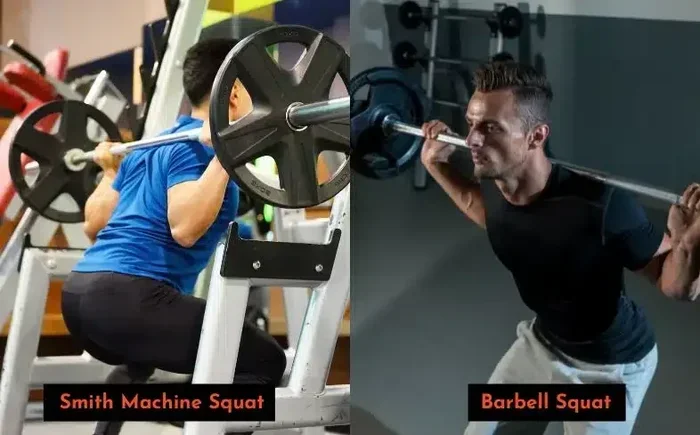
The Smith machine and barbell squat are both popular leg exercises, but they work very differently. The Smith machine offers a fixed path and extra safety, while the barbell squat demands more stabilizer muscles and natural movement. Choosing the right one depends on your goals, experience level, and body type. This guide breaks down everything you need to know.
The debate between the Smith machine or barbell squat is one of the most talked-about topics in strength training. Both exercises target your legs, glutes, and core. But they do it in very different ways. If you have ever stood in front of a squat rack wondering which one to choose, you are not alone.
Choosing the right squat variation can make or break your leg day. It affects your muscle gains, joint health, and even your motivation to train. The Smith machine offers a guided bar path, making it feel more controlled. The barbell squat lets you move freely, which builds real-world strength. Let us dive deep into what makes each one special.
Key Takeaways
- Barbell squats build more functional strength: They engage stabilizer muscles and mimic real-world movement patterns.
- Smith machine squats are safer for beginners: The fixed bar path reduces the risk of losing balance under heavy weight.
- Muscle activation differs between the two: Barbell squats activate more lower back and core muscles compared to Smith machine variations.
- Joint health matters: Smith machine squats can reduce stress on knees and lower back for some lifters.
- Both have a place in your program: Many advanced lifters use both exercises to target different muscle fibers and training goals.
- Proper form is critical: Poor form on either exercise increases injury risk and limits results.
- The barbell weight differs: A Smith machine bar weighs less than a standard Olympic barbell, affecting your total load calculations.
📑 Table of Contents
What Is a Smith Machine Squat?
A Smith machine squat uses a barbell that is fixed inside steel rails. The bar moves up and down on a set path. This means your body does not need to balance the weight the same way it does with a free-weight squat. Many gyms have at least one Smith machine, and it is often a favorite for people who are new to lifting.
How the Smith Machine Bar Works
The bar on a Smith machine is counterbalanced. This makes it lighter than a standard barbell. Most Smith machine bars weigh between 15 and 25 pounds, depending on the machine. You can check how heavy the barbell on a Smith machine is to understand the exact weight you are lifting. This reduced weight can help beginners focus on form before adding more load.
The fixed path also means your joints move in a predetermined groove. This can feel reassuring if you worry about losing control of the weight. However, it also means your body cannot adjust naturally during the movement.
Who Should Use the Smith Machine Squat?
The Smith machine squat works well for several types of lifters:
- Beginners: It lets you learn the squat pattern without worrying about balance.
- Rehab users: People recovering from injuries can use it with less joint stress.
- Isolation work: You can target specific muscles by adjusting foot placement and squat depth.
- Home gym users: A Smith machine takes up less space and is safer to use alone.
Many lifters also use the Smith machine for drop sets and high-rep leg workouts. The safety catches make it easy to push yourself without a spotter.
What Is a Barbell Squat?
The barbell squat is a free-weight exercise performed with a standard Olympic barbell. You place the bar across your upper back and squat down using your own balance and coordination. This exercise is often called the king of all exercises for good reason. It builds serious strength and muscle mass across your entire lower body.
A standard Olympic barbell weighs 45 pounds. When you add plates, the total load can be quite heavy. This is where the compound exercise benefits really shine. Your legs, hips, back, and core all work together to complete the movement.
Why Barbell Squats Are a Compound Powerhouse
Barbell squats are a compound movement, meaning they work multiple muscle groups at once. Here is what gets activated during a proper barbell squat:
- Quadriceps: The front of your thighs do most of the work.
- Glutes: Your glute muscles power you back up to standing.
- Hamstrings: These help control the descent and drive the ascent.
- Core: Your abs and obliques stabilize your spine throughout the movement.
- Lower back: The erector spinae muscles keep your torso upright and strong.
This full-body activation is one reason why barbell squats are so effective for building overall strength. They also boost your testosterone and growth hormone response more than isolation exercises.
Smith Machine vs Barbell Squat: Head-to-Head Comparison
Let us compare the two exercises side by side. This will help you decide which one fits your training goals better.
| Feature | Smith Machine Squat | Barbell Squat |
|---|---|---|
| Bar Path | Fixed, guided rails | Free, natural path |
| Bar Weight | 15-25 lbs (counterbalanced) | 45 lbs (standard Olympic bar) |
| Stabilizer Muscles | Less activated | Highly activated |
| Balance Required | Minimal | High |
| Injury Risk | Lower for beginners | Higher if form is poor |
| Muscle Activation | Good, but reduced core engagement | Excellent, full-body activation |
| Best For | Beginners, rehab, isolation | Strength building, functional fitness |
| Spotter Needed | No (safety catches built in) | Recommended for heavy sets |
As you can see, both exercises have clear strengths. The Smith machine wins on safety and ease of use. The barbell squat wins on muscle activation and functional strength. Many experienced lifters actually use both in their routines.
Muscle Activation Differences
Studies show that free-weight squats activate more muscle fibers than machine-guided versions. The barbell squat forces your body to stabilize the weight, which recruits more muscle fibers. The Smith machine reduces this demand because the bar guides the movement.
However, you can increase muscle activation on the Smith machine by adjusting your stance and squat depth. Some lifters prefer a wider stance or a lower squat position to compensate for the fixed path. This can help target your glutes and hamstrings more effectively.
Which One Builds More Strength?
If your goal is raw strength, the barbell squat has the edge. Because it requires your stabilizer muscles to work, it builds functional strength that carries over to sports and daily activities. You are literally teaching your body to move heavy loads the way nature intended.
The Smith machine can still build strength, but it does so in a more isolated way. The fixed path means your muscles do not have to work as hard to keep the bar stable. This is not a bad thing, but it does mean the strength gains are less transferable to real-world movements.
Strength Training Tips for Both Exercises
Here are some practical tips to get the most out of each squat variation:
- Start with lighter weights: Master the form before adding heavy plates.
- Focus on depth: Full-range squats build more muscle than partial reps.
- Use a consistent tempo: Control the descent and drive up explosively.
- Track your progress: Keep a training log to monitor your gains.
- Warm up properly: Do dynamic stretches and light sets before working up to heavy weights.
Common Mistakes and How to Avoid Them
Both squat variations have common mistakes that can lead to injury or poor results. Knowing these pitfalls helps you train smarter.
Smith Machine Mistakes
- Standing too far from the bar: This puts unnecessary stress on your lower back. Keep the bar close to your body.
- Using the wrong foot placement: Your feet should be shoulder-width apart and slightly turned out.
- Locking out your knees at the top: This shifts stress to the joint instead of the muscle.
- Ignoring the counterbalance: Remember that the Smith machine bar weighs less. Do not directly compare it to a free-weight barbell load.
Barbell Squat Mistakes
- Rounding your lower back: Keep your chest up and spine neutral at all times.
- Letting your knees cave inward: Push your knees out to track over your toes.
- Lifting your heels: Keep your entire foot planted on the ground.
- Breathing incorrectly: Brace your core with a deep breath before descending.
Avoiding these mistakes will keep you safe and help you get better results from either exercise. If you are unsure about your form, consider filming yourself or asking a trainer for feedback.
Which One Should You Choose?
The answer depends on your personal goals, experience level, and body mechanics. Here is a simple breakdown to help you decide.
Choose the Smith machine squat if:
- You are a beginner learning proper squat form
- You are training alone and want a safer option
- You are recovering from a lower body injury
- You want to isolate specific leg muscles
- You have limited space at home
Choose the barbell squat if:
- You want to build maximum functional strength
- You are an intermediate or advanced lifter
- You want full-body muscle activation
- You train with a partner or spotter
- You want exercises that transfer to sports and daily life
Many lifters benefit from using both. You might do barbell squats as your main compound exercise and add Smith machine squats for accessory work or high-rep burnout sets. This combination gives you the best of both worlds.
Expert Insight: Programming Both Into Your Routine
Strength coaches often recommend using the Smith machine for warm-up sets and the barbell squat for heavy working sets. This approach helps you groove the movement pattern safely before loading up the bar. You can also alternate between the two on different training days. For example, use the Smith machine on leg day one and the barbell squat on leg day two.
The key is to listen to your body. If one exercise causes pain or discomfort, switch to the other. Both are excellent tools when used correctly.
Final Thoughts
The Smith machine or barbell squat debate does not have a single winner. Both exercises serve a purpose in a well-rounded training program. The Smith machine offers safety, ease of use, and a lighter bar weight that is perfect for beginners and rehab. The barbell squat delivers unmatched strength gains, muscle activation, and functional fitness benefits.
Your best choice is the one that aligns with your goals, experience level, and how your body responds to each movement. Start with the exercise that feels safest and most comfortable. As you grow stronger and more confident, you can gradually incorporate the other into your routine. The most important thing is to squat consistently with proper form. That is where real results come from.
Whichever you choose, commit to it. Consistency beats perfection every time. Your legs will thank you for showing up and putting in the work.
Frequently Asked Questions
Is the Smith machine bar lighter than a regular barbell?
Yes, most Smith machine bars weigh between 15 and 25 pounds because they are counterbalanced. A standard Olympic barbell weighs 45 pounds. This difference means you cannot directly compare the weights between the two machines without adjusting for the bar weight.
Can Smith machine squats replace barbell squats entirely?
They can if your goals are more focused on isolation and safety. However, barbell squats offer superior functional strength and stabilizer muscle development. For best results, consider using both exercises in your training program rather than choosing just one.
Are Smith machine squats bad for your knees?
Not necessarily. Smith machine squats can actually be easier on the knees for some people because the fixed path reduces shear forces. However, improper foot placement or excessive depth can still cause discomfort. Always prioritize proper form and listen to your body.
How deep should you squat on the Smith machine?
Aim for at least parallel depth, where your thighs drop to knee level or slightly below. The fixed bar path allows for deeper squats in some cases, but you should stop if you feel any pinching or discomfort in your hips or knees.
Can beginners start with barbell squats right away?
It is possible, but most beginners benefit from starting with the Smith machine to learn proper squat mechanics. Once you feel confident with the movement pattern, transitioning to the barbell squat is a natural next step that builds more functional strength.
Which squat variation burns more calories?
The barbell squat generally burns more calories because it engages more muscles and requires greater energy expenditure. The additional stabilizer muscle activation means your body works harder during each rep, leading to a higher calorie burn compared to the Smith machine squat.
=== CONCLUSION ===
The Smith machine or barbell squat choice comes down to your individual needs and goals. Both are valuable exercises that deserve a place in your training program. Use the Smith machine for safety, learning, and targeted muscle work. Use the barbell squat for raw strength, functional fitness, and full-body activation. The best program is one that includes variety and keeps you training consistently. Pick the squat that works for you today, and keep progressing toward your strength goals.