Choosing between a treadmill and an elliptical for knee health isn’t about a universal “winner.” The elliptical generally provides a lower-impact, non-weight-bearing workout that’s easier on sore or arthritic knees. However, the treadmill’s walking motion is more functional and natural, and its impact can be significantly reduced with proper technique, incline, and cushioning. Your best choice depends entirely on your specific knee condition, fitness objectives, and how you use the equipment.
Key Takeaways
- The elliptical is typically lower impact: Its floating, circular motion eliminates the heel-strike impact of running, reducing compressive force on the knee joint, making it a safer starting point for those with significant pain or osteoarthritis.
- The treadmill offers a functional, weight-bearing motion: Walking or running on a treadmill closely mimics natural gait, which is crucial for building bone density and engaging stabilizer muscles, but it inherently involves more joint impact.
- Form and settings are everything: A treadmill with excessive speed/incline or poor form (overstriding, heel striking) can be brutal on knees. An elliptical with too high resistance or improper posture (leaning forward, heel lift) can also cause strain.
- Your specific diagnosis matters: For patellofemoral pain (runner’s knee), the elliptical’s reduced flexion may help. For early osteoarthritis, the elliptical’s motion is often preferred. For general strength and gait retraining, treadmill walking is excellent.
- Muscle engagement differs: The elliptical engages upper body more (if using arms) and provides constant resistance, while the treadmill engages posterior chain (glutes, hamstrings) more dynamically, especially with incline.
- There is no one-size-fits-all answer: The “better” machine is the one you can use consistently with proper form, within your pain limits, that aligns with your broader fitness goals.
- Consult a professional: A physical therapist or certified trainer can analyze your gait and knee condition to provide the most personalized recommendation and technique guidance.
📑 Table of Contents
- Understanding Knee Biomechanics: It’s Not Just About “Impact”
- Treadmill vs. Elliptical: The Impact Factor, Deconstructed
- Knee Conditions & Machine Suitability: A Personalized Guide
- Beyond Impact: Other Crucial Factors in Your Decision
- What The Experts Say: Consensus & Caveats
- Your Personal Knee-Friendly Workout Plan: Putting It All Together
- The Final Verdict: Listen to Your Knees, Not the Hype
Understanding Knee Biomechanics: It’s Not Just About “Impact”
Before we even compare machines, we need a quick primer on how your knee works during motion. Your knee is a complex hinge joint, primarily a meeting point between the femur (thigh bone) and tibia (shin bone), with the patella (kneecap) acting as a protective shield. Think of it less like a simple door hinge and more like a sophisticated suspension system. It’s designed to handle compression, shear, and rotational forces, but its tolerance depends on muscle strength, ligament integrity, cartilage health, and alignment.
When we talk about exercise being “good” or “bad” for knees, we’re usually discussing two key factors: joint loading (the total force transmitted through the joint) and shear stress (sliding forces that can strain ligaments and cartilage). Activities that create high peak forces (like jumping) or repetitive, deep flexion under load (like heavy squats) can be problematic for vulnerable knees. The goal of knee-friendly cardio is to maintain cardiovascular fitness while minimizing harmful stresses—especially compressive and shear forces—and building the surrounding musculature (quadriceps, hamstrings, glutes, calves) to act as natural shock absorbers and stabilizers.
The Role of the “Heel Strike”
A critical difference between running on a treadmill and using an elliptical lies in the initial contact phase. In a typical running gait (on a treadmill or outdoors), your heel strikes the ground first. This impact sends a shockwave up your skeletal system. While your muscles and tendons absorb much of it, a significant compressive force still travels to the knee. The magnitude of this force can be 2-3 times your body weight. Over time, or with pre-existing conditions, this repetitive loading can contribute to wear and tear or exacerbate pain.
The elliptical, by design, eliminates this heel-strike impact. Your feet remain in constant contact with pedals that move in an oval path. There’s no moment of freefall and collision. This fundamental mechanical difference is the primary reason the elliptical is almost always cited as the lower-impact option.
Treadmill vs. Elliptical: The Impact Factor, Deconstructed
Now, let’s get into the direct comparison. We’ll break it down by the type of stress each machine places on the knee joint.
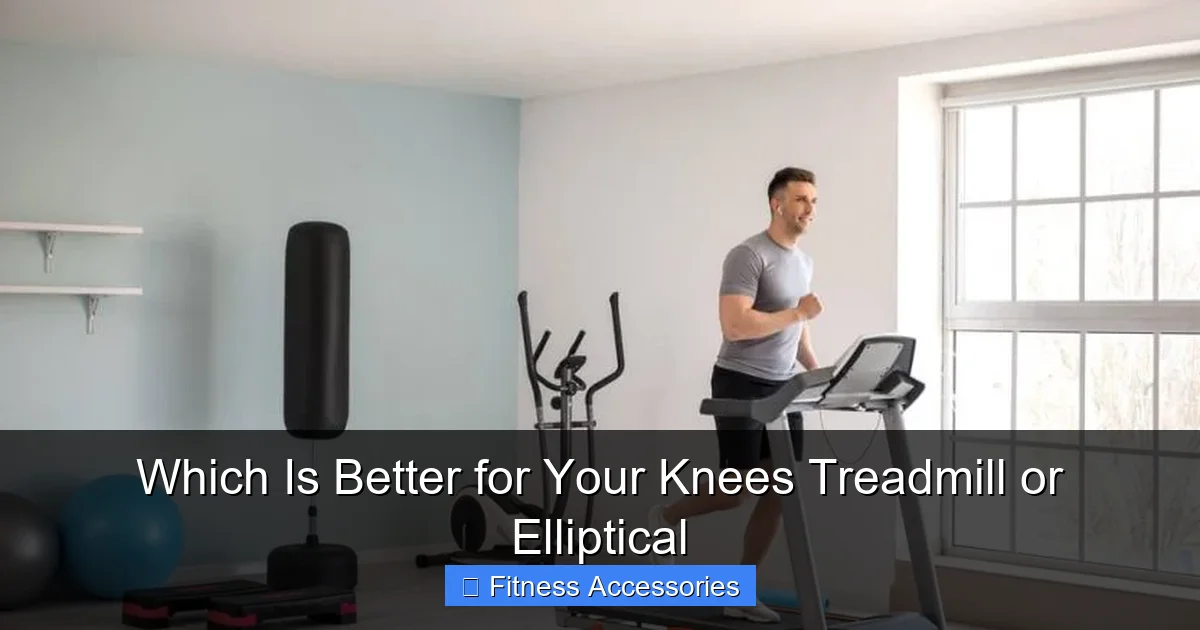
Visual guide about Which Is Better for Your Knees Treadmill or Elliptical
Image source: drbenlee.com
Compressive Force & Vertical Loading
This is the “squeezing” force on the joint surfaces. As mentioned, the treadmill’s heel strike creates a sharp, high-magnitude compressive pulse. However, it’s crucial to understand that walking on a treadmill (as opposed to running) generates much lower forces, often around 1-1.5 times body weight. The elliptical’s motion is almost entirely non-weight-bearing in terms of vertical impact. The force is more about resistance against the pedal’s motion, which translates to muscular effort rather than skeletal jarring. For someone with severe osteoarthritis or bone-on-bone friction, this near-absence of vertical impact is a game-changer.
Shear Stress & Range of Motion
Shear stress occurs when the top of the tibia slides forward or backward relative to the femur. Deep knee bends under load (like in a lunge or squat) create high shear. The treadmill, especially when walking on a flat surface, involves a relatively modest range of motion at the knee—typically 0 to 45 degrees of flexion. Running increases this slightly. The elliptical often allows for a greater range of motion, sometimes up to 90 degrees or more of flexion if you use a long stride. For some conditions (like certain meniscus tears), excessive deep flexion can be provocative. For others, controlled motion through a full range is beneficial for joint nutrition and mobility. This is where personal tolerance becomes key.
The “Perceived Impact” vs. “Actual Impact” Paradox
Here’s a nuance many miss: you might feel less impact on an elliptical, but that doesn’t automatically mean it’s always better. A treadmill walk at a moderate pace on a well-cushioned deck with good form can be surprisingly joint-friendly. Conversely, an elliptical set to a very high resistance level, where you’re straining and using momentum to “cheat,” can place significant torque on the knee. The resistance on an elliptical is constant, while treadmill impact is intermittent (only at heel strike). So, a high-resistance elliptical workout might feel harder overall but could be less “jarring,” while a high-speed treadmill run is both jarring and aerobically intense.
Knee Conditions & Machine Suitability: A Personalized Guide
This is the most important section. “Better” is a diagnosis-dependent term. Let’s walk through common knee issues.
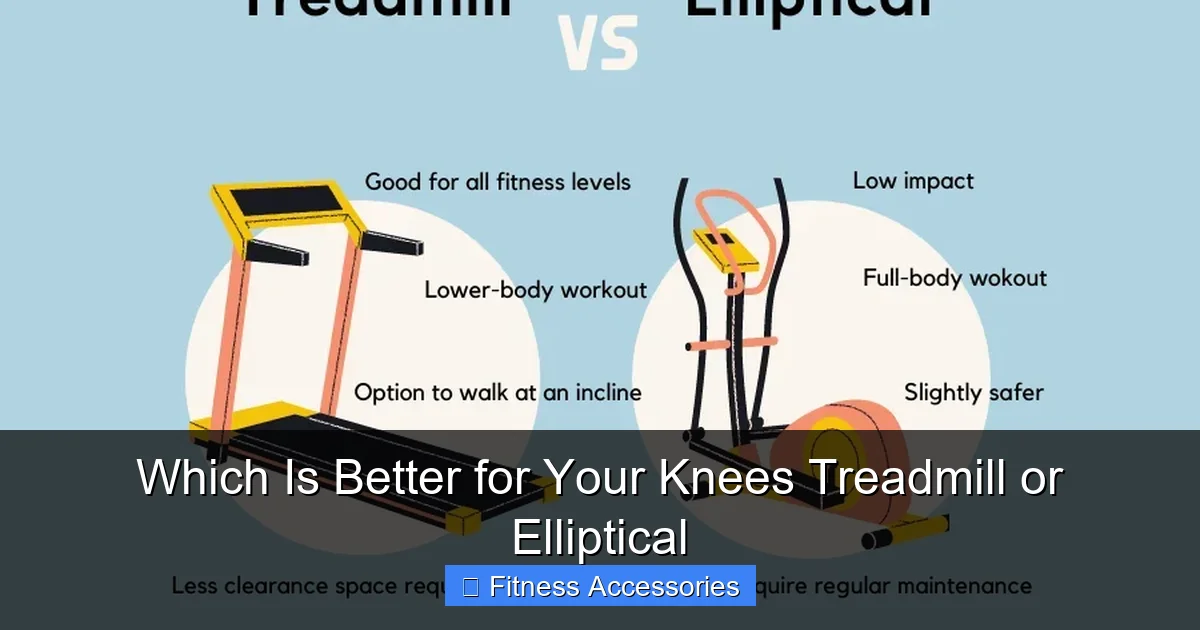
Visual guide about Which Is Better for Your Knees Treadmill or Elliptical
Image source: ellipticalking.com
For Osteoarthritis (OA) and General “Wear and Tear”
Lean Elliptical. For moderate to severe OA, where cartilage is degraded and bone may be rubbing on bone, minimizing compressive load is priority #1. The elliptical’s no-impact nature allows for calorie burning and leg movement without grinding the joint surfaces. It also promotes synovial fluid movement (the joint’s lubrication) through motion. A treadmill walk might be tolerable for very mild OA, but running is generally discouraged. Practical Tip: On the elliptical, focus on a smooth, controlled motion without locking your knees. Use a resistance that feels challenging but not painful. A slight forward lean from the ankles (not the waist) can help engage glutes and reduce knee strain.
For Patellofemoral Pain Syndrome (Runner’s Knee)
This is pain around or behind the kneecap, often from misalignment or overuse. The culprit is usually excessive pressure on the patella during flexion, especially with weak VMO (inner quad) muscles. It’s a toss-up. Some find the elliptical’s fixed path and reduced weight-bearing eases patellar tracking. Others find the constant flexion and resistance aggravates it. The treadmill might be better if you walk with a conscious, mid-foot strike and a shorter stride, reducing the “braking” force that jolts the kneecap. Practical Tip: For both machines, ensure your knee tracks over your middle toe, not caving inward. On the treadmill, try walking backwards for short intervals (hold rails!)—this can activate the hamstrings and glutes differently, sometimes providing relief.
For Meniscus Tears or Ligament Concerns (ACL, MCL)
Here, rotational and shear stress is the enemy. Deep squats and pivoting are out. Elliptical is often safer initially. Its constrained, sagittal-plane (forward-back) motion minimizes dangerous twisting. However, a severe tear might be irritated by any flexion. A treadmill walk with zero incline and a very deliberate, short stride can be a safe, functional way to regain gait mechanics and weight-bearing confidence under supervision. Practical Tip: Avoid any elliptical programs that involve “ramp” or “interval” settings that change the incline/resistance abruptly, as this can create shear. Stick to a flat, steady resistance.
For Tendonitis (Patellar or Quad)
This is inflammation of a tendon, often from overuse. The issue is repetitive loading through a specific range of motion. Both can work, but with caution. The key is avoiding the specific angle that triggers pain. On the elliptical, you can often adjust the stride length to avoid the painful arc (e.g., shorter stride to reduce deep flexion). On a treadmill, you can control speed and incline to manage load. Practical Tip: Ice after your session. On the elliptical, try “reverse” motion if your machine allows it—this can change tendon loading patterns. On the treadmill, focus on a high cadence (steps per minute) with a very short stride to reduce force per step.
Beyond Impact: Other Crucial Factors in Your Decision
Impact is only one piece of the puzzle. Your overall fitness goals, muscle engagement, and even psychological preference play huge roles.
Visual guide about Which Is Better for Your Knees Treadmill or Elliptical
Image source: shape.com
Muscle Engagement & Functional Fitness
The treadmill is a weight-bearing, functional activity. It forces you to stabilize your entire body against gravity, engaging your core, hip stabilizers, and the small muscles of the ankle and foot. This is vital for bone density (especially important for post-menopausal women) and for translating fitness to real-world activities like hiking or climbing stairs. The elliptical is non-weight-bearing. While you can engage your upper body with moving handles, the lower body works against resistance in a supported path. You won’t engage the same stabilizers or gain the same bone-strengthening benefits. If building overall, functional strength and stability is a goal, the treadmill has an edge—provided your knees can handle it.
Caloric Burn & Cardiovascular Intensity
At similar perceived exertion levels (how hard you *feel* you’re working), the treadmill and elliptical will produce very similar heart rate and calorie burn. However, because the treadmill engages more total body mass (you’re supporting your full weight), a true 1:1 comparison at the same speed/resistance setting might yield a slightly higher burn on the treadmill. But this is negligible. The bigger factor is effort. You can likely push harder for longer on an elliptical with less joint pain, potentially leading to a greater total calorie burn over time. Don’t get hung up on machine calorie counters; focus on sustained effort and heart rate zones.
The Psychological & Adherence Factor
The best exercise for your knees is the one you will do consistently, without dread. Some people find the rhythmic, repetitive motion of the elliptical boring. Others love the feeling of “running” without the pounding on the treadmill. Some enjoy watching scenic treadmill trails, while others prefer the steady momentum of the elliptical. If you hate your workout, you won’t stick with it, and that’s the worst outcome for your overall health—including your knees, which benefit from strong, supportive muscles from regular activity. Consider trying both in a gym for a week and note which one leaves you feeling empowered, not in pain.
What The Experts Say: Consensus & Caveats
The medical and fitness community largely agrees on the hierarchy: Elliptical > Treadmill Walk > Treadmill Run for knee stress. However, the qualifiers are significant.
Orthopedic surgeons and physical therapists consistently recommend the elliptical as the go-to cardio machine for post-operative knee patients (after the initial healing phase) and those with advanced arthritis. The American College of Sports Medicine notes that non-weight-bearing exercises like the elliptical are excellent for maintaining cardiovascular fitness while protecting healing or arthritic joints.
Yet, many sports medicine physicians and physical therapists will also prescribe graded treadmill walking as part of a return-to-sport or gait retraining program. Why? Because it’s a functional, weight-bearing activity that teaches proper biomechanics. The key is the “graded” part—starting with very slow speeds, minimal incline, and short durations, often with added support like handrails initially.
The consensus is this: Start low and go slow. If your knee is acutely inflamed or in severe pain, begin on the elliptical. As pain subsides and strength improves, you can cautiously introduce treadmill walking to reintroduce controlled, functional loading. The ultimate goal for many is to maintain the ability to walk comfortably in daily life, and the treadmill is the most specific training tool for that.
Your Personal Knee-Friendly Workout Plan: Putting It All Together
Forget “which machine is best.” Let’s build a strategy.
Step 1: Assess Your Current State
- Pain Level: Is it sharp, acute pain (stop and see a doctor)? Or a dull ache that increases after activity? The former needs medical diagnosis first.
- Condition: Do you have a known diagnosis (OA, tendonitis, meniscus tear)? This guides the initial choice.
- Goal: Is it pure weight loss? General health? Rehab from injury? Training for a running event?
Step 2: The 48-Hour Test & Form Checklist
Try both machines for 10-15 minutes at a very easy pace. The next day, assess your knee pain. Did it increase? If yes, that machine (or that intensity) is not for you right now. While you test, run through this form checklist for both:
- On the Treadmill: Walk, don’t run initially. Land with a mid-foot strike under your hip, not a heel strike out in front. Keep stride short and quick. Don’t hold on tightly—use rails for balance only. If you must hold on, your effort is too high. Zero incline to start.
- On the Elliptical: Stand tall, core engaged. Don’t lean forward on the console. Keep your heels down; don’t lift them to “pedal.” Your knees should track over your toes, not cave inward. Use a full but comfortable range of motion. Start with low resistance (2-4 on a 1-10 scale).
Step 3: Build Your Routine
If Elliptical is Your Champion: Start with 20 minutes, 3x/week at low resistance. Gradually increase time to 30-45 minutes. You can add intervals (1 min higher resistance, 2 min recovery) once you’re pain-free. Consider adding 5-10 minutes of treadmill walking at the end, at a very slow speed, to introduce gentle, functional loading.
If Treadmill Walking is Manageable: Start with 20 minutes at 2.5-3.0 mph, 0% incline. Focus on form. As you adapt, you can very slowly increase time, then perhaps a 1% incline (which is easier on knees than flat, as it shifts load to glutes/hamstrings). Never increase speed and incline simultaneously. Your goal is a brisk, pain-free walk.
Sample Hybrid Week (for adaptable knees): Mon: Elliptical 30 min low-res. Wed: Treadmill walk 25 min, focus on form. Fri: Elliptical 30 min with 4×1-min moderate intervals. Sat: Gentle walk outdoors (natural surfaces can be kinder than concrete).
Step 4: Don’t Forget Strength & Flexibility
Cardio alone won’t fix knee issues. You must strengthen the support system. Add 2x/week of: Quad sets, straight leg raises, clamshells, bridges, and gentle calf stretches. Strong glutes are especially critical—they take load off the knee. A physical therapist can design a perfect, pain-free program. This is non-negotiable for long-term knee health, regardless of your cardio machine choice.
The Final Verdict: Listen to Your Knees, Not the Hype
So, which is better for your knees? For the majority of people with active knee pain, arthritis, or post-injury concerns, the elliptical is the safer, more sustainable starting point and often the better long-term partner. Its near-absence of impact is a profound benefit for compromised joints. However, to declare it the universal “winner” is a disservice. The treadmill, used wisely as a walking machine with pristine form, offers unparalleled functional and bone-strengthening benefits that the elliptical cannot fully replicate. The path to knee health is not about finding a magic machine, but about understanding your own body’s signals, respecting your diagnosis, and progressively building strength and tolerance. Begin conservatively, prioritize form over speed or resistance, and integrate crucial strength training. If you’re unsure, a few sessions with a physical therapist or a certified trainer who understands joint pathology is the best investment you can make. Your knees will thank you for the thoughtful, informed approach.
Frequently Asked Questions
Can I lose weight on an elliptical without damaging my knees?
Yes, absolutely. The elliptical allows for high-intensity, calorie-burning workouts with minimal joint impact. By increasing resistance and maintaining a brisk pace, you can achieve an excellent cardiovascular workout that supports weight loss while being gentle on sore knees, making it a top choice for those managing joint pain.
Is it okay to use both machines in the same week?
For most people, using both is not only okay but beneficial. You can alternate days—using the elliptical for lower-impact days and a gentle treadmill walk for functional, weight-bearing movement. This variety can prevent overuse injuries from repetitive motion on a single machine and provide a more balanced fitness stimulus.
Does walking on an incline on the treadmill hurt my knees more?
Paradoxically, a modest incline (1-3%) can be easier on the knees than walking flat. It shifts the workload from your quadriceps and knee joints to your glutes and hamstrings. However, a steep incline (5%+) while holding on or leaning back dramatically increases load and can be very stressful. The key is moderate incline, no handholding, and a brisk pace.
What’s the single best cardio machine for severe knee osteoarthritis?
For diagnosed, moderate-to-severe knee OA, the elliptical is almost always the recommended starting point due to its non-impact, non-weight-bearing nature. It allows for movement and cardio without compressive grinding. Recumbent bikes are also excellent. Always get clearance from your doctor or physical therapist, as individual cases vary.
My knees only hurt after running on the treadmill, not walking. Should I stop?
This is a classic sign that the impact from running is exceeding your knee’s current tolerance. It doesn’t mean you can never run again, but it’s a clear signal to stop running for now. Focus on building strength and gradually reintroducing running intervals (run 1 min, walk 2 min) only when pain-free walking is effortless. Many people can eventually return to short, slow runs with proper strength and form.
Are expensive treadmills with better cushioning really better for knees?
Yes, cushioning matters significantly. A high-quality treadmill with a thick, responsive deck (like those with shock-absorbing materials) can reduce peak impact forces by 30-50% compared to a cheap, stiff deck or running on concrete. This makes walking and light jogging much more knee-friendly. If choosing a treadmill for knee health, prioritize cushioning in your budget.