What Muscles Is the Rowing Machine Good For

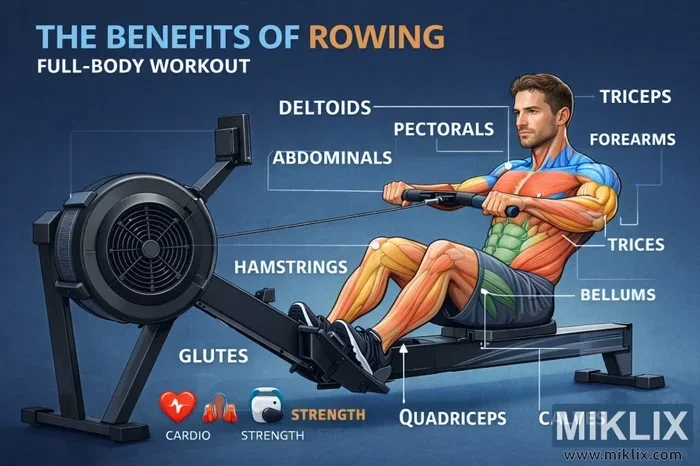
The rowing machine is one of the best pieces of home gym equipment for targeting nearly every major muscle group in your body. From your legs and glutes to your back, arms, and core, a rowing machine workout delivers a balanced full body exercise that builds strength and boosts cardiovascular fitness. Whether you are a beginner or a seasoned athlete, understanding which muscles the rowing machine engages can help you get the most out of every stroke.
Have you ever wondered what muscles the rowing machine is actually good for? Maybe you have seen someone gliding smoothly on a rowing machine at the gym and thought it looked too easy. Or perhaps you are considering adding one to your home gym and want to know if it is worth the investment.
The truth is, the rowing machine is one of the most underrated pieces of workout equipment out there. It hits almost every muscle group in your body, from your calves to your shoulders. In this article, we will break down exactly which muscles you are working, why it matters, and how to get the most out of your sessions.
Whether you want to build strength, lose weight, or improve your overall fitness, understanding the muscle groups involved in rowing will change the way you train. Let us dive in.
Key Takeaways
- Full Body Engagement: The rowing machine works over 80% of your muscles, making it one of the most efficient full body workouts available.
- Legs and Glutes Power the Stroke: Your quads, hamstrings, and glutes generate the majority of the force during each pull.
- Back and Arms Build Strength: The rowing motion targets your lats, rhomboids, biceps, and shoulders effectively.
- Core Stability Is Essential: Your abs and obliques stabilize your body throughout every rowing stroke.
- Cardiovascular Benefits: Beyond muscle building, the rowing machine improves heart health and endurance.
- Low Impact, High Reward: It is gentle on joints while delivering intense muscle engagement.
📑 Table of Contents
- How a Rowing Machine Works
- Lower Body Muscles Worked by the Rowing Machine
- Upper Body Muscles Targeted by the Rowing Machine
- Core Muscles and the Rowing Machine
- Cardiovascular and Endurance Benefits
- Is the Rowing Machine Good for Weight Loss?
- Tips for Maximizing Muscle Engagement on the Rowing Machine
- Common Mistakes That Reduce Muscle Engagement
- Rowing Machine vs. Other Gym Equipment
- Who Can Benefit from the Rowing Machine?
- Final Thoughts
How a Rowing Machine Works
Before we get into the specific muscles, it helps to understand the basic rowing stroke. A single stroke on a rowing machine has four phases: the catch, the drive, the finish, and the recovery. Each phase activates different muscle groups in a specific order.
This sequential firing pattern is what makes the rowing machine so effective. Unlike machines that isolate one muscle group, rowing demands coordination from your entire body. The rowing technique you use directly affects which muscles get the most work.
When you maintain proper rowing form, you distribute the effort evenly across muscle groups. This reduces the risk of injury and maximizes the benefits of every pull. If you are new to rowing, taking time to learn the correct rowing form will pay off big time.
Lower Body Muscles Worked by the Rowing Machine
The lower body does the heavy lifting during a rowing stroke. In fact, about 60% of the power comes from your legs. This makes the rowing machine an excellent lower body exercise tool.
Quadriceps
Your quads are the primary drivers during the drive phase. As you push off the footplate, your quadriceps extend your knees and propel your body backward. Strong quads mean more power and speed on every stroke.
Hamstrings and Glutes
Your hamstrings and glutes work together to extend your hips during the drive. These muscles are essential for generating the explosive force that moves you through the water (or the air, depending on your machine type). The glutes also help stabilize your pelvis throughout the stroke.
Calves
Your calf muscles assist with the initial push-off from the footplate. While they do not carry as much of the load as your quads and glutes, they play an important supporting role in maintaining a smooth and powerful stroke.
For those looking to build stronger legs, the rowing machine is a fantastic addition to your routine. It provides constant resistance without the impact stress that running puts on your joints. This makes it a great option for people who want a challenging leg workout without the pounding.
Upper Body Muscles Targeted by the Rowing Machine
While your legs generate the power, your upper body controls and directs it. The rowing machine engages your back, shoulders, and arms in a way that few other machines can match.
Back Muscles
Your latissimus dorsi, rhomboids, and trapezius are all heavily involved in the rowing motion. These muscles pull your arms back and help you maintain an upright posture. Over time, consistent rowing builds a stronger, more defined back.
Biceps and Forearms
Your biceps and forearms grip the handle and pull it toward your torso. These muscles work hard during every stroke, which helps build forearm endurance and arm strength. If you have ever felt a burn in your forearms after a rowing session, this is exactly why.
Shoulders and Chest
Your deltoids and pectoral muscles assist with the pulling motion. While they are not the primary movers, they still get a solid workout. The shoulders also stabilize your arm joints during the repetitive motion of rowing.
The upper body engagement from rowing is one of the reasons it stands out from machines like the stationary bike or elliptical. You are not just working your legs or your heart. You are building functional upper body strength too.
Core Muscles and the Rowing Machine
Your core is the bridge between your upper and lower body during every rowing stroke. Without strong core muscles, your power leaks out and your form breaks down. This is why the rowing machine is so good for building core strength.
Your abdominals, obliques, and lower back muscles all fire continuously to keep your torso stable. They resist the force generated by your legs and help transfer that power to your arms. Think of your core as the engine mount that holds everything together.
If you are looking to tone your midsection, the rowing machine can absolutely help. While spot reduction is a myth, rowing burns calories and builds the muscles underneath the fat. Combined with a healthy diet, this can lead to visible changes in your core area. For more on how rowing targets your abs specifically, check out our guide on is a rowing machine good exercise for the abs.
Good news: your core gets worked whether you are rowing with perfect form or not. But the better your form, the more your core benefits. This is another reason to invest time in learning the right rowing technique.
Cardiovascular and Endurance Benefits
The rowing machine is not just a strength tool. It is also a powerful cardiovascular workout. When you row at a moderate to high intensity, your heart rate increases and your lungs work harder to supply oxygen to your muscles.
Over time, this improves your cardiovascular fitness, which has benefits far beyond the workout itself. Better heart health means more energy in your daily life, improved sleep, and reduced risk of chronic disease.
Rowing is also excellent for building muscular endurance. Because it engages so many muscle groups simultaneously, your body learns to sustain effort for longer periods. This translates to better performance in other sports and daily activities.
Compared to running on a treadmill, the rowing machine offers similar cardiovascular benefits with much less stress on your joints. If you want to learn more about how rowing compares to other cardio machines, check out our article on what is better for cardio treadmill or rowing machine.
Is the Rowing Machine Good for Weight Loss?
The short answer is yes. The rowing machine burns a significant number of calories because it works so many muscles at once. The more muscle groups you engage, the more energy your body needs to sustain the effort.
A person weighing around 155 pounds can burn approximately 250 to 300 calories in just 30 minutes of moderate rowing. Increase the intensity or resistance, and that number goes even higher. This makes the rowing machine a highly efficient tool for anyone looking to lose weight.
Beyond calorie burn, rowing helps preserve lean muscle mass while you lose fat. Many cardio exercises, like steady-state running, can lead to muscle loss over time. The rowing machine avoids this problem because it builds muscle while you burn calories. For more details on how effective rowing is for weight loss, see our article on how good is a rowing machine for weight loss.
The combination of strength training and cardio in one exercise makes the rowing machine uniquely effective for body composition changes. You get leaner, stronger, and more defined without spending hours in the gym.
Tips for Maximizing Muscle Engagement on the Rowing Machine
Now that you know which muscles the rowing machine targets, here are some practical tips to get the most out of every workout:
- Focus on your drive phase. About 60% of the power comes from your legs. Push hard off the footplate and let your upper body follow.
- Use proper form. Bad form reduces muscle engagement and increases injury risk. Keep your back straight, shoulders relaxed, and core tight.
- Vary your intensity. Mix steady-state rows with high-intensity intervals to challenge your muscles in different ways.
- Increase resistance gradually. Higher resistance builds more strength, but do not jump in too fast. Your muscles need time to adapt.
- Stay consistent. Like any exercise, the benefits come with regular practice. Aim for at least three rowing sessions per week.
- Track your progress. Monitor your distance, pace, and stroke rate to see how your fitness improves over time.
If you are shopping for equipment and want to find the right machine for your home, our article on what is a good rowing machine for home use can help you make a smart choice.
Common Mistakes That Reduce Muscle Engagement
Even with the best intentions, many people make mistakes on the rowing machine that limit their results. Here are a few to watch out for:
- Rounding your back. This puts unnecessary strain on your spine and reduces core engagement. Keep your chest lifted and your back neutral.
- Pulling with your arms too early. The arms should follow the legs and core, not lead the movement. Think legs, then core, then arms.
- Slouching at the finish. At the end of each stroke, sit tall and squeeze your shoulder blades together. Slouching disengages your back muscles.
- Using too much resistance too soon. This leads to poor form and burns out your muscles faster. Start light and build up.
- Rushing the recovery. The recovery phase is just as important as the drive. Slow and controlled movements build more strength and endurance.
Fixing these mistakes will immediately improve the quality of your workout and the muscles you target. For more detailed guidance on proper technique, read our article on what is the proper form for a rowing machine.
Rowing Machine vs. Other Gym Equipment
How does the rowing machine compare to other popular gym equipment when it comes to muscle engagement?
The treadmill primarily targets your legs and cardiovascular system. The elliptical works your legs and arms but with less core involvement. The stationary bike focuses almost entirely on your lower body. The rowing machine stands out because it combines upper body, lower body, and core work into one seamless motion.
For a full body workout that saves time and delivers results, the rowing machine is hard to beat. It gives you the benefits of strength training and cardio in a single session, which is a huge advantage for busy people.
Who Can Benefit from the Rowing Machine?
The beauty of the rowing machine is its versatility. Almost anyone can use it and benefit from it. Here are a few groups who especially benefit:
- Beginners: The rowing machine is easy to learn and forgiving on your joints. Start with short sessions and build up gradually.
- Seniors: Low impact and gentle on the joints, rowing can improve strength and balance without stressing your body. Check out our guide on is a rowing machine a good workout for seniors for more details.
- Athletes: Rowing builds functional full body strength that translates to better performance in sports like running, cycling, and swimming.
- People with back issues: When done with proper form, rowing can strengthen the muscles that support your spine. However, always consult a doctor first if you have existing back problems.
Final Thoughts
The rowing machine is truly one of the most effective pieces of workout equipment you can use. It targets your legs, back, arms, and core in a single, fluid motion that builds strength and improves cardiovascular health. Whether your goal is to build muscle, lose weight, or simply get fitter, the rowing machine delivers.
The key is to use proper form, stay consistent, and challenge yourself progressively. With the tips and insights in this article, you now have a clear picture of exactly what muscles the rowing machine works and how to get the most from every session.
So grab that handle, set your resistance, and start rowing your way to a stronger, healthier body. Your muscles will thank you.
Frequently Asked Questions
What muscles does the rowing machine work the most?
The rowing machine works your legs the hardest, especially your quads, hamstrings, and glutes. These muscles generate about 60% of the power during each stroke. Your back, core, and arms also get significant work, making it a true full body exercise.
Is the rowing machine good for building abs?
Yes, the rowing machine is excellent for building core strength. Your abs and obliques stabilize your torso throughout every stroke. While it is not a spot reduction tool, consistent rowing will strengthen and tone your midsection over time.
Can I use a rowing machine every day?
Light to moderate rowing can be done daily, especially if you are keeping the intensity low. However, if you are doing high-intensity or long sessions, give your muscles at least one rest day between workouts. Listen to your body and adjust accordingly.
How long should I row to see muscle-building results?
For noticeable muscle-building results, aim for at least three rowing sessions per week, lasting 20 to 45 minutes each. Combine this with proper nutrition and adequate rest for the best outcomes.
Is rowing better than running for muscle engagement?
Yes, rowing engages far more muscle groups than running. While running primarily targets your legs and cardiovascular system, rowing works your legs, back, arms, and core simultaneously. It also places less stress on your joints, making it a great alternative.
What type of rowing machine is best for muscle building?
Air rowing machines and water rowing machines typically provide the most natural resistance for muscle building. Magnetic rowing machines are quieter and more adjustable, making them great for home use. For recommendations on the best options, check out our guide on what is the best rowing machine for home use.