How Many Muscles Does a Rowing Machine Work
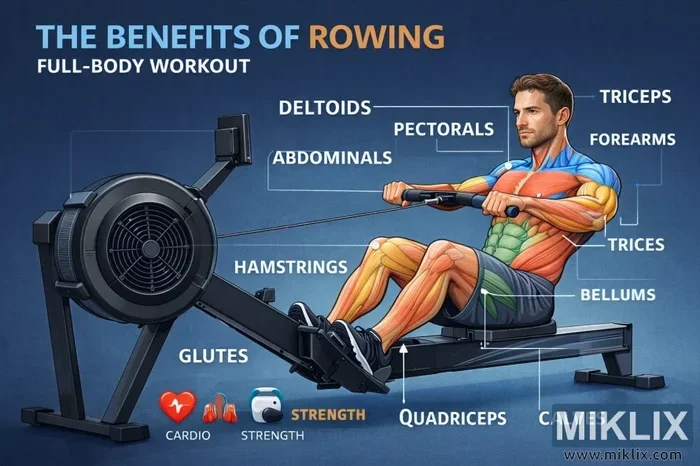
A rowing machine engages over 85% of your body’s muscles, making it one of the most effective full-body workout tools available. From your legs and back to your arms and core, every stroke activates multiple muscle groups simultaneously. This guide breaks down exactly which muscles you work on a rowing machine and how to get the most out of every session.
A rowing machine is one of the most underrated pieces of workout equipment out there. Most people think it is just a cardio machine. But the truth is, a rowing machine works almost your entire body. If you have ever wondered how many muscles a rowing machine actually works, the answer might surprise you. We are talking about over 85% of your body’s muscles firing up with every single stroke.
Whether you are a beginner just getting started or a seasoned fitness enthusiast looking to switch up your routine, understanding which muscles a rowing machine targets can completely change your workouts. This guide breaks down every muscle group, explains the rowing stroke, and gives you practical tips to get the most out of your sessions.
Key Takeaways
- A rowing machine works over 85% of your body’s muscles in a single stroke, making it a highly efficient full-body exercise tool.
- The leg drive phase engages your quads, hamstrings, glutes, and calves as the primary power source.
- Your core muscles stabilize your entire body throughout the rowing stroke, acting as a bridge between your upper and lower body.
- Upper body muscles including your back, shoulders, biceps, and triceps are activated during the pull phase.
- Proper rowing technique is essential to maximize muscle engagement and prevent injury.
- Rowing combines cardio and strength training, offering dual benefits for weight loss and muscle building.
- Consistent rowing sessions can improve muscle endurance, posture, and overall functional fitness.
📑 Table of Contents
- Why a Rowing Machine Is a Full Body Workout Machine
- The Rowing Stroke: How It Works and Which Muscles It Hits
- Muscle Groups Worked on a Rowing Machine in Detail
- How Rowing Compares to Other Machines
- Common Mistakes That Reduce Muscle Engagement
- How to Maximize Muscle Activation on the Rowing Machine
- How Often Should You Row to Build Muscle?
- The Bottom Line
Why a Rowing Machine Is a Full Body Workout Machine
Unlike a treadmill that mostly targets your lower body, or a bicep curl that isolates one muscle, a rowing machine brings everything to the table. It combines cardiovascular exercise with resistance training in one smooth motion. Every stroke follows a sequence that works different muscle groups in a specific order.
This is what makes rowing so special. You get a low impact full body workout that is easy on your joints but tough on your muscles. You do not need to jump from machine to machine to hit every muscle group. The rowing machine does it all in one place. If you are curious about how this compares to other full body workouts, check out this guide on does a rowing machine give a full body workout.
The beauty of indoor rowing is that you can adjust the resistance to match your fitness level. Want a lighter session for recovery? Turn the damper down. Want to build serious muscle? Crank it up. The flexibility makes it a great tool for everyone.
The Rowing Stroke: How It Works and Which Muscles It Hits
To understand how many muscles a rowing machine works, you need to understand the rowing stroke itself. Every stroke has four phases. Each phase activates different muscle groups. Let us break them down one by one.
1. The Catch
The catch is the starting position. You are at the front of the machine with your knees bent and your arms extended forward. This position preloads your muscles and gets them ready to fire.
During the catch, your tibialis anterior (the muscle in your shin) engages to keep your feet stable. Your forearms and grip muscles activate to hold the handle. Your hamstrings and glutes are loaded and ready to drive. This is where the magic starts.
2. The Drive
The drive is the powerhouse of the rowing stroke. This is where the most muscle activation happens. The drive follows a specific sequence called the legs, back, arms sequence.
First, your legs push through the footplates. This engages your quadriceps, glutes, and calves powerfully. Then your torso swings back slightly, activating your core muscles and erector spinae (the muscles along your spine). Finally, your arms pull the handle toward your lower chest, working your lats, biceps, and rear deltoids.
This sequential firing pattern is what makes rowing so effective. No other machine mimics this natural chain reaction so well.
3. The Finish
At the finish, your legs are fully extended, your torso is slightly leaned back, and the handle is pulled into your lower chest. Your abdominals are engaged to stabilize your torso. Your shoulders are pulled back, working the posterior deltoids and trapezius muscles.
The finish position also requires your hip flexors to maintain the slight lean. It is a brief moment of full body tension that ties the entire stroke together.
4. The Recovery
The recovery is the return to the catch position. It might look easy, but it plays an important role in muscle engagement. During the recovery, your triceps push the handle away. Your core rotates forward. Your hamstrings and calves bend your knees as you slide forward.
The recovery phase also gives your muscles a brief moment to reset before the next powerful drive. This rhythm of effort and recovery is what makes rowing sustainable for long workouts.
Muscle Groups Worked on a Rowing Machine in Detail
Now let us get into the specifics. Here is a detailed breakdown of the major muscle groups a rowing machine targets.
Leg Muscles
Your legs do about 60% of the work during a rowing stroke. That is a huge percentage. The quadriceps in the front of your thighs are the primary movers during the drive phase. Your hamstrings on the back of your thigh help extend your hips and flex your knees. Your glutes power the hip extension, and your calves stabilize your ankles throughout the stroke.
If you want to build stronger legs, rowing is an excellent way to do it without the joint stress of heavy squats or lunges. For more on how rowing compares to other leg exercises, you might enjoy how many calories does a rowing machine burn per hour.
Back Muscles
The latissimus dorsi (lats) is the star of the show when it comes to your back. These large muscles in your upper back are responsible for the pulling motion. Your trapezius and rhomboids between your shoulder blades help retract your shoulder blades during the pull. Your erector spinae runs along your spine and keeps your torso stable throughout the stroke.
Regular rowing can improve your posture significantly. Many people who sit at desks all day develop weak back muscles. Rowing helps counteract that by strengthening the entire posterior chain.
Core Muscles
Your core is the bridge between your upper and lower body during rowing. It stabilizes your spine, transfers power from your legs to your arms, and prevents you from collapsing during the drive phase.
The rectus abdominis (your six-pack muscles), obliques on the sides of your torso, and transverse abdominis (the deep core muscle) all work hard during every stroke. A strong core does not just help your rowing. It helps every other movement you do in daily life.
Arm and Shoulder Muscles
While your legs provide most of the power, your arms and shoulders play a crucial role in the pulling phase. Your biceps pull the handle toward your body. Your triceps extend your arms during the recovery. Your deltoids stabilize your shoulder joints throughout the stroke.
The forearms and grip muscles also get a workout from holding the handle. Over time, rowing can build functional grip strength that carries over to other activities.
How Rowing Compares to Other Machines
It is helpful to understand where rowing fits in compared to other popular workout machines. Here is a quick comparison.
| Machine | Primary Muscles | Impact Level | Cardio Benefit |
|---|---|---|---|
| Rowing Machine | Full body (85%+) | Low | Excellent |
| Treadmill | Legs, glutes | High | Excellent |
| Stationary Bike | Legs, glutes | Low | Good |
| Elliptical | Legs, arms | Low | Good |
| Weight Bench (Free Weights) | Targeted muscles | Varies | Minimal |
As you can see, the rowing machine stands out for its ability to work almost every muscle group while keeping impact low. This makes it ideal for people who want a joint friendly full body workout. It is also great for those recovering from injuries who still want to stay active.
If you are wondering how rowing fits into a weight loss plan, the combination of muscle engagement and calorie burn is hard to beat. Check out how to use a rowing machine to lose weight for practical strategies.
Common Mistakes That Reduce Muscle Engagement
Even though a rowing machine works tons of muscles, poor technique can limit your results and increase your risk of injury. Here are the most common mistakes to avoid.
Relying Too Much on Your Arms
Many beginners think rowing is an arm exercise. It is not. Your arms are the final link in the chain, not the engine. If you pull with your arms too early, you miss out on the powerful leg drive that does most of the work. Focus on pushing with your legs first, then leaning back, and finally pulling with your arms.
Rounding Your Back
Rounding your back during the stroke puts unnecessary stress on your spine and reduces core engagement. Keep your back straight and your chest lifted throughout the entire stroke. Think tall and proud.
Sliding Too Far Forward
Overcompressing at the catch position can strain your lower back. Keep your shins vertical and your knees over your ankles. A slight forward lean is fine, but do not collapse into the machine.
Rushing the Recovery
The recovery phase is just as important as the drive. If you rush through it, you lose the chance to properly engage your core and set up for the next powerful stroke. Remember the rhythm: drive hard, recover smooth.
How to Maximize Muscle Activation on the Rowing Machine
Want to get the most out of every stroke? Here are some practical tips to boost your muscle engagement.
Focus on Your Technique First
Before you increase resistance or try to go faster, master the basic rowing form. Proper technique ensures that the right muscles are doing the right work. Watch instructional videos, ask a coach at the gym, or record yourself to check your form.
Use Interval Training
Alternate between high intensity bursts and steady state rowing. This type of training, often called HIIT, maximizes both muscle activation and cardiovascular benefits. Try rowing hard for 30 seconds, then recovering at a slow pace for 60 seconds. Repeat for 15 to 20 minutes.
Increase the Resistance Gradually
Higher resistance forces your muscles to work harder. But do not jump to the highest setting right away. Gradually increase the damper setting over several weeks to build strength safely.
Add Rowing to Your Existing Routine
Rowing pairs well with other exercises. Use it as a warm up before strength training, or add it as a finisher at the end of your workout. The full body muscle engagement makes it a perfect complement to any fitness routine.
How Often Should You Row to Build Muscle?
The frequency of your rowing sessions depends on your goals. For general fitness and muscle maintenance, 3 to 4 sessions per week is ideal. Each session can last anywhere from 20 to 45 minutes.
If your goal is muscle building, focus on higher resistance and slower strokes. This creates more time under tension for your muscles, which is a key driver of muscle growth. For weight loss, longer sessions at moderate intensity will burn more calories and improve endurance.
Always listen to your body. Muscles need time to recover and grow stronger after a workout. If you feel excessive soreness or fatigue, take an extra rest day. Consistency over time beats intensity in short bursts.
For more guidance on rowing frequency, check out how often should you row on a rowing machine for a detailed breakdown.
The Bottom Line
A rowing machine is one of the most efficient pieces of workout equipment you can own. It works over 85% of your body’s muscles, combines cardio with strength training, and is gentle on your joints. From your legs and back to your core, arms, and shoulders, every stroke activates a coordinated chain of muscle groups working together.
Whether your goal is to build muscle, lose weight, or simply stay active, the rowing machine delivers. The key is to use proper technique, stay consistent, and gradually challenge yourself over time. With the right approach, you will feel stronger, more energized, and more confident in no time.
So next time you hit the gym or roll out your rowing machine at home, remember that every stroke is working more muscles than you probably realized. That is the power of rowing.
Frequently Asked Questions
How many muscles does a rowing machine work?
A rowing machine works over 85% of your body’s muscles. Every stroke engages your legs, back, core, arms, and shoulders in a coordinated sequence that makes it one of the most comprehensive full body exercises available.
Is a rowing machine good for building muscle?
Yes, a rowing machine can help build muscle, especially when you use higher resistance and slower stroke rates. It targets major muscle groups like your quads, glutes, back, and core, making it a great strength training tool alongside traditional weight lifting.
Does rowing tone your stomach muscles?
Absolutely. Your core muscles, including your abdominals and obliques, are engaged throughout every rowing stroke. They stabilize your torso and transfer power between your upper and lower body, which helps tone and strengthen your midsection over time.
Is rowing better than running for muscle engagement?
In terms of muscle engagement, rowing is far superior to running. Running primarily targets your lower body and cardiovascular system, while rowing works over 85% of your muscles including your back, arms, and core. It is also much easier on your joints.
Can beginners use a rowing machine to work all their muscles?
Yes, beginners can absolutely use a rowing machine to engage all major muscle groups. Start with low resistance and focus on learning proper form. Once you are comfortable with the technique, you can increase intensity and resistance to build strength and endurance safely.
How long should I row to get a full muscle workout?
A 20 to 30 minute rowing session at moderate intensity is enough to work all the major muscle groups effectively. For muscle building, focus on higher resistance and shorter intervals. For endurance and calorie burn, longer sessions at a steady pace work best.