What Is the Difference Between Cross Trainer and Elliptical
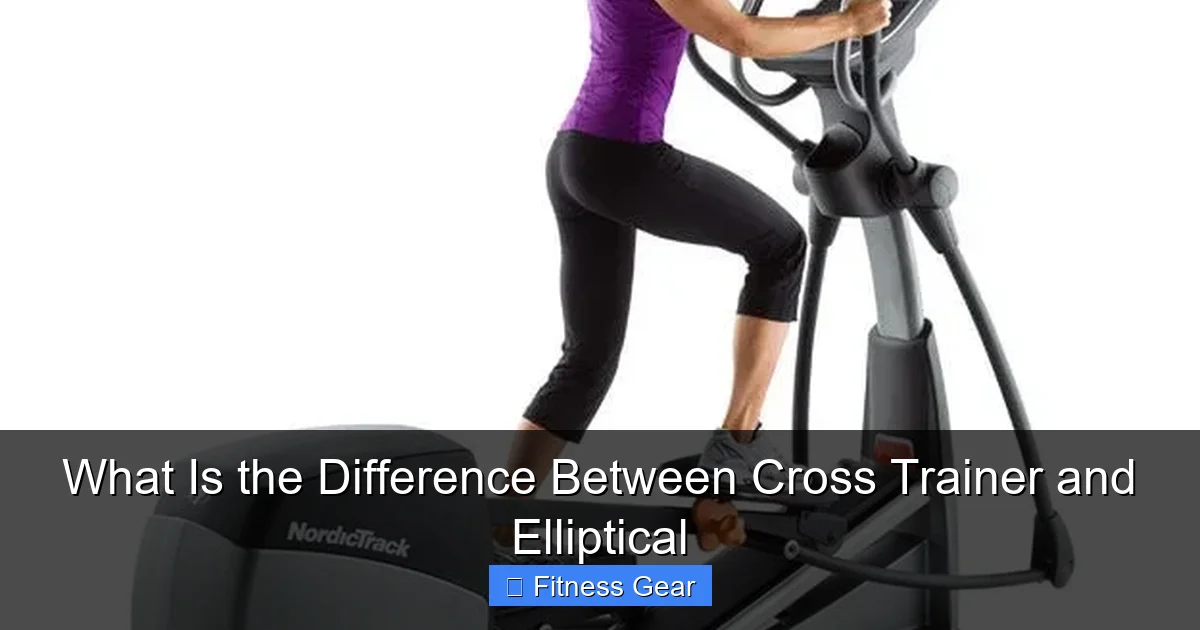
While often used interchangeably, “cross trainer” and “elliptical” refer to distinct cardio machines. A traditional elliptical has a fixed, elliptical footpath and primarily works the lower body. A cross trainer (or elliptical cross-trainer) adds moving handlebars, creating a full-body, coordinated motion that engages both arms and legs. Choosing between them depends on your goals: a cross trainer offers a more comprehensive strength and cardio workout, while a standard elliptical provides a focused, low-impact lower-body burn with a simpler learning curve.
Walk into any gym, and you’ll likely see two machines that look remarkably similar. People hop on, their feet tracing a smooth, oval-shaped path, and they start moving. But are they the same? The terms “cross trainer” and “elliptical” are thrown around as if they’re synonyms, and for good reason—the machines share a common ancestor and a foundational motion. However, beneath that familiar exterior lies a critical mechanical and experiential difference that can significantly impact your workout results. This confusion isn’t just semantics; it’s about understanding which tool is right for your specific fitness journey. Let’s clear the air once and for all.
Think of it this way: all cross trainers are ellipticals, but not all ellipticals are cross trainers. The term “elliptical” is the broad family name, referring to any machine with that signature, smooth, joint-friendly oval footpath. Within that family, there are two primary branches: the “standard” or “front-drive” elliptical, and the “elliptical cross-trainer,” often just called a “cross trainer.” The divergence happens at the handlebars. This single design choice transforms the machine from a lower-body isolator into a full-body symphony of movement. In the following sections, we’ll dissect these differences in motion, muscle engagement, calorie burn, and practical application, so you can walk into the gym (or your living room) with absolute confidence in your machine choice.
Key Takeaways
- The core difference is the handlebars: A cross trainer has moving arms for a full-body workout; a standard elliptical has stationary or simple pivoting handles for stability only.
- Motion pattern differs: Both have an elliptical footpath, but a cross trainer requires coordinated arm and leg movement, increasing complexity and engagement.
- Muscle activation varies: Cross trainers recruit upper body muscles (chest, back, shoulders, arms) significantly more than standard ellipticals.
- Impact is similarly low: Both machines are excellent for joint-friendly cardio, as feet never leave the pedals, reducing stress on knees, hips, and ankles.
- Calorie burn potential is higher on cross trainers: Engaging more muscle mass typically leads to greater energy expenditure per minute at the same perceived effort.
- Learning curve is steeper for cross trainers: The coordinated motion can feel awkward at first, while standard ellipticals are more intuitive for most beginners.
- Your goal dictates the choice: For pure lower-body toning and simplicity, an elliptical suffices. For total-body conditioning, strength, and higher calorie burn, a cross trainer is superior.
📑 Table of Contents
- Understanding the Basics: Definitions and Origins
- The Motion Difference: Feet vs. Feet AND Hands
- Muscle Engagement: Lower Body vs. Total Body
- Impact, Joint Stress, and Injury Prevention
- Calorie Burn, Workout Variety, and Fitness Goals
- How to Choose the Right Machine for You
- Conclusion: Making an Informed Decision
Understanding the Basics: Definitions and Origins
To grasp the difference, we must first define our terms clearly. The story begins with a desire to create a cardio machine that mimicked the natural, efficient motion of running—but without the punishing impact. The solution was a cam-and-roller system that forces the feet to follow a true elliptical (egg-shaped) path, rather than the circular path of a bicycle. This was the birth of the elliptical trainer.
The Standard Elliptical: A Lower-Body Focus
The classic or “standard” elliptical machine features a large, often front-mounted flywheel. The foot pedals are attached to this mechanism via two reciprocating arms. The user stands on the pedals, grips stationary or lightly pivoting handlebars (sometimes called “swing arms” but they do not move in a synchronized, resistive pattern), and moves their legs in the elliptical motion. The arms are there primarily for balance and support. The motion is entirely driven by the lower body. This design is straightforward, intuitive, and incredibly popular for its simplicity and effective lower-body cardio.
The Cross Trainer: Adding the “Cross” to the Motion
The cross trainer, or elliptical cross-trainer, takes the standard elliptical’s lower-body motion and integrates it with a set of long, moving handlebars. These handlebars are connected to the same resistance system as the pedals—usually the same flywheel or an independent resistance system. When you push and pull the handles, you are directly contributing to turning that flywheel against resistance. This means your arms are not just along for the ride; they are active participants generating power. The “cross” in the name refers to the cross-crawl, contralateral movement pattern: when your right foot moves forward, your left hand typically pushes forward (and vice versa), mimicking natural walking or running gait but with amplified arm involvement. This creates a true, coordinated full-body workout.
The Motion Difference: Feet vs. Feet AND Hands
This is the heart of the distinction. Watching someone on a standard elliptical, you’ll see a fluid leg motion with the torso relatively stable, hands resting on the stationary grips. On a cross trainer, the entire body is in a state of coordinated, dynamic movement. The arms swing in a long, powerful arc, often in opposition to the legs.
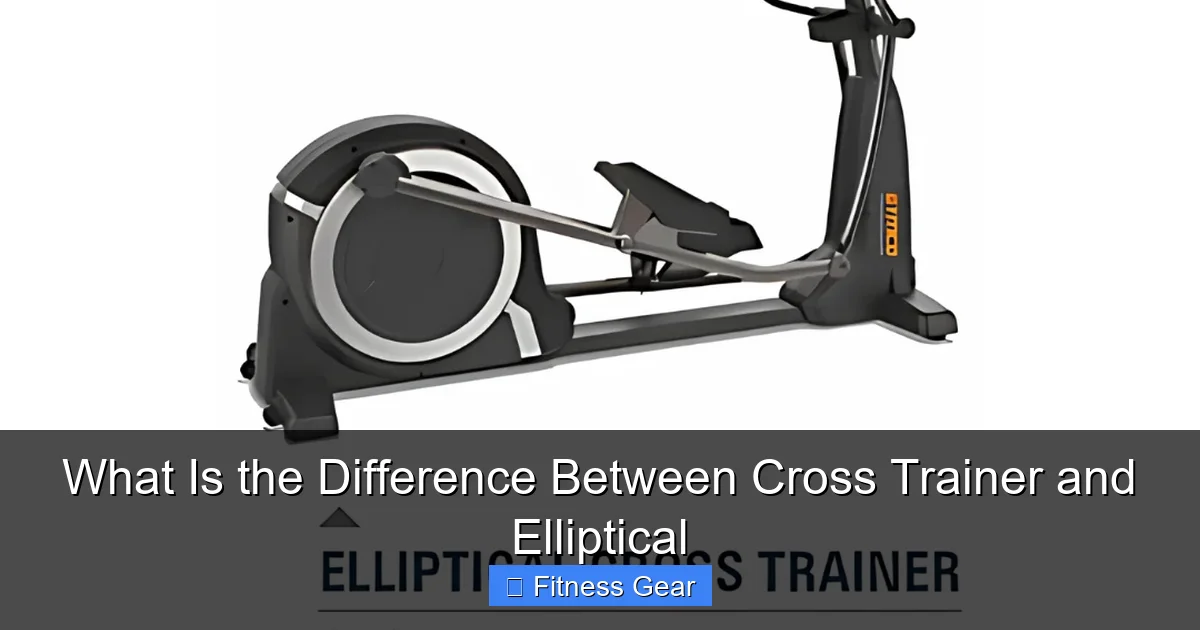
Visual guide about What Is the Difference Between Cross Trainer and Elliptical
Image source: gymco.org
Biomechanics of the Elliptical Path
Both machines share the elliptical footpath, which is key to their low-impact nature. On a circle (like a bike), the knee experiences high forces at the top and bottom of the rotation. On an ellipse, the radius of curvature changes smoothly, allowing for a more natural leg extension and a significant reduction in peak joint stress. This makes both machines superb for rehabilitation, those with arthritis, or anyone seeking to protect their joints while getting a vigorous workout. The difference lies in what’s happening above the waist.
The Coordinated Arm-Leg Drive of the Cross Trainer
On a cross trainer, you initiate the movement by pushing with your legs AND pulling with your arms. The resistance is unified; pushing harder with your legs makes the arms harder to pull, and vice-versa. This requires and develops intermuscular coordination. Your nervous system learns to fire muscle groups in a sequenced, efficient pattern. This is a more functional movement pattern that translates better to real-world activities like climbing, rowing, or even sports. It also means you cannot “cheat” by letting your arms go limp—their effort is mandatory to maintain momentum against resistance.
Practical Example: Imagine simulating a stair-climbing motion. On a standard elliptical, you’d feel it in your quads and glutes. On a cross trainer, as you “step,” you’re also actively “pulling” yourself up, engaging your lats, biceps, and chest in addition to your legs. The sensation is more like a combined leg press and rowing motion.
Muscle Engagement: Lower Body vs. Total Body
This functional difference leads directly to a divergence in which muscles get the brunt of the work. Understanding this is crucial for targeting your training.
Visual guide about What Is the Difference Between Cross Trainer and Elliptical
Image source: runnercross.com
Primary Muscles on a Standard Elliptical
The standard elliptical is a fantastic lower-body sculptor. The primary movers are:
- Quadriceps: The muscles on the front of your thighs do most of the work, especially during the “push” phase.
- Gluteus Maximus: Your primary butt muscle engages powerfully, particularly when you increase the incline (if your machine has that feature) or push through your heels.
- Hamstrings: The backs of your thighs work during the “recovery” or pull phase of the motion.
- Calves (Gastrocnemius & Soleus): These are active throughout for ankle stability and power.
Your core (abdominals and lower back) is engaged isometrically to maintain an upright posture, but it’s not the primary driver. The upper body (chest, back, shoulders, arms) receives minimal activation, mostly from holding onto the handles for balance.
Full-Body Integration on a Cross Trainer
The cross trainer recruits a much broader spectrum:
- All Lower Body Muscles: Quads, glutes, hamstrings, and calves are activated just as on a standard elliptical.
- Pushing Muscles (Anterior Chain): Your pectorals (chest), anterior deltoids (front shoulders), and triceps work hard during the “push” phase when your hands move forward and away from your body.
- Pulling Muscles (Posterior Chain): Your latissimus dorsi (lats), posterior deltoids (rear shoulders), and biceps engage powerfully during the “pull” phase when your hands move back toward your body.
- Core: The core engagement is significantly higher. To transfer force between your upper and lower body efficiently and maintain balance on the moving pedals, your obliques, rectus abdominis, and erector spinae must work dynamically. This makes the cross trainer an excellent core stability trainer.
The result is a near-total-body workout that builds functional strength and muscular endurance alongside cardiovascular fitness.
Impact, Joint Stress, and Injury Prevention
This is where both machines shine and why they are staples in physical therapy clinics and home gyms for injury-prone individuals. The shared elliptical footpath is the hero here.
Visual guide about What Is the Difference Between Cross Trainer and Elliptical
Image source: aerofit.co
The Zero-Impact Advantage
On treadmills or during running, each stride sends a shock wave up your legs, with forces reaching 2-3 times your body weight. On both types of ellipticals, your feet remain planted on the pedals throughout the entire range of motion. There is no “impact” phase where your foot strikes a surface. The motion is smooth, continuous, and driven by the machine’s resistance system. This eliminates the jarring impact that can aggravate knee issues (like patellofemoral pain syndrome), hip arthritis, or stress fractures. For someone recovering from an injury or with chronic joint pain, this is a game-changer.
Is One Easier on the Joints Than the Other?
Surprisingly, the joint stress profile is virtually identical between the two. The elliptical path itself dictates the biomechanics of the lower limb. The addition of moving arms on a cross trainer does not change the path or forces acting on the knees, hips, or ankles. The difference in joint loading is negligible. The choice for joint health should be based on the machine’s condition (smooth operation), proper fit (strides length), and your personal comfort with the motion pattern—not on whether it’s a cross trainer or standard elliptical.
Key Tip: Always prioritize machines with a longer stride length (18-20 inches or more) if you’re taller, as a shorter stride can force an unnatural, cramped motion that may cause discomfort over time, regardless of the machine type.
Calorie Burn, Workout Variety, and Fitness Goals
This is where the muscle engagement difference translates directly into energy expenditure and workout versatility.
Caloric Expenditure: The Full-Body Effect
Burning calories is fundamentally about moving mass over distance. By engaging your large upper body muscles (back, chest) in addition to your large lower body muscles, a cross trainer allows you to move more total muscle mass per minute. More active muscle mass requires more oxygen and fuel (calories). At the same perceived level of exertion (say, “somewhat hard” on a scale of 1-10), a cross trainer will almost invariably burn more calories than a standard elliptical. Studies and metabolic data often show a 10-20% higher calorie burn on cross trainers for the same heart rate, simply because you’re powering the machine with more of your body.
Workout Variety and Programming
Standard Elliptical: Workouts are typically focused on variables like resistance (how hard it is to push), speed (cadence or RPM), and sometimes incline (which changes the muscle emphasis, making it feel more like climbing). The simplicity makes it easy to follow steady-state cardio (long, moderate sessions) or interval training (varying resistance/speed). It’s a specialist for lower-body endurance and toning.
Cross Trainer: In addition to resistance and speed, you can consciously vary your upper body engagement. You can do:
- Arm-focused intervals: Pulling hard with arms while keeping leg effort moderate.
- Leg-focused intervals: Pushing hard with legs while using arms only for balance.
- Full-power synchronized intervals: Driving with both arms and legs for maximum burn.
- Reverse motion: Most cross trainers allow you to reverse the direction, shifting emphasis to different muscle groups (e.g., more hamstrings and glutes, different upper body pulling muscles).
This versatility makes the cross trainer a better tool for high-intensity interval training (HIIT), which is highly effective for improving cardiovascular fitness and metabolic health in shorter time periods.
How to Choose the Right Machine for You
Now that the differences are clear, how do you decide? Ask yourself these key questions.
What is Your Primary Fitness Goal?
- For weight loss and maximum calorie burn: The cross trainer has a clear edge due to full-body engagement. If your primary metric is calories burned per session, lean towards a cross trainer.
- For lower-body toning, rehabilitation, or simplicity: If you want to focus purely on legs and glutes, are recovering from an upper body injury, or simply want a no-fuss machine that’s easy to jump on, a standard elliptical is perfect.
- For improving overall athletic performance and functional strength: The cross trainer’s coordinated, full-body movement builds more functional strength and neuromuscular coordination that benefits sports and daily activities.
What is Your Experience and Physical Condition?
- Beginner or returning from a long break: The standard elliptical’s simpler motion is less intimidating and easier to master quickly, allowing you to focus on building cardio endurance without a coordination challenge.
- Experienced exerciser seeking a challenge: The cross trainer offers an additional layer of complexity and engagement that can prevent plateaus and keep workouts interesting.
- Upper body limitations or injuries: A standard elliptical is the safer choice if you have shoulder, elbow, or wrist issues, as it removes the requirement for resistive arm movement.
Space, Budget, and Practical Considerations
Cross trainers are often slightly larger and can be more expensive than basic standard ellipticals due to the additional linkage and handlebar mechanism. However, the price gap has narrowed. Consider the available space in your home or gym. Also, think about workout duration preference. If you enjoy 45-60 minute steady-state sessions, either machine works. If you prefer shorter, more intense 20-30 minute HIIT workouts, the cross trainer’s higher intensity potential is advantageous.
Final Verdict: There is no “better” machine in an absolute sense. There is only the better machine for you. If you can only have one machine and want the most comprehensive workout, the cross trainer is the more versatile, full-body tool. If your needs are specifically lower-body cardio with ultimate simplicity, the standard elliptical is a proven, effective workhorse.
Conclusion: Making an Informed Decision
The difference between a cross trainer and an elliptical boils down to one fundamental design element: moving handlebars. This transforms the machine from a lower-body cardio device into a full-body, functional trainer. Both share the invaluable benefit of a smooth, zero-impact elliptical footpath that is gentle on the joints. Your choice should be a strategic one, aligned with your personal health goals, physical condition, and workout preferences. Don’t get hung up on the marketing names at the gym. Look at the machine: if the arms move independently and resistively as you pump them, it’s a cross trainer. If the arms are stationary or just swing loosely for balance, it’s a standard elliptical.
If you’re purchasing a machine, test both styles if possible. Feel the motion. Notice which muscles fire. Consider your long-term goals. And always, before starting any new exercise program, especially if you have pre-existing health conditions, consult with a physician or certified trainer. Remember to also review the manufacturer’s terms and conditions regarding warranties, weight limits, and proper use to ensure safe and effective workouts for years to come. Ultimately, the best machine is the one you will use consistently and enjoy. Both are excellent tools on the path to better health—choose the one that best fits your unique journey.
Frequently Asked Questions
Can I use a cross trainer if I have shoulder problems?
It depends on the nature of your shoulder issue. The pushing and pulling motion can aggravate certain conditions like rotator cuff injuries or severe arthritis. A standard elliptical, with stationary handles, is generally a safer choice for upper body limitations. Always consult with a doctor or physical therapist for personalized advice.
Is a cross trainer better for losing belly fat?
Spot reduction is a myth; you cannot target fat loss from a specific area. Both machines are excellent for burning overall body fat through calorie expenditure. Because a cross trainer typically burns more calories per minute by engaging more muscles, it can be more effective for creating the calorie deficit needed for overall fat loss, which will eventually include belly fat.
Which machine is better for toning my legs and glutes?
Both are effective, but with a nuance. A standard elliptical allows you to focus 100% of your effort on the lower body. On a cross trainer, you can still emphasize the legs by reducing arm involvement. However, some find that by consciously driving through the heels and increasing resistance on either machine, they can achieve a powerful glute and hamstring workout. For pure, isolated lower-body toning, the standard elliptical’s simplicity is an advantage.
Do I need to wear special shoes for an elliptical or cross trainer?
You should wear supportive, athletic cross-training or running shoes. Avoid thick, cushioned running shoes with a high heel-to-toe drop, as they can alter your natural ankle motion and potentially cause discomfort. Flat-soled shoes like cross-trainers, court shoes, or minimalist running shoes often provide the best feel and stability for the elliptical footpath.
Can I go backwards on these machines, and is it beneficial?
Most modern ellipticals and all cross trainers allow you to reverse the direction. Reversing changes the muscle emphasis: it typically works your hamstrings and glutes more in the lower body and engages different muscles in the upper back and posterior shoulders during the pull phase. It’s a great way to add variety, balance muscle development, and challenge your coordination.
Are cross trainers harder to learn how to use properly?
Yes, generally. The coordinated arm-leg motion of a cross trainer has a steeper initial learning curve. It can feel awkward or uncoordinated for the first few sessions. Your body needs to learn the cross-crawl pattern. A standard elliptical’s motion is much more intuitive, similar to a stepper, and can be picked up almost instantly. With a few practice sessions, the cross trainer’s motion becomes natural for most people.