What Is the Best Rowing Machine for Home

Choosing the best rowing machine for home can transform your fitness routine without leaving your house. Whether you want a compact model for small spaces or a premium air rower for intense workouts, the right choice depends on your goals, budget, and available room. This guide breaks down the top options, key features, and expert tips to help you pick the perfect rowing machine for home use.
Finding the best rowing machine for home use is one of the smartest fitness decisions you can make this year. Rowing machines deliver a full-body workout that burns calories, builds muscle, and improves heart health. Unlike many pieces of exercise equipment, a rower works your arms, legs, back, and core all at once. That means you get more done in less time.
But here is the challenge. The market is packed with options. Air rowers, magnetic rowers, water rowers, and hybrid models all compete for your attention. Prices range from under $200 to over $2,000. And each machine feels completely different during a workout. So how do you know which one is right for you?
This guide answers that question. We have reviewed dozens of models, compared features, and gathered expert advice to help you find the perfect rowing machine for home. Whether you are a complete beginner or a seasoned athlete, you will find practical recommendations that actually work. Let us dive in.
Key Takeaways
- Air rowers deliver the most realistic feel: They mimic on-water rowing and offer adjustable resistance for all fitness levels.
- Magnetic rowers are the quietest option: Perfect for apartment dwellers or early morning workouts without disturbing others.
- Water rowers provide a premium experience: They look stunning and offer smooth, natural resistance but take up more space.
- Budget matters: You can find a solid rowing machine for home use between $200 and $1,500 depending on your needs.
- Check the footprint before buying: Measure your available space and look for folding models if room is limited.
- Resistance type affects your workout: Each type offers a different feel, so try them out when possible.
- Comfort features count: Seat padding, footrests, and handle grip all impact your enjoyment during longer sessions.
📑 Table of Contents
- Why a Rowing Machine Belongs in Your Home
- Types of Rowing Machines Explained
- Top Features to Look For
- Best Rowing Machines for Home Use Compared
- Common Mistakes to Avoid When Buying
- Expert Tips for Getting the Most Out of Your Rowing Machine
- How to Choose the Best Rowing Machine for Your Home
- Conclusion
Why a Rowing Machine Belongs in Your Home
A rowing machine for home use offers benefits that few other pieces of equipment can match. First, it gives you a true full-body workout. Every stroke engages roughly 86 percent of your muscles. That includes your quads, hamstrings, glutes, back, shoulders, arms, and core. Few machines can claim that kind of coverage.
Second, rowing is low impact. Your feet stay on the pedals, and there is no jarring impact on your joints. This makes it ideal for people with knee or hip issues who still want to get a serious cardio session in. You can push hard without beating up your body.
Third, a home rower saves you time and money. No more commuting to the gym. No more monthly membership fees. Just step onto your machine and start working out whenever it fits your schedule. Over time, the savings add up significantly.
Finally, modern rowing machines are more compact and quieter than ever before. Many models fold up for easy storage, which is a huge win for anyone living in an apartment or a small home. The days of bulky, noisy equipment are largely behind us.
Types of Rowing Machines Explained
Not all rowers are created equal. The type of resistance a machine uses changes everything about how it feels, sounds, and performs. Understanding the four main types is the first step toward finding the right rowing machine for home.
Air Rowers
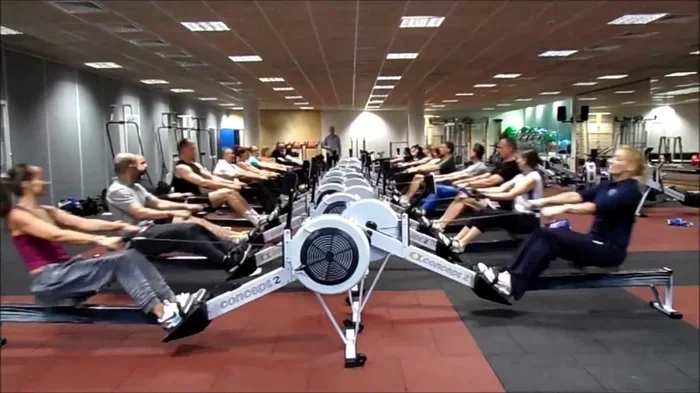
Air rowers use a spinning flywheel to create resistance. The harder you pull, the more air flows through the fan, and the more resistance you feel. This mimics the sensation of rowing on water better than any other type. Air rowers are the go-to choice for serious athletes and CrossFit enthusiasts.
The downside is noise. Air rowers can be quite loud, especially at higher intensities. If you live in an apartment or have close neighbors, this might be a concern. However, if you have a dedicated workout space or a house with plenty of room, an air rower delivers an unmatched training experience.
Magnetic Rowers
Magnetic rowers use electromagnets to create resistance. They are incredibly quiet, making them the best choice for noise-sensitive environments. You can row early in the morning or late at night without worrying about disturbing anyone in your household.
Magnetic models also tend to offer very smooth and consistent resistance. They are great for steady-state cardio sessions and longer endurance workouts. The trade-off is that they do not replicate the feel of on-water rowing as closely as air rowers do. But for most home users, the quiet operation is well worth it.
Water Rowers
Water rowers use a paddle suspended in a tank of water to generate resistance. The result is a rowing feel that is as close to being on the water as you can get without actually leaving dry land. The sound of the water sloshing with each stroke is incredibly soothing and satisfying.
Water rowers are beautiful pieces of equipment. They look stunning in a home and often double as décor. However, they are typically the heaviest and most expensive option. They also require more space and regular maintenance, such as adding water treatment tablets. If budget and space are not constraints, a water rower is hard to beat.
Hybrid and Other Types
Some manufacturers combine resistance types to offer the best of both worlds. For example, a magnetic-air hybrid lets you switch between quiet magnetic mode and dynamic air resistance. These models tend to be more expensive but offer greater versatility. Other niche types include hydraulic rowers, which are compact and affordable but generally less durable and less smooth in their feel.
Top Features to Look For
When shopping for the best rowing machine for home, certain features can make or break your experience. Here is what to focus on.
Resistance Type and Adjustability
The best resistance for a rowing machine depends entirely on your goals and environment. If you want quiet operation, go magnetic. If you want a challenging, dynamic workout, choose air. If you want the most natural feel, pick water. Many modern machines offer adjustable resistance so you can change the intensity from easy recovery rows to all-out sprints. This flexibility is essential for users at different fitness levels.
Footprint and Storage
Measure the space where you plan to keep your rower. Some models are surprisingly compact and fit easily in a closet or behind a couch. Others require a dedicated corner. If storage is a concern, look for folding rowing machines that can be stood upright against a wall after use. The last thing you want is a piece of equipment that takes up permanent real estate in your living room.
Monitor and Workout Tracking
A good monitor displays your pace, distance, strokes per minute, calories burned, and heart rate. Higher-end models offer preset workout programs, Bluetooth connectivity, and app integration. You can compete with friends, join virtual races, or follow guided training sessions. These features keep you motivated and make your workouts feel more engaging.
Comfort and Build Quality
You will spend a lot of time on this machine, so comfort matters. Look for a well-padded seat that glides smoothly on its rails. The footrests should adjust to fit different shoe sizes and foot positions. The handle should feel comfortable in your hands and not cause blisters during longer sessions. A sturdy frame with a high weight capacity ensures stability and safety, especially during intense efforts.
Best Rowing Machines for Home Use Compared
To help you narrow down your options, here is a comparison of the most popular categories of rowing machines for home.
| Type | Noise Level | Price Range | Best For |
|---|---|---|---|
| Air Rowers | Loud | $400 – $1,800 | Athletes, intense workouts |
| Magnetic Rowers | Very Quiet | $200 – $1,200 | Apartments, quiet workouts |
| Water Rowers | Moderate | $800 – $2,500 | Premium experience, aesthetics |
| Hybrid Rowers | Variable | $700 – $2,000 | Versatility, all-around use |
As you can see, each type serves a different need. There is no single “best” rowing machine for everyone. The right choice depends on your budget, your living situation, and your fitness goals. For most home users, a magnetic or air rower strikes the best balance between performance, price, and practicality.
Common Mistakes to Avoid When Buying
Shopping for a rowing machine can be overwhelming, and it is easy to make mistakes. Here are some pitfalls to watch out for.
Skipping the trial period. Many reputable brands offer 30-day or longer trial periods. Take advantage of this. A rower that looks great on paper might feel uncomfortable during actual use. Test it before committing.
Ignoring the rail length. Taller users need longer rails for a full, comfortable stroke. If you are over six feet tall, check the rail length carefully. A rower that is too short will limit your range of motion and reduce the effectiveness of each stroke.
Overlooking maintenance. Water rowers need regular water treatment. Air rowers may need occasional dusting of the flywheel. Magnetic rowers are the lowest maintenance but still benefit from periodic checks. Factor in ongoing care when choosing your machine.
Buying based on price alone. The cheapest model is not always the best value. A slightly more expensive rower with better build quality, a superior monitor, and smoother operation will last longer and provide a better experience. Think of it as an investment in your health.
Expert Tips for Getting the Most Out of Your Rowing Machine
Once you have your rowing machine for home, proper technique and smart training will maximize your results. Here are some tips from experienced coaches and fitness professionals.
First, learn the proper rowing form. The movement follows a sequence: legs push, hips open, arms pull. Then the reverse: arms extend, hips hinge, knees bend. Many beginners pull with their arms too early, which strains the lower back. Focus on driving with your legs first. If you want to refine your technique, check out our guide on proper rowing machine form for detailed instructions.
Second, start slow and build gradually. Rowing is a full-body effort, and your muscles need time to adapt. Begin with 15 to 20 minute sessions at a comfortable pace. As your fitness improves, increase duration and intensity. Overtraining in the first week is a common mistake that leads to soreness and burnout.
Third, vary your workouts. Do not just row at a steady pace every session. Include interval training, endurance rows, and technique drills. This keeps things interesting and challenges your body in different ways. It also prevents plateaus and keeps your progress moving forward.
Fourth, track your progress. Use the monitor on your machine or a connected app to log your workouts. Watching your split times improve and your distance increase is incredibly motivating. It also helps you identify patterns and adjust your training as needed.
How to Choose the Best Rowing Machine for Your Home
Still not sure where to start? Here is a simple framework to guide your decision.
Start with your space. Measure the area where the rower will live. If you have limited room, prioritize compact or folding models. Next, consider your noise tolerance. If you share walls with neighbors, a magnetic rower is your safest bet. Then set a budget. Decide what you are willing to spend and look for the best quality within that range.
After that, think about your fitness goals. Are you training for a race? Do you want general health and weight loss? Are you recovering from an injury? Different goals call for different features. For example, competitive rowers often prefer air rowers for their dynamic resistance. Casual users looking for a gentle cardio session may prefer the smoothness of a magnetic rower.
Finally, read reviews and compare models. Look for feedback from real users who have similar needs to yours. Pay attention to comments about durability, comfort, and customer service. A well-reviewed machine from a reputable brand will give you confidence in your purchase.
For more recommendations on top-rated models, check out our article on the best rowing machine for home use which covers current market leaders in detail.
Conclusion
Finding the best rowing machine for home does not have to be complicated. By understanding the different types, focusing on the right features, and avoiding common buying mistakes, you can confidently choose a machine that fits your life and your goals. A rowing machine is one of the most efficient and effective pieces of home exercise equipment you can own. It delivers a complete workout, saves you time and money, and brings the gym to your doorstep.
Take your time, do your research, and invest in a machine that feels right for you. The best rowing machine is the one you will actually use consistently. With the right choice, you will be on your way to better fitness, more energy, and a healthier lifestyle from the comfort of your own home.
Remember to focus on proper technique, vary your workouts, and enjoy the process. Rowing is a journey, and every stroke counts. Happy rowing!
Frequently Asked Questions
What is the best rowing machine for a small home?
Magnetic rowers are the best choice for small homes because they are compact, lightweight, and fold up easily. They also operate quietly, which is ideal for apartments or shared living spaces. Look for models with a footprint under 30 inches wide for the most flexibility in placement.
How often should I use my rowing machine for results?
For noticeable results, aim for three to five rowing sessions per week, lasting 20 to 45 minutes each. Consistency matters more than intensity, especially when you are starting out. As your fitness improves, you can increase the duration and add higher-intensity intervals to your routine.
Is a rowing machine better than a treadmill for home use?
Both have unique benefits. A rowing machine provides a full-body workout with low impact on your joints, while a treadmill focuses primarily on lower-body cardio. If you want comprehensive muscle engagement and joint-friendly exercise, a rower is often the better choice. For pure running or walking workouts, a treadmill may be more suitable.
What price range should I expect for a good home rowing machine?
Quality rowing machines for home use range from about $200 to $1,500. Budget models under $400 offer basic functionality and work well for beginners. Mid-range options between $400 and $800 provide better build quality, smoother operation, and more features. Premium models above $800 deliver professional-grade performance and advanced monitoring capabilities.
Can beginners use a rowing machine effectively?
Absolutely. Rowing machines are excellent for beginners because the movement is natural and easy to learn. Start with short sessions at a comfortable pace and focus on mastering the proper technique. As your strength and endurance build, you can gradually increase the intensity and duration of your workouts.
How do I maintain my rowing machine at home?
Maintenance depends on the type of rower you own. Air rowers need occasional dusting of the flywheel and regular checks of the chain or belt. Water rowers require adding water treatment tablets and keeping the water tank clean. Magnetic rowers need the least maintenance, typically just a wipe-down after workouts and periodic bolt tightening. Always refer to the manufacturer’s care guide for specific instructions.