How to Do Rowing Exercises Without a Machine
You can get an amazing rowing workout without any machine at all. This guide shows you how to do rowing exercises without a machine using bodyweight movements, resistance bands, and simple household items. You will learn proper form, targeted exercises, and a ready-to-follow workout plan that builds strength and endurance right at home.
Key Takeaways
- No equipment needed: You can perform effective rowing movements using just your bodyweight and a small floor space.
- Full-body engagement: These exercises work your legs, back, arms, and core in every rep, just like a real rowing stroke.
- Perfect for beginners: The movements are simple to learn and easy to scale up as you get stronger.
- Flexible and portable: Do them at home, in a hotel room, or anywhere you have a few square feet.
- Built-in workout plan: A complete 25-minute routine is included so you can start immediately.
- Low impact on joints: Bodyweight rowing is gentle on your knees and hips while building real strength.
- Great for consistency: No expensive gear means no excuses. You can train without a rowing machine every single day.
📑 Table of Contents
- Why Rowing Exercises Without a Machine Are Worth Your Time
- The Muscles You Work With Rowing Movements
- Top Rowing Exercises You Can Do Without a Machine
- How to Perfect Your Rowing Form at Home
- Sample No-Machine Rowing Workout Plan
- Common Mistakes to Avoid
- Benefits of Training Without a Machine
- Quick Tips for Getting the Most Out of Your Workout
- Expert Insights
- Final Thoughts
Why Rowing Exercises Without a Machine Are Worth Your Time
Rowing is one of the best full-body workouts you can do. But not everyone has access to a rowing machine. The good news? You can still get a powerful rowing workout without any equipment at all. Rowing exercises without a machine use simple movements that mimic the rowing stroke. These exercises target your legs, back, arms, and core all at once.
Whether you are traveling, short on space, or just want to mix up your routine, these moves deliver real results. You do not need a gym membership. You do not need fancy gear. All you need is your own body and a little floor space. Doing rowing exercises without a machine is one of the smartest ways to stay fit at home.
Many people do rowing exercise at home without machine setups and see great gains. The key is knowing the right movements and keeping good form. This guide walks you through everything you need to get started.
The Muscles You Work With Rowing Movements
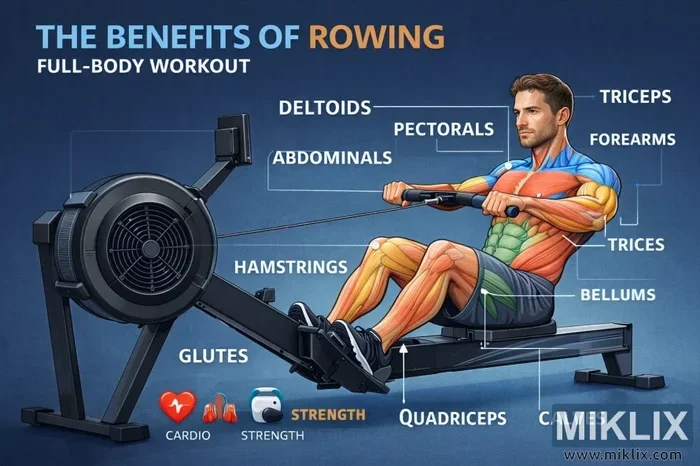
One of the biggest perks of rowing exercises without a machine is how many muscles they hit. A proper rowing motion works your entire body in one smooth movement. Here is a breakdown of what gets activated.
Legs and Glutes
Your legs do the heavy lifting during every rowing movement. The drive phase pushes through your quads, hamstrings, and glutes. This builds serious lower body strength over time.
Back and Shoulders
As you pull the imaginary handle toward your chest, your lats, traps, and rear delts fire up. This helps improve your posture and builds a stronger back.
Arms and Core
Your biceps, forearms, and abs stabilize the whole movement. A strong core keeps your form tight and protects your lower back. This is why rowing without a machine is so effective for core training.
Top Rowing Exercises You Can Do Without a Machine
You might be wondering what exercises without a rowing machine actually look like. Here are the best movements you can start doing today. These row at home without a rowing machine moves are simple but powerful.
1. The Bodyweight Squat Row
This exercise combines a squat with an imaginary rowing pull. Stand with your feet shoulder-width apart. Lower into a squat, then as you stand up, pull your arms back like you are gripping an oar. Squeeze your shoulder blades together at the top.
Do 3 sets of 12 to 15 reps. This movement builds both leg power and back strength. It is one of the most efficient rowing exercises without a machine you can do.
2. The Reverse Lunge with Row
Step one foot back into a lunge. As you push back up, pull both arms back in a rowing motion. This challenges your balance and works multiple muscle groups at once.
Try 10 reps on each leg for 3 sets. This is a great way to build single-leg strength while practicing your rowing movement without machine technique.
3. The Prone Y-T-W Raise
Lie face down on the floor. Raise your arms into a Y shape, then a T shape, then a W shape. This targets your upper back and rear shoulders just like the pull phase of a row.
Hold each position for 3 seconds. Do 2 sets of 8 reps per position. This exercise is perfect for building the back endurance you need for training for rowing without a rowing machine.
4. The Resistance Band Row
If you have a resistance band, anchor it around a sturdy object at chest height. Grab the band and pull back as if you are rowing. This adds real resistance to the movement.
Aim for 3 sets of 15 reps. Resistance bands are affordable and easy to store. They make rowing exercises without a machine feel much more like the real thing.
5. The Seated Knee Drive with Pull
Sit on the floor with your knees bent. Lean back slightly and lift your feet off the ground. Pull your hands toward your chest in a rowing motion while keeping your core tight.
This is a tough core and back exercise. Do 3 sets of 10 reps. It mimics the exact coordination needed for rowing at home without equipment and builds serious functional strength.
How to Perfect Your Rowing Form at Home
Good form makes all the difference. Even without a machine, you can practice proper rowing technique. Here is how to get it right.
The Catch Position
Start with your knees bent and your arms extended forward. Your shoulders should be relaxed and slightly in front of your hips. This is the starting point of every rowing movement.
The Drive Phase
Push through your heels first. Then lean back slightly as your legs straighten. Finally, pull your arms back to your lower chest. The sequence is legs, then core, then arms.
The Recovery Phase
Reverse the order to return to the start. Arms extend first, then lean forward, then knees bend. This smooth transition keeps your movements efficient and safe.
Focus on control over speed. Rushing through reps leads to bad form and missed benefits. Take your time and feel every muscle working. Practicing rowing exercises without a machine with proper form builds the foundation for better technique on any machine later.
Sample No-Machine Rowing Workout Plan
Now that you know the moves, here is a ready-to-follow workout. This plan combines several rowing exercises without a machine into one complete session. It takes about 25 to 30 minutes.
Warm-Up (5 minutes)
- Jumping jacks – 1 minute
- Arm circles – 1 minute
- Bodyweight squats – 1 minute
- Cat-cow stretches – 2 minutes
Main Workout (15 minutes)
- Bodyweight Squat Row – 3 sets of 12 reps
- Reverse Lunge with Row – 3 sets of 10 reps per leg
- Prone Y-T-W Raise – 2 sets of 8 reps per position
- Resistance Band Row – 3 sets of 15 reps
- Seated Knee Drive with Pull – 3 sets of 10 reps
Cool-Down (5 minutes)
- Child’s pose – 1 minute
- Standing forward fold – 1 minute
- Thoracic spine twist – 2 minutes
You can do this routine 3 to 4 times per week. Rest at least one day between sessions. As you get stronger, add more reps or hold a water bottle for extra weight. Consistency matters more than intensity when you are training without a rowing machine.
Common Mistakes to Avoid
Even simple exercises can go wrong if you are not careful. Here are the most common mistakes people make when doing rowing exercises without a machine.
- Rounding your back. Keep your spine neutral throughout every movement. A rounded back puts unnecessary strain on your lower spine.
- Using only your arms. The power comes from your legs and core. Your arms just finish the pull. If your arms are doing all the work, you are missing the main benefit.
- Moving too fast. Speed is not the goal. Slow and controlled reps build more strength and improve your coordination.
- Skipping the warm-up. Cold muscles are prone to injury. Always warm up before you start any rowing-style workout.
- Holding your breath. Breathe out during the pull and in during the recovery. Proper breathing fuels your muscles and keeps you steady.
Avoid these mistakes and you will see faster progress. Quality always beats quantity when it comes to bodyweight training.
Benefits of Training Without a Machine
You might wonder why bother with rowing exercises without a machine when you could just use one. There are some real advantages to training without equipment.
First, you can do these exercises anywhere. Your living room, a hotel room, or even a park bench works. Second, bodyweight rowing movements improve your coordination and balance in ways a fixed machine cannot. Third, training without a machine forces you to engage your stabilizer muscles more. This leads to better overall strength and injury prevention.
Many athletes use these exercises without a rowing machine to supplement their gym work. They help fill gaps and keep your body moving in all planes. If you want a portable, adaptable workout, rowing without a machine is a smart choice.
Quick Tips for Getting the Most Out of Your Workout
- Focus on the mind-muscle connection. Think about each muscle group as it works. This single trick boosts activation and results.
- Use household items for resistance. Water bottles, filled backpacks, and bags of rice all work as weights.
- Practice daily. Even 10 minutes of rowing exercises without a machine adds up over weeks.
- Track your progress. Write down your reps and sets. Seeing improvement keeps you motivated.
- Pair with cardio. Add a 10-minute jog or jump rope session for a complete workout.
Expert Insights
Fitness professionals agree that bodyweight rowing movements are highly effective. They build functional strength that transfers to real-world activities and sports. Many coaches recommend rowing exercises without a machine as a foundation exercise for beginners. Once you master the form, you can scale up the difficulty easily.
Experts also point out that these movements are easy on your joints. Unlike heavy barbell work, bodyweight rowing puts minimal stress on your knees and hips. This makes it a great option for people recovering from injuries or those just starting their fitness journey.
Final Thoughts
Rowing exercises without a machine give you a complete, effective workout with zero equipment. You can build strength, improve endurance, and sharpen your technique all from the comfort of your home. The key is consistency, good form, and a willingness to challenge yourself over time.
Start with the basic movements covered in this guide. Add reps and resistance as you grow stronger. Before long, you will notice real improvements in your full-body strength and cardiovascular fitness. The best part? You can start right now, with nothing but your own body and a small patch of floor.
So get moving. Try your first bodyweight rowing session today and feel the difference. Rowing without a machine is not just a backup plan. It is a smart, effective way to train that works for everyone.
Frequently Asked Questions
Can I really get a full workout doing rowing exercises without a machine?
Absolutely. Bodyweight rowing movements engage your legs, back, arms, and core in every rep. You can build strength, improve endurance, and burn calories without ever touching a rowing machine.
What household items can I use as resistance for rowing exercises without a machine?
Water bottles, filled backpacks, laundry detergent jugs, and bags of rice all work great. They are easy to grip and let you increase resistance as you get stronger.
How often should I do rowing exercises without a machine?
You can do them 3 to 4 times per week. Give yourself at least one rest day between sessions so your muscles can recover and grow stronger.
Are rowing exercises without a machine good for beginners?
Yes, they are perfect for beginners. The movements are simple to learn, require no equipment, and you can start with just a few reps. You can scale up the difficulty as your strength improves.
Will doing rowing exercises without a machine help me lose weight?
Yes. These exercises burn calories and build lean muscle, which boosts your metabolism. Pair them with a healthy diet and some cardio for the best weight loss results.
How is training without a machine different from using a rowing machine?
A rowing machine provides consistent resistance and tracks your metrics. Training without a machine relies on your body weight and creativity. Both build strength, but no-machine training improves coordination and balance more.