What Is a Good Rowing Machine Pace 2
A good rowing machine pace depends on your fitness level and goals. Beginners should aim for a steady stroke rate of 18 to 24 strokes per minute, while advanced rowers can push to 30 or more. Rowing machine pace affects your calories burned, endurance, and overall workout quality. This guide breaks down everything you need to know about finding and maintaining the right pace for your rowing workout.
If you have been wondering what is a good rowing machine pace, you are not alone. This is one of the most common questions beginners and even experienced fitness enthusiasts ask. The answer is not a single number because the right pace depends on your goals, fitness level, and experience.
Setting the correct rowing machine pace can make or break your workout. Go too fast and you burn out quickly. Go too slow and you may not challenge yourself enough. Finding that sweet spot helps you get the most out of every session on the rowing machine.
Whether you are just starting out or looking to push your limits, this guide covers everything you need to know. You will learn how pace is measured, what targets to aim for at every level, and practical tips to improve over time. Let us dive in.
Key Takeaways
- Rowing machine pace varies by fitness level: beginners and advanced users have different target ranges for stroke rate and split time.
- Measuring your pace is essential: use stroke rate, split time, and heart rate to track your progress accurately.
- Proper rowing technique directly impacts your pace: good form helps you go faster with less effort.
- Multiple factors affect your rowing speed: fitness level, resistance settings, and workout type all play a role.
- You can improve your pace over time: consistent training, intervals, and patience lead to real results.
- A rowing machine is a great full-body workout: it builds endurance and burns calories effectively at any pace.
📑 Table of Contents
What Is a Good Rowing Machine Pace?
The answer to what is a good rowing machine pace varies from person to person. Your ideal pace depends on several factors, including your fitness goals, current conditioning, and how long you plan to row.
Understanding Stroke Rate and Split Time
Two key metrics define your rowing machine pace: stroke rate and split time. Stroke rate measures how many strokes you take per minute, often shown as spm on your display. A casual row might be around 18 to 22 spm, while a high-intensity effort could reach 30 to 36 spm.
Split time tells you how long it takes to cover 500 meters. For example, a split of 2:00/500m means it takes you two minutes to row 500 meters. This is one of the most useful ways to track your rowing speed and compare performances over time.
What Is a Good Pace for Different Fitness Levels?
Here is a simple breakdown of what a good rowing machine pace looks like at each level:
- Beginner: 28 to 32 spm with a split of 2:30 to 3:00/500m. Focus on learning proper form and building confidence.
- Intermediate: 30 to 34 spm with a split of 2:00 to 2:30/500m. You can sustain effort for longer periods.
- Advanced: 34 to 40+ spm with a split under 2:00/500m. These athletes train for competition or high-performance goals.
Remember, these are general ranges. Your personal good pace may fall outside these numbers, and that is perfectly fine. The key is to challenge yourself without sacrificing form.
For more details on pacing, check out our guide on what is a good pace on a rowing machine.
How to Measure Your Rowing Pace
Measuring your rowing machine pace correctly helps you train smarter. You cannot improve what you do not track. Fortunately, modern rowing machines make this easy with built-in displays and sensors.
Using Your Rowing Machine Display
Most rowing machines show your pace in real time. Look for metrics like strokes per minute, split time, distance, and calories burned on the display. The screen gives you immediate feedback so you can adjust your effort on the fly.
If your machine does not show these metrics clearly, consider using a fitness app or wearable device. Many apps sync with rowing machines and provide detailed pace tracking and workout analytics that help you understand your trends over time.
Tracking Pace with Heart Rate
Your heart rate is another excellent way to gauge your rowing pace and effort level. A moderate-intensity row typically keeps your heart rate at 50 to 70 percent of your maximum. A vigorous row pushes it to 70 to 85 percent.
Using a heart rate monitor alongside your rowing machine helps you stay in the right zone. This is especially useful for endurance training and long, steady rows where you want to maintain a consistent effort throughout the session.
Rowing Machine Pace for Beginners
Starting out on a rowing machine can feel overwhelming. There is a lot to think about: technique, pace, breathing, and timing. The best approach for beginners is to keep it simple and focus on consistency above all else.
Starting Slow and Building Confidence
When you first begin, do not worry about going fast. Your beginner rowing pace should feel comfortable and sustainable. Aim for a stroke rate of 18 to 24 spm and a split time that feels manageable.
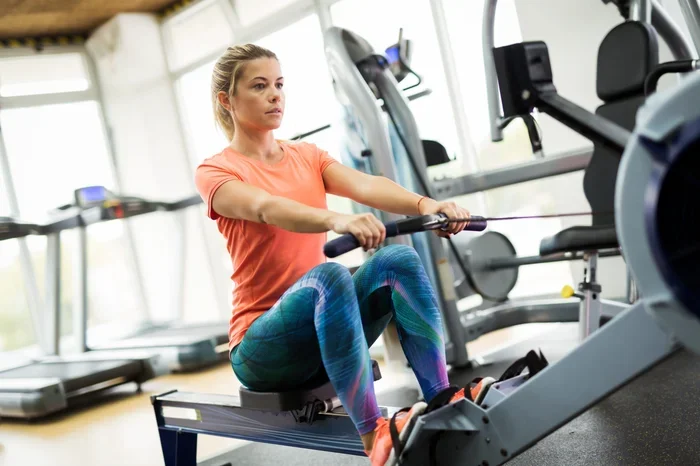
Focus on learning the correct rowing technique first. Proper form includes driving with your legs, keeping your back straight, and pulling the handle smoothly to your chest. Good technique naturally improves your rowing speed over time without you even trying.
Start with sessions of 10 to 15 minutes and gradually increase duration as your fitness improves. Consistency matters far more than speed in the early weeks. Building a strong foundation now sets you up for long-term success.
Sample Beginner Rowing Workout
Here is a simple rowing workout plan to get started:
- Warm up for 3 minutes at a light pace (18 to 20 spm).
- Row at a steady pace for 5 minutes (22 to 24 spm).
- Rest for 1 minute.
- Repeat the 5-minute row two more times.
- Cool down for 3 minutes at an easy pace.
This workout takes about 25 minutes and builds your rowing endurance without overwhelming you. As you get stronger, you can increase the duration or add more intervals to your routine.
If you are looking for a 30-minute routine, our guide on what is a good rowing pace for 30 minutes has detailed plans you can follow step by step.
Rowing Machine Pace for Intermediate and Advanced Users
Once you have built a solid foundation, it is time to challenge yourself. Adjusting your rowing machine pace at the intermediate and advanced levels requires more strategy and intention.
Pushing Your Limits Safely
As an intermediate or advanced rower, you can handle higher stroke rates and shorter split times. However, pushing too hard too soon leads to burnout or injury. Increase your pace gradually, no more than 5 to 10 percent per week.
Listen to your body. If your form starts to break down, slow down immediately. A good rowing pace is one where you can maintain proper technique throughout the entire session. Sacrificing form for speed defeats the purpose of the rowing workout and can lead to setbacks.
Interval Training for Better Pace
Interval training is one of the most effective ways to improve your rowing pace. This method alternates between high-intensity bursts and recovery periods. It builds both speed and endurance simultaneously, making your rowing fitness stronger overall.
Here is a sample interval workout:
- Warm up for 5 minutes at an easy pace.
- Row hard for 250 meters at maximum effort.
- Rest for 1 minute at a slow pace.
- Repeat 6 to 8 times.
- Cool down for 5 minutes.
Over time, your rowing speed will improve as your body adapts to the higher intensity. Interval training also keeps your workouts exciting and prevents the plateaus that stall so many people.
Factors That Affect Your Rowing Pace
Several factors influence how fast or slow you row on any given day. Understanding these helps you set realistic expectations and make smart adjustments to your rowing machine workout.
Fitness Level and Experience
Your current fitness level is the biggest factor in your rowing machine pace. A seasoned athlete will naturally row faster than someone who is just starting their fitness journey. This is completely normal and should not discourage you at all.
As you continue training, your aerobic capacity improves, your muscles get stronger, and your rowing pace increases naturally. Give yourself credit for progress, no matter how small it may seem.
Using a rowing machine regularly is one of the best ways to boost overall fitness. In fact, rowing machine benefits for weight loss and cardiovascular health are well documented. To learn more about this, check out our article on how good is a rowing machine for weight loss.
Machine Resistance and Settings
The resistance setting on your rowing machine directly affects your pace. Higher resistance makes each stroke harder and slows you down. Lower resistance lets you row faster but may not provide enough muscle engagement for a full-body workout.
For endurance training, keep the resistance at a moderate level (damper setting of 3 to 5 on a Concept2, for example). For strength building, increase the resistance slightly. Finding the right balance is key to maintaining a sustainable rowing pace throughout your session.
Body Weight and Technique
Your body weight plays a role in how fast you can row. Heavier individuals may find it harder to maintain a fast pace, but they also tend to burn more calories per session. This is one reason why calories burned rowing is such an effective metric for tracking progress.
Proper rowing form is perhaps the most important factor of all. Poor technique wastes energy and slows you down significantly. Focus on the sequence: legs drive first, then the torso leans back, and finally the arms pull. Smooth, connected movements lead to a faster and more efficient rowing pace.
How to Improve Your Rowing Machine Pace
Improving your rowing machine pace takes time, patience, and a smart training approach. You cannot expect overnight results, but with consistent effort, you will see real and lasting progress.
Focus on Proper Rowing Technique
The single best way to improve your pace is to refine your technique. Efficient movement uses less energy and produces more speed. Work on these key elements:
- Drive phase: Push powerfully with your legs while keeping your arms relaxed.
- Recovery phase: Move smoothly back to the starting position. Do not rush this phase.
- Posture: Keep your back straight and core engaged throughout each stroke.
- Breathing: Exhale during the drive and inhale during the recovery phase.
Consider filming yourself from the side to check your form. Comparing your technique to expert videos can reveal habits that slow you down and hold back your rowing speed.
Add Consistency to Your Routine
Consistency beats intensity when it comes to improving your rowing pace. Rowing three to five times per week, even for short sessions, builds the aerobic base you need for faster speeds over time.
Set a realistic schedule and stick to it. Over time, your body adapts and your rowing speed improves naturally. This is the foundation of any effective rowing workout plan and the secret behind every successful rower.
Use Interval Training
We touched on interval training earlier, but it deserves extra emphasis. Adding just one or two interval sessions per week can dramatically improve your rowing machine pace. These workouts push your cardiovascular system and build the speed you need for faster splits and rowing distance goals.
Alternate between high-intensity rows and active recovery. Over weeks and months, you will notice your recovery pace getting faster and your hard efforts becoming more sustainable and comfortable.
Set Realistic Goals and Track Progress
Set specific, measurable goals for your rowing training. Maybe you want to hit a 2:00/500m split, or row 2,000 meters under a certain time. Having a clear target keeps you motivated and focused on continuous improvement.
Track your progress using your machine’s display or a fitness app. Watching your numbers improve over weeks and months is incredibly motivating. For more on tracking your performance, see our guide on what is a good time on a rowing machine.
Conclusion
Finding the right rowing machine pace is a journey, not a destination. Your pace will change as you grow stronger, fitter, and more confident in your technique. The most important thing is to start where you are and work steadily forward without comparing yourself to others.
Remember that a good rowing machine pace is not about being the fastest. It is about challenging yourself at the right level and making consistent progress. Whether you are a beginner rowing for 15 minutes or an advanced athlete pushing for peak performance, the right pace helps you get the most from every single session.
Use the tips and targets in this guide to set your own rowing pace goals. Track your numbers, refine your technique, and stay patient with yourself. With time and dedication, you will see real improvements in your rowing speed, endurance, and overall fitness. Now get out there and row.
Frequently Asked Questions
What is a good rowing machine pace for beginners?
A good beginner rowing machine pace is around 28 to 32 strokes per minute with a split time of 2:30 to 3:00 per 500 meters. Focus on learning proper form and building consistency rather than chasing speed.
How do I measure my rowing machine pace?
You can measure your pace using stroke rate (spm), split time (time per 500 meters), and heart rate. Most rowing machines display these metrics on the screen, and fitness apps can provide additional tracking and analysis.
Can rowing machine pace help with weight loss?
Yes, maintaining a consistent rowing machine pace helps you burn calories effectively. Rowing engages multiple muscle groups and elevates your heart rate, making it a powerful tool for weight loss when paired with a balanced diet.
What stroke rate should I aim for on a rowing machine?
Beginners should aim for 18 to 24 spm, intermediate rowers for 30 to 34 spm, and advanced athletes for 34 to 40+ spm. The right stroke rate depends on your fitness level and the type of workout you are doing.
How long does it take to improve rowing pace?
Most people notice improvements in rowing pace within 4 to 6 weeks of consistent training. Individual results vary based on fitness level, training frequency, and how well you focus on technique and recovery.
Is rowing machine pace the same as speed?
Not exactly. Pace refers to the time it takes to cover a set distance, usually measured as split time per 500 meters. Speed is how fast you are moving, but pace gives you a more practical and consistent way to track your progress over time.