How Long Should I Jump Rope per Day

Wondering how long you should jump rope per day? The answer depends on your fitness level, goals, and experience. Most experts recommend starting with 10 to 15 minutes and gradually building up to 30 minutes or more. Jump rope per day is one of the most efficient ways to burn calories, boost cardio, and improve overall fitness in less time than many other exercises.
If you have been searching for the best way to get fit fast, how long should I jump rope per day is probably one of the first questions that popped into your head. Jumping rope is one of the simplest and most effective exercises you can do. It requires very little space, almost no equipment, and delivers serious results. Whether you want to lose weight, build endurance, or just get healthier, the jump rope can help you reach those goals.
The beauty of jump rope per day is that you do not need hours in the gym. A short session done consistently can outperform longer workouts on fancy machines. But the real question is: how much time should you actually spend jumping? The answer is not one-size-fits-all. It depends on your fitness level, your goals, and how your body responds to the exercise. In this guide, we break down everything you need to know about jump rope duration so you can get the most out of every session.
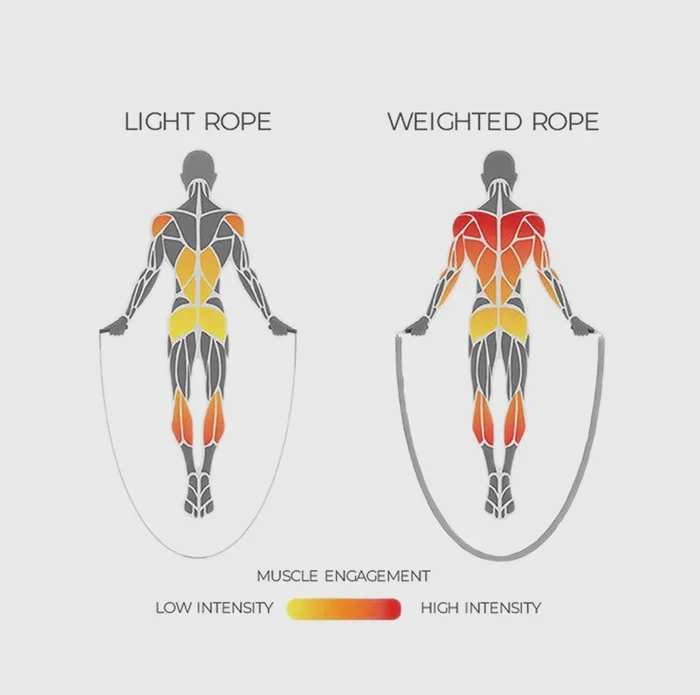
Before you start counting minutes, it helps to understand what makes jump rope such a powerful workout. When you jump rope for cardio, you engage your entire body. Your legs power the jumps, your core stabilizes your torso, and your arms and shoulders turn the rope. This full-body engagement means you burn more calories per minute than many popular exercises. Studies show that calories burned jumping rope can range from 10 to 16 calories per minute, depending on your intensity and body weight. This makes it one of the most time-efficient jump rope workouts available to anyone, anywhere.
Key Takeaways
- Start Small: Beginners should begin with 10 to 15 minutes per session and slowly increase duration over time.
- Weight Loss Sweet Spot: 20 to 30 minutes of daily jump rope work burns significant calories and supports fat loss.
- Cardio Benefits Kick In Fast: Even 10 minutes of jump rope cardio can improve heart health and endurance.
- Consistency Matters More Than Intensity: Showing up every day with a manageable duration beats sporadic long sessions.
- Listen to Your Body: Rest when needed and avoid overtraining to prevent joint strain and burnout.
- Use the Right Rope: Getting the proper rope length and type makes your sessions more effective and enjoyable.
📑 Table of Contents
- What Is the Ideal Jump Rope Duration Per Day?
- How Long Should a Beginner Jump Rope?
- Jump Rope Duration for Weight Loss and Fat Burning
- Jump Rope Duration for Cardio and Endurance
- How to Build a Daily Jump Rope Routine
- Common Mistakes to Avoid With Jump Rope Duration
- Expert Tips to Maximize Your Jump Rope Session
- Conclusion
What Is the Ideal Jump Rope Duration Per Day?
The ideal jump rope duration per day varies from person to person. A complete beginner might start with just 5 to 10 minutes, while an experienced athlete might push 45 minutes or more. The key is to match your session length to where you are right now, not where you think you should be.
Here is a general breakdown of recommended jump rope time based on fitness level:
- Beginners: 10 to 15 minutes per session, 3 to 4 days per week
- Intermediate: 20 to 30 minutes per session, 4 to 5 days per week
- Advanced: 30 to 45 minutes per session, 5 to 6 days per week
- Athletes in Training: 45 to 60 minutes per session, 5 to 7 days per week
These numbers are not rigid rules. They are starting points. You should feel challenged but not destroyed after each session. If you finish and cannot walk up stairs without gasping, you may have pushed too hard. Scale back and build up gradually. Your body adapts faster than you think.
Another important factor is your optimal jump rope time based on your specific goals. Someone focused on weight loss jumping rope will need a different duration than someone training for a sport. Let us break this down further so you can find the sweet spot for your personal fitness journey.
Why Duration Matters More Than You Think
Many people focus only on the number of jumps or the speed of their rope. But jump rope session length plays a huge role in your results. Too short, and you do not give your body enough stimulus to change. Too long, and you risk injury, fatigue, and burnout. Finding the right balance is what turns a casual jump into a real fitness tool.
When you maintain a consistent daily jump rope routine, your body starts to adapt in amazing ways. Your heart becomes more efficient, your lungs take in more oxygen, and your muscles learn to sustain effort for longer periods. This is called jump rope endurance, and it builds over time with the right amount of daily practice.
Think of it like building a tower of blocks. You start with a strong base of short, manageable sessions. As that base gets stronger, you can stack more blocks on top. Before long, you are jumping for longer periods without even realizing it. That is the beauty of gradual progression in rope jumping duration.
How Long Should a Beginner Jump Rope?
If you are new to this exercise, the thought of jumping rope for 30 minutes might feel impossible. And that is perfectly okay. Jump rope as a beginner should feel challenging but not overwhelming. The goal is to build a habit first, then increase the intensity and duration over weeks and months.
Start with just 5 to 10 minutes per day. Focus on maintaining a steady rhythm and proper form. You do not need to go fast or do double unders right away. A basic bounce with both feet is all you need to get started. As your jump rope stamina improves, add 2 to 3 minutes to each session every week.
Many people make the mistake of jumping too long too soon. This leads to sore shins, blistered feet, and frustration. A better approach is to keep your early sessions short and enjoyable. You want to look forward to picking up the rope, not dread it. Once jumping rope feels fun and natural, you will find it much easier to increase your rope jumping duration over time.
One of the best ways to stay motivated as a beginner is to track your progress. Note how many minutes you completed each day. After a couple of weeks, you will see your numbers grow, and that progress will fuel your motivation to keep going. For more detailed beginner guidance, check out our guide on how long should I jump rope as a beginner.
Remember that every expert was once a beginner. The people who achieve great results with jump rope fitness are not the ones who started with the longest sessions. They are the ones who showed up consistently, even when it felt hard. Your future self will thank you for starting small and staying committed.
Jump Rope Duration for Weight Loss and Fat Burning
If your main goal is weight loss jumping rope, the duration of your sessions becomes even more important. To lose fat, you need to create a calorie deficit. This means burning more calories than you consume. Jumping rope is one of the most efficient ways to do this because it burns a high number of calories in a short amount of time.
For effective jump rope for weight loss, aim for 20 to 30 minutes of moderate to high-intensity jumping per day. At this duration, you can burn anywhere from 200 to 400 calories per session, depending on your weight and effort level. Over a week, that adds up to 1,400 to 2,800 extra calories burned, which can translate to real fat loss when combined with a healthy diet.
Some people prefer to split their daily jump rope time into shorter intervals. For example, you might do two 15-minute sessions, one in the morning and one in the evening. This approach works well for people with busy schedules. It also keeps your heart rate elevated throughout the day, which boosts your overall calories burned jumping rope total.
If your goal is specifically to jump rope to lose fat, consider combining your rope sessions with a balanced nutrition plan. Exercise alone will not melt the fat away. You need to fuel your body properly while maintaining that calorie deficit. Think of your jump rope sessions as the engine and your diet as the fuel. Both need to work together for the best results. For a deeper dive into fat loss timing, our article on how long should I jump rope to lose fat covers this topic in detail.
How Jump Rope Compares to Other Cardio Exercises
To put things in perspective, let us compare jump rope duration to other popular cardio exercises. A 30-minute session of moderate jumping burns roughly the same number of calories as 30 minutes of running at a 6-mile-per-hour pace. But here is the kicker: you can burn even more calories in less time by increasing your jump rope intensity.
Compared to cycling, swimming, or using an elliptical machine, jump rope often comes out ahead in terms of calories burned per minute. This makes it an excellent choice for people who want maximum results in minimum time. If you only have 20 minutes to work out, a jump rope session can deliver a workout that rivals an hour on a treadmill.
| Exercise | Calories Burned (30 min) | Impact Level | Equipment Needed |
|---|---|---|---|
| Jump Rope (moderate) | 300 – 450 | High | Jump rope only |
| Running (6 mph) | 300 – 400 | High | Running shoes |
| Cycling (moderate) | 250 – 350 | Low | Bike |
| Swimming (moderate) | 250 – 350 | Low | Pool access |
| Elliptical (moderate) | 200 – 300 | Low | Elliptical machine |
As you can see, jump rope holds its own against some of the most popular cardio exercises. And it wins on convenience. You can do it in your living room, in a park, or in a hotel room while traveling. There is no gym membership required.
Jump Rope Duration for Cardio and Endurance
Beyond weight loss, many people turn to the jump rope to improve their cardiovascular fitness. Regular jump rope sessions strengthen your heart, improve blood circulation, and boost your overall endurance. But how long do you need to jump to see these cardio benefits?
Research suggests that even 10 minutes of moderate jump rope work can improve heart health markers. However, for meaningful endurance gains, aim for at least 20 to 30 minutes per session, 4 to 5 days per week. At this jump rope for good cardio duration, your heart rate stays elevated long enough to trigger the adaptations that make your cardiovascular system stronger. For more on this topic, see our guide on how long should I jump rope for good cardio.
If you are training for a sport or preparing for a fitness test, you may want to extend your sessions further. Many athletes use jump rope as a warm-up or conditioning tool. A 15-minute jump rope session before a workout can activate your fast-twitch muscle fibers and prepare your body for more intense training.
One effective strategy is to alternate between steady-state jumping and high-intensity intervals. For example, jump at a moderate pace for 2 minutes, then sprint for 30 seconds. Repeat this pattern for 20 to 30 minutes. This type of jump rope training not only builds endurance but also improves your speed and agility.
The jump rope benefits for endurance go beyond just your heart. Over time, you will notice that everyday activities feel easier. Climbing stairs, carrying groceries, and keeping up with children all become less tiring. That is the real-world payoff of consistent daily rope jumping and proper jump rope timing.
How to Build a Daily Jump Rope Routine
Now that you know how long you should jump, the next step is building a routine that fits your life. A good daily jump rope routine is one you can stick to consistently. Consistency beats perfection every time.
Here is a simple framework to get you started:
- Warm Up (2 to 3 minutes): Start with light bouncing and gentle arm swings. This prepares your joints and muscles for the work ahead.
- Main Session (10 to 30 minutes): Jump at a moderate to vigorous pace. Focus on maintaining steady rhythm and proper breathing.
- Cool Down (2 to 3 minutes): Slow your pace gradually. Stretch your calves, shoulders, and wrists to prevent soreness.
Try to schedule your daily rope jumping at the same time each day. Morning sessions can energize your entire day, while evening sessions help you decompress after work. Pick the time that works best for you and make it non-negotiable. Treat it like an appointment you cannot cancel.
As your fitness improves, you can add variety to your sessions. Try different jump styles like single-leg hops, side-to-side jumps, or alternating foot patterns. This keeps your workouts interesting and challenges your body in new ways. Variety also helps prevent plateaus, where your progress stalls because your body has adapted to the same routine.
Tracking Your Progress
One of the simplest ways to stay on track is to log your daily jump rope sessions. Use a notebook, a phone app, or even a simple spreadsheet. Record the duration, intensity, and how you felt after each session. Over time, you will see patterns emerge. Maybe you notice that your sessions feel easier after two weeks, or that you can jump longer without getting tired. These observations are valuable and help you adjust your jump rope exercise plan as needed.
Setting small, achievable goals is another powerful strategy. Instead of saying “I will jump for 30 minutes every day,” start with “I will jump for 12 minutes every day this week.” Once that feels easy, bump it up to 15 minutes. These small wins build momentum and keep you motivated. Before you know it, you will be hitting your target jump rope duration without even thinking about it.
Common Mistakes to Avoid With Jump Rope Duration
Even with the best intentions, many people make mistakes when figuring out their jump rope timing. Avoiding these common errors can save you from injury, burnout, and wasted effort.
Mistake 1: Starting Too Long. The most common mistake beginners make is jumping for too long right out of the gate. Your body needs time to adapt to the impact of jumping. Starting with 45-minute sessions on day one is a recipe for shin splints, knee pain, and early quitting. Respect the process and build up gradually.
Mistake 2: Ignoring Rest Days. Rest is not lazy. It is essential. Your muscles, joints, and nervous system need time to recover and grow stronger. Even if you love jumping rope, taking 1 to 2 rest days per week allows your body to repair and come back stronger. Overtraining leads to injuries that can sideline you for weeks.
Mistake 3: Skipping Warm-Ups. Jumping straight into intense rope work without warming up puts unnecessary stress on your ankles, knees, and lower back. A proper warm-up increases blood flow, loosens your joints, and reduces your risk of injury. Always take those extra 2 to 3 minutes to prepare your body.
Mistake 4: Focusing Only on Duration. While how long you jump matters, how you jump matters just as much. Poor form, sloppy landing, and bad posture can turn an effective workout into an injury waiting to happen. Focus on quality jumps with proper technique before chasing longer durations.
Expert Tips to Maximize Your Jump Rope Session
Once you have found your ideal jump rope duration, you can fine-tune your sessions to get even better results. These expert tips will help you squeeze more value out of every minute you spend with the rope.
Tip 1: Invest in the Right Rope. Not all jump ropes are created equal. A properly sized rope makes a huge difference in your comfort and efficiency. If you are unsure about sizing, check out our guide on how long of a jump rope should I get to find the perfect fit for your height.
Tip 2: Mix Up Your Intensity. Doing the same pace for every session can get boring and limit your progress. Alternate between easy, moderate, and high-intensity days. This keeps your workouts fresh and challenges your body in different ways. On easy days, focus on technique and rhythm. On hard days, push your speed and try new tricks.
Tip 3: Pair Jump Rope with Strength Training. Jump rope is fantastic for cardio, but it does not replace strength work. Combining your daily jump rope sessions with bodyweight exercises like squats, push-ups, and planks creates a well-rounded fitness routine. This combo helps you build lean muscle while burning fat, giving you the best of both worlds.
Tip 4: Stay Hydrated. Jumping rope is a sweaty business. Drink water before, during, and after your sessions. Dehydration can reduce your performance and slow your recovery. Keep a water bottle nearby and take small sips between sets.
Tip 5: Be Patient with Your Results. Fitness changes do not happen overnight. Give your body time to adapt and respond to your new routine. Most people start noticing improvements in energy, stamina, and body composition within 4 to 6 weeks of consistent daily practice. Trust the process and keep showing up.
Conclusion
The answer to how long should I jump rope per day ultimately comes down to your goals, your fitness level, and your consistency. Whether you are just starting out with 10 minutes a day or pushing through 45-minute advanced sessions, the most important thing is that you show up and put in the work. Jump rope is one of the most efficient, accessible, and enjoyable exercises available to you. It delivers real results without requiring a gym membership or expensive equipment.
Start where you are. Use the guidelines in this article to find your ideal jump rope duration. Build your routine gradually, listen to your body, and celebrate every small win along the way. Within just a few weeks of consistent daily practice, you will notice stronger legs, a healthier heart, and more energy throughout your day. The rope is waiting. All you have to do is pick it up and start jumping.
Frequently Asked Questions
How long should I jump rope per day to lose weight?
For weight loss, aim for 20 to 30 minutes of moderate to high-intensity jump rope per day. This duration burns a significant number of calories and supports fat loss when combined with a balanced diet. Consistency matters more than intensity, so find a duration you can maintain every day.
Is 15 minutes of jump rope per day enough?
Yes, 15 minutes per day is an excellent starting point, especially for beginners. At this duration, you can burn roughly 150 to 250 calories per session while building your cardiovascular fitness. As your endurance improves, you can gradually extend your sessions to 20 or 30 minutes.
Can I jump rope for too long in a day?
Yes, jumping rope for too long can lead to overuse injuries, joint strain, and fatigue. Most people should cap their daily sessions at 45 to 60 minutes, depending on their fitness level. Listen to your body and take rest days to allow proper recovery.
How long does it take to see results from daily jump rope?
Most people begin noticing improvements in stamina, energy levels, and body composition within 4 to 6 weeks of consistent daily practice. Weight loss results depend on your diet and overall activity level, but cardiovascular improvements often appear sooner.
Should I jump rope every day or take rest days?
It is best to include 1 to 2 rest days per week, even if you feel good. Rest days allow your muscles, joints, and nervous system to recover and grow stronger. On rest days, you can do light stretching or low-impact activities like walking or yoga.
What is the best time of day to jump rope?
The best time to jump rope is whenever you can consistently stick to it. Some people prefer morning sessions to energize their day, while others enjoy evening workouts to decompress. The key is to make it a regular habit at a time that fits your schedule.