Is the Lateral Raise Machine Better Than Dumbbells

The lateral raise machine and dumbbells each offer unique benefits for shoulder training. Machines provide guided movement and stability, while dumbbells allow greater freedom and muscle activation. The best choice depends on your fitness level, goals, and personal preferences.
Key Takeaways
- Lateral raise machines offer guided movement: They help beginners learn proper form with less risk of injury.
- Dumbbells provide greater muscle activation: Free weights engage more stabilizer muscles for complete shoulder development.
- Both tools serve different purposes: Machines suit isolation work, while dumbbells offer versatility across many exercises.
- Your fitness level matters: Beginners may prefer machines first, while advanced lifters often favor dumbbells.
- Combining both is a smart strategy: Use machines for controlled sets and dumbbells for functional strength.
- Proper form is essential with either option: Poor technique leads to injury regardless of the equipment used.
📑 Table of Contents
Understanding the Lateral Raise Movement
The lateral raise is one of the most popular exercises for building wider shoulders. It targets the lateral deltoid, which is the middle head of your shoulder muscle. Whether you use a machine or a dumbbell, the basic movement stays the same. You lift your arms out to the side until they are parallel with the floor.
This exercise plays a big role in shoulder muscle development and overall upper body aesthetics. A strong set of lateral deltoids gives your shoulders that rounded, defined look many people want. It also helps improve shoulder stability and posture in daily life.
But here is the big question many gym-goers face. Is the lateral raise machine better than dumbbells? The answer is not as simple as yes or no. Both tools have strengths and weaknesses. Your best choice depends on several factors like your experience level, training goals, and personal preferences.
Why the Lateral Raise Matters for Shoulder Development
The lateral deltoid is often overlooked in standard pressing movements. Exercises like the overhead press work the front and side deltoids, but they do not fully isolate the middle head. The lateral raise fills that gap. It specifically targets the side of your shoulder for balanced shoulder development.
Well-developed lateral deltoids also create the illusion of a narrower waist. This makes your upper body look more V-shaped. That is why bodybuilders and physique athletes spend so much time on this movement. It is a small exercise with a big visual impact.
The Lateral Raise Machine: Pros and Cons
The lateral raise machine is a piece of gym equipment designed specifically for this movement. It guides your arms through a fixed path using pads, levers, or cables. This fixed path can be helpful for many reasons, but it also comes with trade-offs.
Benefits of Using the Lateral Raise Machine
One of the biggest advantages of the machine is ease of use. You sit down, adjust the pad, and push. There is very little setup required. This makes it ideal for beginners who are still learning exercise form.
- Guided movement path: The machine keeps your arms on track, reducing the chance of swinging or cheating.
- Lower injury risk: Because the path is fixed, you are less likely to use improper form that strains your shoulder joint.
- Easy to adjust resistance: Most machines let you add or remove weight plates with simple pin adjustments.
- Great for isolation: The machine locks your body in place, forcing the lateral deltoid to do all the work.
- Good for drop sets: You can quickly change weight without needing a spotter or reracking dumbbells.
Drawbacks of the Lateral Raise Machine
However, the machine is not perfect. One major limitation is that it does not allow natural movement patterns. Everyone’s body is slightly different, and a fixed path may not match your range of motion. This can feel awkward for some people.
- Reduced stabilizer engagement: Because the machine supports your movement, fewer helper muscles get involved.
- Less functional strength: The guided path does not translate as well to real-world movements or sports.
- Limited versatility: The machine only does one exercise. You cannot use it for front raises or other shoulder movements.
- Availability issues: Many gyms have limited lateral raise machines, and home gyms rarely include them.
Dumbbell Lateral Raises: Pros and Cons
Dumbbells are one of the most versatile pieces of strength training equipment available. The dumbbell lateral raise is a staple in almost every shoulder workout program. But just like the machine, it has its own set of advantages and disadvantages.
Benefits of Dumbbell Lateral Raises
The biggest advantage of using dumbbells is freedom of movement. Your shoulders move through a natural path that matches your unique body mechanics. This can lead to better muscle activation and a more effective workout.
- Greater muscle recruitment: Free weights require your stabilizer muscles to work harder, leading to more overall muscle fiber activation.
- Improved coordination: Balancing dumbbells engages your core and other supporting muscles.
- Versatility: You can easily switch to front raises, Arnold presses, or other shoulder exercises with the same pair of dumbbells.
- Unilateral training: You can work one arm at a time to fix strength imbalances between your left and right sides.
- Portable and accessible: A pair of dumbbells can be used at home, in the gym, or even outdoors.
It is also worth noting that choosing the right dumbbell weight matters a lot for your progress. If you are unsure about how heavy your dumbbells should be, check out this guide on is how heavy are the dumbbells you lift good for helpful tips on selecting the proper weight for your strength level.
Drawbacks of Dumbbell Lateral Raises
Dumbbell lateral raises are not without their challenges. They require more control and balance than the machine version. This means there is a higher chance of using poor form, especially when fatigue sets in.
- Higher injury risk with bad form: Swinging the dumbbells or using too much weight can strain your shoulder joint.
- Harder to isolate the target muscle: Without a fixed path, other muscles may take over the movement.
- Requires more core stability: You need to maintain proper posture throughout the exercise, which can be tiring.
- Weight adjustments take longer: Switching between dumbbells of different weights is slower than adjusting a machine pin.
Machine vs Dumbbells: Side-by-Side Comparison
Let us look at how the lateral raise machine and dumbbells compare across the most important factors. This table breaks down the key differences to help you decide.
| Factor | Lateral Raise Machine | Dumbbells |
|---|---|---|
| Movement Path | Fixed and guided | Free and natural |
| Muscle Activation | Good isolation | Higher overall activation |
| Stabilizer Engagement | Low | High |
| Injury Risk | Lower | Higher with bad form |
| Versatility | Single exercise only | Multiple exercises possible |
| Best For | Beginners and isolation | Intermediate to advanced lifters |
| Home Gym Friendly | Usually not | Yes, very |
| Progressive Overload | Easy pin adjustments | Requires weight changes |
As you can see, neither option is clearly superior. The machine wins on safety and ease of use. Dumbbells win on muscle activation and versatility. Your personal situation should guide your choice.
Which Option Is Right for You?
Choosing between the lateral raise machine and dumbbells comes down to your individual needs. There is no single best option for everyone. Let us break down who benefits most from each tool.
Choose the Machine If…
- You are a beginner learning proper exercise form for the first time.
- You have had shoulder injuries and need a safer, guided movement path.
- You want to focus purely on isolation without worrying about balance.
- You are training at home and do not have access to a full set of dumbbells.
- You want to perform high-volume drop sets or supersets efficiently.
Choose Dumbbells If…
- You are an intermediate or advanced lifter looking for maximum muscle activation.
- You want to build functional strength that transfers to sports and daily activities.
- You prefer free weight training for the natural feel and full range of motion.
- You want versatility and can use the same weight for multiple shoulder exercises.
- You enjoy the challenge of balancing and controlling free weights.
Many experienced trainers recommend using both tools in a well-rounded program. The machine can serve as a finisher after your heavy dumbbell sets, or vice versa. This approach gives you the guidance of the machine and the freedom of free weights.
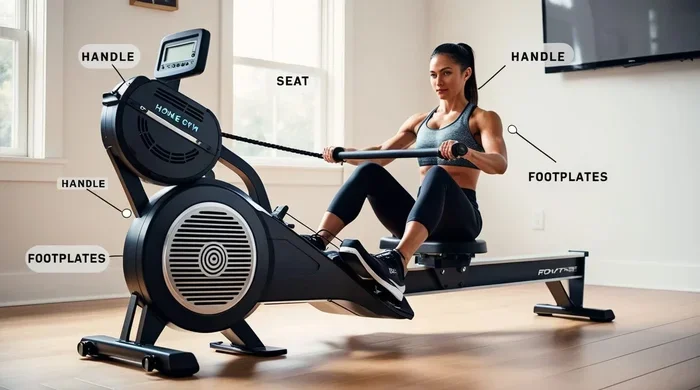
It is also worth noting that full body workouts like rowing engage many muscle groups at once. In contrast, lateral raises are pure isolation exercises. If you are looking for a full body workout that builds overall strength, you might explore options like the rowing machine, which you can learn more about in this guide on is a rowing machine the best full body workout.
Expert Tips for Lateral Raises With Both Tools
Whether you choose the machine or dumbbells, proper technique makes all the difference. Here are some expert tips to get the most out of every set.
Form Tips for Machine Lateral Raises
- Set the seat height so the pads align with your hands when your arms are at your sides.
- Keep your back firmly against the pad throughout the entire movement.
- Use a controlled tempo. Do not swing the handles up using momentum.
- Lift until your arms are roughly parallel with the floor. Going higher reduces tension on the deltoid.
- Squeeze at the top for one second before lowering slowly.
Form Tips for Dumbbell Lateral Raises
- Stand with your feet shoulder-width apart and hold a dumbbell in each hand at your sides.
- Keep a slight bend in your elbows throughout the movement. Straight arms put too much stress on the joint.
- Lead with your elbows, not your hands. Think about pouring water out of a pitcher.
- Keep your torso upright. Do not lean backward to swing the weights up.
- Use a weight that allows you to complete 12 to 15 reps with good form.
Common Mistakes to Avoid
- Using too much weight: This causes you to swing and recruit trap muscles instead of the deltoids.
- Shrugging your shoulders: Keep your shoulders down and away from your ears during the entire movement.
- Lifting too high: Going above parallel shifts the work away from the lateral deltoid.
- Rushing the reps: Slow and controlled sets produce better results than fast, jerky movements.
The mind-muscle connection is crucial for lateral raises regardless of the tool you use. Focus on feeling the lateral deltoid contract and stretch with every rep. This mental focus alone can dramatically improve your results.
Conclusion
So, is the lateral raise machine better than dumbbells? The honest answer is that both have a place in your training program. The machine offers guidance, safety, and ease of use. Dumbbells offer freedom, muscle activation, and versatility. The best approach is to understand what each tool does well and use them strategically.
If you are just starting out, the machine can help you build a foundation with proper form. As you progress, adding dumbbells to your routine will take your shoulder development to the next level. The most important thing is to train consistently with good technique. Whether you choose the machine, the dumbbell, or both, the key is to show up and put in the work. Your shoulders will thank you.
Remember that progressive overload is the real driver of growth. Whether you use a machine or dumbbells, gradually increasing your weight or volume over time will lead to results. Pick the tool that keeps you training consistently and with good form. That is what truly matters in the long run.
Frequently Asked Questions
Can you build muscle with lateral raise machines?
Yes, lateral raise machines can build muscle effectively. They provide constant tension on the lateral deltoid and allow you to focus on isolation. Using proper volume and progressive overload, you will see muscle growth with either the machine or dumbbells.
Are dumbbell lateral raises safer than machine lateral raises?
Neither is inherently safer. The machine is safer for beginners because it guides the movement and reduces the risk of using bad form. Dumbbells are safe when you use controlled weights and proper technique. The key is to match the tool to your experience level.
Should beginners use machines or dumbbells for lateral raises?
Beginners should start with the lateral raise machine. It teaches the movement pattern safely and helps you build the mind-muscle connection. Once you feel confident, you can transition to dumbbells for greater muscle activation and functional strength.
Can you do both lateral raise machines and dumbbells in the same workout?
Absolutely. Many advanced lifters use both in the same session. Start with dumbbells for heavy compound-style work, then finish with the machine for high-rep isolation. This combo gives you the benefits of both tools.
What weight should you use for lateral raises?
Start with a weight that allows you to complete 12 to 15 reps with clean form. The lateral raise is an isolation exercise, so the weight should be lighter than what you use for compound movements. Focus on control and the squeeze at the top.
Do lateral raises help with other exercises like shoulder presses?
Yes, stronger lateral deltoids improve your performance in shoulder presses and many other pressing movements. Well-developed side deltoids create better shoulder stability and aesthetics. They complement your pressing strength rather than replacing it.