Is Rdl Better with Dumbbells or Barbell 2
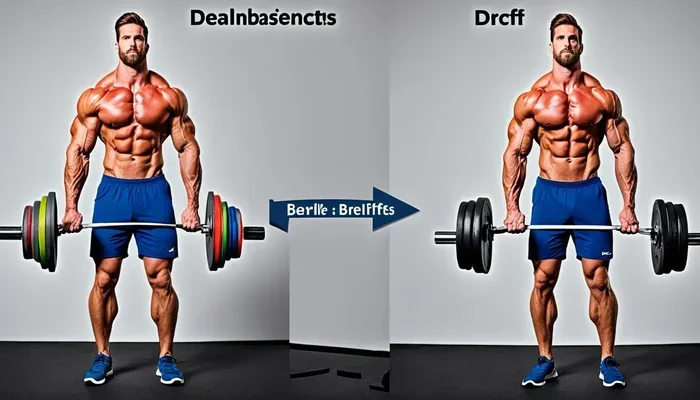
The Romanian Deadlift (RDL) is a powerful posterior chain exercise, and choosing between dumbbells and a barbell depends on your goals, experience level, and mobility. Barbells let you load more weight for raw strength, while dumbbells offer a greater range of motion and joint-friendly benefits. Both tools build hamstring and glute strength effectively when you use proper RDL form and technique.
Key Takeaways
- Barbell RDLs: Best for lifting heavier loads and building raw posterior chain strength with a fixed path of motion.
- Dumbbell RDLs: Offer a deeper stretch, better range of motion, and are more forgiving for beginners and those with mobility limits.
- Muscle activation: Both tools target the hamstrings, glutes, and lower back, but dumbbells may recruit more stabilizing muscles.
- Form matters most: Poor RDL form with either weight increases injury risk, especially to the lower back.
- Progression: Start with dumbbells to master the hip hinge, then progress to a barbell for heavier loading.
- Choice depends on goals: Strength-focused lifters may prefer barbells, while hypertrophy and functional fitness enthusiasts often favor dumbbells.
📑 Table of Contents
- Is RDL Better With Dumbbells Or Barbell?
- What Is an RDL and Why Does It Matter?
- Barbell RDL: Benefits and Best Practices
- Dumbbell RDL: Benefits and Best Practices
- Dumbbell RDL vs Barbell RDL: Head-to-Head Comparison
- Which One Should You Choose Based on Your Goals?
- Programming Tips for RDLs
- Expert Insights: What Coaches Say About RDL Tool Selection
- Final Verdict: Dumbbell or Barbell RDL?
Is RDL Better With Dumbbells Or Barbell?
The Romanian Deadlift, commonly called the RDL, is one of the most effective exercises for building a strong posterior chain. If you have ever walked into a gym wondering whether to grab a pair of dumbbells or load up a barbell, you are not alone. The answer is not as simple as picking one over the other. Both options bring real value to your workout, and the best choice depends on what you want to achieve.
Barbell RDLs allow you to handle heavier loads, which makes them a go-to for strength-focused lifters. They keep both arms fixed in position, which creates a stable movement pattern. On the other hand, dumbbell RDLs give you a freer range of motion and can feel more natural on the joints. Each tool has its place, and understanding the differences helps you train smarter.
In this guide, we break down everything you need to know. From muscle activation to form cues, from beginner tips to advanced programming, you will leave with a clear answer on which option fits your goals best. Let us dive in.
What Is an RDL and Why Does It Matter?
The Romanian Deadlift is a hinge-based movement that targets the back of your body. Unlike a traditional deadlift, the RDL keeps a slight bend in the knees and emphasizes the stretch on the hamstrings. This makes it a unique and valuable exercise for building lower body strength and muscle.
Muscles Worked During an RDL
The primary muscles targeted during an RDL include:
- Hamstrings — the main muscle group worked during the eccentric stretch
- Glutes — activated as you extend the hips back to standing
- Erector spinae — the muscles along your spine that keep your torso upright
- Core stabilizers — engage throughout the movement to protect your lower back
- Forearms and grip — especially when holding heavy weights for extended sets
Because the RDL is a compound movement, it trains multiple muscle groups at once. This makes it time-efficient and highly effective for overall lower body development. Whether you use dumbbells or a barbell, the movement pattern stays the same. The tool just changes how your body responds to the load.
Barbell RDL: Benefits and Best Practices
Using a barbell for Romanian Deadlifts is a classic strength training approach. The barbell sits close to your legs throughout the movement, which creates a mechanical advantage. This allows you to progressively overload the muscles more easily than with dumbbells.
Why Choose a Barbell for RDLs?
- Heavier loading potential: A barbell lets you add weight in small increments, making it ideal for progressive overload
- Fixed path of motion: The bar travels up and down along your shins and thighs, which reduces the need for balance
- Core stability training: Holding a heavy barbell challenges your trunk stability more than dumbbells
- Familiar movement pattern: If you already do barbell deadlifts, the RDL feels natural on a barbell
One thing to keep in mind is that barbell RDLs require good mobility. If your hamstrings or hip flexors are tight, you may struggle to maintain a flat back at the bottom of the movement. This is where proper warm-up and mobility work become essential.
Common Barbell RDL Mistakes
- Rounding the lower back at the bottom of the lift
- Letting the bar drift too far from the legs
- Bending the knees too much, turning it into a squat
- Using the lower back instead of the hips to stand up
Avoiding these mistakes keeps you safe and ensures your hamstrings and glutes do the work. If you are new to barbell training, you might also want to compare how different barbell exercises feel. For instance, some lifters notice they can lift more with dumbbells than with a barbell for certain movements, which is completely normal and worth understanding before you commit to one tool.
Dumbbell RDL: Benefits and Best Practices
Dumbbell Romanian Deadlifts offer a different set of advantages. The dumbbells hang freely at your sides, which allows each arm to move independently. This can help address strength imbalances and feel more comfortable for people with limited shoulder or wrist mobility.
Why Choose Dumbbells for RDLs?
- Greater range of motion: Dumbbells let you descend lower because there is no barbell hitting your knees
- Joint-friendly positioning: The natural path of the dumbbells reduces stress on the wrists and shoulders
- Unilateral training potential: You can train one side at a time to fix imbalances
- Easier to learn: Beginners often pick up the dumbbell RDL faster than the barbell version
Dumbbells also allow for a deeper stretch on the hamstrings. This can lead to better muscle activation and a stronger mind-muscle connection. If your goal is hypertrophy or building muscle size, the extra range of motion from dumbbells can be a real advantage.
Common Dumbbell RDL Mistakes
- Swinging the dumbbells instead of controlling them on the way down
- Letting the shoulders roll forward at the bottom
- Using too much weight and losing proper form
- Bending the arms and turning it into a rowing motion
Keep the dumbbells close to your body the entire time. Think of them grazing your thighs and shins as you hinge at the hips. This keeps tension on the hamstrings and glutes where it belongs.
Dumbbell RDL vs Barbell RDL: Head-to-Head Comparison
To make the best decision, it helps to compare both tools side by side. The table below breaks down the key differences so you can see which option aligns with your training goals.
| Factor | Barbell RDL | Dumbbell RDL |
|---|---|---|
| Load Capacity | Higher — allows heavier weights for strength gains | Moderate — limited by the heaviest dumbbell available |
| Range of Motion | Limited by barbell contact with the body | Greater — deeper hamstring stretch possible |
| Stabilizer Muscle Activation | Lower — fixed bar path reduces instability | Higher — each arm works independently |
| Beginner Friendliness | Moderate — requires good mobility and form | High — easier to learn and safer for new lifters |
| Progressive Overload | Easy — add small plates for incremental jumps | Harder — dumbbells come in larger weight jumps |
| Joint Stress | Moderate — bar can press into the legs | Low — natural movement path is joint-friendly |
| Core Challenge | High — heavy load demands strong trunk stability | Moderate — lighter loads still engage the core well |
As you can see, neither option is objectively better. They simply serve different purposes. If you want to get stronger and lift heavy, the barbell is your tool. If you want more muscle-building stretch and a safer learning curve, dumbbells win.
Which One Should You Choose Based on Your Goals?
Your training goal should drive your choice between dumbbells and a barbell. Here is a simple breakdown to help you decide.
Choose Barbell RDLs If:
- You want to build maximum posterior chain strength
- You are an intermediate or advanced lifter looking for progressive overload
- You already have good hip hinge mechanics and mobility
- You are training for powerlifting or strength sports
Choose Dumbbell RDLs If:
- You are a beginner learning the hip hinge pattern
- You want more hamstring stretch and hypertrophy
- You have joint issues or mobility restrictions
- You want to address left-to-right strength imbalances
Many experienced lifters use both tools in their routine. You might do barbell RDLs on heavy lower body days and dumbbell RDLs on volume or accessory days. This approach gives you the best of both worlds and keeps your workouts varied and productive.
It is also worth noting that some people find dumbbells more comfortable because of the natural grip position. If you have ever struggled with grip fatigue during barbell work, switching to dumbbells can be a game changer. Your forearms will thank you, and you can focus more on the target muscles.
Programming Tips for RDLs
No matter which tool you choose, how you program your RDLs matters just as much as the weight you pick up. Here are some practical tips to get the most out of your Romanian Deadlift training.
Sets and Reps for Strength
For raw strength, stick with 3 to 5 sets of 4 to 6 reps using a heavy barbell. Rest 2 to 3 minutes between sets. This rep range lets you lift with quality form and build maximal strength in the posterior chain.
Sets and Reps for Hypertrophy
For muscle growth, aim for 3 to 4 sets of 8 to 12 reps. You can use either dumbbells or a barbell here. The key is to feel a deep stretch in the hamstrings and a strong contraction in the glutes at the top of each rep.
Sets and Reps for Endurance
For muscular endurance, use lighter weights and perform 2 to 3 sets of 15 to 20 reps. Dumbbells work especially well for this because they are easier to handle at higher rep ranges.
Quick Tips for Better RDL Performance
- Keep the weight close to your body throughout the entire movement
- Push your hips back first, then let the weight travel down your legs
- Maintain a neutral spine — do not round or hyperextend your lower back
- Breathe in at the bottom, breathe out as you return to standing
- Squeeze your glutes hard at the top to fully lock out each rep
Consistency in your RDL programming will deliver results over time. Start with a weight you can control perfectly, and gradually increase the load as your form improves.
Expert Insights: What Coaches Say About RDL Tool Selection
Strength coaches often debate the dumbbell versus barbell question, and most agree that both tools belong in a well-rounded program. The key insight is that the movement pattern matters more than the equipment. A well-executed RDL with dumbbells will build more muscle and strength than a poorly performed RDL with a barbell.
Many coaches recommend starting new lifters with dumbbells to build confidence and master the hip hinge. Once the movement feels natural, transitioning to a barbell allows for heavier loading. This progression respects the body’s adaptation process and reduces injury risk.
If you are curious about how other barbell exercises compare, you might find it helpful to explore articles on barbell rows or bench press variations. Understanding how different tools affect the same muscle groups gives you a broader perspective on training. For example, the differences between barbell and dumbbell pressing are similar in concept to the differences in RDLs.
Another useful comparison is looking at how different barbell types affect your training. The difference between Olympic and standard barbells can influence your RDL performance, especially if you are using bumper plates or competing lifts. Olympic barbells have a larger diameter and more whip, which can change how the weight feels during a hinge movement.
Final Verdict: Dumbbell or Barbell RDL?
The honest answer is that both dumbbells and barbells are excellent tools for the Romanian Deadlift. The best choice depends on your experience level, training goals, and personal preference. If you want to lift heavy and build maximum strength, the barbell is your best bet. If you want a deeper stretch, better range of motion, and a gentler learning curve, dumbbells are the way to go.
For most people, using both tools across different training sessions provides the most well-rounded benefits. You get the heavy loading benefits of the barbell and the mobility and stretch benefits of dumbbells. This combination approach builds a strong, resilient posterior chain that supports everything from athletic performance to everyday movement.
Start where you are. Use the tool that matches your current ability and goals. Focus on perfect form above all else. As you grow stronger, you can always adjust your approach. The RDL is a timeless exercise, and whichever tool you choose, it will deliver real results when performed with intention and consistency.
Frequently Asked Questions
Can beginners do RDLs with a barbell?
Yes, but beginners should start with lighter weights and focus on mastering the hip hinge first. Many coaches recommend learning the movement with dumbbells before progressing to a barbell. This approach reduces injury risk and builds confidence in the movement pattern.
Are dumbbell RDLs as effective as barbell RDLs for building strength?
Dumbbell RDLs are effective for building strength, especially in the hamstrings and glutes. However, barbells allow for heavier loading, which makes them better for maximizing raw strength gains. Both tools are valuable, and the best choice depends on your specific strength goals.
How deep should I go on an RDL with dumbbells or a barbell?
You should go as deep as your mobility allows while keeping a flat back. With dumbbells, you can usually go deeper because there is no barbell contacting your legs. Stop when you feel a strong stretch in the hamstrings without rounding your lower back.
Can I do RDLs every day?
It is not recommended to do heavy RDLs every day. Your posterior chain muscles need recovery time between sessions. For most lifters, training RDLs 2 to 3 times per week with at least 48 hours of rest between sessions is ideal for growth and recovery.
What weight should I start with for RDLs?
Start with a weight you can control for 10 to 12 reps with perfect form. For dumbbells, this might be 15 to 25 pounds per hand for beginners. For barbells, starting with just the bar (45 pounds) or adding a few plates is a smart approach. Focus on form before adding load.
Do RDLs help with other lifts like squats and deadlifts?
Yes, RDLs strengthen the posterior chain muscles that support squats and conventional deadlifts. They build hamstring and glute strength, improve hip hinge mechanics, and reinforce a strong back. Adding RDLs to your routine can lead to better performance in these compound lifts over time.