Looking for a single piece of equipment that hits every major muscle group while torching calories? A rowing machine might just be the answer. It delivers a low‑impact, high‑efficiency cardio and strength combo that rivals treadmills, ellipticals, and weight‑training circuits. Read on to see why rowing could be the ultimate full‑body workout—and how to use it right.
Key Takeaways
- Full‑body engagement: Rowing works legs, core, back, and arms in one smooth motion.
- Low‑impact cardio: It spares joints while still delivering a high‑intensity calorie burn.
- Scalable intensity: From gentle warm‑ups to sprint intervals, the rower adapts to any fitness level.
- Better posture: Regular rowing strengthens the posterior chain, helping to reduce back pain.
- Space‑saving design: Most models fold flat, making them ideal for home gyms.
- Comparable to other gear: When measured against treadmills, ellipticals, and free‑weight circuits, rowing holds its own in both cardio and strength metrics.
- Practical tips: Proper form, programming, and maintenance keep your rowing workouts safe and effective.
📑 Table of Contents
- Introduction: Why the Question Matters
- 1. How Rowing Works: The Mechanics Behind the Magic
- 2. Comparing Rowing to Other Full‑Body Options
- 3. Setting Up for Success: Choosing the Right Rower
- 4. Mastering Form: The 5‑Step Technique Checklist
- 5. Programming Your Rowing Workouts
- 6. Maintenance, Safety, and Longevity
- Conclusion: Is a Rowing Machine the Best Full‑Body Workout?
Introduction: Why the Question Matters
When you walk into a gym, the first thing you see is a sea of machines—treadmills humming, ellipticals gliding, weight racks clanking. Each promises a “complete” workout, but few truly hit every major muscle group while keeping impact low. That’s where the rowing machine steps in. It’s a single piece of equipment that promises cardio, strength, and core stability all at once.
But is it really the best full‑body workout? The answer isn’t a simple “yes” or “no.” It depends on your goals, your body, and how you use the machine. In this article we’ll break down the science, compare rowing to other popular workouts, and give you a step‑by‑step guide to make the most of every pull.
1. How Rowing Works: The Mechanics Behind the Magic
The basic movement
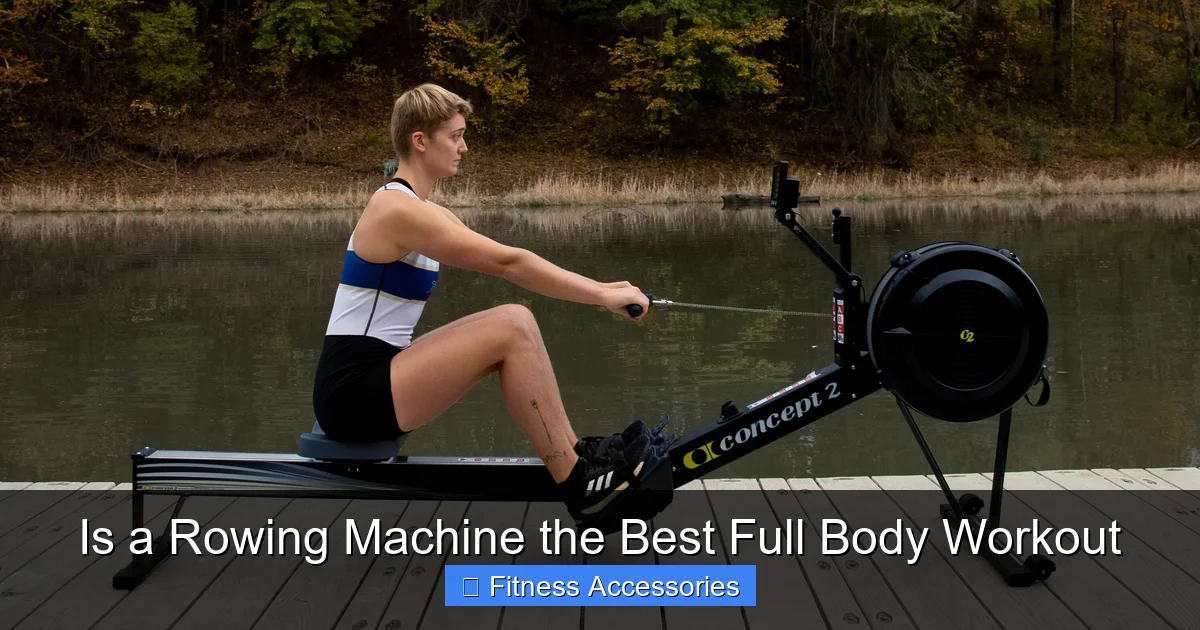
Rowing follows a four‑phase pattern: catch, drive, finish, and recovery. In the catch, you sit tall, knees bent, shins vertical, and arms fully extended. The drive pushes through the legs, then leans back slightly while pulling the handle to the chest. The finish locks the legs, squeezes the shoulder blades, and bends the elbows. Finally, the recovery reverses the motion, returning to the catch.

Visual guide about Is a Rowing Machine the Best Full Body Workout
Image source: barbend.com
Muscles activated
- Legs: Quadriceps, hamstrings, glutes.
- Core: Rectus abdominis, obliques, erector spinae.
- Back: Lats, rhomboids, trapezius.
- Arms: Biceps, forearms.
Because the power comes from the legs first, you get a strong cardio stimulus while still challenging the upper body. This synergy is rare in other machines.
Energy systems involved
Rowing taps both the aerobic and anaerobic systems. Short, high‑intensity intervals (30‑second sprints) push the phosphagen and glycolytic pathways, while steady‑state rows (20‑30 minutes) build endurance through the aerobic system. This dual‑system training is why rowers can burn 600‑800 calories per hour.
2. Comparing Rowing to Other Full‑Body Options
Treadmills
Treadmills excel at cardio but barely engage the upper body. You can increase incline for leg strength, yet the arms stay passive. Rowers, by contrast, involve the arms and back on every stroke, giving you a more balanced workout.
Visual guide about Is a Rowing Machine the Best Full Body Workout
Image source: static01.nyt.com
Ellipticals
Ellipticals are low‑impact and incorporate arm levers, but the motion is limited to a fixed path. Rowing allows a full range of motion, encouraging greater muscle recruitment and better posture development.
CrossFit‑style circuits
High‑intensity circuits combine rowing, kettlebells, box jumps, and more. While effective, they require multiple pieces of equipment and a larger space. A rower can mimic many of those movements—think “row‑sprint‑row” intervals—without the logistical hassle.
Weight‑training splits
Traditional weight rooms isolate muscle groups. Rowing offers a compound, functional movement that translates to real‑life activities like lifting, pulling, and climbing. However, it doesn’t replace heavy squats or deadlifts for maximal strength gains.
Bottom line comparison
When you stack cardio, strength, joint friendliness, and space efficiency, the rowing machine ranks near the top. It may not be the singular “best” for every niche goal, but for overall fitness it’s hard to beat.
3. Setting Up for Success: Choosing the Right Rower
Types of rowing machines
- Air rowers: Use a fan to create resistance; the harder you pull, the more resistance you feel. Great for interval training.
- Water rowers: Simulate the feel of a boat moving through water; provide a smooth, natural resistance curve.
- Magnetic rowers: Offer quiet operation and precise resistance settings; ideal for home use.
- Hydraulic rowers: Compact and inexpensive but can feel uneven; best for beginners on a budget.
Key features to look for
- Performance monitor: Look for a display that tracks stroke rate, distance, calories, and heart rate.
- Adjustable footrests: Ensure a snug fit for different shoe sizes.
- Seat glide: Smooth bearings reduce friction and protect knees.
- Weight capacity: Choose a model that exceeds your body weight by at least 30 kg for safety.
Budget considerations
Entry‑level hydraulic rowers start around $150, while premium water or air models can exceed $1,200. For most home users, a mid‑range magnetic or air rower ($400‑$800) offers the best balance of durability and performance.

Visual guide about Is a Rowing Machine the Best Full Body Workout
Image source: drworkout.fitness
4. Mastering Form: The 5‑Step Technique Checklist
Step 1 – The Catch
Sit tall, shins vertical, knees bent at about 90°, core engaged, shoulders relaxed. Grip the handle lightly; elbows should point down.
Step 2 – The Drive
Push through the heels, straighten the legs, then lean back slightly (about 10‑15°) while pulling the handle to your lower ribs. Keep the wrists flat.
Step 3 – The Finish
Legs fully extended, shoulders pulled back, elbows tucked in. Pause for a second to feel the contraction in the back and biceps.
Step 4 – The Recovery
Extend the arms first, then hinge at the hips, and finally bend the knees to return to the catch. Maintain a controlled tempo; a 2:1 ratio (drive:recovery) works well for beginners.
Step 5 – Breathing
Inhale during the recovery, exhale powerfully on the drive. Proper breathing enhances core stability and prevents dizziness.
Common mistakes to avoid
- Pulling with the arms first—this reduces leg involvement and can strain the biceps.
- Hunching the back—keep a neutral spine to protect the lumbar region.
- Over‑gripping the handle—relax the hands to avoid forearm fatigue.
5. Programming Your Rowing Workouts
Beginner routine (4 weeks)
- Week 1: 3 sessions of 10‑minute steady rows at 20‑22 strokes per minute (spm).
- Week 2: Add 2 × 30‑second intervals at 30 spm, with 2‑minute easy rows between.
- Week 3: Increase total time to 15 minutes, incorporate 4 × 30‑second sprints.
- Week 4: 20‑minute row with 6 × 30‑second sprints and 1‑minute recovery.
Intermediate HIIT session
Warm‑up 5 minutes easy. Then 10 rounds of 40 seconds sprint (30‑35 spm) + 20 seconds rest. Cool down 5 minutes. Total: ~20 minutes, ~500 calories.
Strength‑focused interval
Use a rowing machine with a damper or resistance knob. Perform 5 × 4‑minute rows at a heavy resistance (level 8‑10 on a 1‑10 scale), keeping stroke rate around 22‑24 spm. Rest 2 minutes between sets. This builds muscular endurance in the legs and back.
Mixing modalities
Combine rowing with bodyweight circuits for a full‑body blast: 5 minutes rowing, 10 push‑ups, 10 air‑squats, repeat 4 times. The rower serves as both cardio and active recovery.
6. Maintenance, Safety, and Longevity
Cleaning the rail and seat
Wipe down the rail after each session with a damp cloth. Lubricate the seat rollers monthly using a silicone‑based spray.
Checking resistance components
For air rowers, clean the fan blades every 3–4 months. Water rowers need occasional refilling and anti‑algae tablets. Magnetic units benefit from a quick dust wipe on the flywheel.
Safety tips
- Ensure the foot straps are snug before each row.
- Keep the area around the rower free of obstacles.
- Start each workout with a 5‑minute warm‑up to protect joints.
When to replace parts
Seat rollers typically last 2–3 years with heavy use. Replace them when you hear grinding noises. The chain (on some models) should be inspected every 6 months.
Conclusion: Is a Rowing Machine the Best Full‑Body Workout?
For most people seeking a balanced mix of cardio, strength, and low‑impact movement, the answer leans toward “yes.” Rowing delivers a comprehensive workout that hits every major muscle group, burns a high number of calories, and does so with minimal joint stress. It outperforms many single‑purpose machines in efficiency and space usage.
That said, “best” is personal. If your primary goal is maximal leg strength, heavy squats will still trump rowing. If you love the feel of a treadmill’s rhythm, you may prefer running. The key is to match the tool to your goals, and in many cases, the rowing machine can serve as a versatile foundation that complements other activities.
Pick a model that fits your budget, master the technique, and follow a progressive program. In a few weeks you’ll notice stronger legs, a tighter core, and improved endurance—all signs that you’ve found a true full‑body champion.
Frequently Asked Questions
Does rowing burn more calories than running?
Rowing can burn 600‑800 calories per hour at a vigorous pace, which is comparable to running 6‑8 mph. The exact number depends on intensity, body weight, and duration.
Is rowing safe for people with knee problems?
Yes. Rowing is low‑impact and the power comes from the hips and glutes rather than the knees. Proper form—avoiding hyper‑extension—helps protect the joint.
Can I lose weight using only a rowing machine?
Absolutely. Consistent rowing combined with a moderate calorie deficit will lead to weight loss. Mix steady‑state rows with HIIT intervals for optimal results.
How often should I row each week?
For general fitness, 3‑4 sessions of 20‑30 minutes work well. Beginners can start with 2‑3 shorter sessions and gradually increase frequency and duration.
Do I need a rowing machine at the gym if I already lift weights?
Adding rowing offers cardio without sacrificing muscle mass, improves recovery, and balances the posterior chain—making it a valuable complement to weight training.
What’s the difference between air and water rowers?
Air rowers use a fan; resistance increases with speed, making them great for interval work. Water rowers use a paddle in a water tank, offering a smoother, more natural feel that mimics real rowing.